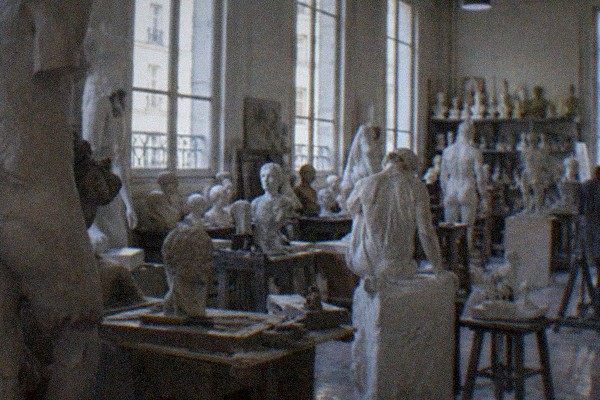
Musée Bourdelle
15e arrondissement · The sculptor's studios and plaster casts, kept as he left them, in Montparnasse.
Sculpture museum in the former studio and home of Antoine Bourdelle.
Free entry, no ticket needed.
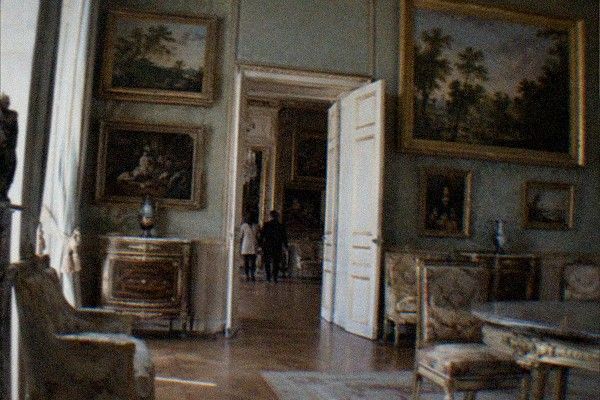
A private mansion with Botticelli and Rembrandt still hung as the owners left them, open daily.
Current price on the listing
Check Price & Availability →Opens the official listing with live dates and prices. Book there; nothing is charged on this site.
Musée Jacquemart-André is a 19th-century private mansion on boulevard Haussmann whose owners, Édouard André and Nélie Jacquemart, filled it with Italian Renaissance painting, Flemish masters and French 18th-century art. It suits travelers who want great art inside an intact grand home rather than a vast public institution.
The museum is a private mansion where the collection still hangs the way its owners arranged it, with Botticelli, Rembrandt, Uccello and Fragonard on the walls of the very rooms Édouard André and Nélie Jacquemart lived in. You walk their apartments, reception halls and winter garden, not a purpose-built gallery, and it is open every day of the week.
That domestic setting is the whole point of a visit here. The couple bought art for a home, and after Nélie Jacquemart's death in 1912 the house opened to the public essentially as she left it. The grand staircase, the music room and the Italian Rotonde still carry their original decoration, so you see the paintings in the same frames, the same silk-paneled walls, the same perspectives their guests saw at dinner parties in the 1880s. Reviewers consistently say this is the closest Paris comes to time travel into a collector's private world.
The Italian holdings anchor the visit. The collection includes Botticelli's Virgin and Child, works by Uccello, Carpaccio and Mantegna, and a sculpture gallery of Venetian and Florentine pieces. The Dutch and Flemish rooms hold Rembrandt, Van Dyck and Rubens. Upstairs, the French 18th-century apartments concentrate on Fragonard, Boucher and Nattier portraits, along with decorative arts of the period, tapestries and ceramics in the period rooms. Nélie Jacquemart also collected some oriental objects, and a small group of works connected to her late interest in Buddhist art sits near the private apartments.
The building itself deserves as much attention as the canvases. Henri Parent's architecture was deliberately lavish, and the mansion was one of the showpieces of the new Haussmann boulevards. Allow your eye to catch the marble paving of the vestibule, the double-height music room where concerts are still performed, and the glazed winter garden with its spiral floor mosaic and plants. Unlike most Paris museums, nothing here was reinstalled for curatorial convenience, so the route through the house follows the logic of the floor plan itself, room by room, exactly as the owners intended.
Standard adult admission is €19, and that figure is the museum's own door price. Entry is by timed slot and it is compulsory, so you reserve a specific arrival window rather than turning up whenever you like. The mansion is not on the Paris Museum Pass and there is no free day at any point in the year.
The timed-entry rule exists because the mansion's rooms are relatively small and the flow of visitors has to be managed through a historic interior with narrow staircases and doorways. When you book, you choose a date and an entry window, and you arrive within that window. Once inside, visitors regularly report there is no rush to leave, and the average stay is unhurried because capacity inside is controlled. The bookable ticket carries a rating of 4.7 across 2,677 reviews, which reflects how reliably the timed system works in practice.
What the ticket covers is the permanent collection in the mansion, the state rooms, the private apartments and the winter garden. Temporary exhibitions, which this museum stages twice a year in the basement galleries and which are often the busiest draw, may carry a separate arrangement, so read the coverage at the point of booking. The on-site café, installed in the original dining room, is paid separately and is a destination in its own right, famous for its pastries under the painted ceiling.
| Item | Details |
|---|---|
| Standard adult admission | €19 |
| Entry system | Timed entry, compulsory |
| Paris Museum Pass | Not accepted |
| Free day | None |
| Reviews | 4.7 from 2,677 reviews |
| Coverage | Mansion, state rooms, apartments, winter garden |
If you would rather sort the ticket before you travel, the booking panel on this page lets you do that in a couple of minutes, which saves you from queueing on the sidewalk on boulevard Haussmann. The museum's official site carries the full conditions, concession rules and current exhibition details.
Allow around ninety minutes to two hours for the mansion itself, longer if a temporary exhibition is running or if you plan to sit down in the café. Because the museum opens every day with no weekly closing day, you have full flexibility on which day to choose, and mornings tend to be the calmest slots.
The visit sequences naturally. You enter through the vestiaire and rise by the grand ceremonial staircase to the state apartments, then work through the Italian rooms and sculpture gallery, cross to the music room and winter garden, and finish upstairs in the French 18th-century private apartments before descending to the exhibition spaces. Visitors who move quickly can do the route in an hour, but most people linger, and reviewers consistently say the house rewards a slow pace because details hide everywhere, from the ceilings to the mosaic floors.
Timing matters more here than at big institutions because the mansion's rooms are intimate and popular exhibitions fill them fast. Booking a first-thing-in-the-morning slot is the single best move for a quiet visit, especially on weekends when Parisians themselves come. Late-afternoon slots also work well, since crowds thin toward the end of the day and the light through the winter garden glazing is at its best. Avoid the first weeks of a headline exhibition if you want space in front of the paintings, as those are the moments when the small galleries feel fullest.
Seasonally, winter is an excellent time to visit because the café's hot chocolate becomes almost a Paris institution of its own and the mansion's interiors feel at their coziest. Summer brings the terrace atmosphere of the 8th arrondissement but also heavier tourist traffic. There is no bad month in absolute terms, since the collection is entirely indoors and the house is open daily, but shoulder seasons, October through November and April through May, strike the best balance between crowd levels and the pleasure of the surrounding neighborhood.
The museum sits at 158 boulevard Haussmann in the 8th arrondissement, at coordinates 48.87552, 2.31055. The nearest stations sit a short walk away on the Haussmann corridor, the mansion is open with no weekly closing day, and standard adult admission is €19 with compulsory timed entry.
Getting there is simple from almost anywhere in central Paris because boulevard Haussmann is a major east-west artery. The RER station Haussmann Saint-Lazare and the Metro connections around Saint-Lazare and Miromesnil place you within a few minutes' walk of the front gate. The Paris transport operator's site has the current line maps and live service status for planning any journey across the network. Buses along boulevard Haussmann stop close by, and the flat, wide sidewalks make the approach easy with luggage or a stroller.
Accessibility is genuinely constrained by the building's historic nature. The visit route involves the grand staircase and several upper floors of a listed 19th-century mansion, so wheelchair users and visitors with limited mobility should check the facilities described on the museum's own page before booking, since not every level may be reachable. Visitors with reduced stamina should also factor in standing time on marble floors. Small bags are generally preferable to large ones in houses of this type, and lockers or a cloakroom handle coats and daypacks.
| At A Glance | Details |
|---|---|
| Address | 158 boulevard Haussmann, Paris, France |
| Arrondissement | 8th |
| Closed days | None, open all week |
| Entry system | Timed entry, compulsory |
| Standard adult admission | €19 |
| Time to allow | 90 minutes to 2 hours |
| Nearest rail hub | Haussmann Saint-Lazare |
| Paris Museum Pass | Not accepted |
The on-site café in the former dining room deserves a slot in your schedule, not just a footnote. Under a Tiepolo ceiling, it serves pastries and a full tea service, and it is one of the most photographed museum cafés in Paris. Reserve a little extra time if you want to include it.
Musée Jacquemart-André suits travelers who love the idea of seeing a world-class collection inside an intact private home, at an unhurried pace, in about two hours. It does not suit visitors expecting a large, multi-hour institution on the scale of the Louvre, or anyone who needs step-free access to every gallery.
For art lovers with a specific appetite, this is one of the best small museums in Europe. The Botticelli Virgin and Child, the Rembrandt, the Mantegna and the Uccello are major paintings by any standard, and they hang at domestic viewing distances rather than across a barrier. The museum's own page states that the collection was assembled by the couple with an eye to completeness in Italian Renaissance, Flemish and French 18th-century painting, and that encyclopedic seriousness is visible room by room. Visitors regularly report that the experience feels closer to a house call on a great collector than a museum visit.
Families find it workable but with caveats. The mansion has no dedicated children's area and the atmosphere is quiet and precious, so very young children may find it a long ninety minutes. Older kids with an interest in how the wealthy lived in 19th-century Paris often love the apartments, the winter garden and the café, and the manageable size means a family visit does not become an endurance test. The daily opening, with no closed day, makes it a reliable backup when larger museums are shut on their weekly closing days.
Where it disappoints is if you arrive expecting scale. The permanent collection fits in one wing of one mansion, so a visitor chasing breadth, dozens of rooms of Impressionism or antiquities, will finish quickly. It is also not a budget pick, since the €19 standard admission is not offset by a free day or a pass acceptance, unlike many public institutions. Come for quality, intimacy and setting rather than volume, and it delivers precisely that. Pair it with a big museum earlier or later in the trip and you have both halves of what Paris does best.
The museum's location on boulevard Haussmann puts you in the heart of the 8th arrondissement, minutes from the Arc de Triomphe, the Champs-Élysées, Parc Monceau and the department-store district, so a morning at the mansion slots easily into a day of classic Paris sightseeing in this quarter.
Parc Monceau is the natural first pairing. A ten-minute walk south of the mansion, it is one of the most elegant parks in Paris, full of follies, a colonnade and tree-lined alleys, and it was the backyard of exactly the class of collector who built houses like this one. A relaxed circuit of the park before or after your timed slot is the classic local rhythm. From there the Arc de Triomphe is reachable up the avenue de Wagram, and its terrace view over the twelve radiating avenues makes a strong half-day companion, with the full guide on our Arc de Triomphe tickets page.
For a second museum day, the Haussmann corridor runs almost directly to two giants. Westward connections take you toward Versailles for the palace and gardens experience, while a short hop on the RER or Metro delivers you to Musée d'Orsay, where the 19th-century French painting continues the story that ends in the mansion's upstairs apartments. The pairing works intellectually too: Jacquemart-André shows you the collectors' taste of the 1870s through 1890s, and the Orsay shows you the art world that taste was formed in, including some of the same decades and the same society portraits.
Closer still, the boulevard Haussmann department stores and the covered passages of the 9th arrondissement, Passage Jouffroy and Passage Verdeau among them, reward an aimless hour. Opera lovers can extend toward Palais Garnier for its grand staircase and Chagall ceiling, roughly fifteen minutes away by foot or one Metro stop. In practice, the mansion is one of the easiest museums in Paris to build a day around, because the surrounding blocks do not ask for a single Metro ride.
Standard adult admission is €19, which is the museum's own door price. There is no free day at any point in the year, and the mansion is not on the Paris Museum Pass, so the admission price stands on its own for a standard visit to the collection.
No. The museum has no weekly closing day and opens every day of the week, which makes it a reliable option on the days when larger Paris institutions shut for their traditional Monday or Tuesday closures. Timed entry is compulsory, so you still need to reserve a slot.
Yes, timed entry is compulsory at Musée Jacquemart-André. You reserve a specific arrival window rather than turning up whenever you like, because the mansion's historic rooms are small and visitor flow has to be managed through narrow staircases and doorways.
No, the museum is not on the Paris Museum Pass and there is no free day. Admission works on a standalone basis, with the standard adult price at €19 and compulsory timed entry. If you are touring with the pass, plan this one as a separate booking.
It is a private mansion where Botticelli, Rembrandt and 18th-century French art still hang the way its owners, Édouard André and Nélie Jacquemart, left them. You visit their actual reception halls, apartments and winter garden rather than a reinstalled gallery, and it is open daily.
Allow roughly ninety minutes to two hours for the mansion itself, longer if a temporary exhibition is running or you want to sit in the café in the former dining room. The timed-entry system controls capacity, so the pace inside is generally unhurried rather than rushed.
The address is 158 boulevard Haussmann in the 8th arrondissement, at coordinates 48.87552, 2.31055. The Haussmann Saint-Lazare rail hub sits a short walk away, and buses run along the boulevard. The mansion is open every day with no closed day.
The bookable ticket carries a rating of 4.7 across 2,677 reviews. Reviewers consistently praise the intimacy of seeing major paintings inside an intact collectors' home, and visitors regularly report that the timed-entry system keeps the rooms comfortable to view in.
15e arrondissement · The sculptor's studios and plaster casts, kept as he left them, in Montparnasse.
Sculpture museum in the former studio and home of Antoine Bourdelle.
Free entry, no ticket needed.
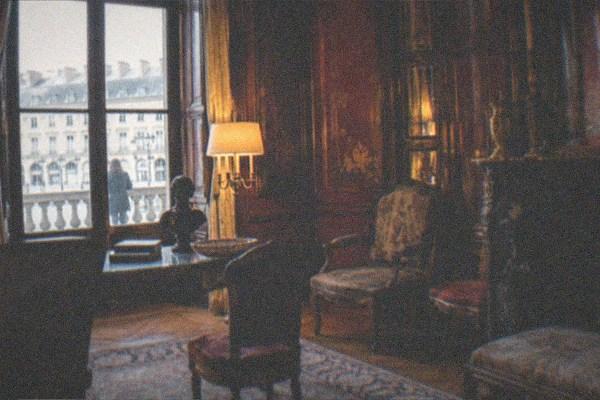
4e arrondissement · Hugo's own apartment on the Place des Vosges, with the Chinese salon he designed for Juliette Drouet.
The writer's apartment of 1832 to 1848 on the Place des Vosges, kept as a museum of his life, work and interiors.
Free entry, no ticket needed.
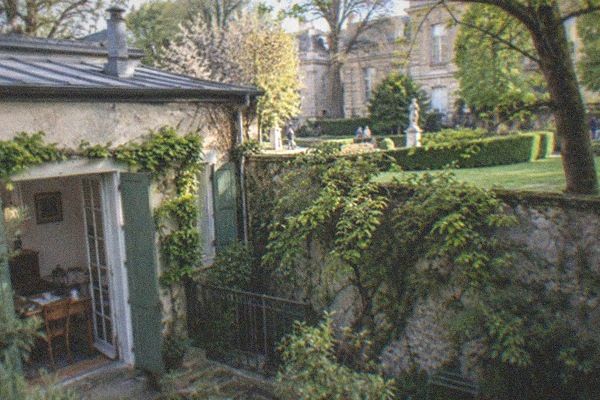
16e arrondissement · The Passy cottage where Balzac wrote and hid from creditors, with a garden over the Seine.
The writer's last Paris house in Passy, where he revised La Comédie humaine, with his study, manuscripts and garden.
Free entry, no ticket needed.