This is Victor Hugo's own apartment on the Place des Vosges, where he lived from 1832 to 1848 and wrote some of his most famous work. Entry to the permanent apartment is free and unticketed. It suits literary readers, architecture lovers, and anyone already wandering the Marais.
What You Actually See Inside
The visit is a walk through Hugo's real apartment on the Place des Vosges, kept as a museum of his life, work, and interiors from his 1832 to 1848 years there. The single most famous room is the Chinese salon, a red and gold drawing room Hugo designed for Juliette Drouet, who lived with him for much of that period.
Hugo moved into 6 place des Vosges, then called place Royale, in October 1832, shortly after the enormous success of Notre-Dame de Paris. He was thirty and already the most famous writer in France. Over the next sixteen years in this apartment he published Le Roi s'amuse, Les Chants du crépuscule, Ruy Blas, and the opening volumes of Les Misérables was taking shape in his head during these years. His daughter Léopoldine drowned in 1843 while the family lived here, and the apartment's rooms are arranged to carry the whole arc of that story: fame, family, grief, and exile that followed in 1851.
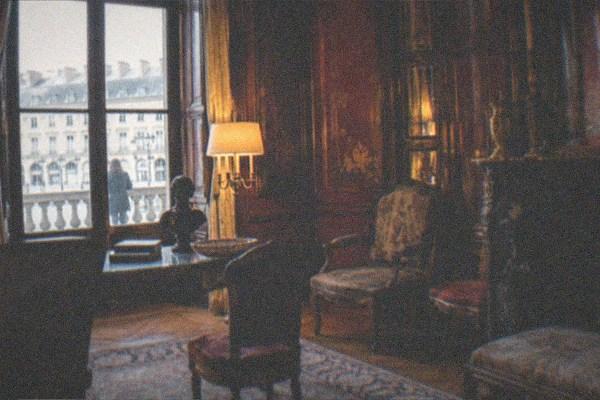
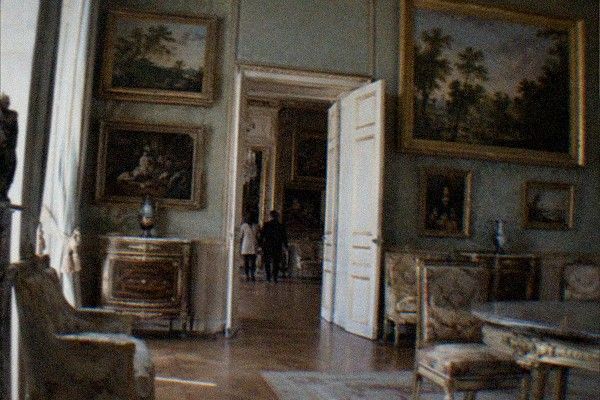
The apartments themselves occupy the second floor of one of the identical brick-and-stone pavilions that frame the square. The rooms are not a reconstruction scattered across generic rooms; the museum displays original furniture that Hugo owned across his life, including pieces designed by Hugo himself, and the interiors follow the sequence of his homes: Paris, then Guernsey in the Channel Islands where he lived in exile under Napoleon III. The drawing room, bedroom, and study spaces are arranged to feel lived in rather than vitrine-heavy, and reviewers consistently say the scale is intimate, more apartment than institution.
The hallmark room is the salon chinois, the Chinese salon. Hugo, never modest about his own talents, drew the furniture himself and created the ensemble for Juliette Drouet's house in Guernsey, and it was later reassembled here. Carved dark wood, lacquer effects in red and black, dragons, and lettering drawn by the writer's own hand cover nearly every surface. It is the one room in the museum that looks like nothing else in Paris, and visitors regularly report it is the image they keep afterward. In addition to the interiors, the museum holds drawings by Hugo, who was a genuinely serious draftsman, and manuscripts, first editions, and personal objects, plus a temporary exhibition space on the first floor which changes programs regularly.
Entry And Tickets: What It Costs
Entry is free to everyone, and normally no ticket is needed at all, with no age condition and no time slot. From 11 June to 22 November 2026, however, the whole museum is ticketed: the exhibition Hugo et l'architecture occupies the house, and the city's own page says entry is paid for that window, permanent collections included. That ticket covers the exhibition plus the apartment, and it is the clearest live example of the exhibition caveat the city itself prints for its museums.
The normal state of this museum is the simplest in the entire city network: walk in, no ticket, no queue for a cashier, no age check, no timed entry. Children and young visitors are free in exactly the same way, with no separate family ticket or youth rate because there is no rate at all. When the permanent apartment shows on its own, nothing in the building costs money.
The exception is happening now. The exhibition Hugo et l'architecture has taken over the house, and the city of Paris has bundled the exhibition and the apartment into a single paid ticket until 22 November 2026. The museum's own practical information page states the current arrangement, and it is exactly the situation the city warns about across its museums: a free permanent collection can become paid when a temporary exhibition occupies it. If the visit matters to you specifically for the free permanent apartment, the safe assumption while an exhibition runs is that you will pay for the combined ticket, and that assumption should be checked against the museum's own page before you travel.
What still costs money, at any time, is the museum shop and anything you buy in the Marais afterward. There is no charge for the building, the rooms, or the permanent collection when it shows alone. There is no premium add-on, no audio guide fee we can verify, and no paid fast track. Compare this with the Musée d'Orsay, a short ride away, where the permanent collection carries a substantial ticket price, and the difference in the two models is immediately obvious: the city runs the Maison de Victor Hugo as a public house museum, priced accordingly.
One practical note on timing your expectations: free here has never meant second-rate. The interiors are among the most personal of any writer's house in Europe, and the free model simply reflects the city's policy for its house museums, not a lesser status compared with the big-ticket monuments such as the Arc de Triomphe.
At A Glance
The Maison de Victor Hugo sits at 6 place des Vosges in the 4th arrondissement, closed every Monday, and a visit to the apartment runs short by museum standards because the space itself is one residential floor. Plan on the morning or late afternoon to catch the square's light, and pair it with the Marais streets around it, which need no ticket either.
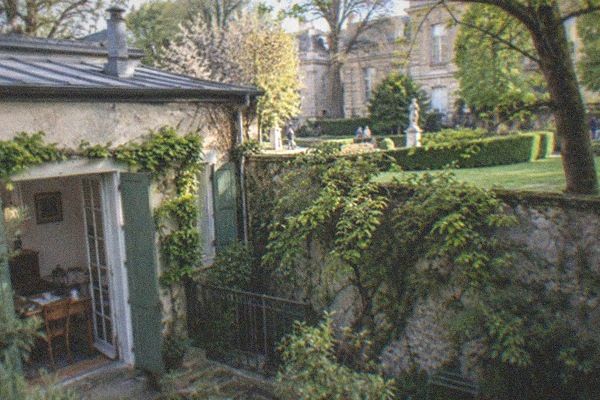
The Place des Vosges is the oldest planned square in Paris, built in the early seventeenth century as place Royale, a perfect square of pavilions with steep pitched slate roofs and covered arcades running beneath all four sides. Hugo's apartment looks over this square from the second floor of the Hôtel de Rohan-Guéméné pavilion. Even before you enter, the building delivers: the arcades, the gravel lawn in the center, and the fountains are the frame for the visit, and the square itself is one of the most photographed places in the city for good reason.
Because the visit itself is compact, it fits easily into a half-day Marais walk. Visitors regularly report spending under an hour on the apartment when no exhibition is running, longer when one is. That makes it the opposite of a full-day institution such as the Musée Jacquemart-André, which demands a longer block for its rooms and its café, or the Palais Garnier across the river. This is a stop, a very good one, not an expedition.
How Long To Allow And When To Go
Allow a short visit for the apartment on its own, longer if a temporary exhibition is running, and go whenever the Marais suits you, avoiding Mondays since the museum is closed every Monday without exception. Weekend afternoons bring the biggest crowds to the square; weekday mornings are the calmest pairing of light and quiet.
The rhythm of the visit is determined by the building. One residential floor holds the sequence of rooms, and you move through it as Hugo's guests would have, room by room, ending at the Chinese salon or pausing longest there. Readers who know Les Misérables or Hernani tend to move slower, reading the manuscripts and letters. Visitors without a strong Hugo attachment still report the interiors carry the visit, because the furniture, drawings, and the salon chinois reward looking even without literary context.
Season matters less here than for the big institutions. The apartment is indoors, the square is small, and the arcades give you covered walking on rainy days. The square's light is at its best in the morning and in the later afternoon, when low sun hits the red brick of the pavilions, and the whole Place des Vosges photographs the way the postcards promise. Midday brings tour groups into the Marais generally, and the museum shares their arrival, so the difference between eleven in the morning and three in the afternoon can be the difference between a quiet apartment and a full one.
Since entry is normally free with no ticket, there is no timed-slot pressure and no need to plan around a booking window. That freedom is the museum's best practical feature: it slots into a day without commanding it. If you are building a literary Paris circuit, this stop pairs naturally with walks past the Panthéon, where Hugo is buried, and the Hôtel des Invalides area is a longer hop but rewards the trip if your day has room.
Know Before You Go
The museum stands at 6 place des Vosges in the 4th arrondissement, at coordinates 48.8548, 2.36614, closed every Monday. Arrive by Metro to the nearby Marais stations and enter from the square through the arcade, then take the staircase up to the second floor. Check the museum's own practical information page before traveling, because the current exhibition ticketing changes the usual walk-in routine.
The nearest Métro stations sit a few minutes' walk away in the Marais: the Bastille and Saint-Paul stops on line 1, and Chemin Vert on line 8, all serving the surrounding neighborhood, and the Châtelet–Les Halles RER hub is a longer walk through the Marais streets. The RATP network covers all of it, and its own journey planner at ratp.fr gives current line status. Bus lines also run along rue de Rivoli, one block north, which is the practical drop-off corridor for the whole quarter. Anyone staying anywhere central, including near the Palais Garnier or the grands boulevards, can reach the square in a short ride or a flat walk along the Seine's right bank.
Accessibility is the weak point of nearly every historic house museum in Paris, and a 17th-century apartment building with an original staircase is no exception. The museum's own practical information page carries the current accessibility arrangements, and we will not print specifics beyond that because the verified details are not ours to guess. The same caution applies to bag rules and cloakroom policy: historic floor plans change what can be stored on site, so treat the official page as the source of truth for the visit day, and expect a compact residential space rather than a grand lobby with full services.
Photography rules in city house museums generally permit non-flash photography, but flash and tripods are usually excluded in rooms with works on paper, and the apartment holds manuscripts and drawings that are light-sensitive. The square outside has no such limits and is one of the most pleasant places in Paris to linger with a camera. Group visits and school groups use the same free regime as everyone else when the permanent apartment runs on its own.
What To Pair It With Nearby
The Maison de Victor Hugo sits inside the Marais, so the pairing is not a detour but the neighborhood itself: the arcades of the Place des Vosges, the Place de la Bastille to the east, the boutiques and courtyards around rue des Francs-Bourgeois, and the Musée Carnavalet a few streets away, the city's own museum of Paris history. Everything on this list is within a ten-minute walk except the cross-river stops.
Start in the square itself. The four arcades of the Place des Vosges hold galleries, wine bars, and a scattering of cafés under stone vaults, and the corner pavilions anchor the square's symmetry. Rue des Francs-Bourgeois runs west from the square and carries the Marais shopping crowd on weekends, while rue de Turenne and rue de Bretagne carry the quieter local version of the neighborhood a block further. The Musée Carnavalet, the museum of the city of Paris itself, is two streets away and also operates under the city's house museum model, which makes it the most natural single pairing with this visit if your day has room for two free interiors and one long lunch.
For a grander second stop, the Marais sits directly across the Seine from the Île de la Cité, so Notre-Dame's exterior and the Conciergerie are a short walk across Pont Marie, and the Sainte-Chapelle is within the same visit block. Anyone with a full day can cross to the left bank from there and reach the Musée d'Orsay via a riverbank walk or a quick Métro ride. For a smaller, richer interior closer to hand, the Musée Jacquemart-André is a modest ride west and delivers a fully furnished aristocratic hôtel with its famous tearoom, a longer visit but a rewarding one for people who loved the intimacy of Hugo's apartment and want a second helping of it.
The honest closing advice is to protect time for the square itself. Visitors regularly report that the hour spent inside is matched by the hour spent outside, and the apartment's balcony-level windows, where Hugo wrote standing at his desk, look over exactly the same roofs he saw. The square he described in his letters is the square you stand in, changed very little. Few literary sites in Europe can say that.
Questions People Ask
Is The Maison de Victor Hugo Free?
Yes, entry is free to everyone, no ticket needed, whenever the permanent apartment is showing on its own. Right now, however, a temporary exhibition occupies the apartment and the city sells the exhibition and apartment together as one paid ticket, which is the clearest live example of the city's own exhibition caveat.
Do Children Need A Ticket?
No. Children and young visitors are free with no ticket and no age condition whenever the permanent apartment is showing on its own. The free regime applies to everyone, so there is no separate youth or family rate to arrange. During the current ticketed exhibition period, the combined ticket applies to all visitors.
Where Exactly Is The Museum?
The Maison de Victor Hugo is at 6 place des Vosges, Paris, France, in the 4th arrondissement, at coordinates 48.8548, 2.36614. It occupies the second floor of one of the square's historic pavilions, the apartment where Hugo lived from 1832 to 1848.
When Is The Museum Closed?
The museum is closed every Monday. Plan around that day regardless of season. The surrounding Place des Vosges and its arcades remain open and walkable, but the apartment itself is shut on Mondays.
What Is The Most Famous Room Inside?
The Chinese salon, the salon chinois, is the hallmark of the house. Hugo designed it himself for Juliette Drouet, drawing the furniture and covering the surfaces with carved wood, lacquer effects, dragons, and his own lettering. Visitors regularly report it is the single image they remember.
How Long Does A Visit Take?
The permanent apartment is one residential floor, so the visit runs short by museum standards, and visitors regularly report spending under an hour when no exhibition is running. A temporary exhibition adds time. There is also a first-floor exhibition space when a program is on.
Why Is A Normally Free Museum Ticketed Until 22 November 2026?
The exhibition Hugo et l'architecture occupies the house until 22 November 2026, and the city of Paris sells the exhibition and the apartment together as one combined ticket. This is exactly the caveat the city prints for its museums: a free permanent collection becomes paid while a temporary exhibition occupies it. The museum's own practical information page carries the current arrangement.
How Do I Get There By Metro?
Nearby Métro stops in the Marais serve the square within a few minutes' walk, and the RATP journey planner at ratp.fr gives current line status for the route from wherever you are staying. The address is 6 place des Vosges, 4th arrondissement, and you enter through the arcade from the square itself.