Musée d'Orsay holds the world's densest concentration of Impressionist and Post-Impressionist painting inside a former Beaux-Arts railway station on the Left Bank. It suits first-time visitors who want Monet, Van Gogh, Degas and Renoir in one grand, walkable building, and anyone who loves architecture as much as canvases.
What Is The Museum Known For?
Its hallmark is Impressionism at full strength in a converted railway station. The collection holds the largest single body of Impressionist and Post-Impressionist painting in the world, displayed under the great glass barrel vault of the 1900 Gare d'Orsay. Van Gogh, Monet, Degas, Renoir, Cézanne and Manet all hang within a few minutes' walk of one another.
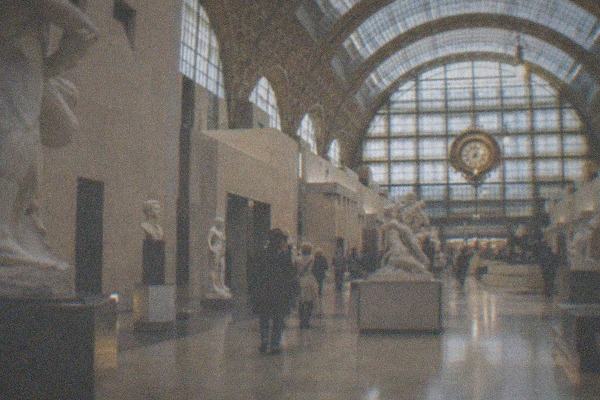
The building is half the experience. What was once a rail terminus, built for the 1900 Exposition Universelle, kept its soaring iron arch, its two giant station clocks and its ornate stone facade. You enter through the former concourse and the whole fifth floor sits behind the glass roof where the hotel once rose. Looking out through the south clock face gives one of the best framed views of Sacré-Cœur in Paris. Reviewers consistently say that even visitors with little patience for museums find the architecture alone worth the trip.
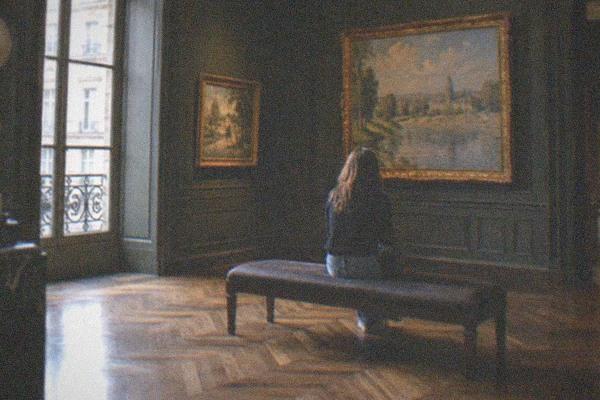
The paintings are arranged roughly by movement and date, so the visit doubles as a walk through the birth of modern art. The ground floor carries the pre-Impressionist academic painters and early Realists, the sort of polished salon canvases the Impressionists rebelled against. The middle levels hold the decorative arts and sculpture, including the famous dancers and animalier bronzes. The upper gallery is where the collection peaks: the rooms of late Monet, the Van Gogh cluster with works from his final Auvers and Saint-Rémy years, the Cézanne still lifes and the small, intense rooms of Signac and Seurat's pointillism.
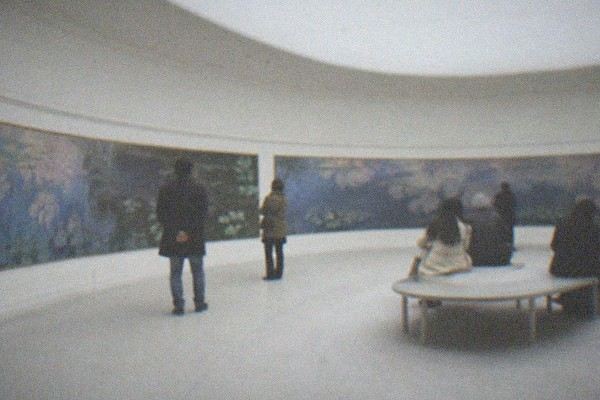
Single works that visitors regularly name as highlights include Manet's Le Déjeuner sur l'herbe, Whistler's Arrangement in Grey and Black No. 1, and Van Gogh's Starry Night Over the Rhône. Do not skip the sculpture promenade along the ground floor, a tree-lined terrace where the marble figures face the Seine. If you want the same artists in a quieter, smaller setting, the Musée de l'Orangerie holds Monet's Water Lilies in two purpose-built oval rooms across the river.
Tickets, Prices And What They Cover
Standard adult admission is €16, and a bookable ticket starts at $15.12. Timed entry is compulsory, which means every visitor needs a slot reserved in advance, whether that ticket is bought online or at the door. Online booking costs €16 against €14 at the museum counter, so the online ticket is the more expensive of the two door-price options.
The museum runs timed entry to spread arrivals across the day, and the system works: the queue outside moves at a set pace rather than surging. The trade-off is simple. Booking online costs €16 and guarantees your slot at your chosen time. Buying at the museum costs €14 but leaves you at the mercy of same-day availability, and on busy days the timed slots can be gone by afternoon. The bookable options that start at $15.12 may include a guide or a timed slot in addition to entry, which is why that figure and the euro door price are different things.
Free entry applies on the first Sunday of every month all year, and even the free slot must be booked. That makes the first Sunday a genuine bargain if you plan early, but a risky gamble if you decide late, because free tickets are the first to disappear. Visitors regularly report that first-Sunday crowds are the heaviest of the month, so weigh the saving against the squeeze.
The bookable ticket carries a rating of 4.7 across 27,881 reviews, which is an unusually strong score for a museum at this volume of visitors. The museum's own page on rates and conditions is the reference for what each category includes, and concessions for young visitors, EU residents under 26 and other groups are listed there. To give a sense of scale for the whole circuit, the Paris Museum Pass covers dozens of state-run sites across the city.
How Long To Allow And When To Go
Allow at least half a day, and a full afternoon is the realistic budget for anyone who wants more than the top-floor highlights. The museum is closed every Monday, so the first planning decision is simply to avoid Mondays entirely. Timed entry means your visit starts when your slot starts, not when you arrive.
A fast pass works like this: go straight to the fifth floor for the Impressionist rooms, spend the bulk of your time there, then descend through the Post-Impressionists on the middle level and finish with the ground-floor promenade. That route covers the essentials in about two hours. A slower visit, one that takes in the sculpture, the decorative arts and the panorama from the clock, fills four hours without strain. Reviewers consistently say the building rewards dawdling, partly because the side galleries off the main hall are where the surprises hide.
Timing matters less than day choice. Weekday mornings, outside French school holidays, are the calmest windows. Weekends and the first Sunday of the month are the busiest. Late afternoon has a secondary advantage: the light through the western clock face turns gold, and the crowds thin toward the last timed slots. Whatever window you pick, book your timed slot before you build the rest of the day around it, since popular morning slots go first.
Pair your timing with the surrounding neighborhood. The 7th arrondissement is a low-rise, cafe-heavy district, and the riverside along the Seine is a short walk with bookstalls and bridge views. Many visitors slot the museum into the morning, lunch near rue Cler, and a walk across the Pont Alexandre III afterward. For a full Monet day, the Fondation Claude Monet at Giverny makes a natural contrast, though it needs a separate day given the distance from central Paris.
Know Before You Go
The museum sits at 1 rue de la Légion d'Honneur in the 7th arrondissement, directly across the Seine from the Louvre. The nearest rail link is the RER C stop named after the museum itself, and the walk from there to the entrance takes under five minutes. Bring a small bag, not a backpack: large luggage will block your entry.
Arriving by Metro, the practical stations are Solférino on line 12 and Assemblée Nationale on line 12, both a short walk away, while the RER C station Musée d'Orsay deposits you almost at the door. Coming from the Right Bank, crossing the Pont Royal or the Passerelle Léopold-Sédar-Sengher turns the approach into part of the outing. The transport operator's own site, RATP, has the current line status and connection detail for every route into the 7th.
Inside, the museum is fully wheelchair accessible, with elevators serving all gallery levels and the upper floors reachable without stairs. The main entrance and the concourse were designed around nineteenth-century circulation, but the modern retrofit has removed the main barriers. Accessible restrooms are on site and loan of wheelchairs can be arranged through the museum's services. Visitors with reduced mobility regularly report that the wide central hall and the terrace layout make this one of the easier big Paris museums to move through, especially compared with the multi-wing palaces on the Right Bank.
On bags and security: all visitors pass through screening at the entrance, and the screening line can itself add ten minutes at peak times. Large suitcases and bulky items are not admitted, and there is a cloakroom for coats and small bags. Photography without flash is generally allowed in the permanent collections, though works on loan and some temporary exhibitions may prohibit it. Food is confined to the museum's own cafe and restaurant spaces rather than the galleries. Practical detail on the building and its history can be cross-checked on the official Musée d'Orsay pages, which carry the current conditions of access.
Who It Suits And Who It Does Not
This museum suits almost every visitor once, and it especially rewards travelers who want the definitive Impressionist hit in a single building. It suits families, first-timers and repeat visitors alike. The people it fits least are those who dislike crowds and timed schedules, because the popularity of the collection means you will rarely have a room to yourself.
For first-time Paris visitors, the case is straightforward. If you see one art museum beyond the Louvre, this is the usual recommendation, and the reason is density: within one former station you get the full arc from academic painting through Impressionism to the Post-Impressionists who set up modern art. The scale is also kinder than the Louvre. Where the Louvre's wings demand map-reading and stamina, the Orsay's layout is a hall with galleries stacked above it, which makes self-guiding simple. The 4.7 rating across 27,881 reviews reflects that accessibility as much as the canvases.
For dedicated art travelers, the museum rewards a second visit with different hours. The temporary exhibition program draws heavily from the French national collections and regularly outperforms expectations, and the sculpture and decorative arts floors are what casual visitors skip. Serious Monet fans should note that the museum is only one corner of the story. The Musée Marmottan Monet holds a deeper single-artist Monet reserve on the edge of the Bois de Boulogne, and the Orangerie's Water Lycles cycles pair directly with what hangs here. Together they form a Monet circuit across the city that repays two or three days rather than one.
Who should manage expectations? Travelers who arrive on a first Sunday without a booked free slot may find nothing left to book, and the free day's crowds are the museum's heaviest. Anyone hoping to wander in spontaneously on a Monday will find the doors closed, every Monday of the year. And visitors with very young children should know the galleries are formal spaces where strolling with a stroller is possible but tight at peak times. None of these are flaws. They are simply the conditions of visiting the most popular art collection on the Left Bank, and knowing them in advance turns a good visit into a great one.
What To Pair It With Nearby
The museum anchors a walkable stretch of the 7th arrondissement that easily fills a full day. The Seine is one block north, the Tuileries are across the river, and the Eiffel Tower lies twenty minutes west on foot. The strongest single pairing is the Musée de l'Orangerie in the Tuileries, a fifteen-minute walk across the Seine, where Monet's Water Lilies hang in two oval rooms built for them.
A classic full-day sequence starts with a morning timed slot at the Orsay, lunch in the 7th around rue Cler or the covered market on rue Saint-Dominique, then a stroll across the Pont Royal into the Tuileries gardens and the Orangerie for the afternoon. The two museums are intellectual twins: the Orsay shows how Impressionism began, the Orangerie shows where Monet's late work arrived. Buying both timed slots in advance, morning for one and afternoon for the other, is the pattern experienced visitors use to avoid backtracking.
Head west instead and the walk along the quay passes the Assemblée Nationale and the Invalides, with the Eiffel Tower at the end of roughly a half-hour stroll. Golden hour on the Champ de Mars, then dinner back in the 7th, makes a day that balances one intense museum visit with the Paris most people picture. The Arc de Triomphe is a longer hop from here but combines well on a separate day with a Right Bank itinerary, since its rooftop gives the panorama the Orsay's clocks only frame in slices.
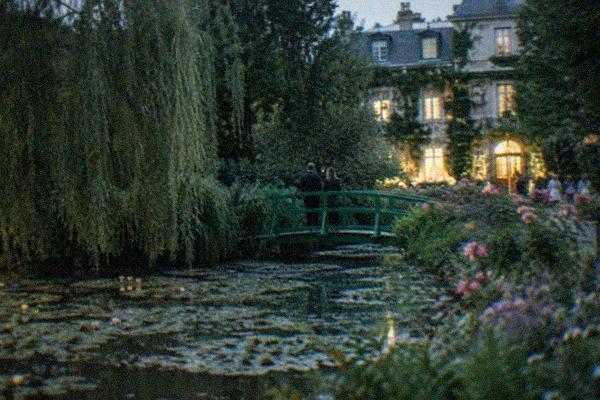
Closer still, the immediate blocks hold smaller draws: the rue de Bac antiques dealers, the Bon Marché department store a little further into the 7th, and the riverside bouquiniste stalls between the museum and the Louvre. The neighborhood is quieter in the evening than the Marais or Saint-Germain, which suits visitors who want a calm dinner after a crowded gallery morning. As day-trip extensions go, Giverny is the one that pairs conceptually, a garden an hour out of the city where the paintings on the fifth floor were grown rather than merely imagined, best treated as its own expedition rather than a bolt-on.
Questions People Ask
How Much Does Musée d'Orsay Cost?
Standard adult admission is €16. The online ticket costs €16 while buying at the museum counter costs €14, so the online option is the more expensive of the two. Bookable tickets start at $15.12 and may include a guide or a timed slot in addition to entry.
When Is Musée d'Orsay Free?
The museum is free on the first Sunday of every month, all year. The free slot has to be booked, so plan early. Free Sundays draw the month's heaviest crowds, and visitors regularly report that free tickets are the first to sell out.
Is Musée d'Orsay Closed Any Day Of The Week?
Yes. The museum is closed every Monday, all year. Build your itinerary around that: a Monday arrival in Paris means the Orsay has to wait until Tuesday or later, and timed slots for the following morning go quickly.
Do I Need A Timed Entry Slot?
Yes, timed entry is compulsory for every visitor. Whether you book online at €16 or at the counter at €14, you are assigned a slot. The system keeps queues moving at a steady pace, but popular morning slots go first.
How Long Should I Spend At Musée d'Orsay?
Allow half a day. A fast pass through the fifth-floor Impressionist rooms takes about two hours, while a visit covering the sculpture, decorative arts and the clock views fills four hours without strain.
What Is The Nearest Station To The Museum?
The museum sits at 1 rue de la Légion d'Honneur in the 7th arrondissement. The RER C stop Musée d'Orsay sits almost at the door, and the walk from the platform to the entrance takes under five minutes. Metro line 12 serves the area a short walk away.
How Good Is The Bookable Ticket According To Reviews?
The bookable ticket is rated 4.7 across 27,881 reviews, an unusually strong score for a museum at this volume of visitors. Reviewers consistently praise both the collection and the converted railway station that houses it.
Is The Museum Accessible For Wheelchair Users?
Yes. The museum is wheelchair accessible, with elevators serving all gallery levels and a central hall that requires no stairs. Visitors with reduced mobility regularly report it is one of the easier big Paris museums to move through.