The Palais Garnier is Charles Garnier's opulent 19th-century opera house on Place de l'Opéra, open to daytime visitors as well as ticket-holders for performances. It suits anyone drawn to grand architecture, gilded interiors, and the most famous staircase in Paris. Go prepared: it closes at short notice for rehearsals.
What You Actually See Inside
The Palais Garnier is a working 19th-century opera house, and the one thing to fix in mind before you go is that it has no fixed weekly closed day but shuts at short notice for rehearsals. An unannounced closure can wipe out a morning visit, so it pays to build flexibility into your plans and confirm your timed slot is still running before you leave your hotel.
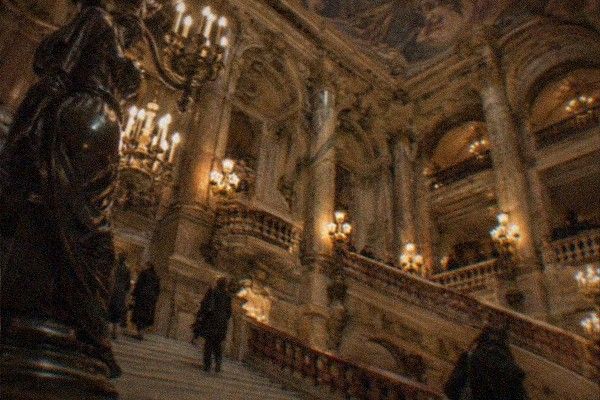
When the building does open its doors, the visit route is built around a sequence of spaces designed to overwhelm, which was precisely Charles Garnier's brief. You enter through the grand vestibule, climb through the pavilion-level staircases, and arrive at the Grand Staircase, a cascade of white marble in green and red onyx that most visitors consider the single most astonishing interior in Paris. The stair was built to see and be seen: it was where Second Empire society displayed its gowns before curtain up, and its scale still stops people mid-step.
From there the self-guided circuit continues through the Grand Foyer and adjoining salons, gilded and mirrored galleries that were conceived as an extension of the stage, a promenade for the interval as much as a corridor. Reviewers consistently say that the foyer alone justifies the ticket, with its ceiling frescoes, chandeliers, and windows framing the avenue toward the Louvre. Smaller rooms along the route include the rotunda under the domed ceiling painted by Marc Chagall, a modern counterpoint to the 19th-century fabric around it, and the museum gallery devoted to the history of the opera and its ballet, with scale models of stage machinery, costume design, and set sketches spanning a century and a half of productions.
Whether you see the auditorium itself depends on the day. When no rehearsal or technical work fills it, the doors open onto the house, the five-tier horseshoe of red velvet and gilded boxes, and the eight-ton bronze and crystal chandelier suspended above it. When a rehearsal claims the room, the rest of the visit usually continues. That uncertainty is the price of visiting a living theater rather than a museum, and it explains why the short-notice closures are the building's defining quirk rather than a fault. Visitors regularly report that even a partial visit, foyer and staircase alone, leaves them feeling they got their money's worth.
The library-museum and the façade deserve a mention too. Outside, the exterior is a riot of columns, friezes, and gilded sculpture representing Poetry, Music, and Dance, and the corner pavilions frame the dome of the double rotunda that rises over the stage end of the building. Give the exterior ten minutes before you go in, because the detail rewards it, then step back across Place de l'Opéra to take in the full sweep of the facade.
Tickets, Prices And Entry Routes
Standard adult admission is €25, reduced to €15 for visitors resident in France and the wider EEA, with the €25 rate applying to visitors from outside the EEA. Tickets are sold online only, with no door sales, timed entry is compulsory, and a bookable ticket with a timed slot starts at $29.08.
That pricing structure is unusual among Paris landmarks, and it matters for planning. The reduced €15 rate is not an age or student discount, it is a residence-based rate, so bring the right expectation depending on where you live. The bookable ticket option, rated 4.6 across 19,247 reviews by people who have taken it, covers timed entry to the visitor circuit and, depending on the option, a guide or an escorted slot, which is helpful in a building where signage is thin and the history dense. For anyone who prefers to simply reserve a timed slot in advance rather than watch the official site for release windows, booking ahead is the practical route, and the booking panel on this page handles that in a couple of clicks.
A word on comparing those two numbers. The €25 figure is the euro door price set by the opera house itself. The $29.08 figure is a booking from-price in US dollars for a ticket product that may bundle a guide or a guaranteed timed slot, so it is not the same thing as the door price converted into dollars. Treat them as two different products, one a plain admission, the other a packaged experience. The from-price is the floor of the range, and options above it add content or flexibility.
The official site for visits is the place to check current opening conditions for a specific date, since rehearsal closures are announced there first: the Palais Garnier visitor page on operadeparis.fr. Because entry is timed and there are no door sales, walk-up visits are effectively impossible in high season, and the policy exists partly to manage the crowds the building draws. If your heart is set on a particular morning, lock in a slot early. A final note on performance days: attending a show is a separate purchase entirely, and it is one of the more memorable ways to see the building, because the auditorium lit and full of people is what Garnier designed it for.
How Long To Allow And When To Go
Allow 90 minutes to two hours for the visitor circuit, more if you linger in the Grand Foyer or read the museum gallery displays closely. There is no weekly closed day to plan around, but the building shuts at short notice for rehearsals, so the timing risk here is not the day of the week, it is the rehearsal schedule.
The visit itself is not long by museum standards, but it is dense. The route moves through a handful of spectacular rooms, and most people slow down without meaning to, partly at the Grand Staircase, partly at the foyer windows, and partly at the auditorium rail if it is open. Two hours gives you that unhurried pace plus time in the library-museum, where the scale model of the opera house and the stage machinery displays reward close attention. If you are the type who reads every label, budget the upper end of that range. If you move quickly and the auditorium is closed for rehearsal, you can be out in an hour.
When to go is a question of crowds and light. The building sits at the heart of the 9e arrondissement, steps from the department stores and the Grands Boulevards, so visitor volume tracks the wider Paris rhythm. Midweek mornings tend to be calmer than weekends, and late afternoon entries have the advantage of low sun through the foyer windows, which turns the gilding molten. The trade-off with late slots is the rehearsal risk: technical sessions often begin as the day ends, so an earlier slot slightly reduces the chance your auditorium leg is cut. There is no bad season, though December and the summer holidays bring the thinnest air and the longest lines at security.
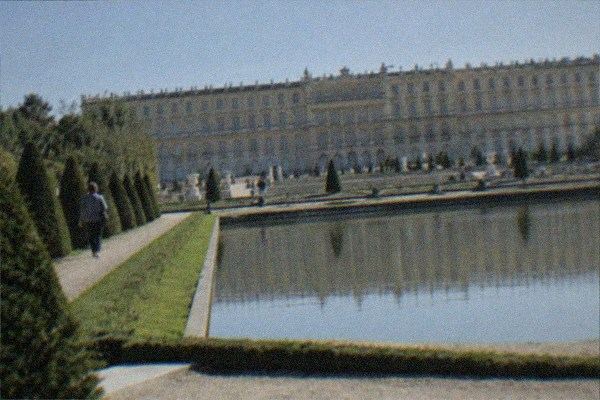
Because the closures are announced at short notice, pair the Palais Garnier with a flexible neighbor rather than making it the sole anchor of your morning. Visitors regularly report that the smart pattern is to book the first timed slot of the day, see the interior in the quiet hours, and then spill out onto Place de l'Opéra mid-morning with the rest of the day ahead. From there the Grands Boulevards stretch east, the Galeries Lafayette dome is a short walk north, and the Louvre is fifteen minutes on foot down the avenue, which makes this an easy building to slot into a route rather than a pilgrimage. For a full day of royal-scale interiors instead, many travelers swap the morning for the Palace of Versailles, though that eats a whole day in a way the Palais Garnier never will.
Know Before You Go
The Palais Garnier is at Place de l'Opéra in the 9e arrondissement, coordinates 48.87209, 2.33233, served directly by the Opéra Metro and RER station. Timed entry is compulsory, tickets are online only with no door sales, there is no weekly closing day, and rehearsal closures can happen at short notice.
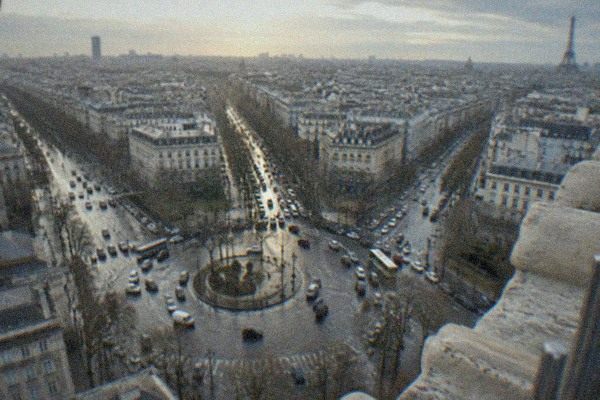
Getting there could hardly be simpler. The Opéra station puts the building at the exit of the Metro's lines 3, 7, and 8 and RER line A, and a dozen bus routes stop on or just off the square. That concentration means the Palais Garnier works as both a destination and a transit point, and many visitors fold it in between other sights precisely because arriving and departing take minutes. The Paris transport operator's own network pages cover the lines in detail: the RATP journey planner will map the route from wherever you are staying. For readers on the Champs-Élysées, it is a direct run down line 8 or RER A from Charles de Gaulle-Étoile, which pairs naturally with a morning at the Arc de Triomphe followed by an afternoon here.
Practical points inside: this is a heritage theater, so expect a security bag check at entry and staircases that are unavoidable on the main route, since the Grand Staircase is the point of the building. The rooms open to visitors are on the pavilion and grand levels, reached by stairs and lifts at the entrance. Big luggage is not welcome in a working theater, so travel light, and note that performance days can alter the visitor circuit even when the daytime visit runs. Photography is generally welcomed in the foyers and on the staircase, though tripods and the usual professional gear will draw attention. There are toilets at visitor level and a gift shop near the exit selling books, scores, and ballet-adjacent souvenirs.
The single most useful habit is checking that your slot is running before you set out, since the rehearsal closures are posted by the opera house on short notice and a cancelled morning visit is not a refund question so much as a rerouting one. Keep a backup in the same arrondissement, the neighborhood around the Palais Garnier is dense enough that a lost hour never becomes a lost day.
What Is Nearby Worth Pairing It With
The Palais Garnier sits in the 9e arrondissement within walking distance of the Grands Boulevards, the department stores, and the church of La Madeleine, with the Louvre roughly fifteen minutes on foot. The strongest pairings are the interiors within a short Metro hop, principally Sainte-Chapelle to the east and the Panthéon on the Left Bank.
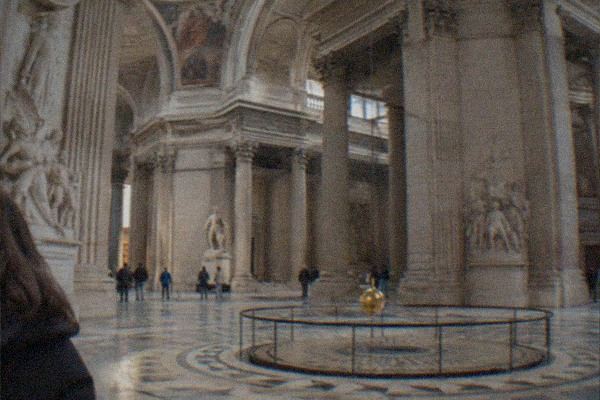
The most natural pairing is Gothic against Baroque. After the gold and mirrors of the Grand Foyer, Sainte-Chapelle delivers the opposite sensory hit, walls of 13th-century stained glass on the Île de la Cité, about twenty minutes away by Metro line 8 and a short walk, or a pleasant forty-minute stroll through the Palais Royal and along the Seine. Doing both in one day gives you two of the most extreme interiors in Europe, one dark and saturated, one blazing and gilded, and travelers who do it in that order often say the contrast makes each building better. The same logic extends to the Panthéon, a neoclassical temple a direct run down line 10 or a riverbank walk away, whose cool stone and Foucault pendulum reset the palate after Garnier's velvet excess.
For a shorter pairing that needs no Metro, the neighborhood itself delivers. The Palais Royal gardens and its striped Buren columns are two minutes east, a calm colonnade of shops and benches ideal for sitting down after the staircase. The Galeries Lafayette and Printemps department stores sit five minutes north, and the view from the Galeries Lafayette rooftop is one of the free thrills of the district, with the Garnier dome itself in the frame. La Madeleine, a Greek-temple church at the head of the Rue Royale, closes a triangle that can be walked in under an hour, though the Cité de la Musique to the northeast and the Musée de la Vie Romantique in the 9e itself are options for anyone wanting a museum afternoon.
For visitors planning a multi-day itinerary around grand interiors, the Palais Garnier slots comfortably into day one, the day that covers the Louvre and the Opéra district. Book the first timed slot of the morning, see the interior in the quiet hours, and by ten o'clock you are on Place de l'Opéra deciding between the department stores, the river, or a coffee on the Grands Boulevards. That flexibility is the quiet advantage of this building: unlike a destination on the city's edge, it never eats a day, it never requires a train, and its neighborhood is worth the price of the detour on its own.
Who The Palais Garnier Suits And Who It Does Not
The Palais Garnier suits architecture lovers, anyone captivated by gilded 19th-century interiors, and visitors who want a short, concentrated dose of grandeur rather than a full museum day. It suits families with school-age children well, but it suits poorly anyone who needs a guaranteed itinerary, because rehearsal closures can cancel a visit on short notice.
Start with who thrives here. If your favorite moments in Paris are the ones that stop you mid-stride, the Garnier delivers that in the first five minutes, because the Grand Staircase does not build up, it simply arrives. Ballet and opera fans get an extra layer, since the building is the historical home of the Paris Opera Ballet and the museum gallery traces that lineage through designs and models. Photography-minded visitors consistently rate the foyers among the best interior shots in the city, provided you arrive before the crowds stack up on the staircase rail. And anyone with limited time in Paris, say one or two days, gets an unusually high return per minute here: the visit is short, the transport is trivial, and the payoff is immediate.
Who should temper expectations. If you want a full museum with hundreds of rooms and hours of collection, this is a 90-minute building, not a museum in that sense. If the auditorium matters to you specifically, accept that a rehearsal may close it, and if seeing it lit and full is the real goal, the answer is a performance ticket rather than a daytime visit. Visitors who dislike crowds should avoid weekends and holiday afternoons, when the foyer can feel like a rail platform. And anyone for whom a fixed, immovable itinerary is important should either book the first slot of the day, when cancellation risk is lowest, or accept the possibility of a reroute. The 4.6 rating across 19,247 reviews for the bookable ticket suggests most people leave delighted, but the reviews also carry the occasional complaint about a closed auditorium, which is the same caveat wearing different words.
Finally, a word on expectations versus the famous phantom. The building carries the weight of its literary afterlife, and some visitors arrive expecting a haunted labyrinth. What you get instead is a state instrument of 19th-century prestige, marble, onyx, gilded bronze, and Chagall's ceiling, all of it built to flatter an empire and now open, most days, to anyone with a timed ticket. Children usually love the sheer scale, the bronze and crystal chandelier above the auditorium, and the model of the stage machinery, and the visit is short enough to hold their attention. Come for the staircase, stay for the foyer, and leave by the Boulevard des Capucines with the sense that you have seen the one Paris interior that even its rivals envy.
Questions People Ask
How Much Does A Palais Garnier Ticket Cost?
Standard adult admission is €25. Visitors resident in France and the wider EEA pay a reduced rate of €15, while visitors from outside the EEA pay the €25 standard rate. Tickets are sold online only, with no door sales, and a bookable timed ticket starts at $29.08.
Is The Palais Garnier Closed On Mondays?
No. The building has no weekly closed day at all, which is unusual for a Paris landmark. The closure risk here is different: it shuts at short notice for rehearsals, so the day of the week matters far less than the rehearsal schedule on your chosen date.
Do I Need To Book A Timed Entry Slot?
Yes, timed entry is compulsory, and tickets are sold online only with no door sales, so there is no walk-up option. Booking a slot in advance is the practical way to visit, and the booking panel on this page lets you do that quickly.
How Long Does A Visit To The Palais Garnier Take?
Allow 90 minutes to two hours for the visitor circuit, including the Grand Staircase, the Grand Foyer, the Chagall ceiling rotunda, and the library-museum. Fast movers can be out in an hour, especially if the auditorium is closed for a rehearsal.
How Do I Get To The Palais Garnier?
The building sits at Place de l'Opéra in the 9e arrondissement, coordinates 48.87209, 2.33233. The Opéra Metro and RER station serves it directly, with several bus routes stopping on or near the square, so arrival takes minutes from almost anywhere in central Paris.
What Is The Palais Garnier Known For?
It is Charles Garnier's opulent 19th-century opera house, known for the Grand Staircase, the gilded Grand Foyer, and the auditorium beneath its bronze and crystal chandelier. Among visitors it is equally known for having no fixed closed day but shutting at short notice for rehearsals.
Will I Definitely See The Auditorium?
Not necessarily. The auditorium is open on the visitor route when no rehearsal or technical session claims it, but the building shuts rooms at short notice. The rest of the visit, including the staircase and the foyer, usually continues even when the auditorium is closed.
Is The Bookable Palais Garnier Ticket Good Value?
The bookable timed ticket is rated 4.6 across 19,247 reviews, and it starts at $29.08. Depending on the option it may include a guide or a timed slot. It is a booking from-price in US dollars, distinct from the €25 euro door price set by the opera house itself.