Musée du quai Branly is Paris's museum of non-Western arts and cultures, holding collections from Africa, Asia, Oceania and the Americas in a Jean Nouvel building beside the Seine. It suits travelers who want something distinct from the classic painting museums and have half a day free.
What You Actually See Inside
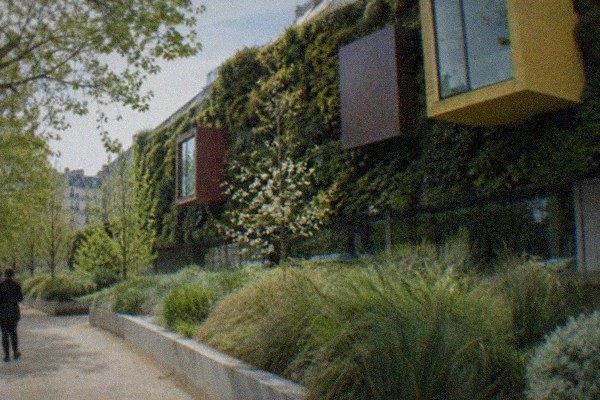
The museum displays the arts and civilizations of Africa, Asia, Oceania and the Americas inside a single Jean Nouvel building whose exterior is partly covered by a living green wall. Around 3,500 objects are on show at any time, drawn from a collection several times that size, and the display philosophy favors density and context over sparse minimalism.
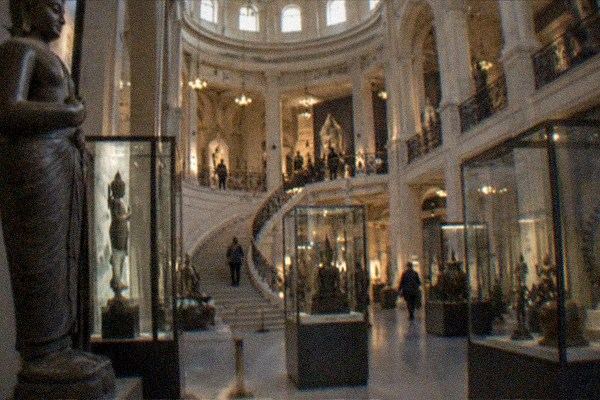
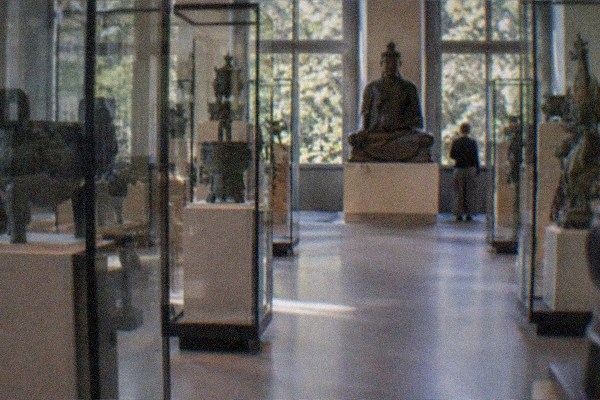
The building itself is the first thing you notice. Nouvel set the main galleries on stilts, half-hidden behind trees, with a 200-meter planted wall facing the quay. Inside, the visitor route is a long, gently sloping ramp that curls through the building like a river, an intentional reference to the collections' origins along the world's waterways. Objects sit in the semi-dark, lit individually, which gives the African masks, Kota reliquary figures and Sepik River carvings an intimacy that bright white-box galleries rarely manage.
The four geographic zones, Africa, Asia, Oceania and the Americas, are not isolated rooms but overlapping territories, and the route encourages wandering between them. The African collection is widely considered among the most important anywhere, spanning West and Central African sculpture, textiles and regalia. The Oceania section carries major assemblages from Papua New Guinea and the Pacific islands. Reviewers consistently say the density of the displays rewards slow looking, and that two hours disappears quickly.
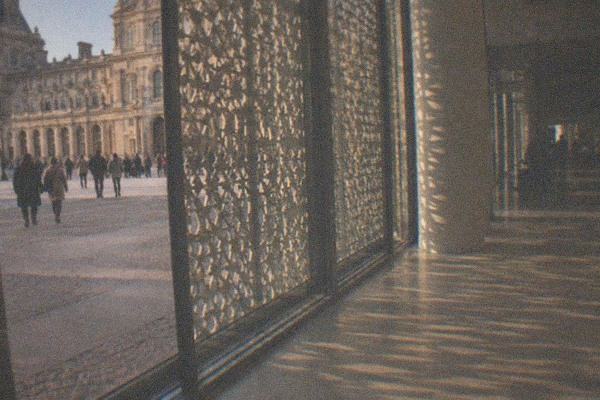
A tall glass wall at the river end looks straight toward the Eiffel Tower, one of the more photographed interior views in Paris. Temporary exhibitions occupy a dedicated suite and regularly draw crowds for shows on specific cultures, contemporary indigenous artists or thematic subjects such as tattooing or jazz. Visitors regularly report that the special exhibitions are worth checking before booking, since they change the shape of a visit considerably.
Who does it suit? Anyone interested in world cultures, ethnography, sculpture or textiles, and anyone museum-fatigued by European painting. It is less suited to visitors who only want Impressionist canvases, and families with very young children may find the low lighting and contemplative mood a harder sell than, say, a natural history museum. Still, the building, the green wall and the tower view make it rewarding even for people who rarely choose museums.
Tickets, Prices And What They Cover
Standard adult admission is €14, which covers the permanent and temporary collections. Entry is timed, meaning you choose or are assigned a slot and arrive within it. The bookable ticket carries a 4.6 rating across 3,401 reviews. The museum is free on the first Sunday of every month, permanent and temporary collections alike.
The €14 door price is the museum's own figure, and it is matched at €14 on the resale channel this directory points to, so there is no premium for booking ahead. Why book at all then? Because timed entry is compulsory and capacity is managed by slot. On busy days, and especially during headline temporary exhibitions, walking up can mean a long wait for the next available slot or none at all. A pre-booked slot converts an uncertain queue into a schedule.
The free first Sunday is the single best value in this museum's calendar, but it draws proportionate crowds, so expect fuller galleries and a slower circuit. Timed entry still applies even on free days in practice, so the practical difference is the price, not the procedure. If your dates are flexible and your budget is tight, anchoring a Paris trip around first Sundays, and combining this museum with others that run the same policy, is a legitimate strategy.
For context, the €14 sits in the same range as the city's heavyweight museums. A visit to the Musée d'Orsay costs a similar amount, as does entry to the Arc de Triomphe, so a two-museum day in this part of the world adds up fast. Booking the Branly in advance keeps the rest of the day predictable.
How Long To Allow And When To Go
Allow two to three hours for a real visit, longer if a temporary exhibition catches you. The museum is closed every Monday. Because entry is timed, your slot fixes your start time, so plan the rest of your day around it rather than the reverse.
The permanent collection alone justifies two unhurried hours. The ramp route is roughly a third of a kilometer end to end, but the object density means you will stop constantly. A temporary exhibition adds 45 minutes to an hour. Visitors who report finishing in 90 minutes generally skipped the Asian and Americas sections or moved quickly through Oceania, which most reviewers say is a mistake.
Timing within the week matters more than timing within the day. Avoid Monday, obviously, since the museum is closed. Weekday mornings tend to be calmer, and late afternoon slots benefit from the low sun hitting the glass wall facing the Eiffel Tower. Free first Sundays are the busiest days of the month by a wide margin, so treat them as a trade: money saved against crowds absorbed.
Season matters too. Summer brings tourist peaks and long waits for popular slots. Autumn and late winter are quieter, and they coincide with some of the museum's strongest temporary exhibitions, which historically launch in shoulder season. If you are pairing the Branly with the Eiffel Tower, which stands a short walk away, book the museum for the morning and the tower for the afternoon, or the reverse; the two share the same transport connections and the same crowds, so staggering them helps.
One practical note on pacing: the museum's semi-dark galleries and continuous gentle slope are less tiring than stair-heavy museums like the Palais Garnier, but the density is mentally demanding. Build in a break. The museum has a café and a garden that can be enjoyed without a ticket, which makes a natural midpoint. Reviewers consistently say the garden is an underrated place to sit and reset before a second pass through whichever section grabbed you most.
Know Before You Go
The museum sits at 37 quai Branly, in the 7th arrondissement, on the Left Bank of the Seine. It is closed every Monday, entry is by timed slot, and standard adult admission is €14. The nearest river crossing and Metro stations make it reachable from most of central Paris in well under half an hour.
The immediate setting is one of the museum's assets. It occupies the ground between the Seine and the Eiffel Tower's Champ de Mars, so most visitors arrive as part of a riverside walk rather than a dedicated trip. The green wall faces the quay directly, and the museum's own official site describes the garden running beneath the building as publicly accessible, which means you can preview the architecture before committing to a ticket.
Arrival logistics: the museum is a short walk from the Pont de l'Alma crossing, and Metro line 9's Alma-Marceau station sits just across the river, reachable by footbridge. Lines 6 and 8 also serve the wider area around Bir-Hakeim and La Motte-Picquet to the west. The transport operator's own RATP network pages are the reliable place to confirm service changes before you travel, since weekend engineering works shift station access more often than museum schedules move.
Accessibility is better than the building's odd silhouette suggests. The ramp-based visitor route was designed as the primary circulation, so the main collection path is step-free for its entire length. Check the museum's site for current details on wheelchair loans and companion entry policies before assuming specifics. Large bags are a poor idea anywhere in central Paris museums; lockers exist but space is finite on free Sundays. Photography without flash is generally accepted in the permanent galleries, though rules around temporary exhibitions vary, so confirm on arrival if images matter to you.
What Is Nearby Worth Pairing It With
The Eiffel Tower is the obvious pairing, a short walk along the same quay, but the stronger double bill for culture-focused travelers is Musée du quai Branly in the morning followed by the Seine-side walk east toward the Invalides and, with a Metro hop, the Musée d'Orsay. The 7th arrondissement is dense enough to fill a full day without repeating a theme.
Start with geography. The museum's front door faces the river, and the Champ de Mars lawn begins roughly ten minutes upstream. If you have tower tickets, or plan to visit the Arc de Triomphe the same day for its aerial view down the axis, sequence the Branly first while your attention is fresh. Tower crowds build through the afternoon, and the museum's low-lit galleries reward morning energy.
The art-lover's pairing is different. The Branly covers Africa, Asia, Oceania and the Americas; the Musée d'Orsay covers the nineteenth-century European canon. They are complementary rather than competing, and the two museums are connected by a pleasant stretch of riverside walking plus a short Metro ride. Doing both in one day is ambitious but feasible if the Branly gets two hours and Orsay gets three, with lunch between.
For a grander day trip, the Palace of Versailles is a half-day-plus excursion reachable from this side of the city, and travelers sometimes book the Branly for late afternoon on the day before a Versailles morning. That ordering leaves Versailles the fresher legs, which its gardens demand.
Closer to hand, the stretch between the museum and the Alma bridge carries its share of unremarkable tourist restaurants, so walk one block inland toward rue Saint-Dominique or rue de l'Université for better food. The Musée de l'Armée at Invalides, a 20-minute walk east, suits visitors who want a second museum and do not mind swapping continents for canons. Honestly, the simplest good plan is this: the Branly in the morning, the Champ de Mars and tower in the afternoon, and dinner inland. It keeps everything walkable and gives the day one clear center of gravity.
Is It Worth The Ticket And Who Should Skip It
For most visitors with any curiosity about world cultures, yes. Standard adult admission is €14, the collections span four continents, and the building is an attraction in its own right. The people most likely to be disappointed are those who arrive expecting a conventional fine-arts museum or a family activity center, neither of which this is.
The value case rests on what you cannot see elsewhere in Paris. The Louvre and the Orsay, for all their scale, give you Europe's artistic lineage. The Branly gives you the rest of the planet, and its African and Oceanic holdings are serious by any international standard. At €14, the price per object encountered is arguably the lowest in the city, since the galleries are packed by design rather than curated thin. The bookable ticket's 4.6 rating across 3,401 reviews reflects that consistency: visitors come expecting something different and get it.
The honest caveats. The museum is presentationally unusual, dim, dense and winding, and a minority of visitors find the lighting frustrating for photography or the layout disorienting. It is not an interactive museum, so children wanting buttons and screens will tire before adults do. And the sociopolitical history of these collections, how they arrived in France, is a live debate the museum itself acknowledges through its displays; some visitors come specifically for that conversation, others find it colors the visit in ways they did not anticipate.
Verdict by traveler type. Solo cultural travelers and couples: strong yes. Families with school-age children interested in geography and world history: yes with realistic time expectations, around two hours. Visitors with two days total in Paris and no interest in non-Western art: skip it in favor of the essentials, and do not feel guilty. Everyone else: book a timed slot, go on a non-Monday, aim for a free first Sunday if the calendar cooperates, and give the Oceania section the hour it quietly deserves.
Questions People Ask
How Much Does Musée du quai Branly Cost?
Standard adult admission is €14, covering both the permanent and temporary collections. The same €14 applies to the bookable timed ticket, so booking ahead carries no price premium. Entry is timed and compulsory, so the booking is about securing a slot, not paying less.
When Is Musée du quai Branly Free?
The museum is free on the first Sunday of every month, and the free entry covers the permanent and temporary collections alike. Those Sundays draw the biggest crowds of the month, so expect fuller galleries and plan to arrive around your timed slot.
Is Musée du quai Branly Closed On Any Day?
Yes, the museum is closed every Monday, with no exceptions for holidays listed by the museum. Build your plan around Tuesday through Sunday. If your stay includes a first Sunday, that is the free entry day across all the collections.
How Long Should I Spend At Musée du quai Branly?
Plan on two to three hours. The permanent collection across Africa, Asia, Oceania and the Americas rewards slow looking, and a temporary exhibition adds roughly another hour. Visitors who rush through in 90 minutes generally report missing the sections they later wished they had seen.
Do I Need A Timed Ticket Or Can I Just Walk Up?
Timed entry is compulsory at this museum, so walk-up visits still depend on slot availability. On busy days, especially during popular temporary exhibitions, the next available slot can be late or fully booked. Pre-booking your slot is the reader-service shortcut to a predictable day.
Where Is Musée du quai Branly Located?
The address is 37 quai Branly, Paris, France, in the 7th arrondissement on the Left Bank of the Seine. It stands between the river and the Champ de Mars, a short walk from the Eiffel Tower, with Metro connections at Alma-Marceau just across the river.
What Is Inside Musée du quai Branly?
Arts, cultures and civilizations from Africa, Asia, Oceania and the Americas, presented in a Jean Nouvel building partly covered by a living green wall. The route is a continuous ramp through semi-dark galleries of masks, sculpture, textiles and regalia, with a glass view toward the Eiffel Tower.
How Do I Get To Musée du quai Branly By Metro?
Alma-Marceau, on line 9, sits just across the Seine and connects by footbridge, making it the simplest rail approach. Lines 6 and 8 also serve the wider area to the west. The museum's own site, at quaibranly.fr, and the transport operator's pages carry current service details.