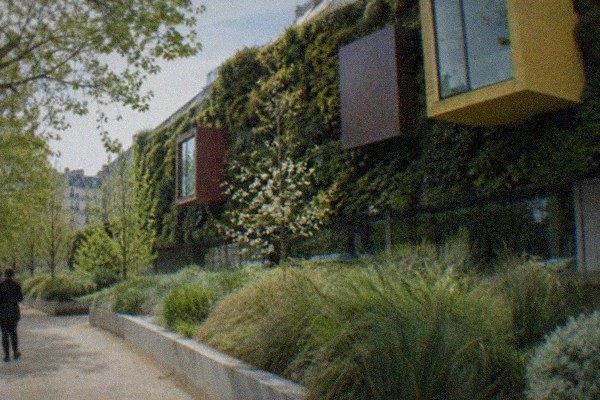
Musée du quai Branly
7e arrondissement · Africa, Asia, Oceania and the Americas in a Jean Nouvel building under a green wall.
Museum of non-Western arts, cultures and civilizations from Africa, Asia, Oceania and the Americas.
Check availability →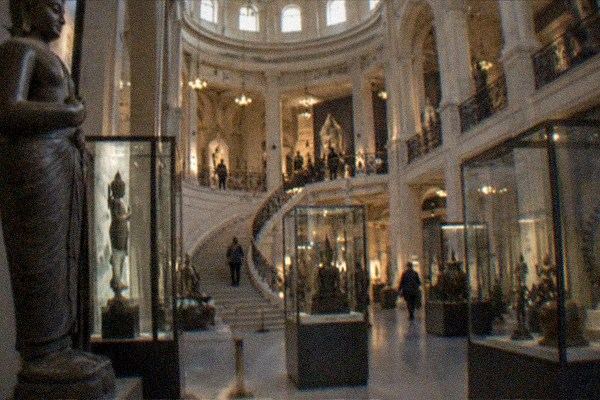
The largest Asian art collection outside Asia. Its annexe, the Musée d'Ennery, is shut until 2028.
Current admission is on the museum's own ticket page.
Official tickets →Opens the museum's own website. Book on the official site; nothing is charged on this page.
Musée Guimet is France's national museum of Asian art, sitting on place d'Iéna in the 16th arrondissement. It holds the largest Asian art collection outside Asia. It suits anyone curious about Indian, Chinese, Japanese, Southeast Asian and Central Asian art, and it charges a modest admission that covers a genuinely deep collection.
It is France's premier museum of Asian arts, founded around a collection assembled by the industrialist Émile Guimet in the late nineteenth century. The building on place d'Iéna, with its distinctive columned facade, holds galleries devoted to India, China, Japan, Southeast Asia and Central Asia. Its hallmark is the largest Asian art collection outside Asia, and that scale is immediately visible in the galleries.
The museum occupies a purpose-built palace from 1889, a tall stone building a short walk from the Seine. The visit unfolds vertically: you move floor by floor through regions and eras, and the rotunda at the top, with its painted ceiling and panoramic views over the roofts, is the architectural centerpiece. The displays range from monumental sculpture to small devotional objects, ceramics, textiles, bronzes and painted scrolls, so the visual register changes constantly as you walk.
The Khmer sculpture from Cambodia and the extensive Chinese ceramics are two of the strongest suits, and the Japanese galleries carry screens, armor and temple sculpture alongside tea-culture objects. The Indian galleries open with large stone sculpture, including works from the Gandhara tradition that blend Indian and Hellenistic styles, which is one of the collection's historically important threads. Central Asian material, including pieces recovered from the Silk Road oasis sites, connects the whole geographic sweep of the museum into a single overland narrative.
Visitors regularly report that the museum is quiet compared with the headline attractions on the Right Bank, which makes it a good choice for people who want to look at objects at length rather than shuffle through a crowd. Reviewers consistently say the collection rewards some preparation: a map of the floors from the entrance desk helps, and the museum's own page at guimet.fr describes current temporary exhibitions if you want to time a visit around one.
Standard adult admission is €15, with a €12 reduced rate, and there are no age-based reductions at all: children and young visitors pay the standard price unless they qualify for the reduced rate. The museum is free the first Sunday of every month, covering both permanent and temporary exhibitions at the Iéna site. You buy directly from the museum's own ticket page; no reseller is involved, and there is no advantage to paying anyone else.
The full-price ticket covers the permanent galleries and the temporary exhibitions, so you do not need a separate ticket for the special shows. The reduced rate at €12 is the only reduced price the museum publishes, and the reduction is based on documented eligibility, not age: there is no child rate, no student rate by age, and no senior rate. Families sometimes assume kids get in cheaply at Paris museums, and here that assumption fails, so plan on the standard price for accompanying adults and teenagers alike.
The first-Sunday rule is the genuinely useful one. It applies every month, without exception, at the main Iéna site, and it includes the temporary exhibitions, which is unusual: many Paris museums restrict free days to permanent collections only. The tradeoff is crowds: first Sundays are busy, and the most popular galleries, especially the Khmer and Japanese rooms, get congested by mid-morning. Arriving near opening or after about 3pm softens that.
Here is the full price picture with what each option covers:
| Entry Route | Price | What It Covers | Notes |
|---|---|---|---|
| Standard adult admission | €15 | Permanent and temporary exhibitions | Museum's own door price |
| Reduced rate | €12 | Permanent and temporary exhibitions | The only reduced price, based on documented eligibility, not age |
| First Sunday of the month | Free | Permanent and temporary exhibitions | At the Iéna site, every month, no exceptions |
Because no reseller sells Musée Guimet tickets, the honest advice is simply to use the museum's own site, guimet.fr, where timed entry can be arranged and where any seasonal changes to the fee schedule would appear. The prices above are the door prices in euro. Nothing about this museum requires advance commitment; walk-up entry is normal on most days.
Allow around two to three hours for a proper visit, longer if a temporary exhibition interests you. The museum is closed every Tuesday, so Wednesday through Monday is your window. Weekday mornings are the calmest stretch, and first Sundays are the busiest because of free entry. The building is tall and the visit involves multiple flights of galleries, so pace yourself rather than trying to see everything.
The collection is broad enough that a single pass cannot do it justice. Many visitors split it: one loop through South and Southeast Asia, a break, then China, Japan and Central Asia. The upper rotunda is a natural midpoint, and the museum café makes the split easy. Two focused hours beat four exhausted ones, especially given that the galleries are dense with small objects, ceramics and bronzes that reward close looking.
Seasonally, the museum is a reliable shoulder-season choice. In peak summer and around school holidays it stays far less pressed than the Louvre or the Eiffel Tower, and reviewers consistently say the galleries remain navigable even in July. Rainy days fill it faster than fine ones, but even then the congestion is relative: this is a museum people reach on purpose, not one they stumble into off a tour bus route.
For an at-a-glance planning picture, here is what is verified and nothing more:
| Detail | Value |
|---|---|
| Closed day | Every Tuesday |
| Free entry | First Sunday of every month, permanent and temporary exhibitions |
| Time to allow | 2 to 3 hours |
| What the ticket includes | Permanent and temporary exhibitions |
| Address | 6 place d'Iéna, Paris, 16e arrondissement |
If you are combining several paid museums in one trip, check whether the Paris Museum Pass covers your itinerary: the Paris Museum Pass official site lists the current covered museums and prices, and for visitors planning four or more major paid sites it can work out cheaper than buying each ticket separately.
The museum sits at 6 place d'Iéna in the 16e arrondissement, at GPS coordinates 48.86538, 2.29359. The nearest Metro station is Iéna on line 9, which stops a short walk from the front steps. It is closed every Tuesday. Admission is €15 full price, €12 reduced, with no age-based discount of any kind, and free the first Sunday of the month.
Line 9 is the practical route for most visitors, and Iéna station emerges almost at the museum's door. Alternatives include walking up from the Alma-Marceau area along the Seine, which takes you past some of the grandest Haussmannian facades in the city, or arriving on the RER C from farther out and crossing the river. The walk from Trocadéro, across the square with the Eiffel Tower behind you, is about fifteen minutes and is a pleasant approach in itself. The Paris transport operator, RATP, runs journey planners covering Metro, RER and bus if you are starting from outside the immediate area.
The building has a stone forecourt and steps at the main entrance. Accessibility provision at Paris museums varies considerably between the nineteenth-century palaces, so if step-free access matters to your group, contact the museum before your visit through its official site rather than assuming. The same applies to large bags: storage space is limited in old buildings, and travelers coming straight from a hotel checkout with full luggage should plan to store bags elsewhere first.
One thing worth flagging for planning: the museum's annexe, the Musée d'Ennery, a few minutes' walk away, is shut until 2028. Some older guidebooks and articles still describe it as visitable, so do not build an itinerary around it. The main Iéna site is the whole of what you can currently see, and it is more than enough for a full visit on its own.
It suits anyone with a genuine interest in Asian art, history or religion, and it rewards visitors who like dense, scholarly collections in quiet rooms. It suits less well travelers who want blockbuster spectacle or who have only one day in Paris and need to triage. At €15, or free on first Sundays, the cost-to-content ratio is excellent for the curious and merely fine for the indifferent.
Fans of sculpture will find the Indian and Khmer galleries the strongest draw: monumental stone deities and temple figures displayed with room to walk around them. Ceramics enthusiasts get one of the great Chinese collections in Europe, arranged chronologically so you can trace technical development across dynasties. People with a specific interest in Buddhism, Hinduism or the Silk Road will find whole galleries speaking directly to them, and the Central Asian material in particular is hard to see at this depth anywhere else in the West.
Families with small children should calibrate expectations. There is no age-based discount, so a family of four pays four full or reduced fares, and the museum's appeal to young kids depends heavily on the child: giant statues and samurai armor fascinate some seven-year-olds and bore others. There is no play area or children's circuit that this directory can verify, so treat it as a looking-museum, not a doing-museum, if you are bringing children.
Visitors regularly report that the museum rewards patience with labels. Many captions carry real historical context, not just titles and dates, so readers get more out of it than skimmers. If your taste runs to Impressionism rather than temple sculpture, you may prefer to spend the same hours at Musée d'Orsay, and there is no shame in that: the two museums sit on opposite sides of the river and attract different temperaments.
The 16e arrondissement around place d'Iéna holds several strong pairings. The Arc de Triomphe is a short Metro or bus ride away, the Musée du quai Branly sits across the river within walking distance, and the Palais Garnier is reachable in about twenty minutes. Pairing one art museum with one monument per day keeps the pace sane and the memory sharp.
The single most natural pairing is Musée du quai Branly, the Quai Branly's collections of art from Africa, Oceania and the Americas, which sits near the Eiffel Tower side of the river. Doing both in one day traces two parallel non-European collecting traditions, and reviewers consistently say the contrast makes each museum more interesting. The walk between them crosses the Pont d'Iéna, with the Eiffel Tower directly ahead, which is one of the better short walks in the city.
The other obvious pairing is the Arc de Triomphe, whose viewing platform offers the axis down the Champs-Élysées. It is a different kind of visit, short and vertical rather than long and horizontal, which makes it a good afternoon complement to a morning in the Guimet galleries. For a full arts day farther east, the Palais Garnier pairs an opulent building with a short visit, and self-guided access is usually quick to arrange.
Do not overlook the immediate street itself. Place d'Iéna is flanked by embassies and mansions, the Trocadéro gardens and the museums of Passy are within a modest walk, and the Seine bank here is one of the calmest stretches in central Paris. If you finish the galleries by early afternoon, the riverside walk toward the Pont de l'Alma is a low-effort way to close the day, and café seating in the 16e is easier to find than in more tourist-saturated districts.
Standard adult admission is €15, and the only reduced price is €12. There is no age-based reduction at all: children and young visitors do not get a cheaper rate. These are the museum's own door prices, and tickets are bought directly from the museum rather than through any reseller.
The museum is free the first Sunday of every month. The free entry covers both the permanent collection and the temporary exhibitions at the Iéna site. It is a standing arrangement rather than a special event, so it applies every month, but first Sundays are noticeably busier than a typical weekday.
Yes, the museum is closed every Tuesday, without exception listed in any published schedule. Plan your visit for Wednesday through Monday. If your trip spans a first Sunday, that is the free-entry day, though it draws larger crowds.
No. There is no age-based reduction at Musée Guimet. The €12 reduced rate is the only reduced price, and it is based on documented eligibility rather than age. Families should budget the standard €15, or €12 where the reduced rate applies, for each visitor.
Plan on two to three hours for the permanent collection, more if a temporary exhibition interests you. The building holds galleries for India, China, Japan, Southeast Asia and Central Asia across multiple floors, so visitors who rush tend to miss the upper rotunda and the Central Asian galleries.
It holds the largest Asian art collection outside Asia, and it is France's premier museum of Asian arts. Its Khmer sculpture, Chinese ceramics and Japanese galleries are particular strengths, and the Central Asian material connects the whole collection through the Silk Road.
No. The Musée d'Ennery, the museum's annexe near the main site, is shut until 2028. Some older guidebooks still list it, but only the main Iéna site at 6 place d'Iéna is currently visitable, and it is a full visit on its own.
Iéna station on Metro line 9 is the nearest stop, a short walk from the museum's entrance at 6 place d'Iéna in the 16e arrondissement. The museum is closed every Tuesday, so plan your Metro journey for a Wednesday through Monday visit.
7e arrondissement · Africa, Asia, Oceania and the Americas in a Jean Nouvel building under a green wall.
Museum of non-Western arts, cultures and civilizations from Africa, Asia, Oceania and the Americas.
Check availability →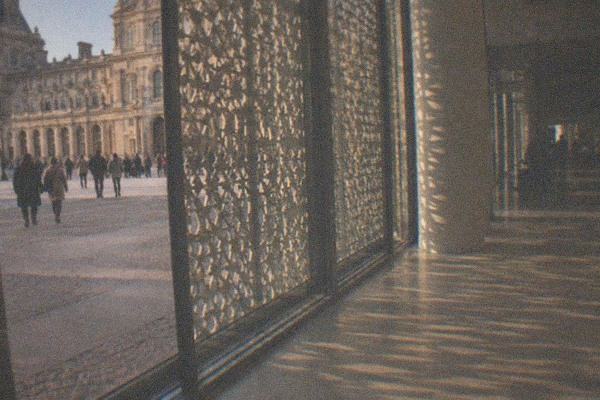
5th arrondissement · Jean Nouvel's photographic-shutter facade, and a free rooftop view over the Seine.
Cultural institute promoting Arab world art, history and contemporary culture with museum and exhibitions.
Official tickets →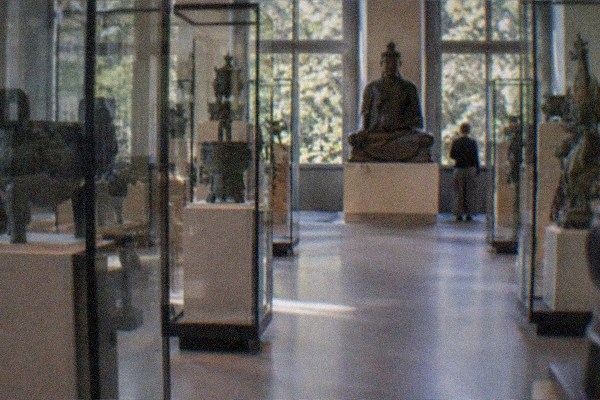
8e arrondissement · Paris's second Asian art museum, on the edge of the Parc Monceau, and nobody queues for it.
Asian art museum built around Henri Cernuschi's Chinese and Japanese collection, beside the Parc Monceau.
Free entry, no ticket needed.