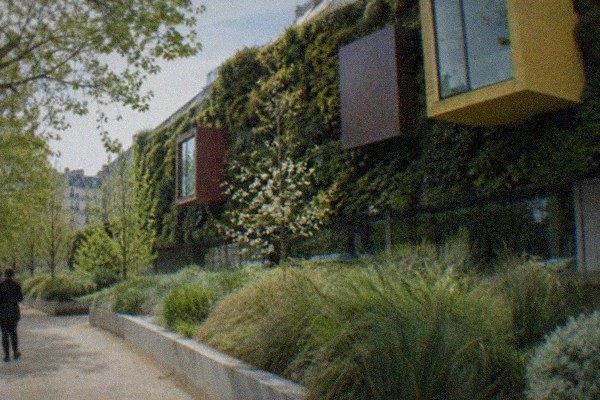
Musée du quai Branly
7e arrondissement · Africa, Asia, Oceania and the Americas in a Jean Nouvel building under a green wall.
Museum of non-Western arts, cultures and civilizations from Africa, Asia, Oceania and the Americas.
Check availability →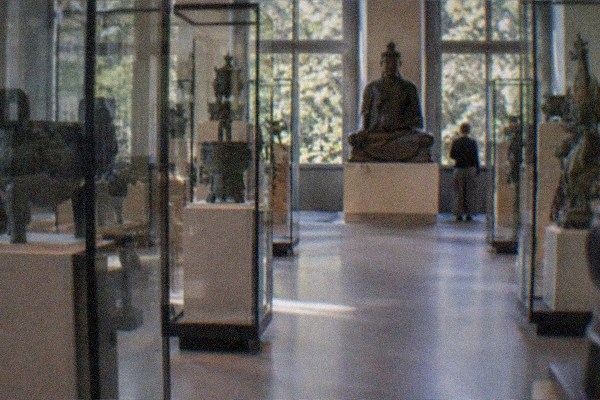
Free entry, no ticket needed.
Paris's second Asian art museum, on the edge of the Parc Monceau, and nobody queues for it.
Plan your visit →Opens the museum's own visitor page. There is nothing to book: the permanent collection is free.
Musée Cernuschi is Paris's Asian art museum, sitting right beside Parc Monceau in the 8e arrondissement. It suits anyone who wants bronzes, Buddhas and Chinese painting without crowds, and it costs nothing to walk in. The only thing you ever pay for is a temporary exhibition.
Built around Henri Cernuschi's own Chinese and Japanese collection, Musée Cernuschi is Paris's second Asian art museum, holding bronzes, Buddhist sculpture, ceramics and funerary art from across East and South Asia. It sits on the edge of the Parc Monceau, and its hallmark is simple: nobody queues for it.
The museum lives in a mansion that Cernuschi, an Italian-born banker and economist, had built to house what he brought back from a long journey through Asia. When he died in 1896 the city inherited the building and its contents, and the collection has grown since with major additions of Chinese art. The ground floor sets the tone immediately with a monumental bronze from Japan, and the central gallery rises through the house so that the largest sculptures read against the architecture rather than in cramped vitrines.
What you actually look at falls into a few families of objects. There are ancient Chinese bronzes, ritual vessels whose patinas run from green to near black. There is Buddhist sculpture in stone, wood and metal, from China but also from Japan, Korea and further along the Buddhist world into India and Southeast Asia. There are ceramics across many dynasties, funerary pieces that were made for tombs rather than display, and a significant holding of Chinese painting. Visitors regularly report that the collection feels coherent rather than encyclopedic: it is one collector's eye plus a century of careful additions, not a warehouse of everything.
The mansion itself is part of the experience. It is a 19th century private house adapted for display, so the visit is a sequence of rooms at human scale, not an endless white hangar. That scale is exactly why the museum suits travelers who found the Musée d'Orsay or the Louvre overwhelming and want a museum they can finish. Reviewers consistently say the same thing: this is one of the few grand museums of Paris you can have nearly to yourself, even in season.
Entry to Musée Cernuschi is free to everyone, no ticket needed, for the permanent collection. There is no age condition and no residency condition: free means free for every visitor. The only thing that costs money is the temporary exhibition program, ticketed at €10.
Let that settle for a second, because it is unusual for Paris. The Musée du quai Branly, the Musée d'Orsay and the Arc de Triomphe all charge standard adult admission, and their queues reflect it. At Musée Cernuschi you walk up, you walk in, and the permanent collection is yours. There is no booking to make, no timed slot to select, and no reason to plan around a price. The museum's own page states the terms plainly, and it is the authority on the details: ticket information on the official Musée Cernuschi site.
The €10 figure applies to the ticketed temporary exhibitions, which the museum mounts several times a year, often drawing on Chinese painting, archaeological loans or contemporary Asian artists. These shows are where the curatorial energy of the place concentrates, and they are the reason some visitors do spend money here. If a temporary exhibition is what brought you, that is the one line item to budget. If you are coming for the bronzes and the Buddhas, budget nothing.
| Entry Route | Price | Who It Applies To | What It Covers |
|---|---|---|---|
| Permanent collection | Free | Everyone, no age condition | The full permanent galleries, no ticket needed |
| Temporary exhibitions | €10 | Visitors who want the shows | The ticketed exhibition program |
One practical note on free museums in general: policies can shift between city institutions, so it never hurts to confirm on the museum's own page before a special trip. But as this guide is written, the position is unambiguous. The permanent collection costs nothing for everyone, and €10 buys the temporary exhibitions. Nothing else here has a price attached to it.
Allow an hour to ninety minutes for the permanent collection at a steady pace, and add time if you are visiting a temporary exhibition. The museum is closed every Monday, so the visiting week runs Tuesday through Sunday, and mornings tend to be the quietest window in any given district museum.
The building is compact, which is the whole point. You are not routing yourself through wings and mezzanines the way you would at the Louvre or at the Musée d'Orsay, where half a day is the honest minimum. Here the floors follow each other, the sequence of rooms makes sense without a map, and a slow visitor reads the collection in about ninety minutes. A fast one can do the highlights in half an hour and still catch the central gallery's big bronzes.
When to go is largely about your week, not your season. Closed every Monday is the one hard constraint. Because entry is free and unticketed, there is no incentive to arrive at opening time for a slot, and in practice the crowd pressure stays low whenever you come. Reviewers consistently describe the galleries as calm even in summer, which is a genuine rarity in this city. If a temporary exhibition is running and heavily covered in the press, expect a touch more traffic on weekends, but nothing comparable to the lines at the Arc de Triomphe or other headline monuments.
The museum sits beside the Parc Monceau, and the pairing shapes the ideal visit more than the clock does. A morning in the galleries followed by a walk through the park's wrought-iron gates and statues is the classic local rhythm, and it works in every season. Rain pushes the plan indoors, which at Musée Cernuschi is no hardship: the park is the interlude, the museum is the destination.
Musée Cernuschi stands at 7 avenue Vélasquez, Paris, in the 8e arrondissement, on the edge of the Parc Monceau. It is closed every Monday. Entry to the permanent collection is free with no ticket, and temporary exhibitions cost €10 on the spot.
The 8e is one of the more elegant corners of the city, a district of grand avenues and embassies a short walk north of the busy department-store strip. The museum's coordinates are 48.87943, 2.31256, which places it directly on the park's northeastern boundary, across from the greenery rather than buried in it. Two mansions in this stretch of the avenue form a small museum cluster: Musée Cernuschi and the Musée Nissim de Camondo face the same stretch of park, which makes the walk between them about one minute.
For transport, the area is served by the Paris Metro network, and the neighborhood around Monceau is covered by several lines and stations within easy walking distance. The city's official transport pages, such as the operator's own site, are the reliable place to plan a specific route from your hotel: the RATP journey planner handles Metro, RER and bus connections across the capital. Coming from central Paris, plan on a straightforward ride plus a pleasant five-minute stroll through the avenues.
Accessibility information and current bag or security policies are the kind of details that change, and the museum's own site is the right authority for them: the official prepare-your-visit pages cover the practicalities directly. As a rule for Paris mansion museums, expect a security check at the door and expect the 19th century architecture to mean some stair-based circulation, so visitors with mobility constraints should read the official accessibility notes before coming. There is no restaurant inside worth planning around; the 8e around the park is full of cafés and brasseries, and the Parc Monceau itself is the best place to decompress afterward.
Musée Cernuschi is an Asian art museum at 7 avenue Vélasquez in the 8e arrondissement, beside the Parc Monceau. Entry to the permanent collection is free for everyone, temporary exhibitions cost €10, and the museum is closed every Monday.
The table below is the whole visit compressed into one view. It uses only the facts this guide can stand behind, which is why you will not find opening hours in it: those belong on the museum's own site, and a printed hour in a directory like this one goes stale fast. What the table does carry is everything you need to decide whether this museum fits your day.
| Detail | Value |
|---|---|
| Address | 7 avenue Vélasquez, Paris, France |
| Arrondissement | 8e |
| Landmark | Edge of the Parc Monceau |
| Collection type | Asian art: Chinese and Japanese core, bronzes, Buddhist sculpture |
| Permanent collection entry | Free, everyone, no ticket |
| Temporary exhibitions | €10 |
| Closed | Every Monday |
| Time to allow | About one hour to ninety minutes for the permanent collection |
| Official site | cernuschi.paris.fr |
Use this as a planning grid rather than a schedule. The one line that matters most is the price line, because free entry changes the math of a Paris museum day entirely. Most itineraries are built around choosing which paid museums to compress into a pass or a budget. Here, the museum costs nothing, which means you can add it to any day without subtracting from another, drop in for twenty minutes if the mood strikes, or come back a second time to look at the bronzes properly. Very few museums of this quality in this city give you that freedom.
The obvious pairing is the Parc Monceau itself, which is directly beside the museum and is one of the prettiest parks in Paris. In the same immediate stretch of avenue sits another mansion museum, and the wider 8e arrondissement puts you within reach of grand department stores and two of the city's landmark monuments.
Start with the park, because it requires no planning at all. Parc Monceau is famous for its follies, a colonnade, a miniature pyramid, a bridge and statues of French cultural figures, all arranged around lawns and mature trees. The classic move is museum first, park after, and the whole loop takes a relaxed morning. The immediate neighbor, the Musée Nissim de Camondo, is a decorative arts house museum in the same avenue Vélasquez stretch, so the two mansions together make a compact double visit without any travel time at all.
From here, the rest of the 8e fans out. South and east of the park lies the Boulevard Haussmann shopping district, and the Palais Garnier sits a short Metro ride away for anyone whose itinerary includes the opera house. Travelers working through the city's major ticketed sights can slot this museum in as the free interlude, and the contrast is the point: after the dense crowds of the Musée du quai Branly on the Seine, with its own strong non-European collections, a quiet mansion of Asian bronzes feels like a different city entirely.
That contrast is worth designing a day around. The Cernuschi collection and the quai Branly overlap thematically, both reaching beyond Europe, but the experience of each is opposite: one is a destination monument with river crowds and paid entry, the other is a neighborhood mansion you can enter on a whim for nothing. For a longer loop, the Arc de Triomphe is west across the 8e and 16e, though it deserves its own morning rather than a rushed add-on. Reviewers regularly report that the best Cernuschi days are the modest ones: galleries, park, a café on an avenue nearby, done.
Yes. Entry to the permanent collection is free to everyone, with no ticket needed. There is no age condition or residency condition. The only paid element is the temporary exhibition program, which is ticketed at €10.
No. The permanent collection requires no ticket at all, so there is nothing to book for a standard visit. If you want to see a temporary exhibition, you pay €10, and the museum's own site states the current ticketing terms for those shows.
Temporary exhibitions at Musée Cernuschi are ticketed at €10. The permanent collection is separate and free to everyone, so if you only want the bronzes and Buddhist sculpture, you pay nothing at all.
This guide does not print daily hours, because those are best taken from the museum's own site rather than a directory. What is confirmed is the closure pattern: the museum is closed every Monday, so plan your visit for Tuesday through Sunday.
The museum is at 7 avenue Vélasquez, Paris, France, in the 8e arrondissement. It sits directly on the edge of the Parc Monceau, one of the most elegant parks in the city, and its coordinates are 48.87943, 2.31256.
Yes, and in the simplest possible way: entry is free for everyone, with no age condition stated. Children pay nothing because everyone pays nothing for the permanent collection, and a ticket is never needed.
Most visitors allow an hour to ninety minutes for the permanent collection at a steady pace. The mansion is compact, so a faster visit is possible, and a temporary exhibition, at €10, adds extra time.
It is Paris's second Asian art museum, built around Henri Cernuschi's Chinese and Japanese collection. The holdings include ancient Chinese bronzes, Buddhist sculpture, ceramics and funerary art, displayed in a 19th century mansion beside the Parc Monceau.
7e arrondissement · Africa, Asia, Oceania and the Americas in a Jean Nouvel building under a green wall.
Museum of non-Western arts, cultures and civilizations from Africa, Asia, Oceania and the Americas.
Check availability →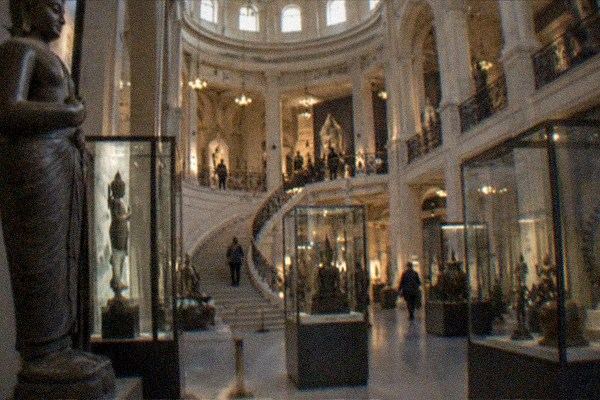
16e arrondissement · The largest Asian art collection outside Asia. Its annexe, the Musée d'Ennery, is shut until 2028.
France's premier museum of Asian arts, with extensive collections from India, China, Japan, Southeast Asia and Central Asia.
Official tickets →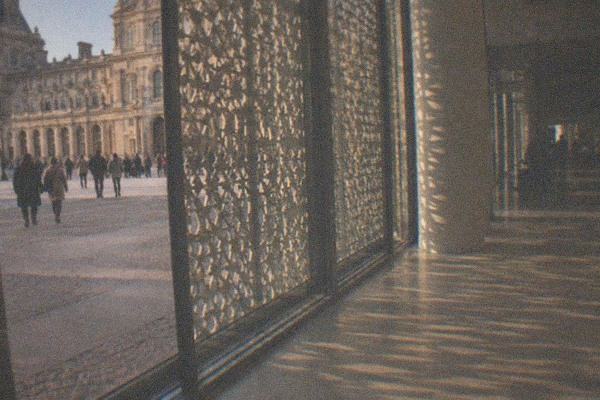
5th arrondissement · Jean Nouvel's photographic-shutter facade, and a free rooftop view over the Seine.
Cultural institute promoting Arab world art, history and contemporary culture with museum and exhibitions.
Official tickets →