Musée Zadkine is the house, studio and sculpture garden of the Russian-born sculptor Ossip Zadkine, tucked behind rue d'Assas in Montparnasse, five minutes from the Luxembourg Gardens. It suits anyone who wants a small, quiet, free museum experience, especially those already exploring the Left Bank.
What Is The Museum Known For?
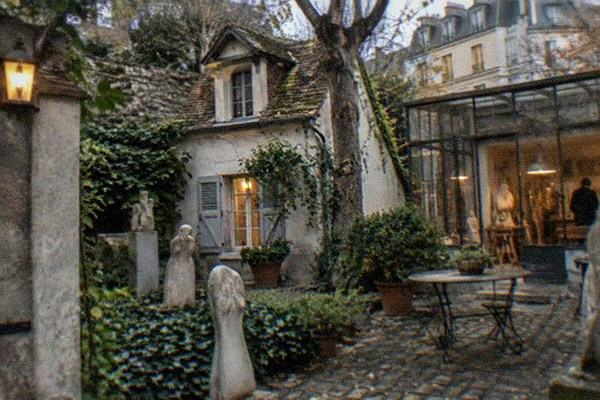
The hallmark is the setting itself: a modest cottage and green garden hidden behind rue d'Assas, where Zadkine lived and worked for decades. The house shows his sculptures, drawings and personal spaces in the rooms where they were made, an intimacy large museums cannot offer. It sits in the 6e arrondissement, five minutes on foot from the Luxembourg Gardens.
Ossip Zadkine arrived in Paris as a young man from Russia and settled in Montparnasse, the neighborhood that by the 1910s had become the center of the avant-garde world. He and his wife, the painter Valentine Prax, moved into the house at 100 bis rue d'Assas in 1928 and stayed for the rest of his life. After his death, Prax donated the house and its contents to the city of Paris on the condition that it become a museum devoted to his work. That is why this place exists at all: it is a bequest honored, not a purpose-built institution.
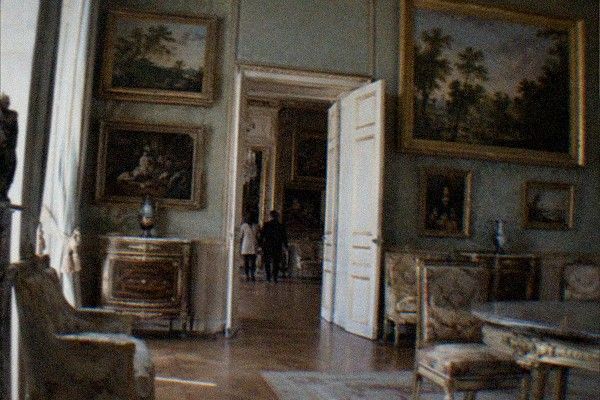
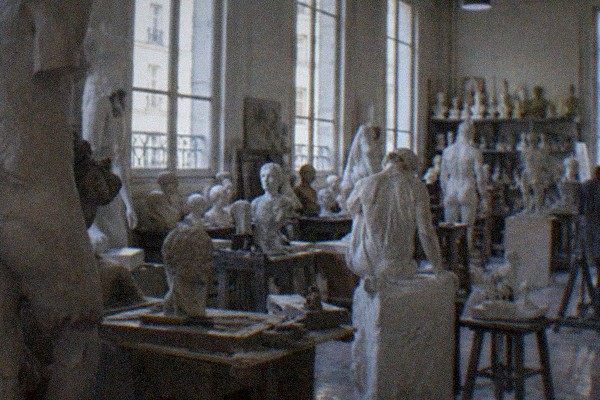
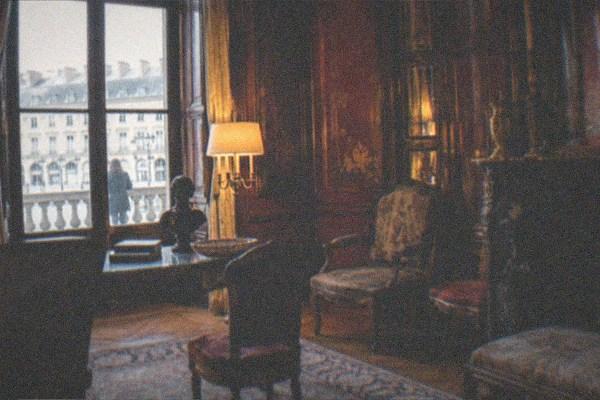
What you see inside follows from that origin. The rooms are small and domestic in scale, hung and arranged with bronzes, stone carvings, wood reliefs and works on paper that span Zadkine's long career. You pass through the studio, which retains the feel of a working space, and the living areas, which give a sense of how the artist actually occupied the house. Cubist-inflected figures from his early years, the sinuous forms of his mature period, and later works in a range of materials are distributed through the space. The garden behind the house holds larger sculptures set among greenery, and for many visitors this is the single most memorable part: stone and bronze figures standing in the open air, screened from the street, quiet enough to hear leaves move.
The house is now one of the fourteen City of Paris museums, the same municipal family as the Musée Carnavalet and the Petit Palais. That status explains the pricing posture described below. It also explains the character of the place: municipal museums in Paris tend to be smaller, quieter and free at the door in a way the great national institutions are not. A visitor comparing it to the Musée d'Orsay should understand they are different categories of experience entirely, one a converted railway station holding thousands of works, the other a single artist's home holding a life's evidence.
Tickets, Entry And What It Costs
Entry to Musée Zadkine is free for everyone. No ticket is needed, there is no age condition, and no booking is required for the permanent collection. The city's own caveat is that the museum is only partly free while a temporary exhibition is on, meaning a fee may apply to the temporary show while the rest stays free. Nothing else on this page costs money.
This is the simplest entry picture of any Paris museum covered on this site. You arrive during opening hours, you walk in, you visit. There is no timed-entry system, no queue-and-scan ritual, no ticketing page on the museum's site to navigate in advance. The museum's official practical information page states the free entry plainly, and it is the source for the temporary-exhibition caveat as well.
What does still cost money, so the picture is honest: nothing at the door itself, but the temporary exhibitions can carry a charge while they run, per the city's own policy for its museums. Beyond that, the usual incidental expenses of any museum visit apply if you choose them: anything you buy in the shop area, any printed guide or catalog you take home, and of course getting there. If you are building a wider Paris itinerary around paid monuments, for instance the Arc de Triomphe, this museum is a useful free counterweight in the day's budget.
One practical note on the free policy. Because the house is a City of Paris museum, its rules come from the municipality rather than a national body, and the city's culture pages, including paris.fr's museum listings, describe the scheme under which permanent collections of municipal museums are free to all. The temporary-exhibition caveat is the only wrinkle, and even then the phrase used is partly free, not closed or fully charged. On an ordinary day with no special show running, the entire visit costs nothing.
How Long To Allow And When To Go
Allow roughly an hour for Musée Zadkine, longer if you linger in the garden or read deeply in each room. The house is small and the visit is unhurried by nature. The museum is closed every Monday, so any day from Tuesday through Sunday works. Mornings and weekday afternoons are the quietest windows in a residential part of the 6e.
The scale of the place sets the pace. This is not a museum you plan a half day around. A first pass through the house takes most people forty minutes to an hour, and the garden invites another stretch of standing and looking, weather permitting. Visitors regularly report that the visit feels longer in memory than in minutes, because the density of objects per square meter is high and the domestic rooms slow you down naturally. Anyone treating it as a quick stop on a Montparnasse walk gets a complete experience; anyone wanting the full arc of Zadkine's career can spend well past the hour.
Timing within the week matters more than timing within the day, for one hard reason: Monday. The museum is closed every Monday without exception listed, and a disappointed arrival on that day is entirely avoidable with basic planning. Otherwise the neighborhood governs the mood. Rue d'Assas and the streets around it belong to the quieter side of the 6e arrondissement, away from the boulevard traffic of Montparnasse proper, so even peak hours here feel calmer than the Luxembourg Gardens a few blocks north.
Season changes the garden more than the house. The sculpture garden is at its best from spring through early autumn, when the greenery frames the stone and bronze figures. In winter the garden is still open and still part of the visit, but it reads differently, bare and formal. Pair the season with your tolerance for crowds: summer brings more tourists to the Luxembourg area overall, though this particular museum never sees the volume that descends on the major nationals. Rain is a genuine consideration only for the garden half of the visit, since the house itself is fully indoor and compact enough that a wet day barely changes the experience.
Know Before You Go
Musée Zadkine is at 100 bis rue d'Assas, Paris, France, in the 6e arrondissement, a five-minute walk from the Luxembourg Gardens. It is closed every Monday. Entry is free with no ticket. The nearest rail links are in the Luxembourg area; arrive by Metro, RER or a short walk from the garden and find the entrance tucked behind the street frontage.
The address deserves one clarification for anyone using a map: the number is 100 bis, meaning a secondary entrance or building behind or beside the main numbered frontage on rue d'Assas. The museum is genuinely hidden, which is part of its charm and also the reason first-time visitors sometimes walk past it. The coordinates are 48.8428, 2.3338, and dropping those into a phone map is the reliable way to land at the correct door rather than guessing along the street.
Getting there is straightforward from anywhere central. The Luxembourg RER station on line B serves the garden a few minutes north, and Metro lines stopping in the surrounding area put the museum within an easy walk from several directions. Cyclists and pedestrians have the simplest run of it, since the whole stretch between the Luxembourg Gardens and rue d'Assas is agreeable Left Bank walking with nothing steep or complicated. If you are coming from a morning at a larger institution, for example after a booked slot at the Palais Garnier, the cross-city transfer by Metro is direct enough to make this a same-day second stop.
On access and practical rules, print only what is verifiable, so the essentials are these: no ticket to collect, no Monday arrival, and a small domestic building, which means narrow rooms and a layout that follows the house rather than a purpose-designed circulation plan. Visitors with reduced mobility should contact the museum directly through its official page before visiting, because the historic character of a 1920s artist's cottage places real limits on what can be modified. Bags and security follow the light procedures typical of the city's smaller museums, but no specific rule is verifiable here, so arrive with ordinary day-bag expectations rather than assumptions.
Who It Suits And Who It Does Not
This museum suits visitors who want depth over scale: art lovers interested in sculpture, anyone curious about Montparnasse's artistic history, and travelers between the big names who need a calm hour. It does not suit those expecting a grand national museum, families wanting interactive displays, or anyone whose ideal visit lasts a full afternoon. It is a cottage, and it delivers a cottage's rewards.
The core audience is people with a genuine interest in sculpture and modern art history. Zadkine's career touches Cubism, the trauma of the First World War, and the mid-century Parisian art world, and the house tells that story through objects in their original setting. For that visitor, the small footprint is an advantage: every work is visible, nothing is behind glass in a crowded hall, and the relationship between the pieces and the rooms they occupy is intact in a way it simply is not in a large institution.
A second audience is the Montparnasse pilgrim. The neighborhood's golden age, the cafes, the studios, the painters and sculptors who arrived from everywhere, is mostly vanished from the streets themselves, surviving in plaques and a couple of preserved sites. The Zadkine house is one of the rare places where the actual workspace survives, which gives it documentary weight beyond the quality of the art. Walking here from the cemetery where many of Zadkine's contemporaries are buried, or from the old artists' residences, turns the visit into a leg of a larger route.
Who should adjust expectations. Travelers with only one or two days in Paris, determined to see the Louvre and the Musée d'Orsay, should not detour here under time pressure, because a short itinerary rewards the monuments. Families with small children will find no dedicated kids' zone and limited space for strollers in a historic house. And anyone hoping for a cafe, auditorium, or full shop on the model of a large museum will find the offer modest. The comparison that clarifies it: this is closer in spirit to an artist's studio visit than to the Musée Jacquemart-André, another former private home but one built on a grander, collector's scale.
What To Pair It With Nearby
The natural pairing is the Luxembourg Gardens, five minutes north on foot, which can absorb an hour or a full afternoon on either side of the museum visit. Beyond the garden, the 6e arrondissement and Montparnasse supply Saint-Sulpice, the art cemetery of Montparnasse, and a dense stretch of cafes and galleries, all walkable. Nothing else nearby requires a ticket in the way the large nationals do.
Start with the obvious sequence. The Luxembourg Gardens are the anchor attraction of this slice of the Left Bank, and their proximity is the reason many people find themselves at the museum's door at all. A sensible plan is garden first, museum second, garden again: the park offers chairs, the fountain, the gravel walks and the modeled grounds, while the museum offers a concentrated indoor hour. Visitors regularly report that the two together make a complete and unusually relaxed morning, and both are free.
West and south of the museum, Montparnasse proper holds the sites associated with the artistic era Zadkine belonged to. The Montparnasse Cemetery, where many of his contemporaries and successors rest, is a modest walk away and continues the same historical thread with a completely different register. The great cafes of the boulevard, the Dome and its neighbors, still stand as landmarks of that period. Rue d'Assas itself continues toward Saint-Sulpice and the church of the same name, one of the largest in Paris and an easy, free addition to the route.
For visitors with wider ambitions, the museum slots neatly into a Left Bank day. From here, the walk to the Musée d'Orsay along the river is entirely possible for anyone with comfortable shoes and a few hours, and the contrast is instructive: Zadkine's bronzes and stone figures in a quiet cottage, then one of the world's great collections of the very art world he worked in. A single day could plausibly run Luxembourg Gardens in the morning, Musée Zadkine at midday, the riverside walk after lunch, and a booked afternoon at a major museum, without a single metro transfer until the last leg. Few Paris neighborhoods offer that sequence on foot.
Questions People Ask
Is Musée Zadkine Free To Enter?
Yes. Entry is free to everyone and no ticket is needed for the permanent collection, which includes the house, studio and sculpture garden. The city's own caveat is that the museum is only partly free while a temporary exhibition is on, so a fee may apply to a special show. On an ordinary day the full visit costs nothing.
Is Entry Free For Children And Teenagers?
Yes. Entry is free for children and young visitors with no age condition, the same walk-in policy that applies to adults. There is no ticket to buy for any age group and nothing to book in advance for the permanent collection, which makes the museum an easy spontaneous stop for families already near the Luxembourg Gardens.
Where Is Musée Zadkine Located?
The museum is at 100 bis rue d'Assas, Paris, France, in the 6e arrondissement, about five minutes on foot from the Luxembourg Gardens. The entrance sits behind the street frontage, which is part of its hidden character. The coordinates are 48.8428, 2.3338, useful for finding the exact door on a phone map.
What Days Is Musée Zadkine Open?
The museum is closed every Monday. It operates on the remaining days of the week, Tuesday through Sunday, and no other closure day is specified. Arriving on a Monday is the single most avoidable disappointment, so plan any Montparnasse or Luxembourg Gardens itinerary around that fixed weekly closure.
How Long Does A Visit Take?
Allow roughly an hour for the house, studio and sculpture garden, and somewhat longer if you linger over the works on paper or the garden sculptures. The building is a small artist's cottage rather than a large museum, so the pace is unhurried but the footprint is compact. Most visitors fit it comfortably into a morning.
What Will I Actually See At Musée Zadkine?
You see the house, studio and sculpture garden where Ossip Zadkine lived and worked from the late 1920s. Inside are his sculptures in bronze, stone and wood, plus drawings spanning his career, arranged in domestic rooms and the working studio. Behind the house, larger sculptures stand in a quiet garden screened from rue d'Assas.
Do I Need To Book Tickets In Advance?
No. Entry is free and no ticket is needed, so there is nothing to book for the permanent collection. You simply arrive during opening hours and walk in. The only circumstance that could involve a charge is a temporary exhibition, which the city describes as partly free while one is running.
What Is The Best Thing To Pair With A Visit?
The Luxembourg Gardens, five minutes north on foot, are the natural pairing and are free as well. A common plan is the garden in the morning, the museum at midday, then a walk toward Saint-Sulpice or the Montparnasse Cemetery, which continues the same artistic history the house belongs to. Everything on that route is walkable.