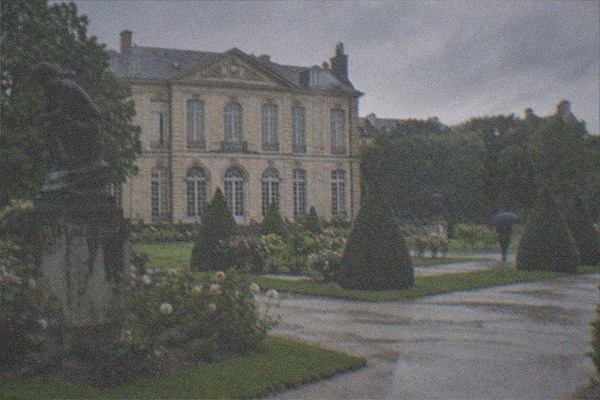
Musée Rodin
7e arrondissement · The Thinker, the Gates of Hell, and a garden worth the ticket on its own.
Dedicated to the works of sculptor Auguste Rodin, with sculptures displayed indoors and in the gardens.
Check availability →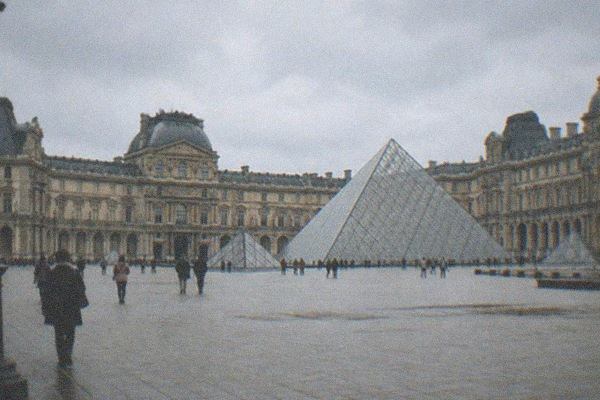
The one museum everybody books, and the one with the strictest timed entry.
from $69.80 live price on the listing€22 for EEA visitors and €32 for everyone else: the Louvre now charges two different admission prices
Check Price & Availability →Opens the official listing with live dates and prices. Book there; nothing is charged on this site.
Musée du Louvre is the largest art museum in the world, spanning ancient civilizations to the 19th century across a former royal palace. It suits first-time visitors, serious art lovers, and anyone with half a day to spare. Timed entry is compulsory, so planning matters more here than anywhere else in Paris.
The museum holds masterpieces from ancient Egypt, Greece, Rome, the Islamic world, and European painting and sculpture up to the 19th century, spread across three wings of a former royal palace. It is the one museum everybody books, and the one with the strictest timed entry. Most visitors come for a handful of famous works, then discover the building itself is half the experience.
The palace grew over eight centuries, and the sequence of rooms tells that story. You enter under I. M. Pei's glass pyramid in the Cour Napoléon, descend into the Hall Napoléon, then fan out into the Denon, Richelieu, and Sully wings. The Denon Wing carries the heaviest foot traffic because it holds the Mona Lisa, the Winged Victory of Samothrace at the top of the Daru staircase, and the Slaves by Michelangelo. Reviewers consistently say the crowds around the Mona Lisa are dense and the viewing window is short, so set expectations accordingly.
The Sully Wing is where most visitors find breathing room. It opens with the foundations of the medieval Louvre fortress, visible in the excavated lower level, then climbs through French and Italian sculpture into the Egyptian antiquities, which fill two dozen rooms and rank among the finest collections outside Cairo. The Richelieu Wing holds French sculpture, the lavish Napoleon III Apartments, and the northern European paintings, including Vermeer's Lacemaker and works by Rubens filling an entire gallery.
Beyond the stars, plan around departments rather than trying to see everything. The Egyptian, Greek, Roman, and Etruscan antiquities, the Islamic art galleries with their luminous glass courtyard, and the French and Italian schools each justify an hour on their own. Visitors regularly report that a single well-chosen wing beats a frantic lap of all three, and the museum's own page states that the collection is organized by department and civilization, which is the practical key to routing a visit.
Photography is permitted without flash in the permanent collection. The Carrousel du Louvre, an underground mall, connects to the museum complex and offers shopping and food without leaving the site, useful for a mid-visit break in a building where an exit can mean the end of your slot.
Standard adult admission is €32 at the door for non-EEA visitors, with a reduced €22 price for EEA visitors. Timed entry is compulsory, so every visitor needs a slot, and the museum operates a two-tier door price depending on where you are from. Under-18s enter free with photo ID, as do EU and EEA residents under 26.
The two-price structure is the biggest change visitors need to know about. The museum's own admission page explains the current rules in full, and the euro figures there are the museum's own door prices. A bookable ticket from a reseller starts at USD 69.8, but that is a different product: it may include a guide or a guaranteed timed slot, and it is never the same thing as the euro door price. Do not compare the two numbers directly, they are different purchases. Reviewers consistently rate the bookable option at 4.6 across 7,769 reviews, and the most common praise is skipping the ticket line and having a fixed entry time in a museum where slots sell out.
If you would rather not work out the door-price tiers and slot availability yourself, the booking panel on this page handles it, which saves the back-and-forth of matching a timed slot to your travel dates.
Free entry does not exempt you from the timed entry rule. Free visitors, including under-18s and eligible under-26s, still need a slot, so book one rather than assuming you can walk up. The same applies to the free-day windows below. Identification is checked, and the museum's own page states photo ID is required for free categories.
| Ticket Category | Price | Notes |
|---|---|---|
| Standard adult, EEA visitors | €22 | Museum door price |
| Standard adult, all other visitors | €32 | Museum door price |
| Under 18 | Free | Photo ID required |
| EU and EEA residents under 26 | Free | Long-stay permit or visa holders included |
| Bookable ticket (guide or timed slot) | From USD 69.8 | Rated 4.6 across 7,769 reviews |
Musée du Louvre is free the first Friday of the month after 6pm, except in July and August, and free all day on 14 July. It is not free on any Sunday, a common misconception. All free entry still requires a timed slot, and eligibility categories are checked with photo ID at the door.
The first-Friday-evening window is the one locals know about. Outside July and August, arriving after 6pm on the first Friday of the month gets you in without paying, but the evening hours compress your visit, so pick two departments at most. The 14 July free day celebrates Bastille Day and draws very large crowds, including many residents taking advantage of the same rule. If your trip overlaps either date, decide deliberately rather than drifting into one.
The under-26 rule deserves precision. It applies to EU and EEA residents, and the museum includes holders of a long-stay permit or visa in that category, which covers many students and expatriates who assume they must pay. Visitors from outside the EEA under 26 do not qualify and pay the standard door price. Under-18s are always free regardless of nationality. All of this is spelled out on the museum's own hours and admission page, which is the authoritative source if your situation is unusual, for instance a non-EU student on a French long-stay visa.
A common mistake is treating the free evening as a way to see the highlights in two hours with no slot. It does not work that way. Timed entry is compulsory at all times, free or paid, and free-evening slots can disappear too. Book your slot for the free windows exactly as you would for a paid visit, then arrive early, because the security line operates for everyone without exception.
Allow a half day at minimum, and a full day if you want more than the headline works. Most visitors spend three to five hours and still leave rooms unvisited. The museum is closed every Tuesday, and evening visits on the free first-Friday windows are shorter by nature.
The honest arithmetic is that the Louvre cannot be seen in one visit. Visitors regularly report planning two hours and staying five. A workable pattern is to pick a morning or afternoon, choose two departments, and commit to seeing the Mona Lisa either very early in your slot or at the very end, when the crowd thins. Reviewers consistently say the first hour after opening and the final hour before closing are the calmest around the star paintings.
Day of week matters more than time of day. Tuesday is out entirely, the museum is closed. Wednesday and Thursday tend to run lighter than weekends. The free first-Friday evenings and 14 July carry the heaviest footfall, so if your dates are flexible, weigh the savings of a free window against the crowds it guarantees. Summer brings the longest lines of the year at the pyramid security check, which functions as the funnel for every visitor regardless of ticket type.
| At A Glance | Detail |
|---|---|
| Closed | Every Tuesday |
| How long to allow | Half day minimum, full day for depth |
| Arrondissement | 1er arrondissement, rue de Rivoli |
| Entry system | Timed entry, compulsory for all |
| Free entry | First Friday after 6pm except July and August, 14 July, under-18s, EEA under-26s |
Weather matters less here than at most Paris sights, since nearly everything is indoors and the pyramid entrance is sheltered. But the security queue outside can stretch across the courtyard in rain and heat alike, so a fixed slot early or late in the day minimizes time spent in it. Pair your visit with a slow walk in the adjacent Tuileries Garden as a decompression step afterward, it is directly connected to the museum grounds and requires no ticket.
The museum sits on rue de Rivoli in the 1er arrondissement, with Metro lines 1 and 7 serving Palais Royal, Musée du Louvre station directly. Allow extra time for the pyramid security check, carry photo ID if you qualify for free entry, and remember the building is closed every Tuesday.
The nearest Metro stop, Palais Royal, Musée du Louvre, is served by lines 1 and 7 and connects underground to the museum complex, which is the smartest approach in bad weather. Line 1 crosses the city east to west and stops at many of the hotels visitors stay in. The transport operator's own site, RATP, has route planners and service alerts, worth a check the morning of your visit since Metro disruptions reroute people along rue de Rivoli, adding walking time to a fixed slot.
Security screening applies to every visitor, and the museum does not permit large bags. Travel light. Anything bulky forces a detour to the cloakroom and eats your timed slot from the front. Photography without flash is allowed in the permanent collections, but tripods and selfie sticks are not welcome in crowded galleries. Food and drink are confined to designated areas, and the Carrousel du Louvre mall offers a mid-visit break without exiting the complex.
Accessibility is built into the pyramid design, with elevators and step-free routes throughout the main visitor levels. Visitors with reduced mobility and their companions should contact the museum ahead of their slot for guidance on the smoothest routes, since the palace's older sections include stairs that are best avoided by design. The museum's own site is the authoritative source for current accessibility services.
Build in buffer time. A fixed timed slot plus a security queue plus a Metro walk means you should aim to arrive at the pyramid thirty minutes before your entry time. Missed slots are the single most common complaint reviewers mention about this museum, and the cause is almost always an over-tight morning schedule elsewhere in the city.
The Louvre anchors the 1er arrondissement, so most visitors pair it with the Tuileries Garden, the Seine quays, or the Palais Royal courtyards on foot. For a second museum day, Musée d'Orsay sits directly across the river and is the natural companion, holding the French art of the generations the Louvre's collection stops just short of.
The smart pairing is chronological. The Louvre's painting collection runs up to the 19th century, and Musée d'Orsay picks up exactly where it leaves off, with the Impressionists in a converted railway station one bridge away. Doing the Louvre on one day and Orsay the next gives you a continuous story of French art, and the walk between them across the Pont Royal takes ten minutes. Reviewers consistently say the contrast between the two buildings, a palace and a train station, is itself worth the pairing.
If sculpture is what moved you in the Louvre's French galleries, Musée Rodin offers a slower, garden-set experience on the Left Bank, with the Thinker outdoors among the roses. It suits a late-afternoon slot after a morning at the Louvre, and its human scale is a deliberate antidote to the crowds around the pyramid. Similarly, Palais Garnier is a short walk up the avenue de l'Opéra and rewards visitors who loved the Napoleon III Apartments, since both interiors share the same Second Empire opulence, and Garnier can be toured in about an hour.
For a non-museum finale, Arc de Triomphe caps a day that starts at the Louvre and follows the Champs-Élysées axis from the Tuileries, the same vista commissioned to align with the palace. Finish at the Arc's rooftop terrace at sunset and you have seen the city's grand axis from both ends in one day. Otherwise, the Seine quays between the Louvre and Orsay are the simplest free pairing, bookended by two of the finest museum buildings in Europe.
Standard adult admission is €32 for visitors from outside the EEA and €22 for EEA visitors. These are the museum's own euro door prices. A bookable ticket that may include a guide or a timed slot starts at USD 69.8, which is a different product and not directly comparable to the door price.
Yes, on specific dates. Entry is free the first Friday of the month after 6pm, except in July and August, and free all day on 14 July. It is not free on any Sunday. Free entry still requires a compulsory timed slot, so book one rather than walking up.
Under-18s enter free with photo ID, regardless of nationality. EU and EEA residents under 26 also enter free, including holders of a long-stay permit or visa. All free visitors still need a timed entry slot, since timed entry is compulsory for everyone.
The museum is closed every Tuesday. Plan around this when building your itinerary, since the Louvre is the centerpiece of most Paris trips and Tuesday is off the table entirely. Check the other days' opening details on the museum's official hours and admission page.
Allow a half day at minimum, and a full day for real depth. Most visitors spend three to five hours and still leave rooms unvisited. Picking two departments and seeing the Mona Lisa early or late in your slot works better than attempting everything.
The museum is on rue de Rivoli in the 1er arrondissement, at coordinates 48.86115, 2.33803. The nearest Metro station is Palais Royal, Musée du Louvre, served by lines 1 and 7, and it connects underground to the museum complex.
Yes. Timed entry is compulsory for every visitor, including those who qualify for free entry. The Louvre is the Paris museum with the strictest timed entry enforcement, and missing your slot is the most common complaint reviewers mention. Arrive about thirty minutes early for the security check.
It depends on what you want. The door price is €22 for EEA visitors and €32 for everyone else. A bookable ticket starts at USD 69.8 but may include a guide or a guaranteed timed slot, and it is rated 4.6 across 7,769 reviews, with skipping the ticket line the most praised benefit.
7e arrondissement · The Thinker, the Gates of Hell, and a garden worth the ticket on its own.
Dedicated to the works of sculptor Auguste Rodin, with sculptures displayed indoors and in the gardens.
Check availability →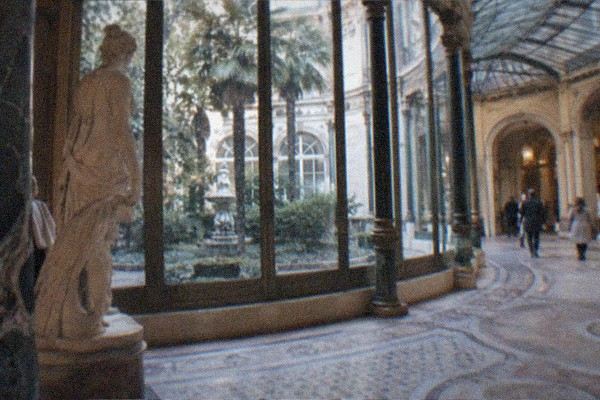
8e arrondissement · A 1900 exhibition palace with Courbet, Monet and a garden cafe, and no entry fee.
Fine arts museum with collections from antiquity to early 20th century in a Belle Époque building.
Free entry, no ticket needed.
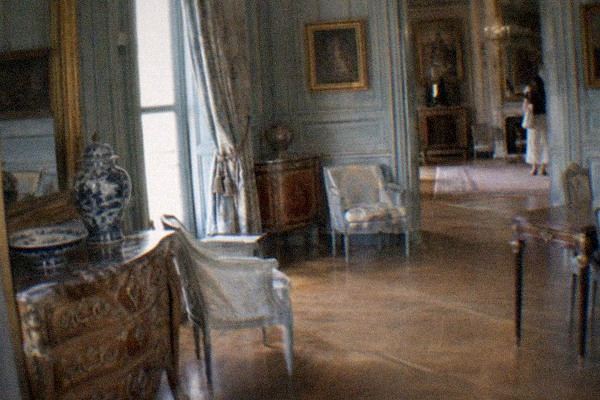
3e arrondissement · The Samaritaine founders' 18th-century collection, in a Marais hôtel particulier.
Eighteenth-century paintings, furniture and porcelain collected by the founders of La Samaritaine, shown in a Marais mansion.
Free entry, no ticket needed.