Petit Palais is a fine arts museum facing the Champs-Élysées, housed in the palace built for the 1900 Universal Exhibition. Its permanent collection runs from antiquity to the early 20th century, and entry costs nothing. It suits travelers who want major paintings, a Belle Époque setting and a garden pause without spending a cent.
What Is The Petit Palais?
Petit Palais is the city of Paris's fine arts museum, built for the 1900 Universal Exhibition and facing its larger sibling, the Grand Palais, across Avenue Winston-Churchill. The permanent collection spans antiquity to the early 20th century, and the museum's hallmark is simple: Courbet and Monet hang on the walls, a garden cafe sits at the center, and walking in costs nothing.
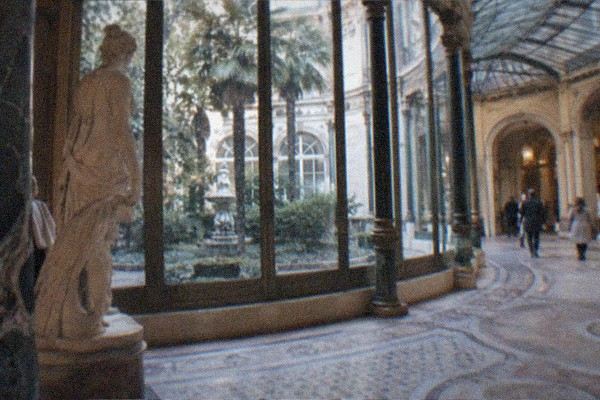
The building alone justifies the walk. Architect Charles Girault designed it as a showpiece for the Exposition Universelle of 1900, and everything about it was built to impress: a semicircular forecourt, an Ionic colonnade, gilded ironwork gates, and interior courtyards tiled in mosaic. The decor was meant to outshine every other nation's pavilion that year. A century later the palace still does the heavy lifting before you see a single canvas. Visitors regularly report that the architecture feels like part of the collection rather than a container for it.
Inside, the route moves roughly forward in time. Greek and Roman antiquities open the visit, then medieval and Renaissance holdings, followed by 17th and 18th century French and Dutch painting, and finally the 19th century galleries. The 19th century rooms are the strongest draw for most people. Gustave Courbet is represented with real weight, Claude Monet appears alongside Camille Pissarro, and the Symbolist and academic painters of the Belle Époque era close things out. There is also a substantial decorative arts spread: icons, jewelry, porcelain and the kind of period objects that give the painting rooms their context.
The museum sits in the 8e arrondissement, at Avenue Winston-Churchill, coordinates 48.86604, 2.31535, one block off the Champs-Élysées and directly opposite the Grand Palais. It is small enough to feel manageable in a morning and grand enough that you will not confuse it with anywhere else. Compared with the overwhelming scale of the Musée du Louvre, or the single-artist focus of the Musée Rodin, Petit Palais occupies a useful middle ground: a survey collection in a palace you can absorb in one unhurried visit.
One thing to keep in mind when planning. The museum is closed every Monday, so the free-entry advantage is only available Tuesday through Sunday. The official site carries current exhibition details and practical information.
Entry, Tickets And What Actually Costs Money
Entry is free to everyone, no ticket needed. The permanent collection is free to all visitors, with no age condition and nothing to buy in advance. The only thing that costs money is the temporary exhibition program: those shows are ticketed, and tickets are sold for those shows alone. Everything else, including children and young visitors, enters without paying.
This is the part worth stating plainly, because free museums in Paris generate more confusion than they should. You do not need to reserve anything to see the Courbets, the Monets, the antiquities or the decorated interiors. You walk up, you pass through security, and you are inside. There is no paid fast track, no timed slot for the collection, no age threshold, no residency requirement. Free means free, for a solo adult on a Tuesday afternoon and for a family of five alike.
Where money does enter the picture is the temporary exhibitions. Petit Palais mounts major ticketed shows, often large monographic or themed exhibitions that draw significant crowds. Those require a purchased ticket, and they are the only part of the museum with a price attached. If a big show is running and you want it, you will pay for that show specifically. If you only want the permanent collection, you pay nothing at all.
The ticket picture at a glance:
A word on the practical effect of free entry. Because the collection needs no booking, Petit Palais works as a flexible stop. Lines for the collection are generally shorter than at the Musée d'Orsay, and you can slot the visit into a spare hour on the Right Bank without having committed a fixed time weeks earlier. The one exception is during a headline temporary exhibition, when the forecourt can fill with people queuing for the paid show. Even then, the collection route usually stays accessible.
The museum's own page at petitpalais.paris.fr lists what temporary exhibitions are currently ticketed, so check there before assuming a show is included with your free visit.
What You See Inside: Collection Highlights
The visit is anchored by 19th century French painting, with Courbet and Monet as the headline names, inside a Belle Époque palace whose interiors are themselves an exhibit. Around them sit antiquities, medieval and Renaissance objects, Dutch and Flemish masters, decorative arts, and a landscaped interior garden with a cafe at its center. All of it is free.
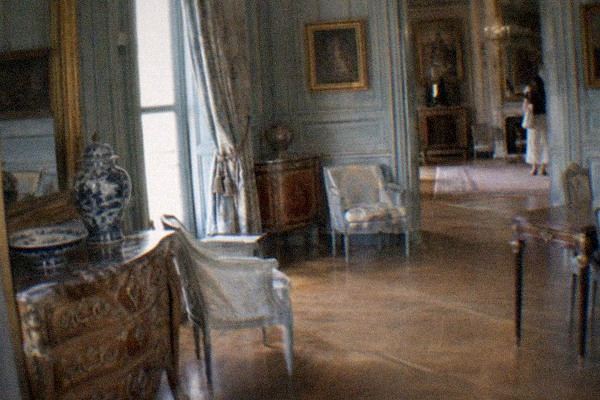
Start with the 19th century galleries, because that is what most visitors come for. Courbet's canvases give the rooms their gravity, and the Impressionist presence, including Monet, gives them their light. Reviewers consistently say the hang rewards slow looking: the salons are arranged as period interiors rather than white cubes, so the paintings, the furniture and the paneled walls read together as a picture of the era that built the palace itself. The collection stops around the early 20th century, which means you leave the museum roughly where its own building left off in history.
From there, work backward. The older holdings are quieter but genuine: Greek vases and Roman sculpture, medieval sculpture and painting, Renaissance ceramics and metalwork, and a strong run of 17th century Dutch and Flemish painting. The decorative arts spread through these rooms ties the whole sequence together. Icons, jewelry, snuffboxes and porcelain appear alongside the paintings, which is unusual. Most museums of this scale separate fine and decorative arts into different wings. Here they share rooms, and the effect is closer to walking a collector's house than a survey museum.
Do not skip the architecture on your way between galleries. The entrance sequence, the mosaic-floored courtyards, the painted ceilings and the grand staircase are the 1900 exhibition experience preserved. The inner garden is the natural midpoint of a visit: a semicircular courtyard of greenery, benches and a cafe where visitors regularly report spending longer than planned. In warm weather it functions as one of the more pleasant free places to sit in the 8e arrondissement, and it is a legitimate reason to visit even for someone with limited appetite for museums.
In pure art-historical weight, the collection sits a tier below the Louvre. That is not a criticism. The strength of Petit Palais is proportion: you can see the highlights in a single visit without the route-planning anxiety that a larger museum imposes, and the price of admission, nothing, makes a short visit entirely reasonable. Depth is where you find it, in the Courbet rooms and the garden.
How Long To Allow And When To Go
Allow two to three hours for a full sweep of the permanent collection at a comfortable pace, or about an hour for the 19th century galleries and the garden alone. The museum is closed every Monday, so plan Tuesday through Sunday. Weekday mornings are the calmest window, and a temporary exhibition will add both time and crowds to your visit.
The building's footprint is what sets the pace. The galleries wrap around the interior garden in a loop, so a natural visit is one circuit, either clockwise through antiquity and forward in time, or straight to the 19th century rooms and backward. Families with children often compress this to the painting highlights and a garden stop, which works in under an hour because there is no ticket to feel obliged about. If a ticketed temporary exhibition is on your list, add that on top of the collection time, since the shows occupy their own galleries and often their own queue.
Timing within the week matters more here than at paid museums, and less. Because entry is free, there is no slot to book, so the crowd pattern follows the clock rather than a ticketing schedule. Late mornings and mid-afternoons carry the most visitors, and weekends around the Champs-Élysées bring spillover from shoppers and sightseers. An opening-time arrival on a weekday gives you the Courbet rooms close to alone. Mondays are the trap: the museum is closed every Monday, no exceptions, and this catches a remarkable number of visitors who assume Paris museums keep identical schedules.
Season matters less inside than out. The garden cafe is at its best from late spring through early autumn, and that is when the courtyard earns its place in the itinerary. In winter the interiors compensate, since the palace was designed as a sheltered exhibition machine, and the mosaic-lined spaces are genuinely warm in both senses. Rain, incidentally, is a good reason to come: a free, roofed, ornate building a minute from the Champs-Élysées is about the best bad-weather option in the neighborhood.
One planning note for itinerary builders. Because the collection needs no booking, Petit Palais pairs well as a flexible second stop on a day anchored by something scheduled. Add it before or after a fixed-time visit nearby, and use the extra time in the garden.
Know Before You Go
Petit Palais stands at Avenue Winston-Churchill in the 8e arrondissement, directly opposite the Grand Palais and a short walk from the Champs-Élysées. It is closed every Monday. Entry is free with no ticket, which means security screening is the only real gate between the street and the collection. Come light, come early, and treat the official site as the source for current practical details.
Getting there is straightforward. The museum faces Avenue Winston-Churchill, coordinates 48.86604, 2.31535, and the surrounding streets, including the Champs-Élysées immediately to the north, are served by a dense cluster of Metro and RER stops within walking distance. Arriving on foot along the Champs-Élysées is the most pleasant approach, and the avenue's bus routes are frequent. Anyone already in the neighborhood for the Grand Palais or the Pont Alexandre III needs no transit at all: the museum is simply across the street. For transport specifics and current line information, the Paris public transport operator's site at ratp.fr is the reference to check before you travel.
Because there is no ticket, the only queue you will encounter is the security line at the entrance, which moves quickly outside peak periods. Standard French museum security practice applies: bags pass through screening, and large luggage is not the place for it. Travelers arriving from the airport with suitcases should note that no Paris museum of this type accommodates checked bags well, and Petit Palais is no exception. Bring a small bag or nothing, and the free entry stays frictionless.
Inside, the layout is forgiving. The galleries loop around the central garden, so disorientation is unlikely, and the cafe in the courtyard makes a natural rest point without leaving the building. Photography for personal use follows the usual French norms for permanent collections; temporary exhibition galleries, being ticketed, often carry their own rules, which are posted at the entrance to each show. The museum is a city institution, part of the network of Paris Musées sites, rather than a national museum, which explains both its free permanent collection and its neighborhood feel.
For opening hours beyond the closed Monday, for accessibility details, and for anything related to a current ticketed exhibition, the museum's own page at petitpalais.paris.fr carries the authoritative information. This page does not reprint hours that could drift out of date, so treat the official site as the single source for the daily schedule.
A final practical point in favor of the visit. Because the collection is free, the cost of a mistake is near zero. Arrive on a Monday and you lose a walk; arrive on a Tuesday and you gain a palace. Few Paris stops have a downside this small.
What Is Nearby And Worth Pairing It With
Petit Palais sits in one of the densest sightseeing clusters in Paris: the Grand Palais is directly opposite, the Champs-Élysées is a block north, the Pont Alexandre III and the Seine are a short walk south, and the Musée d'Orsey lies just across the river. A natural pairing is a morning here followed by a river crossing, or a combined Right Bank circuit with the Arc de Triomphe at the far end of the avenue.
The most obvious pairing is also the most pleasant: the Grand Palais, facing Petit Palais across the avenue that shares the museum's address. The two 1900 exhibition palaces were built as a pair for the same Universal Exhibition, and seeing them side by side is the point. When the Grand Palais has a major show, the two buildings make a single day of it, with Petit Palais's free collection as the anchor and the ticketed Grand Palais exhibition as the splurge.
South of the museum, the Pont Alexandre III is the most decorated bridge in Paris and takes you over the Seine in a few minutes of walking. On the far bank, the Musée d'Orsay is the natural continuation for anyone following the 19th century thread. Petit Palais's Courbet and Monet holdings set up the Orsay's far larger Impressionist collection perfectly: the free palace first, the blockbuster second. It is a pairing visitors regularly report as the best single art day on the Right and Left Bank combined.
In the other direction, the Champs-Élysées runs up to Place Charles de Gaulle and the Arc de Triomphe. That is a 20 to 25 minute walk along the avenue, or a quick Metro ride, and it turns the museum into one leg of the classic 8e arrondissement circuit: art in the morning, avenue and arch in the afternoon. Purists will note that the Musée du Louvre is also within reach to the east, though pairing the Louvre with anything substantial on the same day is a mistake most first-time visitors make exactly once.
A quieter local suggestion: build in the garden. Petit Palais's courtyard cafe is one of the few genuinely calm seats in this part of Paris, where every square meter within sight of the Champs-Élysées trends toward the crowded and the expensive. Ending a museum visit there, with nothing on the bill except coffee, is the correct use of a free palace.
In short, treat the museum as a hub rather than a detour. Free entry makes it the flexible leg of any itinerary in this quarter, and everything worth pairing with it sits within a walk or one transit hop.
Questions People Ask
Is Petit Palais Really Free?
Yes. Entry is free to everyone, with no ticket needed, and the permanent collection is free to all visitors. The only thing that costs money is the temporary exhibition program, which is ticketed separately. Children and young visitors enter free as well, with no age condition.
Do I Need To Book Petit Palais In Advance?
No booking is needed for the permanent collection. Entry is free to everyone with no ticket, so you simply arrive and pass through security. Only the ticketed temporary exhibitions involve purchasing anything, and those are sold for the specific show.
What Are The Highlights Inside?
The 19th century French painting galleries anchor the visit, with Courbet and Monet as the headline names. Around them sit antiquities, medieval and Renaissance objects, Dutch and Flemish painting, and decorative arts. The Belle Époque building and its interior garden cafe are highlights in their own right.
Is Petit Palais Closed On Mondays?
Yes, the museum is closed every Monday, so plan your visit for Tuesday through Sunday. This catches many visitors who assume Paris museums share identical schedules. All other days, the free permanent collection is accessible without a ticket.
How Long Should I Spend At Petit Palais?
Allow two to three hours for a full sweep of the permanent collection at a comfortable pace. A focused visit to the 19th century galleries and the garden takes about an hour. A ticketed temporary exhibition adds time and crowds on top of that.
Where Is Petit Palais And How Do I Get There?
The museum is at Avenue Winston-Churchill, in the 8e arrondissement, directly opposite the Grand Palais and a block from the Champs-Élysées. Multiple Metro and RER stops sit within walking distance, and the Pont Alexandre III leads over the Seine toward the Musée d'Orsay on foot.
Is Petit Palais Good For Kids?
Yes, and the price is the argument: children and young visitors enter free with no ticket and no age condition. The collection spans antiquity to the early 20th century, and the interior garden with its cafe gives families a natural rest point in the middle of the visit.
What Is The Difference Between The Permanent Collection And Temporary Exhibitions?
The permanent collection, covering antiquity to the early 20th century, is free to everyone with no ticket. Temporary exhibitions are ticketed and sold separately for each show. If you skip the temporary exhibitions, your visit costs nothing at all.