Musée Cognacq-Jay is a small mansion museum in the Marais holding the 18th-century paintings, furniture, and porcelain assembled by Ernest Cognacq, founder of the La Samaritaine department store. It suits travelers who want an intimate, free hour of French art rather than a monumental all-day museum.
What Is The Museum Known For?
Musée Cognacq-Jay is known for one thing above all: the personal 18th-century collection of Ernest Cognacq and his wife Marie-Louise Jay, the founders of La Samaritaine, displayed in a hôtel particulier in the Marais rather than in a purpose-built gallery. The mansion itself, with wood-paneled rooms and period fireplaces, is part of the show.
Ernest Cognacq built La Samaritaine into one of the great Paris department stores of the late 19th century, and he spent his fortune on the century he loved most: the 1700s. He and Marie-Louise Jay gathered paintings, pastels, sculpture, furniture, snuffboxes, and porcelain on a scale that a department-store fortune made possible. When the collection entered the city of Paris, it needed a home that matched its period. The city chose the Hôtel Donon, a 16th-century mansion on rue Elzévir, restored and fitted out so the objects could hang in rooms that feel like a grand townhouse rather than a white cube.
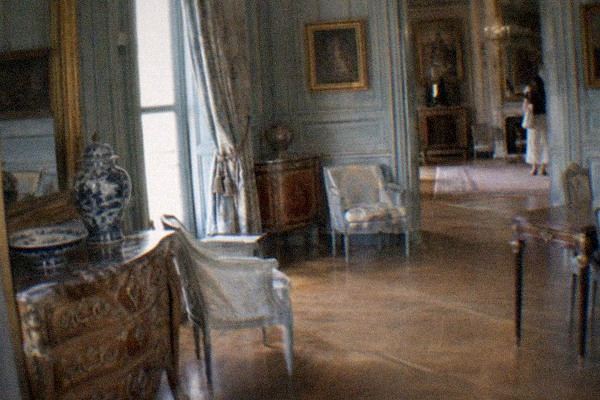
What that means for you as a visitor is intimacy. The paintings hang low, over consoles and against boiserie, the way they were meant to be seen. Reviewers consistently describe the experience as walking through someone's exceptionally fine home rather than through a museum. You pass drawing-room scenes, portraits, Chardin-like still lifes, and display cases of tiny porcelain and gold snuffboxes that reward slow looking. There is no predetermined blockbuster route: the visit flows room to room and floor to floor at your own pace.
The scale also matters. Unlike the Musée du Louvre, where 18th-century French decorative arts are one department among dozens, here they are the entire point. Visitors who love the period sometimes rank a quiet hour here above a scrambling half-day in a giant institution, precisely because you can see everything and then see it again. The museum's own page presents the collection as an evocation of Enlightenment-era taste, and the installation mostly lives up to that ambition.
Entry, Tickets, And What It Costs
Entry to Musée Cognacq-Jay is free, with no ticket needed for the permanent collection. There is one exception: while a temporary exhibition is running, the museum is only partly free, and the combined ticket that covers both the exhibition and the permanent collection is €8. Children and young visitors enter free, with no ticket and no age condition.
In plain terms: most of the time you walk in without paying anything. Like other city of Paris museums, Musée Cognacq-Jay operates a free-admission policy for its permanent holdings. The city's own caveat applies during temporary exhibitions, when the visit is only partly free and the combined ticket costs €8. The museum's official admission page states the current terms, and it is the source to consult if your visit coincides with a show you want to see.
If your Paris itinerary is heavy on paid institutions, a genuinely free museum is a useful counterweight. It also changes the calculus for a short visit: with no money at stake, an hour here costs you only time, and the museum is small enough that an hour is a real visit rather than a taster. Visitors regularly report being surprised by the quality of the holdings relative to the absence of an entry charge.
Do not confuse this museum's free policy with the paid model at national institutions. The Musée d'Orsay and the Musée Rodin charge standard admission, and a Paris Museum Pass only makes sense once you have priced those against this sort of free alternative. Budget your pass days for the paid places and save Musée Cognacq-Jay for a spare afternoon.
How Long To Allow And When To Go
Allow about one hour for Musée Cognacq-Jay, or up to ninety minutes if a temporary exhibition is running and you choose the €8 combined ticket. The museum is closed every Monday, so plan around that fixed day. Mornings on a weekday are the calmest window.
The mansion is compact. The permanent collection occupies a modest number of rooms, and a visitor moving at a normal pace, pausing in front of the paintings and the porcelain cases, will finish comfortably inside an hour. That makes it a good filler between two bigger commitments, or a morning stop before the Marais fills with shoppers and brunch crowds. People who linger over the snuffboxes and the furniture details take longer, but very few visitors need more than ninety minutes for the full house.
The closed day is the one hard scheduling fact: every Monday, without exception listed here, the doors stay shut. Tuesday through Sunday is your window. Weekends in the Marais are busy in the streets outside, and the museum's small rooms feel that crowd more than a large museum would. If your trip includes the Arc de Triomphe, the Arc de Triomphe climb, or other fixed-time entries, slot this museum on an open afternoon rather than trying to squeeze it before a timed slot, since there is no entry fee to lose by dawdling.
Seasonally, there is no strong argument for one month over another, because the collection is indoors and unchanging. What matters more is what surrounds your visit: the Marais on a Saturday afternoon is a social event, while the same streets on a Tuesday morning belong to locals and delivery vans. Choose your moment for the neighborhood, not the weather.
Know Before You Go
Musée Cognacq-Jay sits at 8 rue Elzévir in the 3e arrondissement, inside the Marais, and it is closed on Mondays. Entry is free, so there is nothing to book and no ticket queue for the permanent collection. The museum is small enough that you should arrive expecting a mansion, not a monument.
The address is 8 rue Elzévir, Paris, France, and the coordinates 48.85812, 2.36168 place it in the heart of the Marais, a short walk from Place des Vosges and the rue des Francs-Bourgeois shopping stretch. It is a neighborhood you explore on foot, and the museum rewards that approach: you will likely reach it through narrow streets and courtyard passages rather than emerging from a Metro station directly at its door. Because it is free, it also works as a spontaneous stop, one you can enter or skip depending on how your day is going, with zero sunk cost.
On practical matters the museum follows the norms of small Parisian municipal museums. Expect a security check at the entrance on the model used across the city's public buildings; large bags are best left at your hotel since a mansion museum has limited storage space. Photography without flash is the general rule at city museums. Accessibility in a 16th-century hôtel particulier is inherently constrained by stairs and period architecture; if step-free access matters to your group, confirm conditions with the museum before you make the trip, since the mansion's historic structure limits what retrofitting can achieve. The city's own paris.fr pages cover municipal museum access policies if you need the details in advance.
What You Actually See Inside
Inside Musée Cognacq-Jay you see 18th-century French art and decorative objects displayed as a period home: paintings hung against wood paneling, furniture arranged as it would have been lived with, and cases of porcelain and gold boxes. The Hôtel Donon's paneled rooms, fireplaces, and staircases carry as much atmosphere as the objects themselves.
The sequence works upward and inward. You move through reception rooms set up to evoke aristocratic Parisian interiors of the 1700s, with paintings, pastels, and sculpture placed in conversation with consoles, seating, and cabinetry of the same period. The painting holdings lean toward portraits, genre scenes, and still lifes of the French Enlightenment era, the kind of intimate work that rewards standing close rather than scanning a wall. Reviewers consistently say the strength of the hang is precisely this domestic scale: nothing here was meant for a palace gallery wall, and nothing is displayed as if it were.
The smaller objects are where the founders' collector instinct shows most clearly. Cases of snuffboxes, porcelain, and gold objects display the miniature luxury of the French court century, pieces bought by a department-store magnate who understood retail display and applied the same logic to his private passion. Visitors regularly report that these cabinets hold their attention longer than expected, and that the museum rewards a second loop through the rooms after the paintings have had their turn.
The building completes the picture. A hôtel particulier of this age comes with irregular floors, unexpected landings, and rooms that open onto one another rather than off a corridor. That layout is the experience: it is closer to visiting a preserved private house than to touring a gallery, and visitors who arrive expecting a conventional museum sometimes describe the house itself as the most memorable exhibit. Travelers who want grand public sculpture can pair this domestic scale with the gardens and galleries of the Musée Rodin on another day, and the contrast between the two is a fair summary of what French collecting looked like across different centuries and budgets.
What Is Nearby Worth Pairing It With
Musée Cognacq-Jay sits in the Marais, one of the densest museum-and-strolling neighborhoods in Paris, so the natural pairing is on foot: Place des Vosges, the Carnavalet district, and the rue des Francs-Bourgeois circuit can all be combined with a one-hour visit here without any transit at all.
Start with the immediate streets. Rue Elzévir sits inside the old Marais, within a short walk of Place des Vosges, the oldest planned square in Paris and a good place to rest after the mansion's hushed rooms. Rue des Francs-Bourgeois, a few blocks away, is the neighborhood's browsing street, a mix of boutiques, galleries, and food stops. The Musée Carnavalet, the city's museum of Paris history, is nearby and shares the same free-entry model for its permanent collections, which makes the pairing genuinely double-value: two free museums, one afternoon, one neighborhood.
The Jewish quarter around rue des Rosiers lies west of here and is the Marais at its most animated, especially on a Sunday when much of the rest of Paris goes quiet. Sunday is a smart day to combine the two: the museum is open, the streets are full, and falafel lines and pastry windows give the visit a counterweight of noise and food. Visitors who plan a Marais Sunday around this museum and Carnavalet effectively build a free culture day out of nothing but shoe leather.
For a different tone, the area between here and the Seine holds the Place de la Bastille and the start of the Canal Saint-Martin walk, which runs northeast through lock-side cafés toward the 10e. If your trip also includes heavyweight museum days, keep this area for contrast: the Marais gives you small, free, and walkable, while the Musée du Louvre gives you the opposite. The best Paris itineraries alternate between the two, and Musée Cognacq-Jay is one of the easiest small museums in the city to fold into the Marais half of that plan.
Questions People Ask
Is Musée Cognacq-Jay Free?
Yes. Entry to the permanent collection is free to everyone, with no ticket needed. The one exception is when a temporary exhibition is running, when the museum is only partly free and the combined ticket covering both the exhibition and the permanent collection costs €8.
Is The Museum Free For Children?
Yes. Children and young visitors enter free, with no ticket and no age condition. This matches the city of Paris policy on municipal museums, so families pay nothing for the permanent collection at any child's age.
When Is Musée Cognacq-Jay Closed?
The museum is closed every Monday. That is the fixed weekly closing day, so plan your visit for Tuesday through Sunday. No other regular closing days are specified here, so Monday is the only day you need to route around.
How Long Does A Visit Take?
Allow about one hour for the permanent collection, or up to ninety minutes if a temporary exhibition is running and you buy the €8 combined ticket. The mansion is small, and most visitors finish well inside that window even at a slow pace.
Where Is The Museum Located?
The address is 8 rue Elzévir, Paris, France, in the 3e arrondissement, inside the Marais. The coordinates are 48.85812, 2.36168, placing it a short walk from Place des Vosges and the rue des Francs-Bourgeois shopping street.
Do I Need To Book Tickets In Advance?
No. There is no ticket needed for the permanent collection because entry is free. If you want to see a temporary exhibition during your visit, the combined ticket is €8, and the museum's official practical information page states the current admission terms.
What Kind Of Art Is Inside?
Eighteenth-century French paintings, furniture, and porcelain, collected by Ernest Cognacq and Marie-Louise Jay, the founders of the La Samaritaine department store. Everything is displayed inside a Marais hôtel particulier, so the period rooms carry as much atmosphere as the works themselves.
Can I Combine It With Other Free Museums Nearby?
Yes. The Marais holds several city museums with the same free-entry model for permanent collections, including the Musée Carnavalet within a short walk. Since Musée Cognacq-Jay needs only about an hour and costs nothing, you can comfortably build a free half-day on foot.