Musée des Arts et Métiers is France's national museum of science and technology, housed in a former medieval priory in the 3rd arrondissement. It suits families, engineers, inventors at heart and anyone curious about how machines changed the world. Foucault's pendulum, Blériot's aeroplane and 3,000 instruments anchor the collection.
What Is The Musée des Arts et Métiers Known For?
The museum is known for three things: Foucault's pendulum, the plane Blériot flew across the English Channel in 1909, and roughly 3,000 machines, instruments and inventions filling a former Augustinian priory. It is France's national museum of science and technology, and it treats engineering as culture rather than as homework.
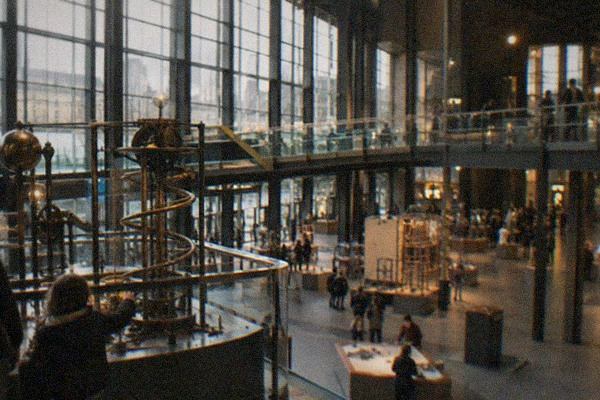
The pendulum is the moment most visitors remember. Léon Foucault's 1851 experiment demonstrated the rotation of the Earth without anyone needing to look at the sky, and the museum keeps the demonstration alive in its nave. Watching the plane of the pendulum's swing slowly drift is one of the simplest and most elegant science displays anywhere in Paris, and it rewards a few minutes of patient standing.
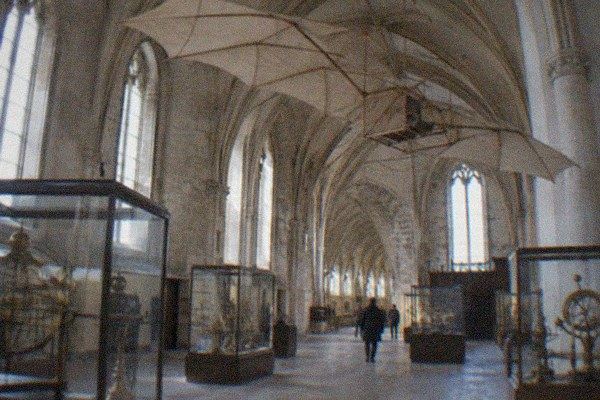
Blériot's aeroplane hangs as an emblem of the machine age. It is the actual type XI monoplane that made the first flight across the English Channel, dangling above galleries that trace how transport, energy and communication were transformed between the 18th and 20th centuries. Around it sit looms, clocks, calculating engines, early cameras and scientific instruments, the working hardware of industrialization.
The building deserves attention too. The collection sits inside a former priory, with the church of Saint-Martin-des-Champs at its heart, a space with vaulted medieval masonry that makes an unusual and memorable setting for aircraft and machinery. Visitors regularly report that the contrast between the architecture and the engineering is half the pleasure of the visit.
Families with curious children tend to do well here, as do visitors with an engineering or industrial-history bent. If your ideal Paris museum is Impressionist canvases, the Musée d'Orsay will serve you better. But for a change of pace from paintings, this museum delivers something genuinely different, and it is one of the city's most underrated cultural stops.
Tickets And Entry Routes
Standard adult admission is €12, whether you buy ahead or pay at the door, so there is no price penalty for deciding on the day. The cheapest way in is free: the museum is free the first Sunday of every month, and it is also free every Friday evening from 18:00 to 21:00, a rule unique to this museum among Paris's major museums.
The Friday-evening window is the tactic savvy repeat visitors use. Arrive after 18:00 on a Friday and you pay nothing, and the galleries are quieter in the evening hours than at midday. Combine that with the first-Sunday rule and a visitor with a flexible schedule never needs to pay the €12 at all.
The standard ticket covers the permanent collection, which is where the pendulum, the Blériot plane and the bulk of the machines live. Temporary exhibitions may carry separate admission, and the museum's own site, arts-et-metiers.net, lists what is currently showing. There is no point buying a ticket before checking whether a Friday evening or first Sunday falls within your travel dates.
If you are building a multi-museum itinerary, note that the national museum network covered by the Paris Museum Pass includes many state museums, and you can confirm current coverage on the official Paris Museum Pass site. Science fans with more time in the city should also look at the Cité des sciences et de l'industrie, the larger, more hands-on science institution on the northern edge of the city. The two make a good pair if your trip has room for both.
When you are ready to lock in a date, the booking panel on this page handles ticket purchases directly, which saves you deciphering the French-language checkout on the museum's own site.
How Long To Allow And When To Go
Allow two to three hours for the permanent collection. The museum is closed every Monday, so plan around that. The best-value timing is Friday after 18:00, when entry is free and the evening hours thin the crowds; the first Sunday of the month is also free but considerably busier.
The visit is sequenced across multiple levels of the priory complex. Most people start with the church, where the pendulum and the suspended aircraft create the strongest first impression, then work through the instrument galleries and the transport collections. Reviewers consistently say two hours feels right for a first visit, while travelers with a serious interest in mechanisms or horology will want three.
Mornings on weekdays tend to be the calmest paid hours. School groups are common on weekday mornings during term time, so late afternoon can actually be calmer than noon. The Friday free window from 18:00 to 21:00 gives you three unhurried evening hours, enough for a full circuit at a relaxed pace.
First Sundays draw families and locals, so arrive early in the free window if you use that route. Weekends are busier than weekdays across the board. There is no timed-entry penalty for the free routes, you simply join the line, but the line moves quickly outside peak Sunday hours.
The station itself is a small bonus: Arts et Métiers has one of the most distinctive platform designs on the network. You can confirm connection details on the operator's own site before you travel, ratp.fr, which is useful if you are coming from farther out.
Know Before You Go
The museum sits at 60 rue Réaumur in the 3rd arrondissement, with its own Metro station, Arts et Métiers, on lines 3 and 11, steps from the entrance. It is closed Mondays. Allow two to three hours, arrive after 18:00 on a Friday for free entry, and do not confuse this museum with the Cité des sciences, which is a different institution in a different part of the city.
The address places you in the heart of the Marais-adjacent Sentier district, a short walk from Place de la République and within easy walking distance of the northern Marais. Line 11 runs directly toward the Belleville and Canal Saint-Martin neighborhoods, and line 3 crosses the city east-west, so the museum is reachable from most central hotels in twenty minutes or less.
Inside, the priory layout means stairs and level changes are part of the experience, as with most buildings of this age. The museum's official site carries current accessibility information for anyone with reduced mobility, and it is worth checking there before visiting, since renovation work in historic buildings can change elevator availability. Large bags and wheeled luggage are generally discouraged in Paris museums, and this one is no exception, so travel light.
Photography is permitted in the permanent galleries without flash, which matters here because the suspended aircraft and the pendulum are genuinely photogenic. The nave's vertical space is the shot most visitors try to capture, with the plane silhouetted against the vaulting.
One practical note on timing your arrival: the Friday free window starts at 18:00 sharp, and the last entry in that window naturally compresses toward 21:00, so arrive at the start of the window rather than the end if you want the full three hours inside.
What Is Nearby And Worth Pairing It With
The museum sits in the 3rd arrondissement, within a fifteen-minute walk of the Musée Picasso, the Musée Carnavalet and the Conservatoire National des Arts et Métiers, the engineering school that gave the museum its collection. The Marais district surrounds it, so a half-day of museum-going pairs naturally with an afternoon of neighborhood wandering, covered passages and food.
The immediate streets are some of the best walkable territory in central Paris. Rue Réaumur runs toward the covered passages of the 2nd arrondissement, themselves a kind of living industrial heritage, with glass roofs and ironwork from the same century the museum's exhibits celebrate. Heading east instead brings you into the Marais, with the Place des Vosges a pleasant twenty-minute stroll away.
If one science museum is not enough, the Cité des sciences et de l'industrie makes the natural companion piece. It is bigger, newer and far more hands-on, aimed squarely at families, whereas the Musée des Arts et Métiers is about historic originals in an atmospheric old building. Doing both gives you the whole arc of French science and industry, from Foucault to interactive displays.
For a contrast of eras rather than themes, the Palais Garnier sits a few Metro stops away and shows off the same century's other obsession: opulent architecture and the decorative arts. And if you want to cap a day of engineering with pure spectacle, the view from the Arc de Triomphe looks down the twelve avenues radiating from the Étoile, a piece of urban planning every bit as engineered as the machines in the priory.
Practically speaking, a good day looks like this: the museum in the morning or on a Friday evening, lunch in the Sentier, then the Marais or a second monument in the afternoon. Two museum-heavy stops per day is the comfortable ceiling for most visitors, and this one earns its slot.
Is The Musée des Arts et Métiers Right For You?
This museum is right for you if you like machines, inventions and the story of how technology reshaped daily life. It is wrong for you if you came to Paris exclusively for painting and sculpture. It costs €12, it is free on first Sundays and Friday evenings from 18:00, it closes on Mondays, and it offers a visit you genuinely cannot get elsewhere in the city.
Strengths first. The collection is made of originals, not replicas, which gives it a weight that many science centers lack. Foucault's pendulum is a scientific landmark, the Blériot plane is an aviation milestone, and the setting, a medieval priory with a soaring church nave, turns a museum visit into an architectural experience as well. Reviewers consistently say the museum exceeds expectations, precisely because most visitors arrive knowing little about it.
Limitations matter too. There are fewer interactive displays than at a purpose-built science center, so very young children may drift after an hour. Label information leans toward French, so visitors who read no French get more from the visual spectacle than from the detailed captions. The priory layout means a lot of standing and walking, with stairs between levels.
The value case is straightforward. At €12 the museum is priced in line with Paris's mid-tier monuments, and the free routes make it accessible to any budget without advance planning. A visitor using the Friday-evening window gets a world-class collection for nothing, with thinner crowds than the paid hours, which is about the best value proposition in the city.
For itinerary builders, this museum fills the slot that Paris's classic art museums cannot: the engineering and industry chapter of French history. Pair it with an art museum on the same day and you cover both halves of the national story, the aesthetic and the mechanical, in one well-rounded visit.
Questions People Ask
How Much Does Musée des Arts et Métiers Cost?
Standard adult admission is €12, and it is the same price whether you pay at the door or buy in advance. The museum is also free the first Sunday of every month and free every Friday evening from 18:00 to 21:00, so with flexible timing you can visit without paying anything at all.
Is There A Free Entry Day At Musée des Arts et Métiers?
Yes, two. The museum is free on the first Sunday of each month, and it is also free every Friday from 18:00 to 21:00. The Friday-evening rule is unique to this museum among Paris museums and typically comes with smaller crowds than the first-Sunday free day.
What Is The Cheapest Way To Visit Musée des Arts et Métiers?
Arrive on a Friday after 18:00, when entry is free until 21:00. This is the cheapest way in and one of the calmest times to visit. The first Sunday of the month is equally free, though it draws noticeably more families and larger crowds.
When Is Musée des Arts et Métiers Closed?
The museum is closed every Monday, all day, year-round. Plan around that when building your itinerary, especially if you are combining it with other museums that may close on different days. Any other day of the week is a candidate for your visit.
How Long Should I Spend At Musée des Arts et Métiers?
Allow two to three hours for the permanent collection. Two hours suits most first-time visitors, while anyone with a serious interest in machines, clocks or the history of engineering will happily use three. The Friday free window from 18:00 to 21:00 gives you exactly three unhurried hours.
What Are The Highlights Inside Musée des Arts et Métiers?
Foucault's pendulum, demonstrated in the church nave, is the signature exhibit. The museum also displays the plane Blériot flew across the English Channel in 1909 and about 3,000 machines, instruments and inventions, all housed in a former medieval priory whose architecture is part of the attraction.
Where Is Musée des Arts et Métiers And How Do I Get There?
The museum is at 60 rue Réaumur in the 3rd arrondissement of Paris. The nearest Metro station is Arts et Métiers, served by lines 3 and 11, and it sits essentially at the museum's doorstep. The address is also within comfortable walking distance of the northern Marais and Place de la République.
Is Musée des Arts et Métiers Good For Kids?
It works well for curious children, especially school-age kids who enjoy machines, planes and the pendulum demonstration. There are fewer hands-on interactive displays than at the Cité des sciences et de l'industrie, so very young children may lose interest after about an hour. Older kids with any interest in how things work tend to love it.