Cité des sciences et de l'industrie is Europe's largest science museum, sitting in Parc de la Villette in the 19th arrondissement. It is the one big Paris museum built with children in mind, and it suits families better than any other major institution in the city.
What Is The Museum Known For?
It is known as Europe's biggest science museum, and as the one Paris museum purpose-built for children. Interactive exhibitions, a planetarium, and the dedicated Cité des Enfants area make it the city's default family destination. The building alone, a vast glass-and-steel structure inside a former slaughterhouse complex, is unlike anything else in Paris.
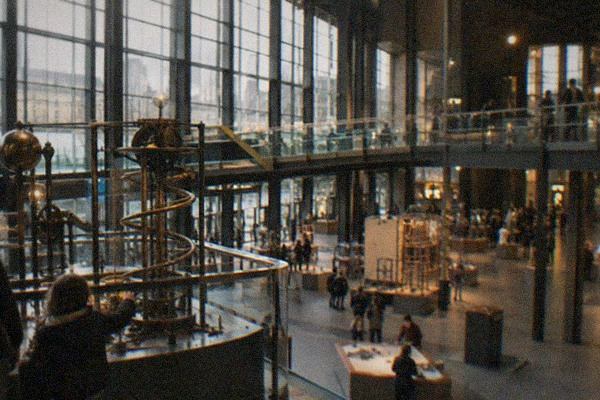
Most of Paris operates at museum scale: town palaces, converted railway stations, aristocratic hôtels particuliers. Cité des sciences et de l'industrie inverts every one of those assumptions. It occupies the slaughterhouse halls of the old Villette meat market, an industrial site reimagined in the 1980s under architect Adrien Fainsilber. The result is a cathedral of steel and glass, some ten meters of it rising into a daylight-flooded atrium, with greenery climbing the interior walls. The surrounding Parc de la Villette, designed by Bernard Tschumi, spreads the experience outward across lawns, red follies, and canalside walkways.
What is inside follows the same logic of scale. The permanent exhibitions cover sound and light, the human brain, mathematics, energy, the universe, and transport, and almost all of them are designed to be touched, switched on, pushed, and played with. This is a museum where a hands-off policy would be absurd. Reviewers consistently say the interactivity is genuine rather than token, with working demonstrations rather than buttons that light up a screen and nothing else.
The children's zone, Cité des Enfants, is the museum's signature asset. It offers two separate age-banded sessions, one for roughly 2 to 7 year-olds and one for about 5 to 12 year-olds, each run as a timed, capacity-limited session rather than a free-flowing gallery. That structure is why parents rate it so highly. The museum's own page states that these sessions are the most booked element of the whole site, and that they should be planned around rather than fitted in on arrival.
For travelers without children the museum still earns its time, particularly the planetarium and the temporary shows, which historically have covered subjects from deep-sea exploration to the science of dinosaurs with the production values you would expect of a national institution. If your trip is short and you are traveling child-free, the Musée des Arts et Métiers, the collection of historic scientific instruments and machines in the 3rd arrondissement, is the more condensed and more historically focused alternative, and many visitors with a strong interest in science do both on separate days.
Which Ticket Or Entry Route Applies?
Entry is split across several products: the permanent exhibitions, the Cité des Enfants timed sessions, the planetarium, and the large temporary shows. A general ticket gets you the permanent halls, while the planetarium, planetarium-style add-ons, and temporary blockbusters are typically separate. The museum's own tariff page lists a full adult rate of €15, with €12 for visitors aged 6 to 25. Bookable tickets start from $15.12, though that is a booking from-price, not the euro door price, and it may include a timed slot or a guide.
The single most important planning decision is whether you want Cité des Enfants. Because those sessions are timed and capacity-limited, they are the part of the museum that genuinely sells out, particularly on weekends and during French school holidays. Everything else can more often be managed on the day. Visitors regularly report that arriving without a reserved children's session slot in high season means missing it entirely.
The bookable ticket for this museum carries a 3.8 rating across 1,212 reviews. That is a respectable score at a very high volume, and the spread is worth reading as a family traveler would. The consistent themes in positive reviews are the scale of the place, the genuine interactivity, and the value for children. The consistent criticism is crowds, especially during school holidays, and the distance from central Paris, which surprises visitors who underestimate the trip out to the 19th arrondissement.
If you are fitting the museum into a wider Paris itinerary, think about what kind of sightseeing you are doing on the day. A science museum day is a half-day minimum and pairs naturally with the park and canal around it rather than with, say, a monument. Save the monument and fine-arts days for other products: the Musée d'Orsay and the Arc de Triomphe are both strictly central and completely different in pace. The official site, cite-sciences.fr, sets out the current combination options and session times.
How Long To Allow And When To Go
Allow a half day, four hours at minimum for a family visit, and longer if you book a Cité des Enfants session, since the session itself runs on a fixed schedule and the permanent halls around it demand another two to three hours. The museum is closed every Monday. Weekday mornings outside French school holidays are the quietest window.
This is not a two-hour museum. The exhibition floors are large and deliberately slow-paced, designed so that children spend real time at each station rather than filing past. Families who try to compress it into a morning before lunch reliably report that they left half the building unvisited. If a planetarium show and a temporary exhibition are both on your list, you are effectively committing the full day, with a lunch stop in between.
Timing matters more here than at central Paris museums because the visitor base skews heavily local. French school holidays fill the building with families from the surrounding suburbs, and Wednesday afternoons, when French schools traditionally release pupils early, are also busy. A Tuesday, Wednesday morning, or Thursday in term time gives you the calmest experience. In contrast, the visitor crush at the Palais Garnier or the Louvre follows the international tourist calendar, so quiet days do not line up between the two kinds of attraction.
Season matters too. Parc de la Villette runs open-air cinema in summer and hosts festivals across its lawns, so a warm-weather visit can be extended into the park for free. In winter the museum becomes the main draw, and the indoor scale becomes an advantage. Whenever you go, check the day of the week first. Monday closures catch out a surprising number of visitors because the museum feels like a year-round institution, and a Monday arrival at the door is a wasted trip across the city.
The RATP journey planner on the transport operator's site is the reliable way to time the ride from your hotel, because the museum sits far enough north that transfer time varies a lot depending on where you start.
Know Before You Go
The museum sits at 30 Avenue Corentin Cariou on the edge of Parc de la Villette in the 19th arrondissement, coordinates 48.89481, 2.38253. Porte de la Villette on Metro line 7 is the nearest station, a short walk from the entrance. Expect 30 to 40 minutes of travel time from central Paris, and plan around the Monday closure before you set out.
Line 7 runs directly from the heart of the city, including Châtelet, so the journey is simple but long. Allow extra time if you are coming from the Left Bank, since a transfer is unavoidable. Taxis and rideshares work well for the return trip in the evening, when tired children make the prospect of a crowded metro less appealing. Cyclists can use the canal-side paths along the Canal de l'Ourcq, which run almost to the door.
Once inside, the layout rewards a plan. The main atrium acts as the circulation hub, with the permanent exhibitions on the upper levels and the temporary shows generally installed on the ground and lower floors. The Cité des Enfants occupies its own wing, so families with a booked session should locate it first and work the rest of the visit around the session time. The on-site restaurants and café areas handle lunch crowds, though the surrounding park has cheaper options in fine weather, and picnicking on the lawns is a normal local habit.
Accessibility is well handled for a building of this scale. The museum's own page states that the whole site is accessible to visitors with reduced mobility, with step-free routes through the atrium and elevators to all exhibition levels. The vast ground floor alone offers plenty to see, so even a partial visit works for visitors who want to limit walking. In terms of belongings, this is a hands-on museum and there are no restrictive small-bag rules of the kind enforced at monuments, but large suitcases will not be practical on the crowded interactive floors, and luggage storage is limited, so travel light.
One last practical note: the surrounding neighborhood is residential and unstarry, nothing like the streets around the grand monuments. That is part of the appeal. Arrive with realistic expectations of a working-class, canal-side district rather than a postcard one, and the trip feels like a genuine slice of Parisian family life.
What Is Nearby Worth Pairing It With?
Parc de la Villette itself is the best pairing, with its themed gardens, red architectural follies, lawns, and summer open-air cinema all free to wander. The Canal de l'Ourcq runs alongside, giving a waterside walk or a short cruise option. The Philharmonie de Paris concert hall sits next door, and the smaller, quirkier science attractions of the 19th arrondissement fill out a full day.
Do not leave immediately after your museum session. The park is one of the largest green spaces inside the Périphérique, designed by Bernard Tschumi as a landscape of red follies, playgrounds, and themed gardens, including a bamboo garden and a mirror garden. In summer it hosts the open-air cinema festival, one of Paris's most-loved seasonal rituals, and the lawns fill with picnicking families every weekend. The canal-side path makes an easy, flat walk or bike ride southeast toward the Bassin de la Villette, where you will find the popular swimming basins, guinguette-style bars, and boat rentals.
The Philharmonie de Paris, Jean Nouvel's striking building in the same complex, hosts classical concerts, jazz, and world music, and its museum of music, with instruments across five centuries, is a genuinely good rainy-day attraction in its own right. Between the two buildings, the Grande Halle hosts major touring exhibitions, so check what is on during your dates, because a blockbuster show can justify the trip out on its own.
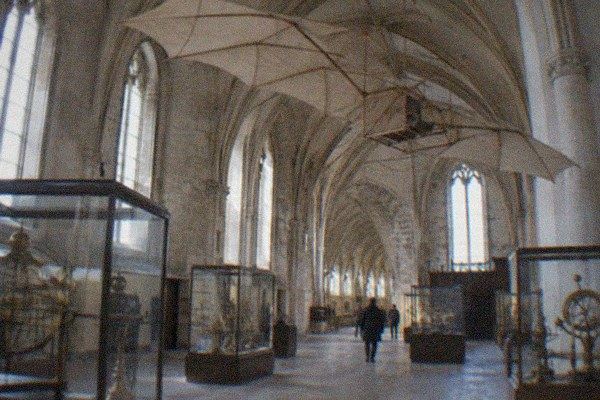
If your appetite for science is not yet satisfied, plan a separate day for the Musée des Arts et Métiers in the 3rd arrondissement, home to the original Foucault pendulum, historic astronomical instruments, and the first operational calculator prototypes, all housed in a medieval abbey. It is the historic counterweight to Cité des sciences et de l'industrie's hands-on modernity, and older children with a real interest in engineering often prefer it. For visitors who want the contrast with a completely different register of Parisian spectacle, the Palais Garnier is a direct Metro ride away and makes a spectacular late-afternoon stop. Combining the science museum with a monument in the same day is possible but rushed, so most itineraries keep them apart.
Foodwise, the immediate area is short on destination restaurants, so eat well either inside the museum's own cafés or picnic in the park. The Canal Saint-Denis and Quai de la Charente stretch offers a handful of unpretentious local spots, and the drive or ride back into central Paris passes through better dining territory if you time your exit for early evening.
Questions People Ask
What Is Cité des sciences et de l'industrie?
It is Europe's largest science museum, located in Parc de la Villette in the 19th arrondissement of Paris. Built inside a former slaughterhouse complex, it holds interactive exhibitions on science and technology, a planetarium, large temporary shows, and the dedicated Cité des Enfants area for children.
Is It A Good Museum For Children?
Yes, it is the one major Paris museum purpose-built for children. The Cité des Enfants offers timed, age-banded sessions for roughly 2 to 7 and 5 to 12 year-olds, and the permanent exhibitions are designed to be touched and operated rather than just looked at. Families consistently rate it the best children's museum experience in the city.
How Much Do Tickets Cost?
The museum's own tariff page lists a full adult rate of €15, with €12 for visitors aged 6 to 25. Bookable tickets start from $15.12, though that is a booking from-price rather than the euro door price, and it may include a timed slot or a guide. The museum sets separate pricing for the planetarium, Cité des Enfants sessions, and temporary shows, so your total depends on what you include.
How Do I Book The Cité Des Enfants Session?
The children's sessions are timed and capacity-limited, so they are the element that genuinely sells out, especially on weekends and during French school holidays. Reserve your slot in advance through the booking panel on this page or via the museum's own site rather than counting on getting in on arrival.
When Is The Museum Closed?
Cité des sciences et de l'industrie is closed every Monday. Plan your visit for any other day of the week, and note that French school holidays and Wednesday afternoons bring local family crowds, so weekday mornings in term time are the quietest window.
How Do I Get There?
The museum is at 30 Avenue Corentin Cariou on the edge of Parc de la Villette, in the 19th arrondissement. The nearest Metro station is Porte de la Villette on line 7, which runs directly from central Paris including Châtelet. Allow 30 to 40 minutes of travel time from the city center.
How Long Should A Visit Take?
Plan on at least a half day, around four hours. If you book a Cité des Enfants session, the fixed session time anchors your visit and the surrounding permanent halls need another two to three hours. Adding a planetarium show and a temporary exhibition turns it into a full day.
Is The Museum Accessible?
Yes. The museum's own page states that the whole site is accessible to visitors with reduced mobility, with elevators serving all exhibition levels and step-free routes through the central atrium. The large ground floor alone contains plenty to see, so a shorter, lighter visit is workable.