Musée Curie occupies Marie Curie's actual laboratory and office in the 5th arrondissement, a small free museum on the history of radioactivity and the Curie family. It suits science-curious visitors and anyone wanting a quiet, meaningful hour between bigger sights. It costs nothing to enter.
What You Actually See Inside
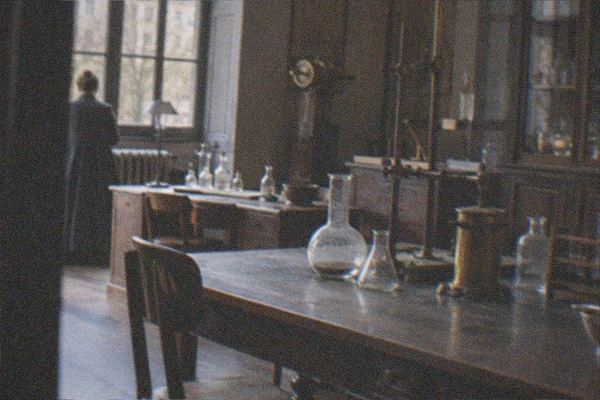
The centerpiece is Marie Curie's own laboratory and office, preserved in the building where she worked, presented alongside displays on the discovery of radioactivity and the scientific work of the whole Curie family. The whole museum is compact, and the free entry means you can linger or leave as you like.
Musée Curie sits inside the Pavillon Curie, part of the old Radium Institute complex on rue Pierre et Marie Curie, a short walk from the Panthéon. This is not a building reconstructed to look old or a collection gathered from elsewhere: the rooms you walk through are the rooms where Marie Curie directed her laboratory from 1914 until her death in 1934. That fact does a lot of work here. Standing in her office, with her desk and period furnishings, is the reason most people make the trip, and reviewers consistently say it is the most affecting few square meters of the visit.
The rest of the display tells the story of radioactivity in the Curie family's hands. You will find instruments and apparatus from the era, photographs, documents, and explanatory panels covering the discovery of polonium and radium, Marie Curie's two Nobel Prizes, her mobile radiology units from the First World War, and the continuation of the work by her daughter Irène Joliot-Curie and son-in-law Frédéric Joliot-Curie, who won a Nobel of their own. The panels are in French and English, so visitors who do not read French are not stranded.
The museum is deliberately small, closer to a historic house visit than a grand gallery. You move through a few rooms at your own pace. There is no prescribed route and no audio guide as the main experience: the objects and the walls do the talking. Visitors regularly report that the intimacy is the point, since you are a few feet from where one of the most important scientific careers of the twentieth century actually happened. Do not arrive expecting interactive science-center exhibits; if hands-on physics displays are what you want, the Cité des sciences et de l'industrie is the Paris institution built for that.
One practical note: because it is a historic laboratory space, some rooms are compact and the visit flows through rather than sprawls. Budget attention for the chemistry laboratory where radiochemistry experiments were carried out, and for the personal effects and documents that round out the family story, including the Joliot-Curies' era at the institute.
Tickets And Entry: What It Costs
Entry to Musée Curie is free for everyone, and no ticket is needed. You simply walk in during opening hours. There is nothing to buy in advance, no timed entry to reserve, and no booking step of any kind. The only costs are the ones you create yourself getting there.
That makes this one of the simplest museum visits in Paris to plan. There is no ticket line, no pass to validate, and no voucher on your phone. The museum's own page states plainly that admission is free, and that matches how the visit works on the ground. If a website tries to sell you admission to this museum, be suspicious, because there is nothing to sell.
What still costs money is everything around the visit: your Metro or bus fare, lunch in the Latin Quarter, and anything you buy in the gift shop if there is one on the day you go. Note that free entry does not mean always open. This museum has one of the most restricted schedules of any free museum in Paris, which we cover in the next section, so the real constraint is the calendar, not the wallet.
The table below is the complete price picture. There are no concessions, no youth rates, and no discount tiers because there is no base price to discount. Children and young visitors pay nothing, same as adults.
If you are building a Paris itinerary around free and low-cost entry, this museum pairs naturally with the city's other free scientific institutions, though some, like the Musée des Arts et Métiers, have standard paid admission and entirely different scale. Musée Curie is the rare case where a genuinely historic site costs nothing at all.
Opening Days, Timing And When To Go
Musée Curie is closed Sunday, Monday and Tuesday, so it is open only three days a week. It is also closed for the whole of August and from 20 December to 5 January. If you arrive outside Wednesday to Saturday, the doors will very likely be shut. Free entry is not a reason to skip checking the calendar.
This is the single most important planning fact on this page. Many free museums in Paris are closed one day a week, typically Monday or Tuesday. Musée Curie goes further and closes three days out of seven, plus a full month in summer, plus the winter holiday stretch. A visitor who shows up on a Tuesday, or any day in August, will find it closed regardless of season or weather. The museum's official site is the place to confirm the current schedule before you travel.
How long to allow: this is a short visit. The rooms are few and the content is dense but digestible. An hour covers it comfortably for most people, and deeply interested visitors might stretch to ninety minutes reading every panel. That makes it a good mid-morning or late-afternoon insert in a Latin Quarter day rather than a destination that anchors the day.
When to go depends on what else is happening. It sits steps from the Panthéon and the Rue Mouffetard market street, so a Wednesday to Saturday morning here fits neatly into a walking loop of the 5th arrondissement. Crowds are rarely a reported problem, partly because the limited hours keep casual foot traffic down. The trade for free entry is simply this: you plan around the museum's calendar, not yours.
Know Before You Go
Musée Curie is at 1 rue Pierre et Marie Curie in the 5th arrondissement, within walking distance of the Panthéon. Plan around the three-day opening week, the August closure, and the winter closure. Arrive by Metro to nearby stations in the Latin Quarter.
The address places it in the heart of the Quartier Latin, the historic university district on the Left Bank. The street itself is named for the couple whose work you have come to see, which is a small pleasure before you even reach the door. The Panthéon, where Marie Curie is interred alongside Pierre, is only minutes away on foot, and many visitors naturally combine the two into one coherent pilgrimage.
For transport, the surrounding Latin Quarter is served by several Metro lines, and the city's transport operator RATP publishes route and accessibility information for every station at ratp.fr, which is worth a look when planning connections. Local buses also serve the area well. If you are staying anywhere central in Paris, the trip is short, which matters when the museum is only open three days a week and you want to protect a specific slot.
Accessibility and bag rules are not facts we can verify for this museum, so we will not invent them. Historic laboratory buildings in Paris vary widely in step-free access, and a small museum may or may not have a cloakroom. The honest advice is to contact the museum directly through its official site before visiting if either of these matters to your group. What we can say for certain is the visit is short and the content is text-heavy, so younger children may need the science explained to them rather than discovering it on their own.
Photography is generally relaxed in small French museums, but policies can change, and again, this is not something we can state as a verified rule. The safest habit in any historic room furnished with original objects is to ask staff before using flash or a tripod. Staff in museums of this size are usually few and genuinely knowledgeable, and a question about the building is often the best free tour you will get.
Who It Suits And Who It Does Not
Musée Curie suits visitors with a real interest in the history of science, Marie Curie's life, or women's history in the sciences. It does not suit anyone expecting a large museum experience, hands-on exhibits, or a full afternoon of galleries. It is a quiet, focused stop of about an hour, free, and best for the already curious.
Reviewers consistently say the emotional weight of the place comes from specificity: this is the actual office, the actual laboratory, the actual street where the Curies lived their working lives. For a visitor who has read anything about radium, polonium, or the two Nobel Prizes, standing in the room is a different order of experience than reading a panel in a bigger institution. The museum respects that by keeping the presentation restrained rather than theatrical.
Families should calibrate expectations. Older children studying physics or history can get a lot from it, and free entry removes all risk if a younger child loses interest after twenty minutes. But there is no dedicated children's track here, no experimental stations, and no room to roam. Families wanting an interactive science outing should treat this as the adults' stop and save the hands-on energy for the Cité des sciences et de l'industrie, which is built from the ground up for that kind of visit.
Likewise, travelers chasing Paris's blockbuster names, the Musée d'Orsay crowds or the monumental Arc de Triomphe, should understand this is the opposite register: small, calm, and quick. That is its strength. People who plan only the big sights and then feel museum fatigue often report that a compact, free, human-scale museum like this one is the most memorable hour of their week. The reverse also holds, so be honest with yourself about your interests before making the trip.
The practical sweet spot is a visitor already in the Latin Quarter on a Wednesday through Saturday, with an hour to spare and some genuine curiosity about how radioactivity was discovered, in the room where much of that discovery was carried forward.
What Is Nearby Worth Pairing
The Panthéon is the obvious pairing, minutes away on foot, and it holds the tombs of both Pierre and Marie Curie. The rest of the 5th arrondissement, the Rue Mouffetard market street, the Jardin des Plantes, and the Seine's Left Bank, all sit within an easy walk. Plan Musée Curie as one stop in a Latin Quarter loop.
Start with the Panthéon if you want the story to land in the right order, or end with it if you prefer to earn the visit first. Marie Curie was reinterred in the Panthéon's crypt in 1995, the first woman honored there on her own merits, with Pierre at her side. Seeing the laboratory where she worked and then the crypt where she rests turns two nearby stops into one coherent narrative about a life, and visitors regularly report doing exactly this.
The Jardin des Plantes and its associated museums lie a bit further east and make a good half-day continuation, especially for families. The Rue Mouffetard, one of the oldest market streets in Paris, is a few minutes south and the natural place for lunch before or after your visit. The area is dense with bookshops and cafés, which suits the mood of a science-history stop better than a rushed itinerary would.
For visitors who leave wanting more history of science and invention, the Musée des Arts et Métiers in the 3rd arrondissement covers centuries of scientific instruments and machinery on a much grander scale, with paid admission. Between the two, Musée Curie offers the human story in its original rooms, free of charge, three days a week. That combination, a genuine historic site that costs nothing, is rare in any capital city, and it is the honest reason this small museum earns its place on a Paris itinerary.
A workable day: a morning visit to Musée Curie on an open day, an hour inside, then the Panthéon, lunch on Mouffetard, and an afternoon in the gardens. Nothing in that loop requires you to spend a cent beyond transport and food.
Questions People Ask
Is Musée Curie Free To Visit?
Yes. Entry is free for everyone and no ticket is needed. You walk in during opening hours. The costs that remain are your own transport, food, and anything you choose to buy while you are out.
Do Children Need A Ticket?
No. Entry is free for everyone, including children and young visitors, and no ticket is required for any age group. The visit is short and text-heavy, so younger children may engage better with the story than with hands-on exhibits, since there are none.
When Is Musée Curie Closed?
The museum is closed every Sunday, Monday and Tuesday, meaning it is open only three days a week. It also closes for all of August and from 20 December to 5 January. Check the museum's official site before traveling.
How Long Should I Allow For A Visit?
About an hour covers the museum comfortably for most visitors, since it is a compact historic laboratory rather than a large gallery. Deeply interested visitors might stay closer to ninety minutes reading the French and English panels in detail.
Where Is Musée Curie Located?
The museum is at 1 rue Pierre et Marie Curie, in the 5th arrondissement of Paris, within walking distance of the Panthéon. The street is named after the couple whose laboratory the building preserves, and the surrounding Latin Quarter is easily reached by Metro or bus.
What Do You Actually See Inside?
The centerpiece is Marie Curie's own laboratory and office in the building where she worked from 1914 to 1934. Displays cover the discovery of radioactivity, her Nobel Prizes, her wartime radiology units, and the work of Irène and Frédéric Joliot-Curie.
Should I Book Anything In Advance?
No. There is nothing to book, reserve, or buy for this museum, since entry is free and no ticket is needed. The only planning that matters is the calendar, because the museum is open just three days a week and closes for August and the winter holidays.
What Nearby Sights Pair Well With It?
The Panthéon is minutes away on foot and holds the tombs of Pierre and Marie Curie, which completes the story. The Rue Mouffetard market street and the Jardin des Plantes are also close, making an easy half-day loop through the 5th arrondissement.