What Is Special About The Musée Marmottan Monet, And How Long To Spend?
What the €14 door ticket covers at the Musée Marmottan Monet, the $16.89 bookable entrance, how long to allow, why it is shut on Mondays and how it compares with the Musée d'Orsay and the Musée de l'Orangerie.
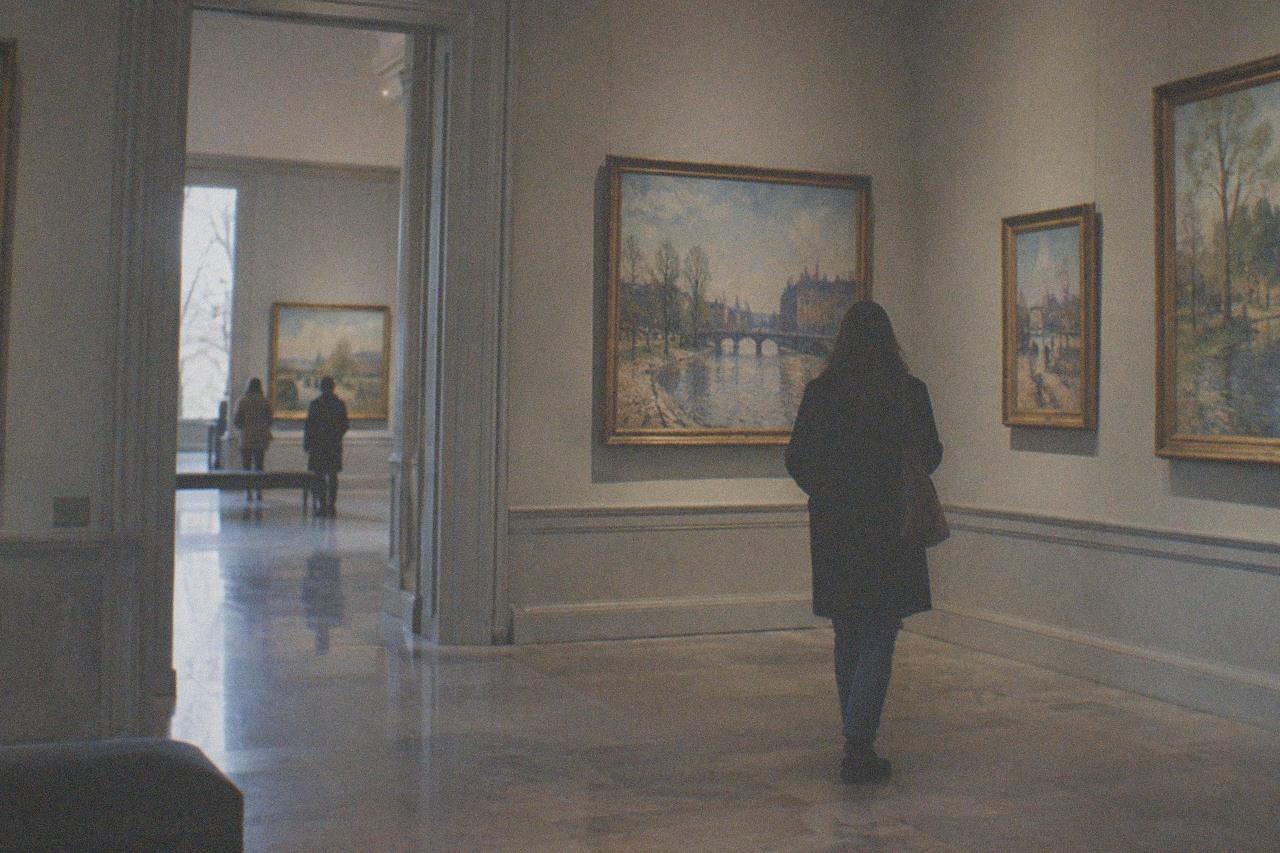
What Is Special About The Musée Marmottan Monet, And How Long To Spend?
The Musée Marmottan Monet is a small, timed-entry Impressionist museum in the 16th arrondissement, built around Claude Monet, where a €14 door ticket covers the permanent collection in a single sitting. It rates 4.8 across 18 reviews, it is closed on Mondays, and most visitors are comfortably finished in 90 minutes to two hours.
What makes it special is focus rather than scale. The Musée d'Orsay spreads an entire movement across a former railway station; the Marmottan gives its rooms to one painter and the school around him, at 2 rue Louis-Boilly on the eastern edge of the 16th arrondissement. Nobody crosses a vast plaza to get in. You arrive on a timed slot, you walk a compact set of rooms, and you leave having seen one thing deeply rather than many things briefly.
The rating deserves a second read before it impresses anyone. A 4.8 looks like a knockout next to the Orsay's 4.7, but the base behind it is 18 reviews, where the Orsay's is 27,881. Treat the number as a small museum that the people who make the trip tend to love, not as a verdict from a crowd. It also explains the atmosphere: this is a place visitors find on purpose, which changes the tone of the rooms more than any star count can.
Who it suits best is easy to say. A first-time visitor with three days in Paris has bigger stops to spend them on, and the Musée d'Orsay will teach more in one morning. A returning visitor, a painter's-painting enthusiast, or anyone who has already stood in the Musée de l'Orangerie's oval rooms and wanted more of the man himself is exactly who the Marmottan is built for. That distinction runs through the whole article.
The pages below lay out what the ticket covers, what it costs in both euro and dollars, how long to allow, which day it is shut, and how the museum compares with its two big Impressionist rivals. The figures come from the venues' own published prices, tracked across the Paris Museums site, and every door price in euro is the museum's own charge, never a booking platform's number dressed up as one.
The short planning answer: book a timed slot, give it two unhurried hours, and keep well clear of Monday.
What Is Actually Inside The Musée Marmottan Monet?
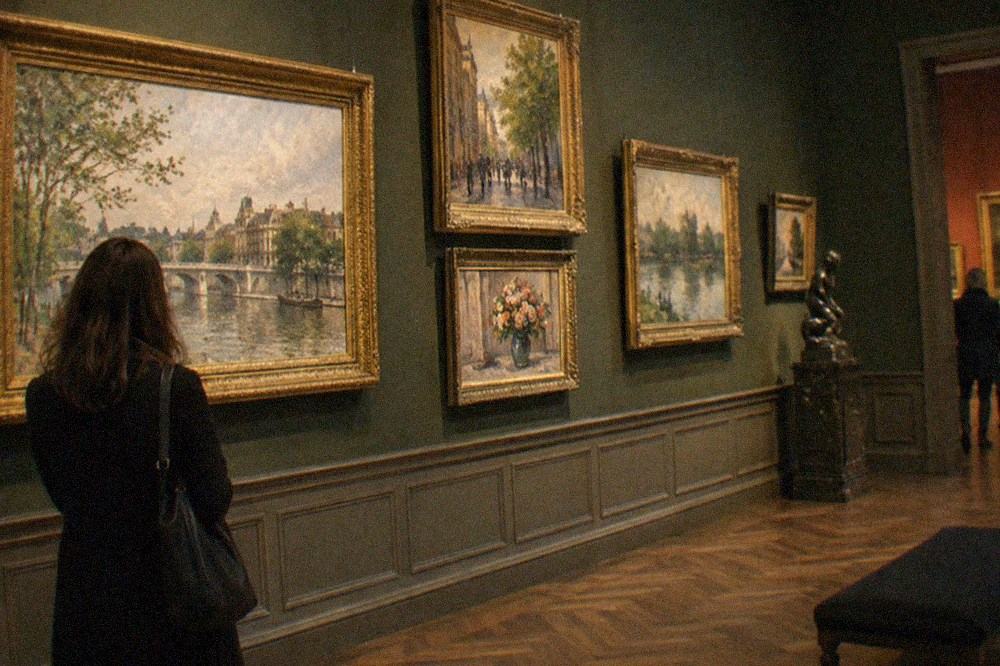
Inside, the permanent collection is built around Claude Monet, shown in a compact building you can see end to end in one visit. The €14 ticket covers the permanent collection, timed entry is compulsory, and there is no second charge once you are through the door. What you get is one building, one route, and no annex to hunt down.
The collection's centre of gravity is Monet himself, a run that reaches from his early decades through to the late garden paintings. That arc is the museum's real argument: instead of meeting the painter once, at his most famous, you meet him across a working life. The rooms are hung so the development is visible, which is what a single-painter museum can do and a survey museum cannot.
The building is domestic in scale rather than monumental, and that changes the visit more than the floor plan suggests. Labels sit close, rooms stay quiet, and the people a timed slot lets in spread out rather than bunching at a single famous canvas. The small review base skews affectionate in tone: guests describe finding the museum rather than being ferried to it, which is a fair summary of the experience on offer.
It helps to know what the phrase "permanent collection" means in Paris, because the city runs two systems with two different rules. The eleven Paris Musées city museums, from the Musée Carnavalet to the Petit Palais, are free to everyone all year for their permanent collections, and charge only when a temporary exhibition is in. The Marmottan is not one of them: it is a standalone, always-ticketed museum, so the €14 is charged every day it opens, permanent collection or not. Nothing about a free Sunday applies here.
Timed entry is the last piece of the mechanics. The ticket names a slot and the visit starts there, which at a museum this size is less about crowd control and more about pacing: you know what the Marmottan costs you in hours before you leave the hotel, and the day can be planned around that fixed block instead of around a queue.
What Does A Ticket To The Musée Marmottan Monet Cost?
A ticket costs €14 at the door, and the bookable entrance ticket reads $16.89, a platform from-price that is not the same thing as the door price in euro. There is no free day at all: the museum is not on the Paris Museum Pass and no first-Sunday rule applies. Timed entry is compulsory.
The two figures answer two different questions, and keeping them apart is half the planning. The €14 is the museum's own door price, charged in Paris, in euro, at the counter. The $16.89 is a booking platform's from-price for the bookable entrance ticket, in dollars, for the same timed entry settled from home. They are never the same number and never presented as the same number here; one is what you pay walking up, the other is what booking ahead in another currency looks like.
The pass question is where most pre-trip arithmetic goes wrong. The Musée Marmottan Monet is on the exclusion list, and the pass's own site is the source for that: it sits alongside the Eiffel Tower, the Catacombes de Paris, the Opéra Garnier, the Atelier des Lumières, the Musée Jacquemart-André, the Fondation Louis Vuitton and every Paris Musées city museum. None of the three pass versions, €85 for two days, €105 for four, €125 for six, buys a single room here. If the pass is already in your pocket, this counter is cash.
For the price and the timed-entry rule straight from the source, the museum's own visit page prints the current tariffs and the booking terms. That page is what every euro figure in this article is measured against, and it is the place to confirm the slot rules before a fixed itinerary.
If you would rather settle the slot before you travel, the Musée Marmottan Monet tickets page lines up the bookable entrance against the door price, keeping the two currencies and the two meanings clearly separate.
| Way in | Cost | What it covers |
|---|---|---|
| At the museum | €14 | Permanent collection, one timed slot |
| Bookable entrance ticket | $16.89 | The same timed entry, booked ahead, a platform from-price |
| Paris Museum Pass | Not covered | The museum is on the pass exclusion list |
How Long Should You Spend At The Musée Marmottan Monet?
Plan on 90 minutes to two hours inside the Musée Marmottan Monet, in a timed slot you book before you arrive. A quick pass through the Monet rooms takes about an hour, and a slower, painting-by-painting visit runs to about two and a half. Anything past that is a sitting, not a visit.
Two hours is the number to plan around, and the honest range runs from an hour to two and a half. What drives the difference is not floor space, which is modest, but how you read. The permanent collection can be walked in under an hour at museum-shuffle pace. It takes twice that if you stop, and the quiet here is precisely what makes stopping feel natural rather than obstructive.
The timed slot sets the outer limit anyway. Because entry is by a compulsory reservation, the visit is bounded by the museum's day rather than by your stamina, and that is a useful discipline for a Paris itinerary. Plan the Marmottan as a fixed block, not an open-ended wander, and the rest of the 16th arrondissement can be arranged around it: a morning here, a walk afterwards, lunch somewhere in the district, and no part of the plan sliding.
Who should take the long version is anyone whose main reason for the trip is Monet himself. A museum of this scale repays close looking in a way the large venues cannot manage, simply because the rooms are small and the canvases hang close enough to study without a crowd pressing. The short version suits visitors slotting the Marmottan between two larger stops, and there is nothing wrong with that either; the collection reads clearly even at speed.
These are planning ranges rather than promises. The museum publishes no official visit duration, and your own pace settles it.
| Pace | Time to allow | What gets done |
|---|---|---|
| Quick pass | About 60 minutes | The Monet rooms, walked, no lingering |
| Standard visit | 90 minutes to 2 hours | The full permanent collection at a reading pace |
| Slow visit | Up to 2.5 hours | Everything, plus the labels, plus time sitting with the late work |
When Is The Musée Marmottan Monet Open, And Which Day Is It Shut?
The Musée Marmottan Monet is closed on Mondays and opens the rest of the week, at 2 rue Louis-Boilly in the 16th arrondissement. It sits in the same Monday-closure camp as the Musée d'Orsay, the Musée Rodin and the Musée Picasso Paris, which makes Tuesday through Sunday the safe window. Entry is by timed slot.
Monday is the shut day, and it is the single most trip-breaking detail in this article. Monday is also the closed day for the Musée d'Orsay, the Musée Rodin, the Musée Picasso Paris, the Musée du quai Branly, the Musée de Cluny, the Musée des Arts et Métiers, the Catacombes and every free Paris Musées city museum from the Musée Carnavalet to the Petit Palais. A Monday in Paris is a thin day for museum-goers, and the Marmottan joins the thinning.
The opposite camp closes Tuesdays instead: the Louvre, the Musée de l'Orangerie, the Musée Guimet and the Château de Fontainebleau. A handful of venues never close at all, among them the Eiffel Tower, the Arc de Triomphe, the Panthéon, the Sainte-Chapelle, the Conciergerie, the Musée Jacquemart-André, the Atelier des Lumières and the Musée de l'Armée. The practical reading: if Monday kills the Marmottan plan, the Arc de Triomphe and the Panthéon will still take the day.
The address is 2 rue Louis-Boilly, in the 16th arrondissement, on the quiet side of the district. That position is why the museum rewards a deliberate trip: it sits off most walking routes, so the people inside generally chose to be there, and once you are in the neighbourhood the visit slots into a half-day neatly rather than being squeezed between two larger stops.
Timed entry governs the open days, so the slot you book is the slot you get. Keep the Monday rule and the slot rule together when planning: the first decides which day, the second decides which hour.
How Does The Musée Marmottan Monet Compare With The Orsay And The Orangerie?
Against the Musée d'Orsay, €14 at the door and €16 booked online, 4.7 across 27,881 reviews, closed Monday, and the Musée de l'Orangerie, €11 at the door, 4.7 across 7,188 reviews, closed Tuesday, the Marmottan is the quiet third option: €14 at the door, 4.8 across 18 reviews, closed Monday, and a single-painter focus the other two do not attempt.
The three museums do different jobs, and the comparison is really about roles. The Musée d'Orsay is the survey: a whole era of painting in a former station, a door price of €14 against €16 booked online, and a 4.7 rating across 27,881 reviews. The Musée de l'Orangerie is the single great room: the water-lily cycle in two oval spaces, €11 at the museum against €12.50 online, 4.7 across 7,188 reviews, closed Tuesday. The Marmottan is the deep cut, the one for visitors who already know the headline paintings and want the painter whole.
For the Orsay itself, the Musée d'Orsay booked tickets page keeps the two prices separate, which matters because the online ticket costs more than the counter one and the free first Sunday still needs a booked slot. Book the Marmottan for depth and the Orsay for breadth, in that order if Monet is the reason for the trip.
The Musée de l'Orangerie pairs with the Marmottan better than either pairs with the Orsay: both are single-idea museums, and between them they cover the two halves of Monet most visitors actually want, the panoramic and the developmental. The Musée de l'Orangerie timed entry page handles the obligatory reservation, which the free first Sunday also demands, so the pairing works best when both slots are settled in the same sitting.
The price logic across the three is almost amusing in its honesty. The Marmottan and the Orsay cost the same €14 at their counters, the Orangerie costs €11, and the online inversions, €16 for the Orsay and €12.50 for the Orangerie, mean booking ahead costs more at the two big venues while the Marmottan's bookable entrance sits in dollars. None of the three is expensive by Paris standards; the choice is about crowd and focus, not money.
For the full route across the city, the where to see Monet in Paris guide puts all three in one itinerary, with door prices and closed days side by side.
| Museum | At the museum | Booked ahead | Rating | Closed |
|---|---|---|---|---|
| Musée Marmottan Monet | €14 | $16.89 bookable entrance | 4.8 across 18 reviews | Monday |
| Musée d'Orsay | €14 | €16 online | 4.7 across 27,881 reviews | Monday |
| Musée de l'Orangerie | €11 | €12.50 online | 4.7 across 7,188 reviews | Tuesday |
Is The Musée Marmottan Monet Worth The Detour To The 16th Arrondissement?
For anyone already rooted in the 16th arrondissement, or pairing a Monet morning with the quiet end of the district, the Musée Marmottan Monet earns its €14 door ticket. For everyone else it is a strong second-day visit, the one to book after the Musée d'Orsay and the Musée de l'Orangerie are already in the bag.
The verdict depends on appetite rather than quality. If one painter followed across decades sounds like a good afternoon, the Marmottan is close to ideal: small, quiet, cheap by Paris standards, and honest about what it is. If a museum needs to carry a whole day, the Orsay does that and this does not, and no framing of the 4.8 rating changes it.
One caution for planners stacking the 16th into a single day: the Fondation Louis Vuitton, the district's headline venue out at the Bois de Boulogne, is closed and reopens on 9 October 2026, so a same-day pairing should not be built around it until that date has passed. The Marmottan, by contrast, runs its normal week minus Mondays, and its timed slots make it the easiest of the two to plan around.
Set against the wider field, the museum sits comfortably in the second tier of the best museums in Paris: not the first visit, not an afterthought, and priced at €14 for exactly what it delivers. Book the slot, keep Monday clear, give it two hours, and it will do what it promises and nothing it does not.
Common Questions About The Musée Marmottan Monet
What Is Special About The Musée Marmottan Monet, And How Long To Spend?
It is a compact, single-painter Impressionist museum at 2 rue Louis-Boilly in the 16th arrondissement, with timed entry, a €14 door ticket and a 4.8 rating across 18 reviews. Most visitors are done in 90 minutes to two hours. It is closed on Mondays and it is not on the Paris Museum Pass.
How Much Does A Ticket To The Musée Marmottan Monet Cost?
€14 at the museum. The bookable entrance ticket reads $16.89, a booking platform's from-price in dollars, not the door price in euro. There is no free day, no first-Sunday rule and no pass coverage of any kind.
Is The Musée Marmottan Monet On The Paris Museum Pass?
No. The museum is on the pass's exclusion list, alongside the Eiffel Tower, the Catacombes de Paris, the Opéra Garnier and the Musée Jacquemart-André. No pass version, at €85, €105 or €125, buys entry here.
Which Day Is The Musée Marmottan Monet Closed?
Monday. It opens the rest of the week, which puts it in the same Monday-closure camp as the Musée d'Orsay, the Musée Rodin, the Musée Picasso Paris and the free Paris Musées city museums. Tuesday through Sunday is the safe window.
How Long Should You Spend At The Musée Marmottan Monet?
Ninety minutes to two hours covers the permanent collection at a normal reading pace. A quick pass takes about an hour, and a slow, painting-by-painting visit can run to two and a half. These are planning ranges, not published durations.
Can You Just Turn Up At The Musée Marmottan Monet Without A Timed Ticket?
Timed entry is compulsory, so the slot should be settled before you travel. Turning up without one risks being turned away even on quiet days, and the fixed slot is also what makes the visit easy to plan around.
Is The Musée Marmottan Monet Better Than The Musée De L'Orangerie?
They do different jobs. The Musée de l'Orangerie, €11 at the museum and closed Tuesday, is the central panoramic stop; the Marmottan, €14 and closed Monday, is the quieter, deeper, single-painter visit in the 16th. Many visitors do both in one trip.