Musée Marmottan Monet holds the largest collection of Claude Monet's paintings anywhere, including Impression, Sunrise, the canvas that gave Impressionism its name. It suits first-time Monet admirers and serious art lovers who want the paintings without the crowds of the bigger museums.
What Is The Museum Known For?
The hallmark here is sheer depth: Musée Marmottan Monet owns the world's largest collection of works by Claude Monet, and among them hangs Impression, Sunrise, the 1872 harbor view of Le Havre whose title gave the Impressionist movement its name. Add strong holdings of Berthe Morisot and other painters of the era and you have a focused, deeply satisfying collection.
The story of how this museum became a Monet shrine is worth knowing before you go. The building began life as a hunting lodge for the Duke of Valmy, later bought by Jules Marmottan, whose art and Empire-era collections seeded the museum. The Monet fortune arrived later, in 1966, when Michel Monet, the painter's second son, bequeathed the works that had remained in the family. That single bequest transformed a discreet mansion into the most concentrated Monet destination on earth.
Impression, Sunrise is the painting most visitors come for, and the museum treats it accordingly. A critic's mocking use of its title in 1874 accidentally christened an entire artistic revolution, and standing in front of the small, misty canvas you understand how much menace and atmosphere Monet packed into a modest format. Around it, the collection spreads across the painter's whole career: the Normandy coast, the gardens at Giverny, and the late water lilies painted as his eyesight failed.
The museum also holds a second, less famous strength: the works of Berthe Morisot, one of the few women central to the Impressionist group. Her oil portraits and drawings here trace a career that ran parallel to Monet's, from Salon-adjacent respectability to loose, light-filled domestic scenes. Reviewers regularly report that this gallery is the quiet surprise of the visit, often overlooked by crowds heading straight for the water lilies. If your interest runs to female Impressionists or works on paper, allow extra time on the lower floor.
Beyond the Impressionists, the mansion's period rooms preserve furniture and objets d'art from the First Empire, a reminder that the house itself is a historical artifact. Medieval illuminations round out the lower galleries. The sequence, from a Renaissance of manuscript painting to the birth of modern light, gives the visit an unusual arc that most single-artist museums cannot offer.
What You Actually See Inside
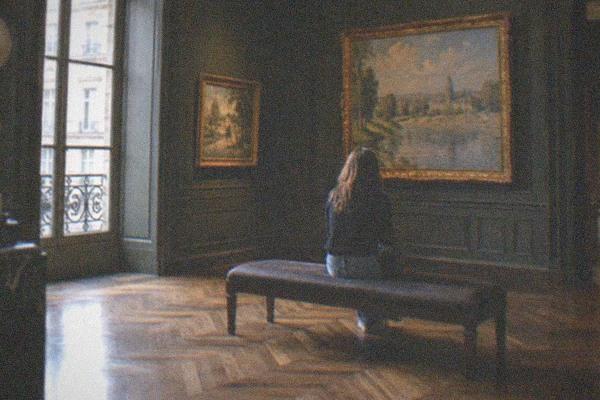
Plan on a mansion visit arranged across a ground floor of period rooms, a basement level of medieval and illuminated works, and a first-floor gallery given over almost entirely to Monet. You will see Impression, Sunrise, late water lily canvases of unusual size, works by Berthe Morisot, and a supporting cast of Impressionist and modern painters, all inside a 19th-century residence in the 16th arrondissement.
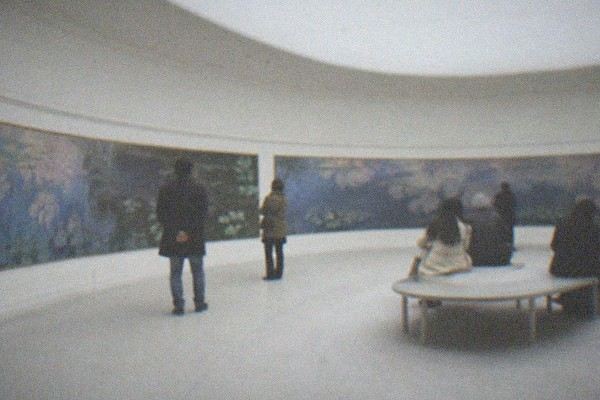
The Monet floor is the destination, and the museum has sequenced it so the paintings carry the narrative. The large late works hit hardest: these are canvases from the final decades at Giverny, painted without horizon lines, where the water, the reflections and the sky dissolve into one another. Visitors regularly describe these rooms as the closest thing to the Musée de l'Orangerie's oval water lily rooms, but in a more intimate setting where you can get within arm's reach of the brushwork. The color shifts as Monet's cataracts progressed are visible without any wall text, though the labels explain the timeline.
Impression, Sunrise anchors the Impressionist gallery, hung alongside works by Monet's contemporaries. Take a slow circuit here. The painting is smaller than most people expect, and its orange sun against slate-blue water reads differently from three feet away than it does from postcards. The Morisot works sit nearby, and reviewers consistently say the contrast is instructive: her brushwork is if anything looser, her subjects domestic and interior where Monet's are atmospheric and public.
The ground floor returns you to the house's origins. The Marmottan family's Empire furniture, portraiture and decorative objects fill salon-style rooms that retain the feel of a private residence rather than a purpose-built gallery. Downstairs, the illuminated manuscripts run from medieval devotional books to books of hours, a collection that rewards anyone with an interest in the history of the painted page. The full circuit is compact but dense, and there is no bad order in which to see it, provided you save time for the Monet floor rather than exhausting yourself on the manuscripts.
Tickets, Prices And Entry Routes
Standard adult admission at the door is €14, and timed entry is compulsory, so you need to plan an arrival rather than simply walking in. A bookable entrance ticket starts at $16.89 from online sellers, and that from-price is not identical to the euro door price because it can bundle a timed slot or a guide. The museum is not on the Paris Museum Pass, so pass holders cannot use it here.
The compulsory timed-entry rule is the single most important planning detail. Entry slots spread visitors through the day, which keeps the Monet floor comfortable, but it means a same-day decision can leave you waiting for a later slot. Booking ahead is the practical move for anyone with a fixed itinerary, especially in summer. The bookable ticket currently carries a 4.8 rating across 18 reviews, which gives a reasonable signal on how the timed-entry experience works out for most buyers.
If you are building a Paris art itinerary around the pass, adjust your expectations here. Many of the city's heavyweights participate, and pass holders often assume universal coverage. Musée Marmottan Monet sits outside that system, so budget for it separately. For travelers comparing the big Impressionist options, our pages on Musée d'Orsay tickets and Musée de l'Orangerie tickets cover the other two pillars of Monet viewing in the city, both of which work differently from this one.
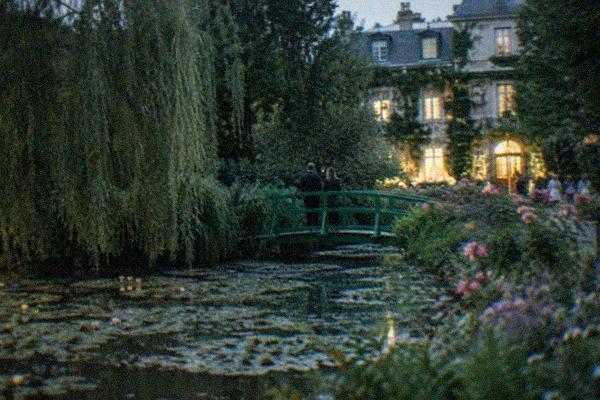
For visitors combining this museum with a day trip, note that the Fondation Claude Monet at Giverny makes the natural companion piece: here you get the paintings, there you get the garden and pond that produced them. The two sites book separately and neither covers the other. Whatever your route, reserve your Marmottan slot before you finalize the rest of the day; the timed-entry system is strict about late arrivals.
How Long To Allow And When To Go
Allow ninety minutes to two hours for a full circuit, longer if you want to sit with the late Monet canvases or the Morisot gallery. The museum is closed every Monday, so build your Paris schedule around the other six days. Because entry is timed, when to go matters less for crowds than for slot availability, so early booking matters more than clever arrival times.
Ninety minutes covers the ground-floor rooms, the illuminated manuscripts and the Monet floor at a steady pace. Two hours lets you backtrack, and backtracking is worth it here: the late water lilies reward a second pass after your eye has adjusted to Monet's blues and greens, and the Morisot gallery deserves unhurried attention that most visitors only give it on the way out. Serious Monet enthusiasts regularly report spending half a day, and the mansion's compact footprint makes long stays physically easy.
Season and day of week shape the experience more than the hour. Weekday mornings are the calmest windows in practice, since the 16th arrondissement is a residential quarter with less through-traffic than the city center, and school groups tend to arrive later. Avoid counting on a Monday visit under any circumstances, as the museum is closed every Monday without exception. The museum's official site carries the authoritative word on special closures and holiday schedules, worth a quick check against your travel dates.
Compared with the city's blockbuster museums, this one is refreshingly predictable. There is no two-hour entry queue culture and no scramble at the door, because the timed slots do the crowd control. The trade-off is rigidity: show up well outside your slot and you may be turned away or pushed to the next opening. Build in the walk from the Metro, which takes a few minutes through a calm residential neighborhood that many visitors find a pleasant change from central Paris.
Know Before You Go
The museum sits at 2 rue Louis-Boilly in the 16th arrondissement, a quiet residential stretch west of the Bois de Boulogne. Bring your timed-entry booking, expect a walk of several minutes from the nearest Metro station through a calm neighborhood, and remember that Monday visits are impossible. Standard adult admission is €14 at the door if you arrive without a booking.
The 16th arrondissement location surprises first-time visitors who expect every Paris museum to sit beside a major landmark. Instead, Musée Marmottan Monet occupies a handsome mansion on a narrow street of apartment blocks, and the approach on foot is part of the charm. Give yourself a buffer for the walk and for finding the entrance, which is more discreet than the grand entrances of larger institutions. For onward travel planning across the city, the RATP transport operator's site is the reliable source for Metro and RER routing.
A few practical notes on the visit itself. The museum is compact and horizontally manageable, with the main galleries on the upper floor and the manuscript collection below ground, so stair use is part of the standard circuit. Photography policies and bag rules can vary with temporary exhibitions, so the museum's own page is the place to verify current rules before you pack a large camera or luggage. Travelers carrying suitcases on a departure day should plan to store bags at their hotel, as small mansions rarely accommodate bulky items.
The surrounding quarter rewards a little wandering. The streets near the museum are elegant and largely untouristed, with neighborhood cafés rather than chain outlets, and the Bois de Boulogne lies a short stroll west. Visitors regularly report that the calm of the arrival and departure is a genuine pleasure after the density of central Paris, and that the museum feels like being let into a private collection rather than processed through an attraction. That character is exactly why many people rank it among their favorite Paris art stops despite its distance from the core sights.
What Is Nearby Worth Pairing It With
The immediate neighborhood is residential and quiet, so the best pairings are deliberate rather than accidental: the Bois de Boulogne and the western-edge museums and monuments within a short ride. Most visitors pair Musée Marmottan Monet with either a green-space afternoon or one major monument to the east, rather than trying to chain it to a packed city-center day.
Westward, the Bois de Boulagne's paths, lakes and gardens sit within easy walking distance, and a museum-then-park combination works beautifully on a fine afternoon. Eastward and across the river, the Arc de Triomphe is the most natural big-name pairing, close enough that a morning at the paintings and an afternoon atop the monument makes a coherent day on the city's western half. Climbing the Arc after the Marmottan gives you the Paris skyline from above to set against the intimate canvases you saw at ground level.
For a deeper Monet itinerary, think in threes. Start at Musée Marmottan Monet for the broadest survey of the painter's career, continue to the Musée de l'Orangerie for the monumental water lilies installed exactly as Monet intended them to be seen, and finish at the Musée d'Orsay for the wider Impressionist context alongside Manet, Degas and Renoir. Each of those visits takes half a day at a relaxed pace, so resist the temptation to do two in one morning.
Dining near the museum is understated but genuine: the 16th arrondissement is full of neighborhood bistros and pâtisseries that cater to locals rather than visitors, a short walk from the museum on the avenue-side streets. Eat before or after your timed slot rather than hunting for something adjacent, then head toward your second stop. Visitors regularly report that treating the area as a living neighborhood rather than a museum district makes the whole outing feel more like a Parisian Saturday than a tourist circuit, which is arguably the right tempo for a museum built around the pleasures of looking slowly.
Questions People Ask
How Much Does Musée Marmottan Monet Cost?
Standard adult admission at the door is €14. If you book an entrance ticket online in advance, prices start at $16.89, though that from-price can include a timed slot or a guide and is not the same thing as the euro door price.
Is The Paris Museum Pass Accepted At Musée Marmottan Monet?
No. The museum does not participate in the Paris Museum Pass, so pass holders need to buy a separate ticket. Budget for the €14 door price or a bookable timed-entry ticket if you are building a pass-based itinerary across Paris.
Why Is Impression, Sunrise Significant?
It is the painting that gave Impressionism its name. A critic used its title mockingly in 1874, and the label stuck to the entire movement. The canvas hangs at Musée Marmottan Monet, which holds the world's largest collection of works by Claude Monet.
Is Musée Marmottan Monet Closed On Any Day?
Yes, the museum is closed every Monday. Plan your visit for Tuesday through Sunday, and check the official site for any additional holiday closures before you lock in travel dates.
Do I Need A Timed-Entry Ticket?
Yes. Timed entry is compulsory at Musée Marmottan Monet, so you cannot simply walk in whenever you like. Arrive within your slot, and book ahead if your itinerary is fixed, since same-day slots can fill.
How Long Does A Visit Take?
Plan on ninety minutes to two hours for the full circuit, including the Monet gallery, the Berthe Morisot works and the illuminated manuscripts. Devoted Monet admirers often stay longer with the late water lily canvases.
Where Is The Museum Located?
The address is 2 rue Louis-Boilly in the 16th arrondissement, a quiet residential area of western Paris. The walk from the nearest Metro station takes several minutes through a calm neighborhood, so allow buffer time before your timed slot.
How Well Reviewed Is The Bookable Ticket?
The bookable entrance ticket carries a 4.8 rating across 18 reviews. That reflects the timed-entry experience, which spreads arrivals across the day and keeps the Monet galleries comfortable compared with larger Paris museums.