Musée de l'Orangerie is a small museum in the Tuileries garden built around one thing: Claude Monet's Water Lilies, displayed as eight panels across two oval, light-flooded rooms. It suits travelers who want a single, concentrated masterpiece experience rather than an all-day museum trek.
What Is The Museum Known For?
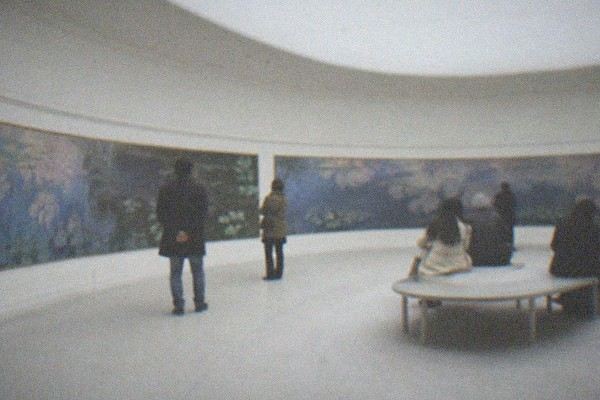
The museum's hallmark is its two oval rooms, where eight monumental Water Lilies panels by Claude Monet wrap around curved walls under diffused natural light. Most visitors spend about an hour here, and the building was in fact designed by Monet himself around exactly this experience, with the rest of the museum holding a strong Post-Impressionist collection.
The oval rooms are unlike anything else in Paris. Monet gave the State the Nymphéas cycle in the years after the First World War and worked closely with the architect Camille Lefèvre on rooms specifically proportioned for the paintings. The result is a setting with no straight walls and no conventional frames: the canvases sit directly on curved surfaces, and skylights wash the surfaces with even, filtered daylight. Standing at the center of either room, you see water, reflections, willows and sky encircling you completely. Reviewers consistently describe the effect as closer to standing inside a painting than looking at one.
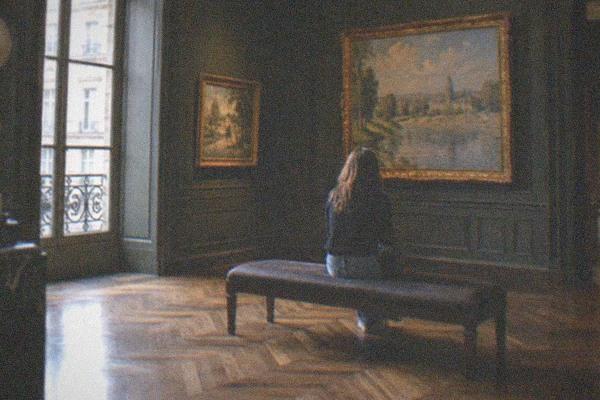
The sequence matters. The two oval rooms occupy the ground floor and function as the emotional core of the visit, and most people spend the bulk of their time there, often sitting on the central benches in silence. Downstairs, the Jean Walter and Paul Guillaume collection holds the Walter Guillaume collection's Post-Impressionist and Modern holdings: Cézanne, Renoir, Matisse, Picasso, Rousseau, Modigliani, Soutine, Utrillo and Derain, among others. It is a compact, high-quality ensemble rather than an encyclopedic survey, and it rewards unhurried looking.
Because the museum is small and deliberately focused, it suits a particular kind of visitor very well. If you want one transcendent hour in central Paris, this is arguably the best-value museum in the city for that. If you want hours of corridor-after-corridor variety, the Louvre next door or the Musée d'Orsay across the river will serve you better. Many visitors combine the two instincts: an hour here, then a longer museum elsewhere.
Tickets, Prices And Entry Routes
Standard adult admission is €11 at the museum, or €12.50 booked online in advance. Timed entry is compulsory, so every visitor needs a slot, and the museum is free on the first Sunday of every month with an obligatory timed reservation. Booked ticket options through the on-page panel start at $15.70.
The pricing structure is simple. The €11 figure is the museum's own door price in euro; paying €12.50 online buys you the certainty of a reserved slot, which matters more here than at most Paris museums because the Water Lilies rooms are small and the timed system is strictly enforced. The museum's official site carries the full breakdown of concessions and exemptions, which change often enough that we do not reprint them all here.
Booked ticket products sold alongside the bare entry, visible in the booking panel on this page, start at $15.70 and are rated 4.7 across 7,188 reviews. These are booking from-prices, not the euro door price, and some options bundle a timed slot or a guide into what you are buying. If all you want is a straightforward entry, the door-price route is the cheaper option; if you want a guided walkthrough of the Water Lilies and the Walter Guillaume collection, the bookable products are the way to do it.
The free first Sunday is the best deal in the building, but it comes with a catch that catches many travelers out: the timed reservation is obligatory, not optional, and free-day slots go weeks in advance. If your Paris dates include a first Sunday, book that slot the moment reservations open. If you miss it, the paid route still works fine on the same day, capacity permitting.
How Long To Allow And When To Go
Allow about an hour, which is genuinely enough for both oval Water Lilies rooms and the lower-floor collection. The museum is closed every Tuesday, timed entry is compulsory, and weekday mornings are the quietest window most visitors report.
An hour well spent is the museum's own unofficial slogan in practice, and it is accurate. Twenty to thirty minutes in the oval rooms, if you linger, plus twenty to thirty downstairs, covers everything at a relaxed pace. This is not a museum where you feel cheated by a short visit; it is a museum built for one. That makes it a strong pairing with a heavier day: an hour here in the morning, lunch in the Tuileries or Place de la Concorde, then an afternoon somewhere bigger.
Tuesday is the one closure to build your week around. On open days, the timed-entry system keeps crowding fairly even, but the first and last slots of the day tend to be the emptiest, and reviewers consistently say the light in the oval rooms shifts noticeably with the hours. Because the rooms rely on natural daylight, the paintings genuinely look different at 9 a.m. than they do at mid-afternoon. There is no single "best" hour, but there is a real difference, and repeat visitors often argue about which is better.
Seasonally, avoid the first Sunday if you dislike crowds, even though it is free, because everyone else has had the same idea and the reservation slots fill with exactly that in mind. School holidays and summer push numbers up across Paris, and this museum's small rooms feel it sooner than the large ones do. Booking a timed slot in advance neutralizes most of the risk regardless of season, which is one reason the online price premium is easy to defend.
Know Before You Go
Musée de l'Orangerie sits inside the Jardin des Tuileries at Place de la Concorde, in the 1er arrondissement, at coordinates 48.86377, 2.32266. It is closed Tuesdays, requires a timed slot, and is easy to reach by Metro or on foot from central Paris.
The setting is half the experience. The building began life as an actual orangerie, a greenhouse for the Tuileries palace's orange trees, and was converted into a gallery in the 1920s specifically to house Monet's gift. You enter through the Tuileries garden, which means the approach is a walk through one of the most formal and pleasant gardens in central Paris, gravel paths, fountains and all, rather than a queue on a sidewalk. Come from the Concorde end and the museum appears tucked into the southwest corner of the garden, low-slung and easy to miss if you are not looking.
For transport, the museum's position makes it reachable from several directions. The nearest Metro stop is Concorde, on lines 1, 8 and 12, a short walk across the Place de la Concorde into the garden. From the Rivoli side, line 1's Tuileries station is equally close. The Paris transport operator's site has journey planners if you are coming from farther out. If you are walking from the Louvre, the museum is roughly a ten-minute stroll west through the garden itself, which is the nicest possible approach. From Musée d'Orsay, cross the river via the Passerelle Léopold Sédar Senghor or the Concorde bridge.
A few practical notes. Security screening applies, as at all major Paris museums, so travel light: large bags and wheeled luggage will not be admitted, and small bags go through the scanner. Photography without flash is generally accepted in the permanent collection, but check signage in the oval rooms, where staff are protective of the viewing atmosphere. The building itself is step-free at entry and has elevators between floors, and the compact layout makes it one of the least tiring museums in Paris for visitors with limited mobility or families with young children. Because entry is timed, arrive within your slot window, not an hour early, as early arrivals are typically held outside until their slot opens.
Nearby Pairings And Monet Beyond Paris
The museum's Tuileries location puts the Louvre, Place de la Concorde and the Champs-Élysées axis within a short walk, and it sits naturally alongside the Musée d'Orsay across the river. Monet fans can extend the Water Lilies story to Giverny or the Musée Marmottan Monet in the 16th arrondissement.
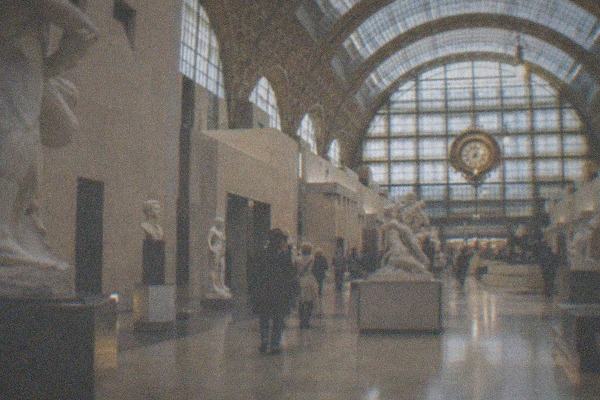
The obvious same-day pairing is Musée d'Orsay, ten minutes away on foot via the Concorde bridge. The two complement each other well: the Orangerie gives you Monet at his most monumental and immersive, while Orsay gives you the full Impressionist context, including earlier Monet, alongside Manet, Degas, Van Gogh and the rest. Do the Orangerie first, while your attention is fresh, because an hour in the oval rooms after three hours at Orsay is a lot of museum for one day in the other order.
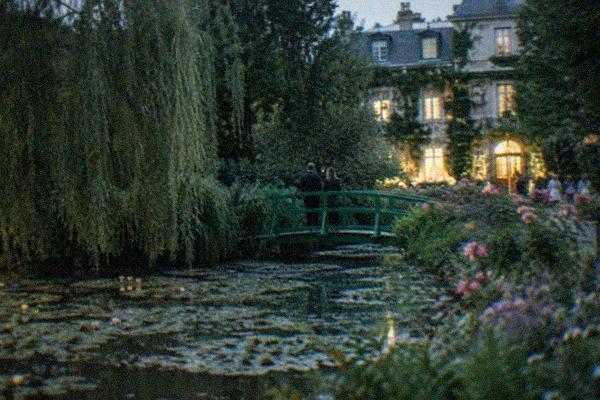
For travelers building an entire Monet itinerary, two extensions matter. The Fondation Claude Monet at Giverny is the artist's house and the actual garden he painted for over forty years, the real-life water garden the Water Lilies came from, a day trip west of Paris. The Musée Marmottan Monet holds the single largest Monet collection anywhere, including Impression, Sunrise, the painting that gave the whole movement its name. Seeing the real garden at Giverny, the Nymphéas cycle at the Orangerie and the Marmottan's early canvases is, in effect, the complete Monet arc, and many visitors plan exactly that sequence.
Back in the immediate neighborhood, the options cluster thick. The Louvre bounds the Tuileries on the east, a five-minute walk. Westward, Place de la Concorde opens onto the Champs-Élysées leading to the Arc de Triomphe, whose rooftop is one of the best vantage points over that entire axis. The Rue de Rivoli runs along the garden's north side with cafés, and the Jeu de Paume, a contemporary art venue, faces the Orangerie directly across the garden. A realistic and satisfying day: morning at the Orangerie, lunch in the Tuileries, afternoon at Orsay, evening walk from Concorde toward the Champs-Élysées.
Who It Suits And Who It Does Not
This museum suits visitors who want one concentrated, world-class experience in about an hour: Monet lovers, first-time Paris travelers on tight schedules, families and anyone fatigued by vast museums. It suits less well those who want hours of varied galleries or a cafeteria-and-shop full museum day, for which the Louvre or Orsay are the better fits.
The strongest case for the Orangerie is density. In a single hour you get what many reviewers describe as the single best room of painting in Paris, plus a small but serious collection downstairs including Cézanne, Matisse, Modigliani, Renoir and Picasso. There is no filler, no long walk between wings, no decision fatigue. Visitors regularly report that the oval rooms are the one Paris museum space that made them sit down and stop talking.
The honest counter-case: this is a specialist stop, not a general one. If Impressionism and Post-Impressionism leave you cold, an hour here will not convert you, and €11 is real money for a museum you may walk through in twenty minutes. The museum also has limited ancillary facilities compared with its giant neighbors, and the timed-entry system means you cannot improvise a spontaneous long visit on a busy day. Families should note that small children often love the oval rooms precisely because there is nothing to walk past, one thing to look at, everywhere you turn, but the quiet atmosphere also means a noisy moment is more conspicuous here than it would be at the Louvre.
The practical verdict most visitors land on is this: book a timed slot, come early, give it an hour, then use the location. The museum sits inside one of the great walks of Paris, with the Tuileries, the Concorde axis and the river crossings all immediately at hand, and the price of admission buys not just the Water Lilies but the most convenient single hour of museum-going in the city. If your time in Paris is measured in hours rather than days, this is one of the hours best spent.
Questions People Ask
How Much Does Musée de l'Orangerie Cost?
Standard adult admission is €11 at the museum or €12.50 booked online in advance. The first Sunday of every month is free with an obligatory timed reservation. Booked ticket options sold through the on-page panel start at $15.70 and may include a guide or a timed slot.
Is Musée de l'Orangerie Free On Certain Days?
Yes, the museum is free on the first Sunday of every month. A timed reservation is obligatory even on the free day, so you still need to reserve a slot in advance. Free-day slots tend to book up well ahead, so plan early if your trip includes a first Sunday.
What Is There To See At Musée de l'Orangerie?
The museum is home to Claude Monet's monumental Water Lilies series: eight panels displayed across two oval rooms with diffused natural light, arranged so the paintings wrap around you. Below the oval rooms, a Post-Impressionist and Modern collection includes works by Cézanne, Renoir, Matisse, Picasso, Modigliani and Soutine.
How Long Should I Spend At Musée de l'Orangerie?
About an hour is enough for most visitors, which covers the two oval Water Lilies rooms and the lower-floor collection at a relaxed pace. Reviewers consistently describe it as an hour well spent. It is a small, focused museum, so a longer visit is possible but not necessary.
Is Musée de l'Orangerie Closed Any Day Of The Week?
Yes, the museum is closed every Tuesday. Plan around that when building your itinerary, and remember that timed entry is compulsory on every open day, so you need a reserved slot regardless of when you visit.
How Do I Get To Musée de l'Orangerie?
The museum sits inside the Jardin des Tuileries at Place de la Concorde, in the 1er arrondissement, at coordinates 48.86377, 2.32266. The nearest Metro stop is Concorde on lines 1, 8 and 12, a short walk across the square into the garden. From the Louvre it is about ten minutes on foot through the Tuileries.
Do I Need To Book Musée de l'Orangerie Tickets In Advance?
Timed entry is compulsory, so every visitor needs a slot. You can reserve online at €12.50 or take your chances at the museum for €11, subject to availability. Booking ahead is the safer option, especially on weekends, during school holidays and on the free first Sunday.
Is Musée de l'Orangerie Worth It If I Have Already Seen Musée d'Orsay?
Yes, because the experiences are different. Orsay shows the full Impressionist story across many works, while the Orangerie gives you Monet's Water Lilies in two purpose-built oval rooms, an immersive setting with no equivalent at Orsay. Many visitors do the Orangerie in an hour and Orsay the same day or the next.