Best Museums In Paris: The Ranked Shortlist
Paris inverts the pattern most visitors expect: the greatest collections here charge admission, while a network of eleven city museums stays free all year. This shortlist ranks what a ticket actually buys, using each museum's own prices and current ratings.
Short answer
The Louvre (€32 non-EEA, €22 EEA, rated 4.6), Musée d'Orsay (€16 online, 4.7) and the Musée de l'Orangerie (€11 at the door, 4.7) top the ranked shortlist. Eleven city museums, including the Musée Carnavalet and the Petit Palais, are free year round with no ticket at all.
How This Shortlist Is Ranked
Ranking Paris museums by fame produces a useless list, because in this city the famous names and the expensive tickets are the same names. This shortlist ranks on what a ticket actually buys: the verified door price each museum charges, the rating real visitors give it, the size of the collection behind the turnstile, and the free-entry rule attached to it. Prices below are the museums' own, in euro, and each rating comes with its review count.
Most published round-ups of Paris museums quietly assume the pattern of free heavyweight museums and small ones that charge. Paris runs the other way. The Louvre, the Musée d'Orsay and the Musée de l'Orangerie, the three collections almost every visitor has heard of, all sell tickets, and two of them now run two-tier pricing that depends on where you live. Meanwhile the museums that cost nothing, the eleven-city network described further down this page, are largely names a first-time visitor has never encountered.
So the ranking logic here is deliberate: a museum earns its place by the ratio between what you pay at the door and what you get once inside, not by its name recognition. The Musée Rodin at €14, rated 4.7 across 2,519 reviews, arguably returns more per euro than the Louvre at €32, rated 4.6 across 7,769 reviews. Both statements are true at once, which is exactly why this guide ends with a verdict by visitor type instead of one universal winner.
One structural fact shapes everything on this page. Paris Museums tracks two separate systems with two separate free rules: the city museums, free every day they open, and the national museums, free one Sunday a month at most. The biggest museum of all, the Louvre, is not free on any Sunday of the year, a correction worth making because so much of the internet still gets it wrong.
The Ranked Shortlist At A Glance
The top of the shortlist is stable: the Louvre first, the Musée d'Orsay second, the Musée de l'Orangerie third, all three rated 4.6 or better across tens of thousands of reviews. Below them sit the Palais Garnier, the Arc de Triomphe and the Musée Rodin, each strong value under €25. The ranked table below carries each museum's own price, rating, review count and closed day.
A note on the prices in this table before you read it. The euro figures are the museums' own admission prices, what you pay at their door or on their own booking site. Where a museum runs two-tier pricing, both prices are shown, because for many readers that single fact changes the shortlist. The one museum on this list with no published door price, the Cité des sciences et de l'industrie, carries no price line at all rather than a guess.
| Rank | Museum | Own price | Rating | Closed |
|---|---|---|---|---|
| 1 | Musée du Louvre | €22 EEA / €32 non-EEA | 4.6 (7,769 reviews) | Tuesday |
| 2 | Musée d'Orsay | €16 online / €14 at the door | 4.7 (27,881 reviews) | Monday |
| 3 | Musée de l'Orangerie | €11 at the door | 4.7 (7,188 reviews) | Tuesday |
| 4 | Musée de l'Armée | €17 | 4.6 (10,794 reviews) | never |
| 5 | Arc de Triomphe | €22 summer / €16 winter | 4.7 (37,709 reviews) | never |
| 6 | Palais Garnier | €15 EEA / €25 non-EEA | 4.6 (19,247 reviews) | none fixed |
| 7 | Musée Rodin | €14 | 4.7 (2,519 reviews) | Monday |
| 8 | Musée Picasso Paris | €16 | 4.5 (3,696 reviews) | Monday |
| 9 | Musée du quai Branly | €14 | 4.6 (3,401 reviews) | Monday |
| 10 | Cité des sciences et de l'industrie | no published door price | 3.8 (1,212 reviews) | Monday |
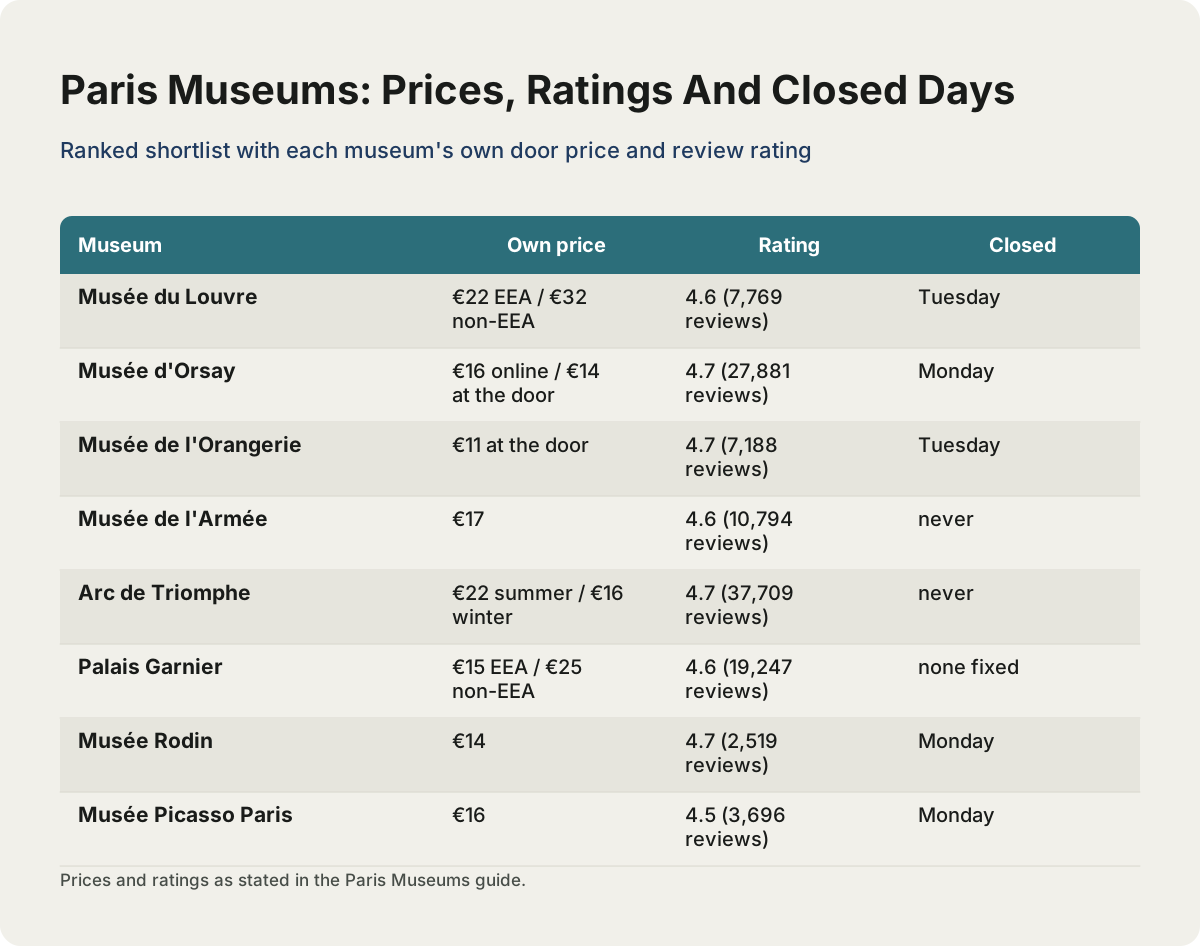
Three patterns jump out of that table. The impressionist pair, Orsay and Orangerie, is rated identically at 4.7, but one costs €16 online and the other €11, which is why they are ranked separately. The Arc de Triomphe holds the single largest review count on the list at 37,709, a reminder that it is a museum with a rooftop, not just an arch. And the Cité des sciences sits tenth on rating alone: 3.8 across 1,212 reviews is the weakest score in the top ten, honest numbers that most round-ups would quietly omit.
For anyone whose plan is simply "the big three, in order", the selection below covers the top three of this table in one place. Each of the three also gets its own section on this page, because they reward different kinds of visitor.
The Louvre: What €32 Actually Buys
The Louvre charges €32 for visitors from outside the EEA and €22 for EEA visitors, a two-tier price that is in force now, not announced. That buys the largest single art collection in this ranking, closed Tuesdays, with compulsory timed entry. It rates 4.6 across 7,769 reviews, and it is free the first Friday evening of each month, except July and August, and on 14 July.
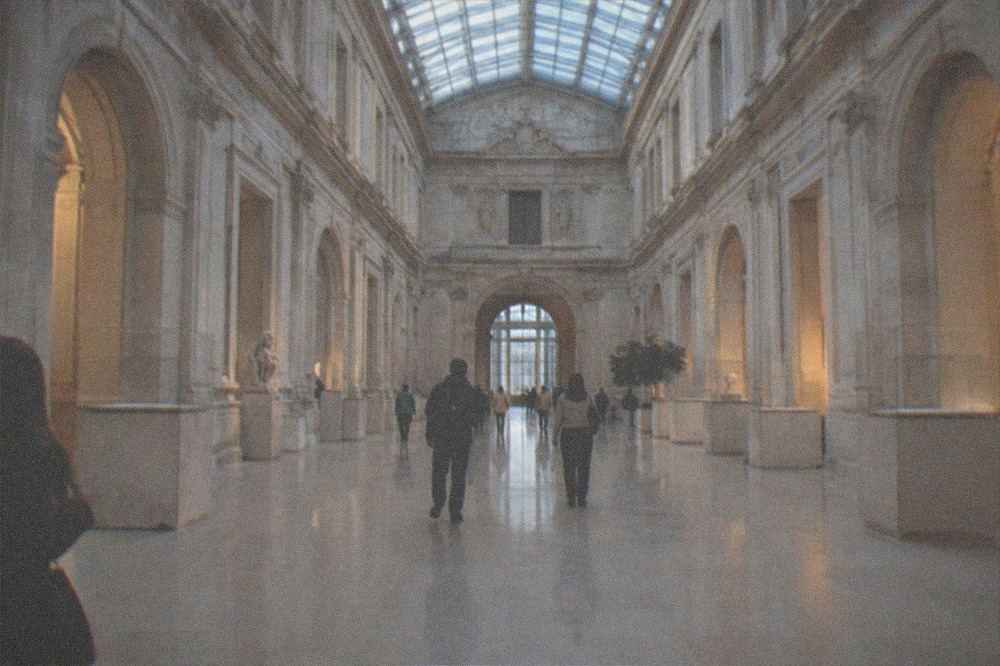
The two-tier price deserves its own sentence, because most guides have not caught up with it. The Louvre's own admission page now states €22 for EEA visitors and €32 for everyone else, and the same shape has appeared at the Sainte-Chapelle, €16 EEA against €22 non-EEA, and at the Palais Garnier, €15 for France and the EEA against €25 from outside. For a family of four from outside Europe, that is a €40 difference at the Louvre alone, real money that changes which other museums make the cut. Under-18s are free with photo ID, and EU and EEA residents under 26 are free too, including holders of a long-stay permit or visa; what gets checked is residency, not nationality.
What the ticket buys is genuinely enormous: the departments run from Egyptian antiquities through Italian Renaissance painting to the decorative arts of Napoleon III, and the building itself, a former royal palace, is part of the collection. The honest caveat is volume. Reviewers consistently say the full museum cannot be seen in a day, and the museum's own gallery availability page publishes a room-by-room closure schedule because rooms rotate shut. A first visit of three focused hours beats an open-ended attempt at everything.
The free rule is the site's sharpest single correction: the Louvre has no free first Sunday, ever. Its free moments are the first Friday of the month after 6pm, except in July and August, plus 14 July. If you find a guide telling you to show up on a free first Sunday, that guide is describing a policy that does not exist.
The practical pages on this site cover the two decisions most visitors face: how much a Louvre ticket costs and how to skip the line. Timed entry is compulsory, so a slot must be booked either way. The museum's own entry details are on the Louvre's official page{: rel="noopener"}.
If the Louvre anchors your trip, the question below is the one to settle before anything else, because the slot matters more than the day.
The Impressionist Pair: Musée d'Orsay And The Orangerie
The Musée d'Orsay costs €16 booked online against €14 at the door, one of the few Paris museums where the online ticket costs more, and rates 4.7 across 27,881 reviews. The Musée de l'Orangerie runs the same inversion at €12.50 online and €11 at the door, rated 4.7 across 7,188 reviews. Both are closed one day a week and both need a timed slot.
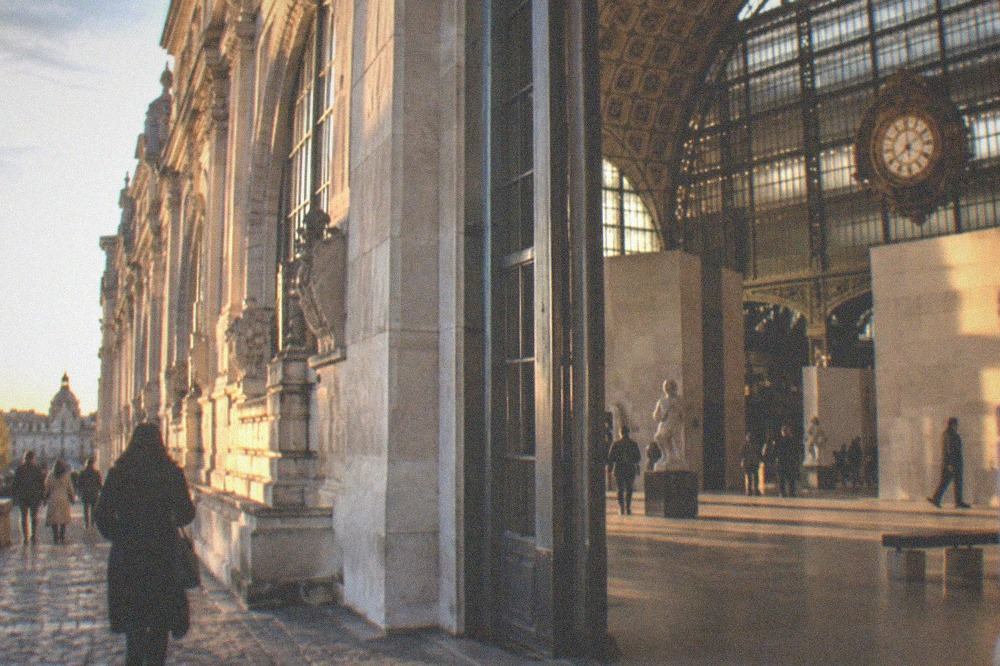
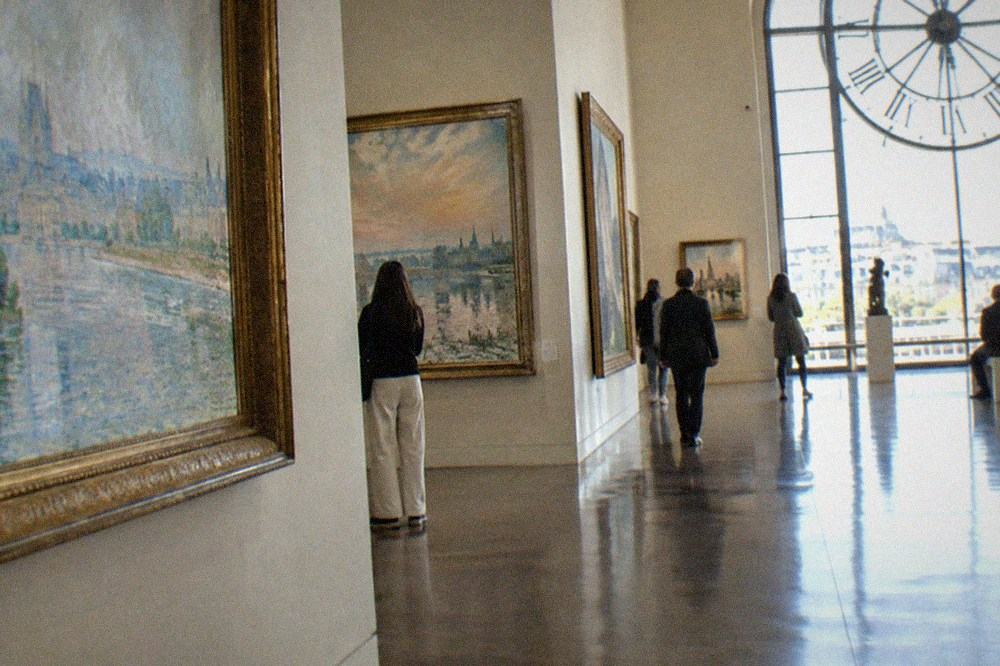
The Orsay is the world's densest concentration of impressionist painting, housed in a former railway station whose great clock is itself a landmark. Van Gogh, Cézanne, Monet, Degas and Manet hang in quantity, and the fifth-floor terrace view over the Seine toward Montmartre is included in the ticket. Renovation works are running from 10 March 2026 to summer 2028, with modified access routes but all collections accessible, so the visit is unaffected in substance. If you are weighing the pair, is the Musée d'Orsay worth visiting has the longer answer, and do you need Orangerie tickets covers the smaller museum's booking question.
The Orangerie is the short visit done perfectly: Monet's Water Lilies in two oval rooms built for them, plus a strong collection of early twentieth-century painting upstairs. Most visitors spend between one and two hours, against three or more at the Orsay. First Sunday of the month is free at both, but the free slot must be booked, and both museums make timed reservation compulsory even on paid days. The booking-inversion detail is worth knowing before you buy: at the Orsay you pay €2 more for the convenience of the online ticket, and at the Orangerie €1.50 more, so a walk-up visit on a quiet weekday morning is measurably cheaper at both.
Between the two, the choice is simple. Two hours or less and a love of Monet means the Orangerie; a half day and the full sweep of the movement means the Orsay. Doing both on consecutive days, morning slots, is the pattern repeat visitors report works best, and the two museums are a fifteen-minute walk apart along the Seine.
The Free Eleven: City Museums That Cost Nothing
Eleven City of Paris museums are free to everyone, all year, with no ticket and no condition, a policy in place since December 2001. The list includes the Musée Carnavalet, the Petit Palais and the Musée d'Art Moderne de Paris. The catch is that a temporary exhibition suspends the free rule: the Maison de Victor Hugo is ticketed until 22 November 2026 for exactly that reason.
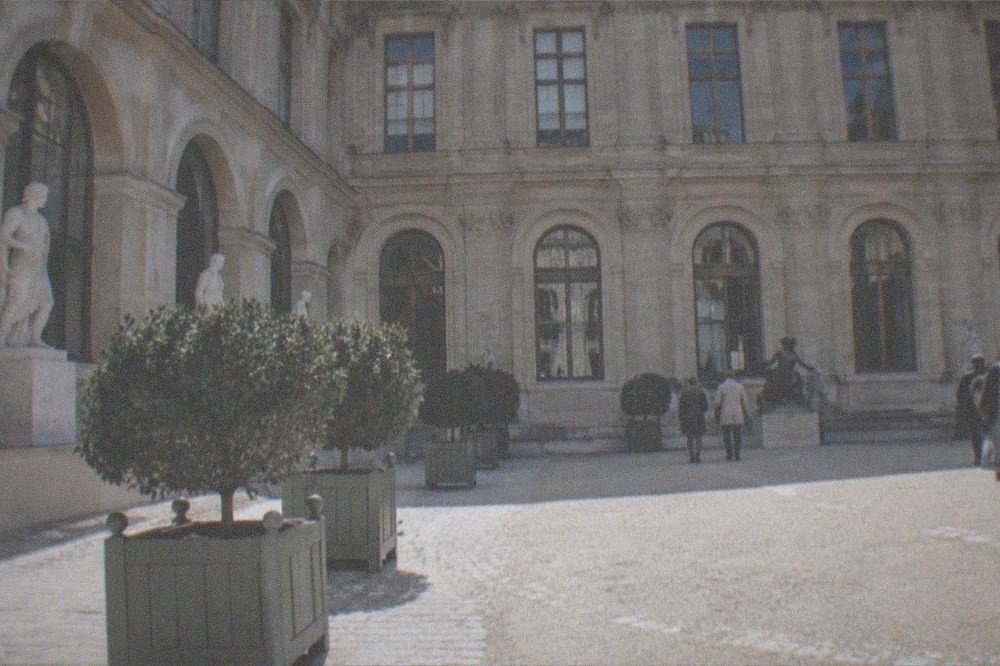
The full picture, including which free museums are easiest to reach, is in the site's free museums in Paris guide. The short version is below. The city's own tariffs page, published by Paris Musées{: rel="noopener"}, is the primary source, and it prints three caveats worth repeating plainly: Balzac is free only outside exhibition periods, Bourdelle, Cognacq-Jay and Zadkine are only partly free during a show, and the Maison de Victor Hugo is currently charging because an exhibition occupies the apartment.
| Free city museum | What it holds | Caveat |
|---|---|---|
| Musée Carnavalet | History of Paris, in the Marais | none |
| Petit Palais | Fine arts, opposite the Grand Palais | exhibitions ticketed |
| Musée d'Art Moderne de Paris | Modern and contemporary art, 16th | exhibitions ticketed |
| Maison de Victor Hugo | Writer's apartment, place des Vosges | ticketed during current exhibition |
| Musée Cernuschi | Asian art, near Parc Monceau | exhibitions €10 |
| Musée de la Vie romantique | Romantic-era house museum, 9th | exhibitions ticketed |
| Musée Bourdelle | Sculptor's studio and gardens, 15th | partly free during shows |
| Musée Cognacq-Jay | 18th-century decorative arts | partly free during shows |
| Maison de Balzac | Writer's house, 16th | free only outside shows |
| Musée Zadkine | Sculptor's house, 6th | partly free during shows |
| Musée de la Libération | WWII resistance and liberation, 14th | none |
Three Paris Musées sites charge and always have: the Palais Galliera, the Catacombes at €31, and the Crypte archéologique, which is shut for works. Any guide that says all fourteen city museums are free is wrong by three. The other free rule worth knowing runs in the opposite camp: national museums, Orsay, Orangerie, Picasso, quai Branly and the rest, are free the first Sunday of the month, while the CMN monuments, the Panthéon, Sainte-Chapelle, Conciergerie and Arc de Triomphe, are free the first Sunday only from January to March and November to December. And the Musée des Arts et Métiers adds a rule no other museum in Paris has: free every Friday evening from 18:00 to 21:00, on top of its first Sunday.
Which Museum Should You Visit First?
There is no single best first museum in Paris. The verdict splits by visitor type: first-timers with one slot each should book the Louvre and the Orangerie; art lovers with two days should run Orsay then Orangerie; families with children should start at the Musée de l'Armée or the Arts et Métiers on a Friday evening; and budget visitors should build a day entirely from the free eleven.
The reasoning behind each verdict is straightforward. A first-time visitor with only two museum slots gets the highest return from the Louvre's sheer scale plus the Orangerie's focused hour: between them that is the ceiling and the essence of French art in one day. An art-first visitor who has already done the Louvre, or who finds crowds corrosive, gets more from the Orsay at 4.7 across 27,881 reviews than from a second pass at the Mona Lisa, and can close the day at the Musée Rodin, €14, also rated 4.7, whose sculpture garden alone justifies the walk down rue de Varenne.
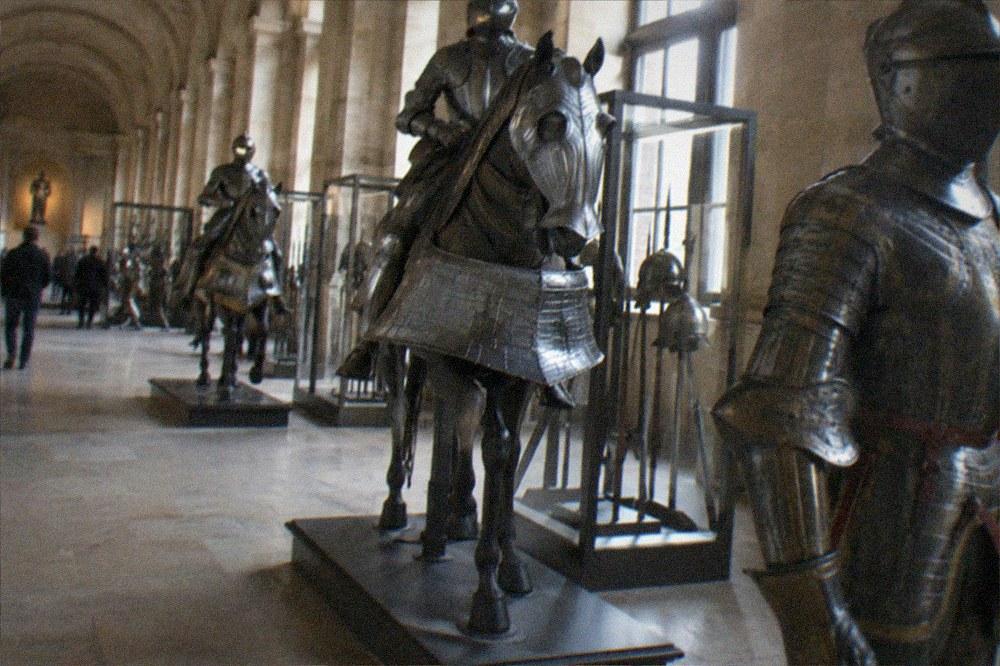
Families travel under different constraints, and two entries serve them unusually well. The Musée de l'Armée at the Invalides, €17, open every day of the week, rated 4.6 across 10,794 reviews, covers armour, Napoleon's tomb under the Dôme and enough swords and uniforms to hold a ten-year-old's attention for two hours. The Musée des Arts et Métiers, €12, closed Mondays, no published rating, is the science museum that actually works for children, and its free Friday evening from 18:00 to 21:00 fits a school-week schedule or a parents' budget. The dedicated Paris museums for kids guide carries the full family shortlist.
The budget verdict is the most underused fact on this page. A full and genuinely excellent day exists entirely inside the free eleven: the Musée Carnavalet for the history of Paris in the morning, the Petit Palais after lunch, the Musée de l'Art Moderne de Paris in the late afternoon, all three open the same days and none requiring a ticket. That day costs nothing at the door, and it competes with any €32 entry on this list for memorability.
| Visitor type | First museum | Second museum | Why |
|---|---|---|---|
| First-time visitor | Louvre | Orangerie | Scale plus focus, a 15-minute walk apart across the Seine |
| Art-focused repeat visitor | Musée d'Orsay | Musée Rodin | The movement, then its sculptor, both rated 4.7 |
| Family with children | Musée de l'Armée | Arts et Métiers | Armour and machines, open daily and free Friday evenings |
| Budget traveller | Carnavalet | Petit Palais | Free city collections, no tickets, all in walkable districts |
| Short trip, one slot only | Louvre | none | The single most dense collection in the city |
Planning Around Prices, Passes And Closed Days
Closed days split Paris museums into two camps and wreck more itineraries than ticket prices do: the Louvre and Orangerie close Tuesday, while the Orsay, Rodin, Picasso, quai Branly, Cluny, the Catacombes and Versailles all close Monday. A Paris Museum Pass costs €85 for 2 days, €105 for 4 or €125 for 6, counts validity in hours from first scan, excludes the Eiffel Tower and the Catacombes, and still requires a separate timed slot at eight sites including the Louvre.
The pass arithmetic only works for a packed itinerary, and the is the Paris Museum Pass worth it guide does the full sum. The headline terms come from the pass site's own pricing page{: rel="noopener"}: adult only, no transport included, no temporary exhibitions ever, one entry per site, and hours counted from the first scan rather than calendar days. The exclusion list matters more than the inclusion list: no Eiffel Tower, no Catacombes, no Palais Garnier, no Marmottan Monet, no Jacquemart-André, no Atelier des Lumières, and nothing at all at the free city museums, where a pass buys precisely nothing because entry already costs nothing.
The reservation rule is the one that catches pass holders. Eight sites still demand a separate free timed reservation even with a pass: the Louvre, the Orsay, the Orangerie, the Sainte-Chapelle, the Conciergerie, the Hôtel de la Marine, the Tours de Notre-Dame and Versailles. A pass does not get you into the Louvre without booking a slot, and Louvre slots for peak days go weeks ahead. Everything else on the pass list is walk-in access, including the Arc de Triomphe, which most guides get wrong in the other direction.
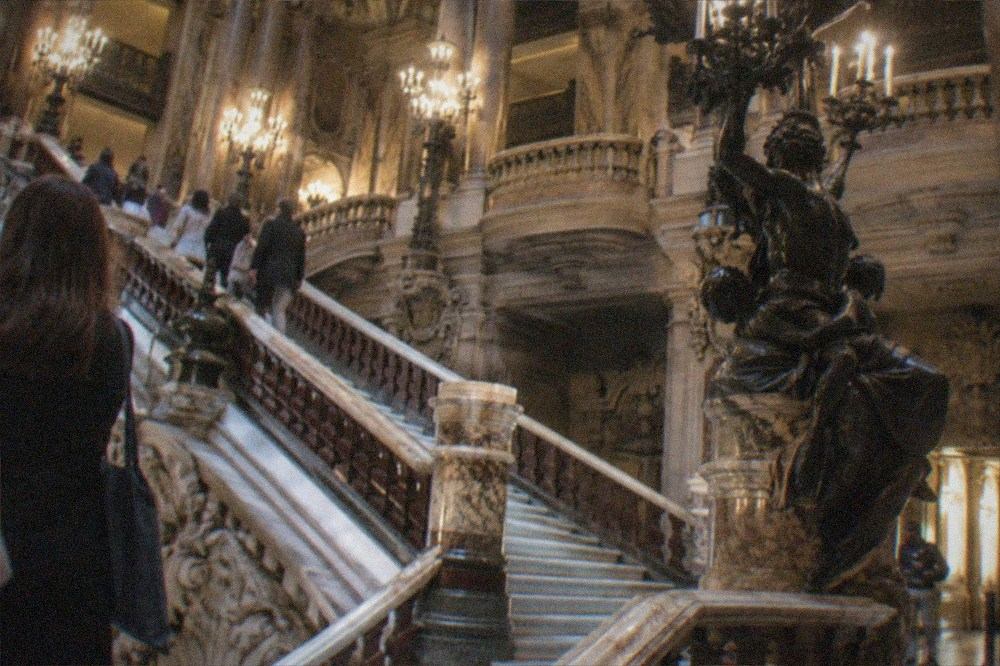
Two further planning facts round out the picture. The Palais Garnier, €15 for EEA visitors and €25 from outside, sold online only, has no fixed closed day but shuts without warning for rehearsals, which makes a booked slot the only safe plan. And the Centre Pompidou is closed entirely, from 22 September 2025 until 2030, its collection showing off-site at the Grand Palais, the Forum des images, the Gaîté Lyrique and mk2 bibliothèque; it appears on no shortlist here for that reason, and the which is the better day château guide covers the out-of-town alternative if your dates lose a museum day.
Tickets for the top three can also be booked as a bundle of single decisions rather than one package, and the selection below puts all three side by side for exactly that comparison, with each museum's own door price printed alongside.
Common Questions About The Best Museums In Paris
What are the best museums in Paris?
The Louvre, the Musée d'Orsay and the Musée de l'Orangerie top the ranked shortlist, rated 4.6, 4.7 and 4.7 respectively. Below them the Musée de l'Armée at €17, the Musée Rodin at €14 and the Musée Picasso Paris at €16 represent the strongest value tier.
Which Paris museum should I visit first?
First-time visitors should book the Louvre first and close the same day at the Orangerie, a short walk across the Seine. Art-focused visitors who have already seen the Louvre get more from the Musée d'Orsay, and families start best at the Musée de l'Armée.
Are any Paris museums free?
Eleven city museums are free all year with no ticket, including the Musée Carnavalet, the Petit Palais and the Musée d'Art Moderne de Paris. National museums are free the first Sunday of the month, though Orsay and Orangerie require a booked slot even on the free day.
How much does the Louvre cost now?
The Louvre charges €22 for EEA visitors and €32 for everyone else, with under-18s and EU and EEA residents under 26 free with ID. The two-tier price is already in force. Timed entry is compulsory and the museum closes on Tuesdays.
Is the Louvre ever free?
The Louvre has no free first Sunday. It is free the first Friday of the month after 6pm, except in July and August, and on 14 July. Most guides that promise a free first Sunday are describing a policy that does not exist.
Is the Paris Museum Pass worth it for the best museums?
Only for a packed itinerary of pass-listed sites. A pass costs €85 for 2 days, €105 for 4 or €125 for 6, counts validity in hours from first scan, excludes the Eiffel Tower and the Catacombes, and still requires a separate timed reservation at the Louvre, Orsay, Orangerie and five other sites.
Which big museums are closed on Monday and Tuesday?
The Louvre and the Musée de l'Orangerie close on Tuesdays. The Musée d'Orsay, Musée Picasso, Musée du quai Branly, Musée Rodin, the Catacombes and Versailles close on Mondays. The Musée de l'Armée, the Arc de Triomphe and the Sainte-Chapelle open every day.
Can you see the Louvre and the Orsay on the same day?
Yes, but it is a heavy day. The pattern repeat visitors report works best is the Louvre in a morning slot, lunch on the walk across the Seine, then the Orsay after 14:00, with the Orangerie saved for a second morning at only €11 and a one-hour visit.