What Is Inside The Cité des sciences et de l'industrie?
What the Cité des sciences et de l'industrie actually contains, what a ticket covers and costs, who gets in free, how long to allow, and how it compares with the Musée des Arts et Métiers.
What Is Inside The Cité des sciences et de l'industrie?
The Cité des sciences et de l'industrie is a purpose-built science and industry museum at the Parc de la Villette, 30 Avenue Corentin Cariou in the 19th arrondissement. Inside, it holds permanent and temporary exhibition spaces on science, technology and industry themes, with hands-on discovery areas aimed strongly at families and children. It sits on the Paris Museum Pass list with no reservation required, it is closed on Mondays, and a bookable ticket starts at $15.12.
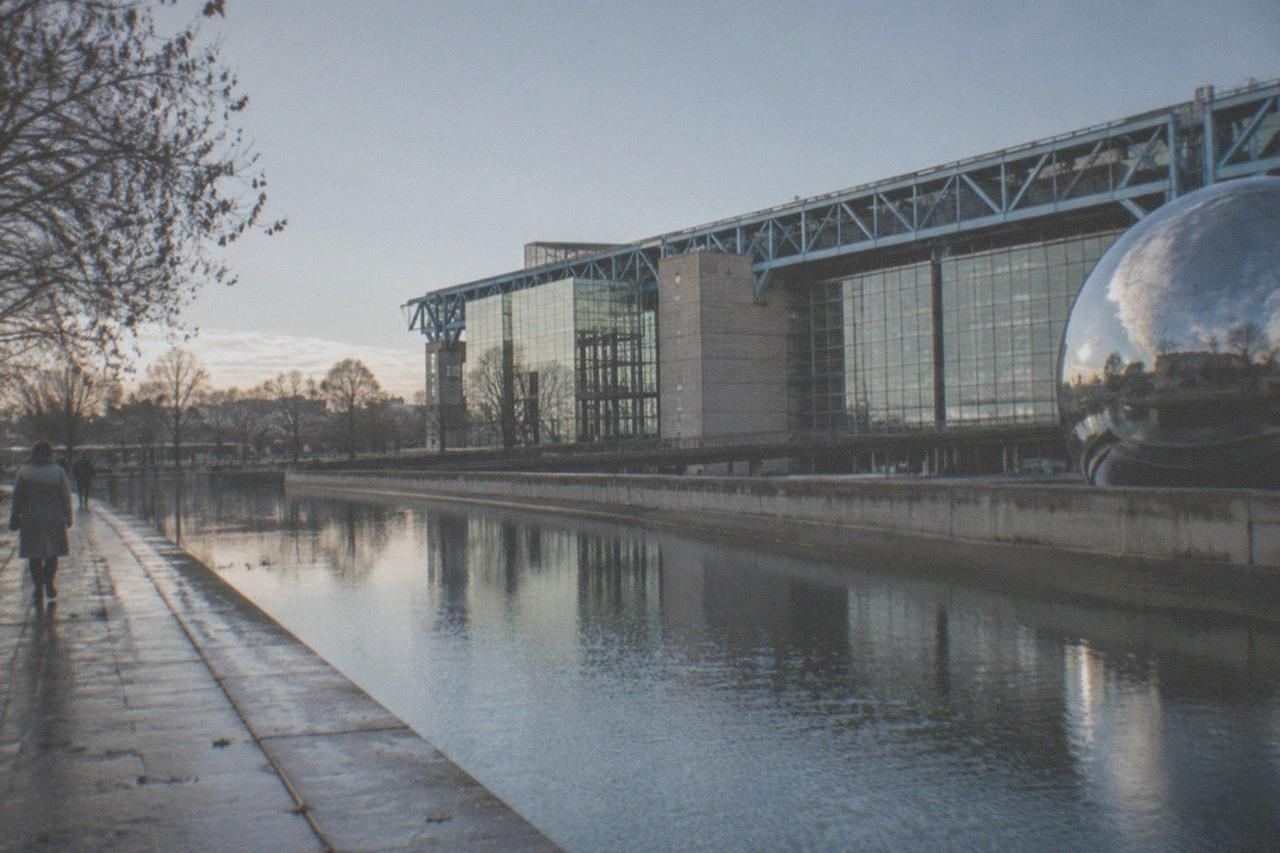
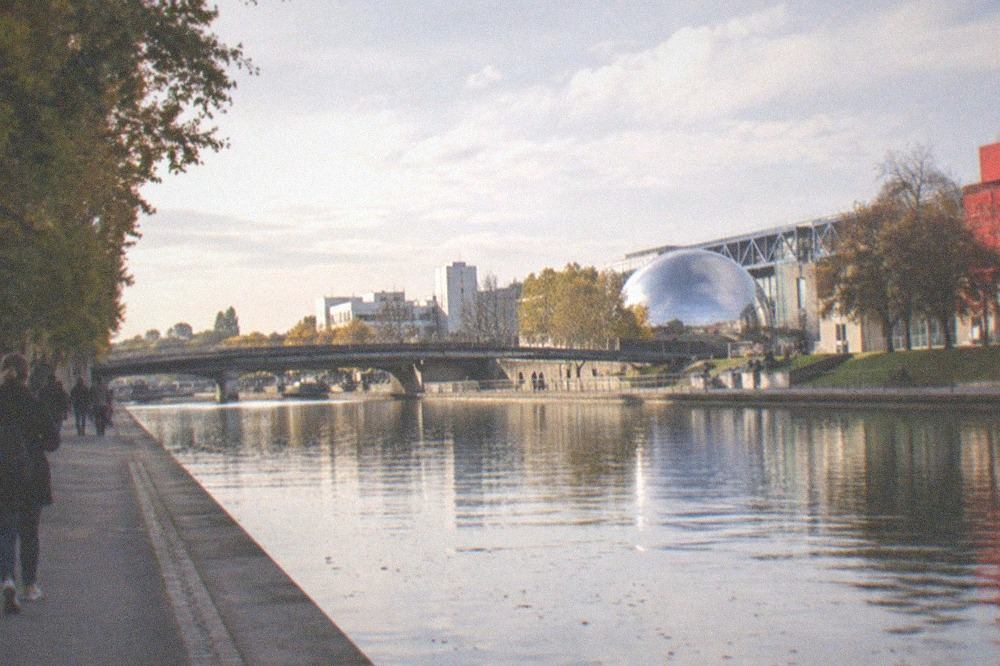
The building itself is the first thing that answers the question. It is a vast modern structure of glass and steel that once served as the central hall of a slaughterhouse complex, and it was converted into a museum of science and technology as part of the redevelopment of the whole La Villette site toward the end of the last century. The surrounding park, designed as a cultural landscape rather than a formal garden, wraps the museum in open space, canalside walkways and red follies that are themselves minor architectural landmarks. Most visitors arrive from the surrounding neighborhoods and from families staying in the northern arrondissements, because this is the one major museum in Paris that was built, from the ground up, around the idea of touching things rather than looking at them.
That single design decision shapes everything inside. Where the Louvre or the Musée d'Orsay are collections of objects behind glass, the Cité is organized around participation. The exhibition floors are given over to interactive displays on physics, biology, space, mathematics and industrial technology, with explanations pitched at visitors who have no technical background. Reviewers regularly describe it as closer to a North American science center than to a traditional European museum, and the venue's own rating pattern reflects that: it scores 3.8 across 1,212 reviews, which is noticeably lower than the 4.6 and 4.7 scores of Paris's art museums, a gap that is typical of science centers everywhere, where visitors comparing them against the Louvre feel the difference in atmosphere.
The audience matters too. This is the museum that Paris families use, which means school groups on weekdays, strollers in the corridors, and a rhythm of visiting that is entirely unlike the hushed rooms of the 1er and 7e arrondissements. For a traveler deciding between this and another museum, the honest framing is that the Cité is not a Highlights-of-Paris stop. It is a half-day destination in its own right, and the people who get the most out of it are those with children, an interest in science and technology, or a rainy afternoon to fill in a part of Paris most tourists never reach.
For readers planning a wider trip, our guide to the best museums in Paris for kids places the Cité in its full context, and the rainy-day guide covers how it performs when the weather turns, which is one of its strongest suits given the sheer size of the covered space.
What Does The Ticket Cover And What Does It Cost?
The Cité sells entry to its exhibition spaces, and the bookable ticket starts at $15.12, which covers admission to the visitable spaces that are open on the day. The museum's own door price is not published in a form this site could verify, so no euro figure is stated here. Under-18s are free at national museums with photo ID, and EU and EEA residents under 26 are also free with proof of residency.
That price paragraph is deliberately narrow, because the Cité is one of the museums where pricing is genuinely layered. The pass angle is the clearest one: the Cité des sciences is on the Paris Museum Pass's own site list, badged "Access without reservation", which means a pass holder can walk in on the pass alone, with no separate timed slot. That is not true of the big names. The Louvre, the Musée d'Orsay, the Musée de l'Orangerie, Sainte-Chapelle, the Conciergerie, the Hôtel de la Marine, the Tours de Notre-Dame and Versailles all still require a separately booked free slot even for pass holders, so the Cité is one of the pass sites where the pass genuinely works as a walk-in. The pass itself runs €85 for 2 days, €105 for 4 days and €125 for 6 days, with validity counted in hours from the first scan rather than in calendar days, and the pass site's flat rule applies here as everywhere: it never includes temporary exhibitions.
The booking route is the other decision. A bookable ticket from $15.12 buys entry through the operator's live listing, and the from-price is a platform figure, not the door price in euro; the two numbers are never the same thing, and at some museums the bookable ticket actually costs more than walking up, as the Musée d'Orsay's €16 online against €14 at the door shows. At the Cité, whose own tariff page lists €15 full and €12 for ages 6 to 25, the honest advice is that a family with children under 18 may find the museum's own counter cheaper than the platform, and that under-18s are free across the national museums anyway.
Who exactly gets in free is worth spelling out, because it is the single most useful pricing fact on this page. Under-18s are free at national museums with a photo ID, and EU and EEA residents under 26 are free too, and the wording is broader than many guides give it: the exemption covers holders of a long-stay residence permit or visa of over four months, and what is actually checked at the desk is residency, not nationality. A non-citizen EEA resident under 26 must show a valid photographic and residency permit longer than 90 days. So for a family of four with two adults and two teenagers living anywhere in the EEA, the entire cost of a Cité visit can come down to two adult tickets.
| Entry route | What it costs | What to know |
|---|---|---|
| Bookable ticket | from $15.12 | A platform from-price for admission, never the same figure as the door price in euro |
| Paris Museum Pass | €85 / 2 days, €105 / 4 days, €125 / 6 days | Cité is on the pass list, access without reservation; temporary exhibitions never included |
| Under 18 | Free | Photo ID required |
| EU and EEA residents under 26 | Free | Residency is what is checked, including long-stay permits over four months |
The museum's own page at the Cité des sciences official site is the place where the current program and any ticketing changes are published first, and it is worth a look before a visit because the exhibition offer at a science center rotates far more often than a permanent art collection does. If the plan is to book rather than walk up, you can also go straight to the Cité des sciences ticket page on this site.
Which Day Is It Shut, And How Long Should You Allow?
The Cité des sciences et de l'industrie is closed on Mondays, and it keeps no other weekly closing day. Allow at least half a day for a visit, two to three hours for families with children who want to work through the interactive spaces properly, and an hour only if you are skimming. The Musée des Arts et Métiers, its nearest comparison, also closes on Mondays, so the two cannot be swapped on the same day.
The Monday closure is the one scheduling detail that genuinely matters, because it puts the Cité firmly in the Monday-closed camp that dominates the Paris museum landscape. The national museums mostly close on Tuesdays: the Louvre, the Musée de l'Orangerie, the Musée Guimet, the Musée Gustave Moreau, the Musée Eugène-Delacroix, the Musée Jean-Jacques Henner, the Château de Fontainebleau and the Musée d'Archéologie nationale all sit in that camp. The city museums and much of the rest close on Mondays: the Musée d'Orsay, the Musée Rodin, the Musée Picasso, the Musée du quai Branly, the Musée de Cluny, the Musée des Arts et Métiers, the Musée Marmottan Monet, the Catacombes, the Château de Versailles and the Cité itself. A traveler who plans a Monday museum blitz in Paris will find the doors shut almost everywhere, and our guide to Paris museums open on Monday exists for exactly that trap.
How long to allow is a function of what the museum is. Because the display style is interactive rather than contemplative, time inside is elastic in a way it is not at an art museum. Two hours covers the main exhibition floors at an adult pace. A family with children who want to engage with the hands-on areas should plan closer to half a day, and should not pair the Cité with a second demanding museum on the same itinerary. The Parc de la Villette itself deserves a share of the visit whenever the weather cooperates: the site was developed as a cultural park, and the walk between the museum and the canalside is part of the experience rather than dead time getting there.
Practical logistics are straightforward once you are there. The address is 30 Avenue Corentin Cariou, in the 19th arrondissement, at the Parc de la Villette. The 19th is a genuinely residential part of Paris, well northeast of the usual tourist corridor, so the trip out is real but simple; this is not a museum you pass on the way to something else, and planning should treat it as the day's anchor rather than a stop on a route. Visitors regularly report that the surrounding area feels local and unfussy compared with the museum districts of central Paris, which many families count as a point in the Cité's favor after several days of crowds at the Louvre and the Eiffel Tower.
How Does It Compare With The Musée des Arts et Métiers?
The Musée des Arts et Métiers is the Cité's closest alternative in Paris: a science and technology museum in the 3rd arrondissement, entry €12, closed Mondays, free the first Sunday of the month and free every Friday from 18:00 to 21:00. The Cité is bigger, more modern and more family-oriented; the Arts et Métiers is more historic, more compact and cheaper. They are complements rather than rivals.
The two museums answer different versions of the same question. The Arts et Métiers, housed in the former priory of Saint-Martin-des-Champs, is a museum of the history of invention: scientific instruments, machinery, transport and communications objects displayed as artefacts, with the weight of two centuries of collecting behind them. The Cité is a museum of doing: built in living memory, designed around participation, and aimed at a visitor who wants to press the button rather than study the vitrine. Adults traveling childless and interested in the history of science tend to come away preferring the Arts et Métiers; families with younger children almost always prefer the Cité, and reviewers on both listings consistently split along exactly those lines.
The money comparison is easy to state because the Arts et Métiers price is fully verified. Entry is €12 at the door, and the museum's free rules are the most generous in Paris: free the first Sunday of the month, and, uniquely, free every Friday evening from 18:00 to 21:00. No other museum in Paris has that Friday-evening rule. Set against the Cité's bookable from-price of $15.12 and its absence from this site's verified door-price list, the Arts et Métiers is the cheaper and more predictable of the two for a walk-up visitor. The full story of what it holds is in our piece on what you can see at the Musée des Arts et Métiers, and the Musée des Arts et Métiers ticket page covers booking.
Location is the other differentiator, and it is not a small one. The Arts et Métiers sits in the Marais, walkable from the Musée Picasso and the Musée Carnavalet, inside the tourist corridor; the Cité sits in the 19th, a deliberate trip. A Paris itinerary that is short on days will fit the Arts et Métiers into an existing Marais afternoon and cannot do the same with the Cité. A family with a full day to give, or a week in the city with children, will find the Cité rewards the journey in a way its central rival never can, simply because of scale and the amount of hands-on material on offer.
There is also a pass angle that separates them. Both are on the Paris Museum Pass list, but the Arts et Métiers is a cheap €12 door, so the pass only makes sense there as part of a wider sweep. The Cité is the same: neither museum alone justifies a pass, and both are best treated either as walk-up or as part of a multi-museum pass day that also includes the big reserved-slot sites. For anyone weighing the pass properly, the question is not inclusion but density, and our Paris Museum Pass guide works through that arithmetic site by site.
Is It Good For Kids And Rainy Days?
Yes, on both counts, and this is where the Cité earns its place in a Paris plan. The interactive exhibition style is built for children, the covered space is large enough to absorb hours of bad weather, and the surrounding Parc de la Villette gives the day a free outdoor component. Its 3.8 rating across 1,212 reviews sits below the art museums, but families are the segment where reviewers consistently rate it highest.
The children's case needs no hedging. A science center whose displays are designed to be operated, not observed, is a different proposition for a seven-year-old than a painting gallery, and Paris has only one museum at this scale built around that idea. The under-18 free rule across the national museums also applies here, which makes the Cité one of the more affordable big-museum outings in the city for a family: the adults pay, the children do not. Reviewers with children in tow regularly describe visits that run four hours and more, which is longer than almost any art museum in Paris can hold a child's attention, and the complaints that pull the rating down to 3.8 come overwhelmingly from adult visitors comparing it to the Louvre or expecting a traditional collection.
The rainy-day case is almost as strong. Paris rain arrives in earnest in the autumn and winter months, and the number of museums where a family can spend an entire wet afternoon without finishing is short: the Louvre and the Orsay qualify but demand stamina and crowd-tolerance, the Grande Galerie de l'Évolution qualifies but is outside this site's roster, and the Cité is arguably the best of them, because the interactive material is designed to be consumed slowly. The surrounding park makes a useful half of the day in better weather too, and the combination of a free park and a bookable museum makes the whole La Villette outing easier to budget than a day around the Champs-Élysées, where every component charges. Anyone building a weather-flexible plan should read our rainy day Paris museums guide, which ranks the covered options by how much time they absorb.
One honest caveat belongs here rather than buried later. The science-center model means the offer changes: exhibitions rotate, spaces close for reinstallation, and a visit six months apart can feel different. That is normal at a venue of this type and it is also why this site states the Cité's door price as unverified rather than quoting a figure that may not hold. The museum's own site is the reliable source for what is running on any given week, and a family making a special trip across Paris to the 19th should spend the two minutes it takes to check the program before setting out.
How Does It Fit With The Rest Of A Paris Museum Plan?
The Cité fits best as a dedicated half-day addition once your plan covers the central Paris museums, so skip it on a first trip that has yet to include the Louvre, the Musée d'Orsay or the Musée de l'Orangerie. Book from $15.12 or walk up on a Paris Museum Pass, pair it with the Parc de la Villette in good weather, and it moves up the list on a second visit or a trip with children.
There is a version of Paris museum planning where the Cité is a first-weekend priority, and a version where it never makes the list, and both are defensible. A first-time visitor with three days and no children is almost always better served by the core: the Louvre at €22 for EEA visitors and €32 for everyone else, the Musée d'Orsay at €16 online and €14 at the door, the Musée de l'Orangerie at €11 at the museum, and the monuments, the Arc de Triomphe among them at €22 in summer and €16 from October to March. That circuit is why this site exists in the first place, and Paris Museums covers it museum by museum.
A second trip, or a week with children, changes the arithmetic completely. The Cité becomes one of the best value days out in the city precisely because it is not competing with the Louvre for the same attention: the children are free, the adults pay a from-price of $15.12 to book, the pass accepts it without a reservation, and the museum can absorb a whole afternoon without anyone getting museum fatigue in the classic sense. Visitors with a full week and a pass can also fold in the Arc de Triomphe, which is on the pass with access without reservation and stands with the Panthéon, Sainte-Chapelle and the Conciergerie in the group that is free the first Sunday of the month only from January to March and from November to December, never in the summer half of the year. The Arc de Triomphe ticket page covers that climb and its €22 to €16 seasonal pricing.
The pass question deserves its own honesty here. A pass needs several paid sites each day to earn its price against the door totals, and the Cité is a single-site outing in a distant arrondissement, so on a pass day it functions best as the anchor of a northern morning paired with central sites in the afternoon. On a cash plan, it is simply a bookable family half-day, and there is nothing wrong with treating it that way. The exclusion list matters more than the inclusion list for most travelers, and the Cité is comfortably on the included side, which for a science museum in the 19th arrondissement is the only pass question that needs answering.
Common Questions About The Cité des sciences et de l'industrie
What Is Inside The Cité des Sciences et de l'Industrie?
Permanent and temporary exhibition spaces on science, technology and industry themes, organized around interactive, hands-on displays rather than objects behind glass, with a strong family and children's focus. The museum sits at 30 Avenue Corentin Cariou in the Parc de la Villette, 19th arrondissement.
How much does it cost to visit the Cité des sciences?
A bookable ticket starts at $15.12, which is a platform from-price, not the door price. This site has no verified euro door price for the Cité, so none is stated. The Cité is on the Paris Museum Pass list, so pass holders enter on the pass with no reservation.
Which day is the Cité des sciences closed?
Monday. The museum keeps no other weekly closing day, which puts it in the large Monday-closed camp alongside the Musée d'Orsay, the Musée Rodin, the Musée Picasso and the Musée des Arts et Métiers.
Do children get in free at the Cité des sciences?
Yes. Under-18s are free at national museums with a photo ID, and EU and EEA residents under 26 are also free, including holders of a long-stay residence permit or visa of over four months. Residency is what is checked, not nationality.
How long should I spend at the Cité des sciences?
Two to three hours covers the main exhibition floors at an adult pace. Families with children who want to work through the interactive spaces should plan half a day, and the surrounding Parc de la Villette adds an outdoor component in good weather.
Is the Cité des sciences on the Paris Museum Pass?
Yes, badged access without reservation, so a pass holder walks in without a separate timed slot. Note that the pass never covers temporary exhibitions, at the Cité or anywhere else, and pass validity is counted in hours from the first scan.
Cité des sciences or Musée des Arts et Métiers?
Families and hands-on visitors should pick the Cité. Adults interested in the history of science and invention usually prefer the Arts et Métiers, which is entry €12, free the first Sunday of the month and free every Friday evening from 18:00 to 21:00, and sits centrally in the Marais rather than in the 19th arrondissement.