What Can You See At The Musée des Arts et Métiers?
A full look inside the Musée des Arts et Métiers in Paris: the collections, the €12 ticket, the free Friday evenings, the Monday closure, and how it compares with the Cité des sciences.
What Can You See At The Musée des Arts et Métiers?
You can see three centuries of applied science: the collection of the Conservatoire national des arts et métiers, spread through a medieval abbey on rue Réaumur in the 3rd arrondissement. Its galleries cover scientific instruments, timekeeping, energy and machinery, materials, transport and communications. Entry costs €12 at the door. It is free the first Sunday of the month and every Friday evening from 18:00 to 21:00, and it closes on Mondays.
The short answer to the question is "almost every machine that changed how people lived." The museum grew out of the Conservatoire, the engineering school founded to teach the practical arts in the revolutionary decade, and it has been collecting the tools of its subjects ever since. Where the Louvre gathers paintings and the Musée d'Orsay gathers impressionists, this one gathers the objects of the industrial age and the centuries just before it.
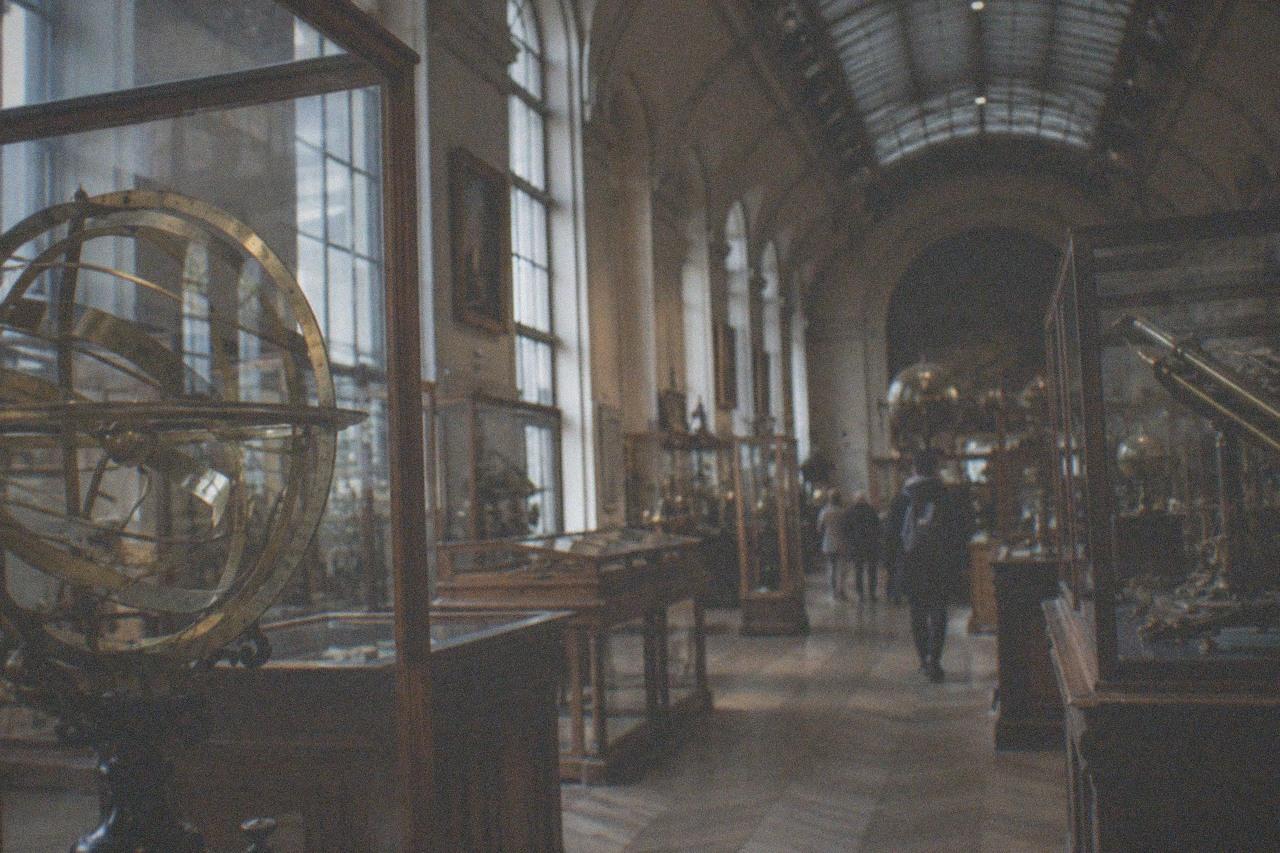
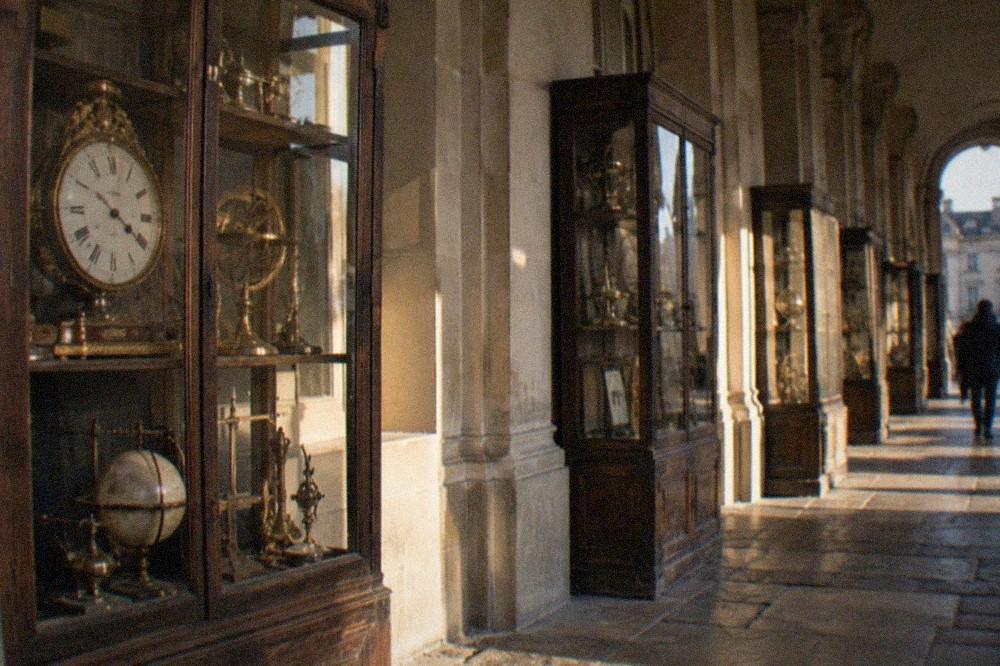
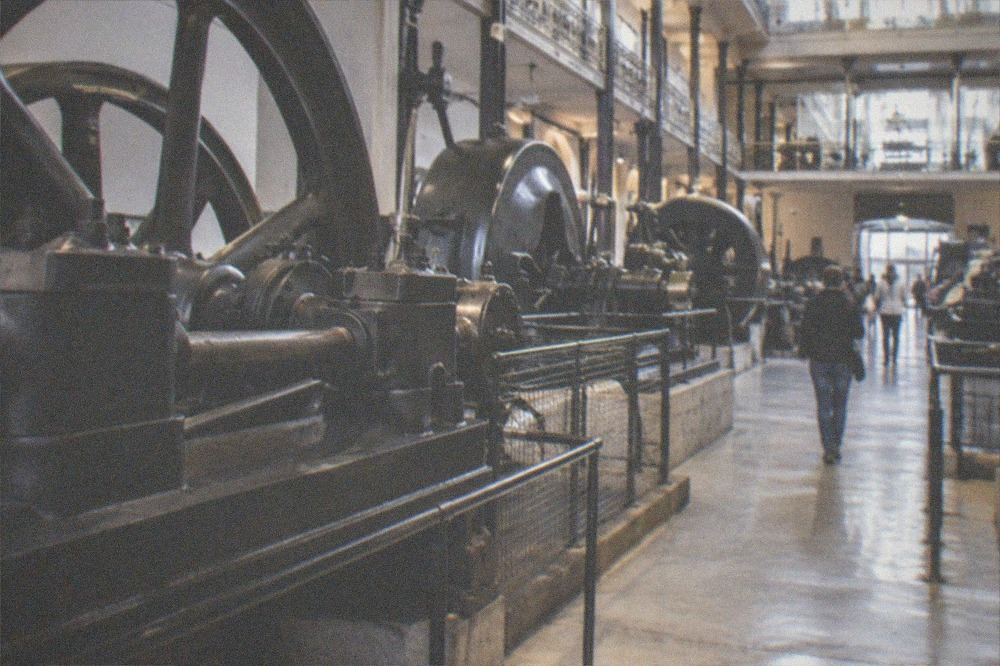
Walk the permanent galleries in their usual order and the rooms move from measurement to motion. The instrument galleries open with precision work: balances, microscopes, optical devices, the delicate brass and glass apparatus of Enlightenment science. The timekeeping rooms trace the long effort to make clocks accurate at sea, a problem that occupied half of Europe's best minds. From there the displays widen into energy, with steam engines and turbines, and into transport, where full-size aircraft and early automobiles sit inside the abbey's stone vaults.
The materials galleries are easy to overlook between the bigger rooms, and they hold some of the museum's quietest satisfactions: the story of how iron, steel, glass and the early plastics were turned from curiosities into everyday materials, told through samples and finished objects rather than text panels. Visitors with an engineering interest tend to lose the most time here, precisely because the labels assume you want to know how a thing was made, not just what it is.
The most photographed object is the Foucault pendulum. The original demonstration pendulum that Léon Foucault hung in the Panthéon in the mid-19th century to prove the Earth rotates is preserved here, swinging in the chapel of Saint-Martin-des-Champs. The chapel itself, a rare surviving piece of medieval Paris, is the museum's architectural centrepiece, and the aircraft suspended in it are the reason many visitors remember the building long after the exhibits blur together.
Communications form another whole strand: printing presses, telegraph equipment, early photography and the apparatus of cinema. The collection treats invention as a chain rather than a set of isolated flashes, one device answering the problem the previous one exposed. The printing section runs from hand presses through mechanised typesetting to the machines that made mass newspapers possible, and the telegraph and telephone cases that follow show how quickly the invention of one era becomes the furniture of the next. Reviewers regularly describe the visit as denser than expected, more a walk through the history of engineering than a science centre, and that framing is fair.
The museum suits a particular kind of visitor very well. If you like mechanism, if you would rather look at a loom than a landscape, this is one of the most rewarding hours and a half in Paris. It also works for families with curious children, though there is less touching and pushing than at a purpose-built science centre. Visitors who want interactive screens and hands-on experiments tend to leave with mixed feelings, and that distinction is worth holding in mind before you book.
If you are weighing it against Paris's other big science attraction, the practical comparison is laid out further down this page. For most people the choice comes down to historic instruments versus modern interactive displays, and the two are far enough apart in character that knowing your own preference settles the question before any price comparison does.
A few practical details help you plan the visit. The museum sits directly above the Arts et Métiers métro station on line 11, one of the more atmospheric stations in the network, and line 3 also stops at nearby Réaumur-Sébastopol. Allow roughly ninety minutes to two hours for the permanent galleries, more if the materials and communications rooms pull you in. Photography without flash is generally permitted, and the stone floors and staircases between levels mean comfortable shoes are a better idea than they might sound for a museum visit.
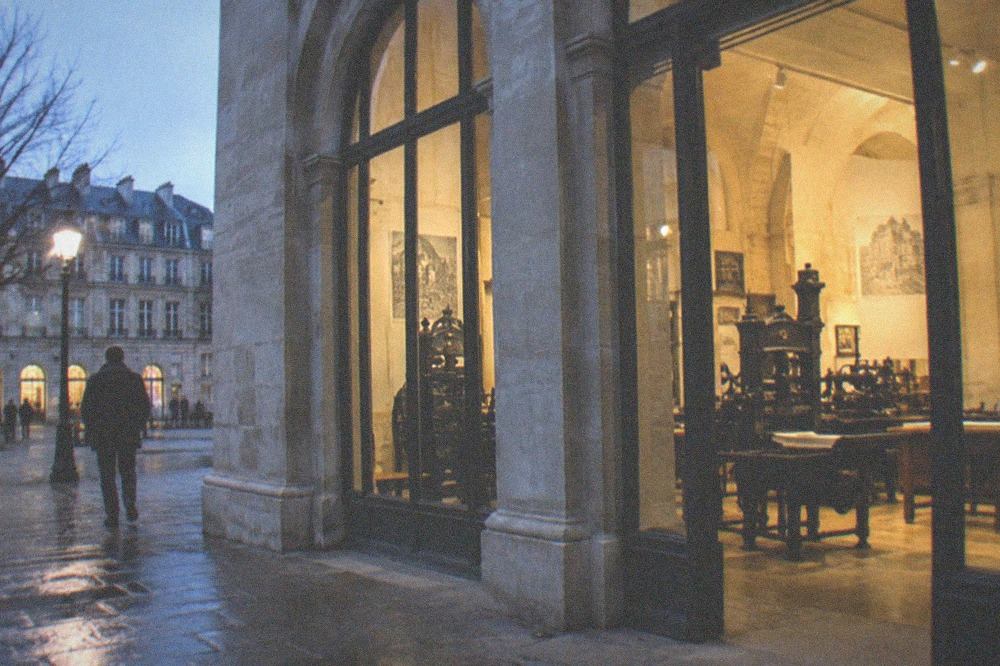
The building itself rewards attention between the exhibits. The abbey of Saint-Martin-des-Champs predates most of what surrounds it, and the way the museum has fitted industrial collections into medieval and later architecture is part of the experience rather than a backdrop to it. The chapel, the vaulted spaces and the contrast between heavy machinery and old stone give the place a character no purpose-built science museum can copy, which is worth remembering when you are deciding how it fits into a Paris itinerary alongside the larger institutions.
What Does A Ticket Cover And What Does It Cost?
A standard adult ticket costs €12 at the door and covers the permanent collection plus whatever temporary exhibitions are running. There is no separate charge for the pendulum chapel, it is part of the route. Two free routes exist: the first Sunday of the month, and every Friday from 18:00 to 21:00, when no ticket is needed at all.
The €12 door price is the honest baseline. The museum publishes its own rates and hours on its official site, and that is where any change to the door figure or the Friday-evening window would appear first. Booking a timed entry in advance costs a little more than the door price, which is the normal pattern at busy Paris museums; the premium buys a guaranteed slot rather than extra access.
The Friday evening is the quiet bargain in this museum's calendar. From 18:00 to 21:00 every Friday, entry is free with no ticket, which makes it the cheapest way into any paid museum in this part of Paris. Nothing else in the city has that rule. The evenings are popular with people finishing work nearby, so expect company, but a free visit at 18:30 on a Friday beats a €12 visit at 15:00 on a Saturday for crowds and mood alike.
The first Sunday of the month is the second free route, and no reservation is needed for it. The trade-off is the same one every first Sunday in Paris carries: everyone else has read the same sentence. Arrive close to opening and treat the first two rooms as the reason to come early, since the instrument galleries are the most crowded.
| Entry route | Price | What to know |
|---|---|---|
| Standard adult, at the door | €12 | Permanent collection and current exhibitions |
| Booked timed entry | Above the door price | Guarantees a slot, costs slightly more |
| Every Friday, 18:00 to 21:00 | Free | No ticket, unique to this museum |
| First Sunday of the month | Free | No reservation, busiest free day |
| Closed | Mondays | Plan around it |
Booking ahead is the right call on weekends and in school holidays, when the timed slots fill first. On a weekday afternoon the door is usually the simpler option. If you do book, the entry product for Musée des Arts et Métiers tickets covers the same permanent collection the door ticket does; there is no premium tier inside.
One group deserves a note: under-18s and young EU and EEA residents enter many French national museums free with photo ID, and it is always worth carrying the relevant document in Paris. Where a museum checks age or residency, the document is what is actually inspected, so a passport or card beats a claim. This museum's own free windows, Friday evening and first Sunday, need no document at all.
Do you want a slot reserved before you travel?
How Long Should You Allow And Which Day Is It Shut?
Allow ninety minutes to two hours for the permanent collection, and add half an hour if a temporary exhibition catches you. The museum is closed every Monday, open the rest of the week. That Monday closure puts it in the same camp as the Musée d'Orsay, the Musée Rodin and the Catacombes, and opposite the Louvre and the Orangerie, which shut on Tuesdays.
The Monday closure matters more in Paris than in most cities because so many visitors plan museum days around it badly. Roughly half the city's museums shut on Monday, including every free City of Paris museum, and the national camp led by the Louvre shuts on Tuesday. A visitor who assumes "museums close on Monday" and plans the Louvre for Monday discovers the opposite problem. The safe structure is this museum, or any Monday-open site such as the Musée de l'Armée or the Arc de Triomphe, on Monday, and the Louvre on almost any other day.
Two hours is the realistic pace. The galleries are dense with labels, and the transport hall in particular rewards stopping: full-size aircraft under a medieval vault are not something you hurry past. Visitors who report rushing the museum usually gave it an hour between other commitments, and the most common regret in reviews is exactly that. If your itinerary only permits an hour, the instrument galleries, the clock rooms and the chapel give the strongest return for the time.
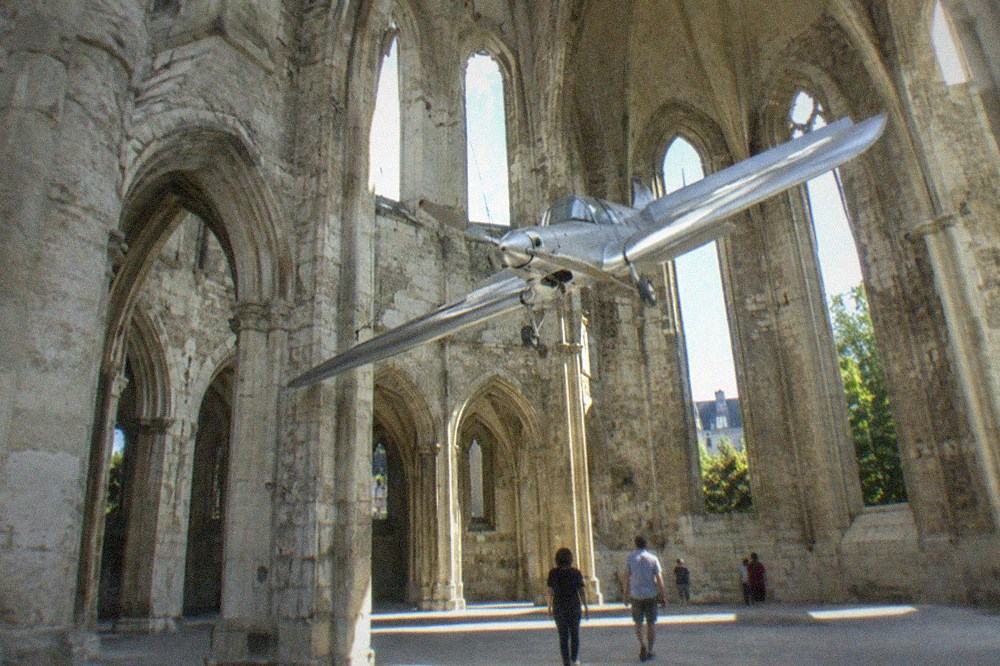
The building rewards slow looking as much as the exhibits do. The site began as a medieval priory, became the abbey of Saint-Martin-des-Champs, and was handed to the Conservatoire after the Revolution. Most of what you walk through is 18th and 19th century infill around surviving medieval stone, and the chapel is the piece that survives most completely. Visitors regularly single out the architecture in reviews as much as the machines, and on a quiet weekday morning the stone vaults give the galleries an acoustic and an atmosphere that purpose-built museums cannot copy.
How Does It Compare With The Cité des sciences et de l'industrie?
The Musée des Arts et Métiers shows the history of invention through original objects; the Cité des sciences et de l'industrie, in the Parc de la Villette in the 19th arrondissement, is a modern science centre built around interactive displays, planetarium shows and a submarine. The Arts et Métiers visit is shorter and cheaper to reach; the Cité is bigger, louder and better for children who want to press buttons.
The two museums answer different questions. Here, the question is "what did the machines that changed the world actually look like," and the answer is the real object, the original pendulum, the actual aircraft, the brass instrument under glass. At the Cité des sciences, the question is "how does this work," and the answer is a display you operate. Adults with an interest in history or engineering almost always prefer rue Réaumur. Families with children under ten usually get more from Villette, where the point is participation rather than looking.
Practically, the differences stack up in a table:
| Musée des Arts et Métiers | Cité des sciences et de l'industrie | |
|---|---|---|
| Arrondissement | 3rd, central | 19th, Parc de la Villette |
| Character | Historic collection, original objects | Interactive science centre |
| Adult entry | €12 at the door | €15 at the door |
| Booked entry from | From $15.12 | From $15.12 |
| Rating | Not published | 3.8 across 1,212 reviews |
| Closed | Monday | Monday |
| Free route | Friday evenings and first Sunday | Not established |
| Time needed | 90 minutes to 2 hours | Half a day |
Both museums shut on Monday, which catches out visitors who plan one for the day the other is also shut. Neither is a good rainy-Monday fallback; the Paris Museums roster keeps a Monday-open list for exactly that planning problem, and the Musée de l'Armée or the Arc de Triomphe are the usual saves.
The Cité's booking from-price and the Arts et Métiers door price are not the same kind of figure. The €12 is the museum's own charge at the counter; the $15.12 figures are a booking platform's from-price for a reserved slot, which is usually a little above the door and not interchangeable with it. If you are curious what the Villette site actually holds, the rundown of inside the Cité des sciences et de l'industrie covers it in detail, and reserved entry for Cité des sciences tickets can be booked like any other timed Paris attraction.
How Does It Fit Into A Day Of Paris Sightseeing?
The museum sits in the 3rd arrondissement, at 60 rue Réaumur, which puts it between the Marais and the Grands Boulevards. It pairs naturally with the Musée Carnavalet, the free city history museum a short walk east, or with a walk along the covered passages that thread the same streets. Give the morning to the machines and the afternoon to the neighbourhood, or the reverse if you are using the free Friday evening.
The location is one of the museum's underrated assets. rue Réaumur is the boundary street of a district dense with smaller attractions, most of them free. The Musée Carnavalet, the city's history museum, is free with no ticket and closed Monday like this one, so the two make a natural paid-plus-free pairing on any Tuesday to Sunday. The Musée des Arts et Métiers also sits beside the covered passages of the 2nd and 3rd arrondissements, the 19th century glass-roofed shopping arcades that are themselves artefacts of the same industrial age the museum documents.
For visitors structuring a whole day, the geography works like this: the museum in the morning, the Marais for lunch and the afternoon, and the evening free. On Fridays the order can invert entirely, with the free 18:00 entry becoming the day's last stop rather than its first. That flexibility is rare among Paris museums, and it is the single best argument for fitting this museum into a tight itinerary rather than dropping it.
If you are combining it with monument sightseeing rather than museum-hopping, the Arc de Triomphe makes a classic second stop. It is open every day, which removes the Monday problem entirely, and the view from the top gives you the industrial city this museum's machines helped build, laid out in a single ring. The arc's pricing is seasonal: €22 from 1 April to 30 September, except Wednesdays at €16, and €16 from October to March, with free first Sundays from January to March and November to December only.
Visitors to Paris who track free attractions will find the city's own accounting useful: the City of Paris maintains a page listing which museums and exhibitions are free, covering the eleven free city museums and the smaller always-free sites outside that network. It complements the two free routes this museum offers rather than replacing them, since national museums like this one follow the Sunday rule rather than the city rule.
The honest summary of a visit here: two hours, €12 or nothing at all on a Friday evening, in a building that is itself half the exhibit. If your Paris list is all paintings, this is the museum that breaks the pattern, and it breaks it well.
Common Questions About The Musée des Arts et Métiers
What Can You See At The Musée des Arts et Métiers?
Scientific instruments, clocks and timekeeping, energy and machinery, materials, transport including full-size aircraft, and communications from printing to cinema, all inside a former abbey whose chapel holds the original Foucault pendulum. Plan on ninety minutes to two hours.
How Much Does Entry To The Musée des Arts et Métiers Cost?
€12 at the door for an adult, covering the permanent collection and current exhibitions. Booked timed entry costs slightly more than the door price and guarantees a slot.
When Is The Musée des Arts et Métiers Free?
Every Friday from 18:00 to 21:00, with no ticket needed, and on the first Sunday of the month. The Friday evening rule is unique to this museum in Paris.
What Day Is The Musée des Arts et Métiers Closed?
Monday, like the Musée d'Orsay, the Musée Rodin, the Catacombes and every City of Paris museum. It is open the rest of the week.
How Long Should You Spend At The Musée des Arts et Métiers?
Ninety minutes to two hours for the permanent collection, longer if a temporary exhibition interests you. Visitors who gave it an hour consistently report regretting the rush.
Is The Musée des Arts et Métiers Good For Children?
Curious older children enjoy the aircraft hall and the pendulum chapel. Children who want hands-on interactive displays are better served at the Cité des sciences et de l'industrie in the 19th arrondissement.