Museums In Paris For Kids: What Actually Holds Their Attention
Paris has more museums than any family can use, and the arithmetic is better than most visitors expect: at the national museums, under 18s walk in free with a photo ID. The real planning problem is not price, it is matching the room to the child.
Short answer
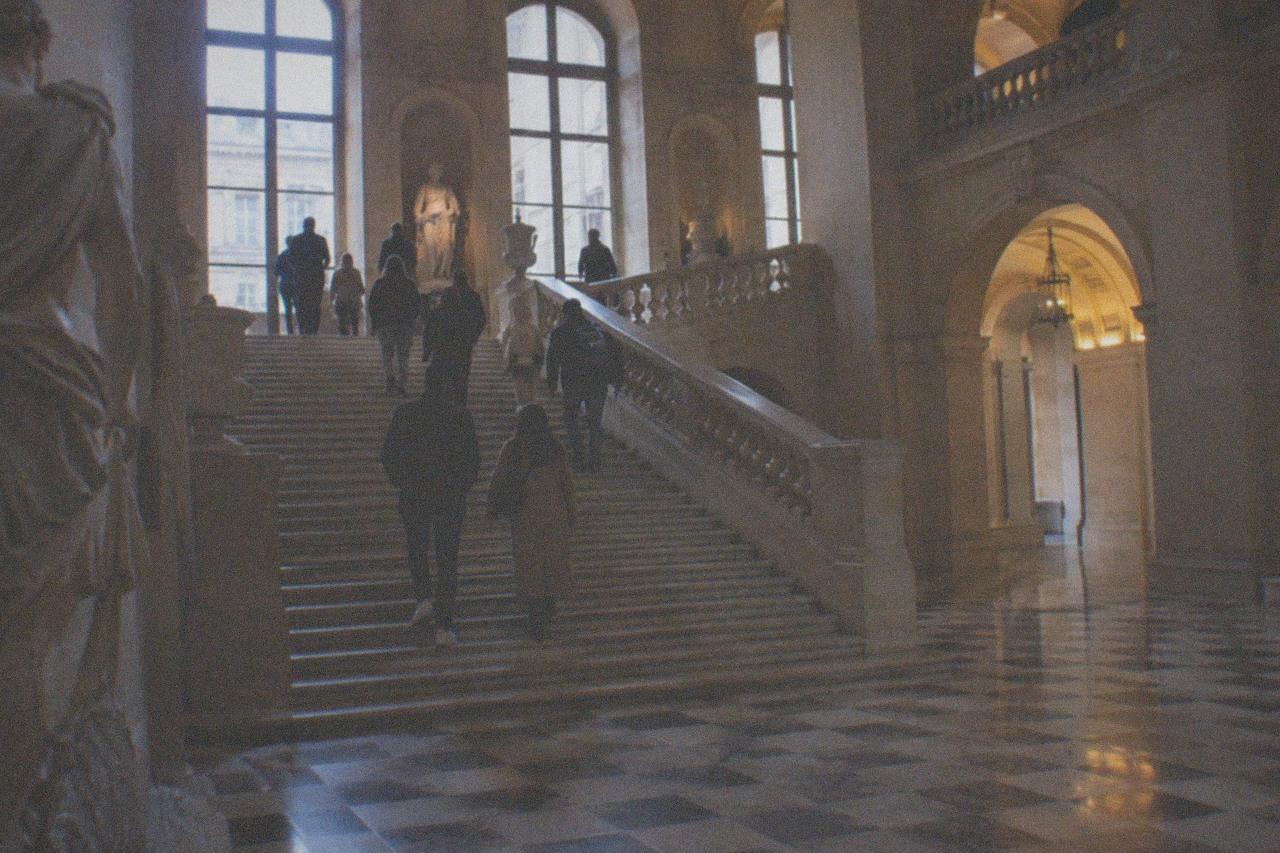
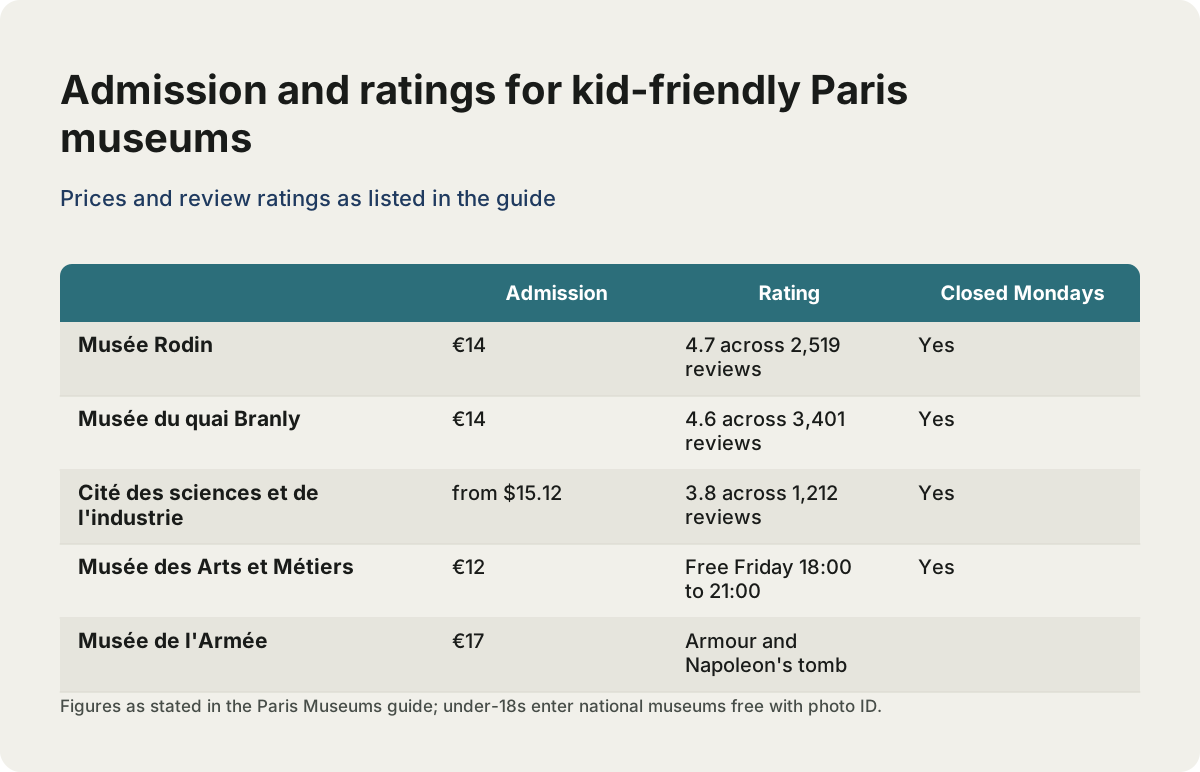
Under 18s are free at national museums like the Louvre and Musée d'Orsay with a photo ID, and EU and EEA residents under 26 are free too, so a family usually pays only the adult tickets. The Cité des sciences et de l'industrie is the one big venue built for children; Rodin, quai Branly and the free city museums suit short visits.
Paris is unusually generous to families, and almost nobody arrives knowing it. At every national museum in the city, from the Louvre to the Musée Rodin, visitors under 18 enter free with a photo ID, and so do EU and EEA residents under 26, including holders of a long-stay residence permit or visa. That turns the standard family budget on its head: two adults and two children at the Musée d'Orsay means two adult tickets, and nothing else. The Louvre states the rule on its own admission page, including the detail that what gets checked for young adults is residency, not nationality.
The Family Arithmetic Comes First: Kids Often Pay Nothing
Under 18s are free at the national museums, the Louvre included, with a photo ID, and EU and EEA residents under 26 are free as well, residency being the detail that actually gets checked at the desk. A family of four often owes only one or two adult prices. The main exceptions are the Eiffel Tower, the Catacombes and the paid city sites, which charge every visitor.
That is the single most useful fact for anyone planning museums in Paris with children, so it is worth spelling out the shape of it. Paris runs two museum systems with two different free rules. The City of Paris museums, the Paris Musées network, keep their permanent collections free to everyone all year with no ticket at all: the Musée Carnavalet, the Petit Palais, the Musée d'Art Moderne de Paris, the Musée Cernuschi, the Musée de la Vie romantique and their siblings. The city's own tariffs page prints this rule and its caveats plainly. Temporary exhibitions at those museums are still ticketed, which is the caveat that catches families out: the Maison de Victor Hugo, normally free, is ticketed until 22 November 2026 because a show occupies it.
The national museums work the other way around. They charge every day, then let children and young residents in without paying. The Louvre's own admission page confirms the under-18 and under-26 EEA rules, and also the fact most guides get wrong: the Louvre has no free first Sunday at all. It is free the first Friday of the month after 6pm, except in July and August, and on 14 July.
| System | Who gets in free | What to show at the desk |
|---|---|---|
| National museums (Louvre, Musée d'Orsay, Musée Rodin, Musée Picasso Paris, Musée de Cluny) | Everyone under 18, plus EU and EEA residents under 26 | Photo ID; for non-citizen EEA residents, a photographic residence permit valid longer than 90 days |
| Paris Musées city museums (Carnavalet, Petit Palais, Musée d'Art Moderne, Cernuschi, Vie romantique and others) | Everyone, permanent collections, every day they open | Nothing, walk straight in |
| CMN monuments (Panthéon, Sainte-Chapelle, Conciergerie, Arc de Triomphe) | Under 18s and EEA residents under 26 daily; everyone on the first Sunday of the month, January to March and November to December only | Photo ID for the age rules |
This site, Paris Museums, exists to keep exactly this kind of detail straight. The practical consequence for a family is simple: the city's free museums make low-stakes outings where a child can last fifteen minutes and nothing is wasted, while the paid nationals are worth the ticket precisely because children get in beside you at no charge.
Which Museums In Paris Work For Ages Six And Under?
The strongest picks for small children are the Cité des sciences et de l'industrie, the Musée du quai Branly with its masks and instruments, the Musée Rodin, whose sculpture garden lets a toddler wander, and the free city museums, where a short visit costs nothing and ends whenever it needs to. Long rooms and long queues are the real enemy at this age.
With very young children, the visit matters more than the collection. A free museum is the ideal first stop: the Musée Carnavalet in the Marais charges nothing, closes Mondays, and its period rooms give a small child something physical to look at room by room. The Petit Palais is free too, with an interior courtyard that works as a pause between short stretches of gallery. If the trip ends at minute twenty, no money was lost, and that changes how relaxed the adult is, which the child notices more than any painting.
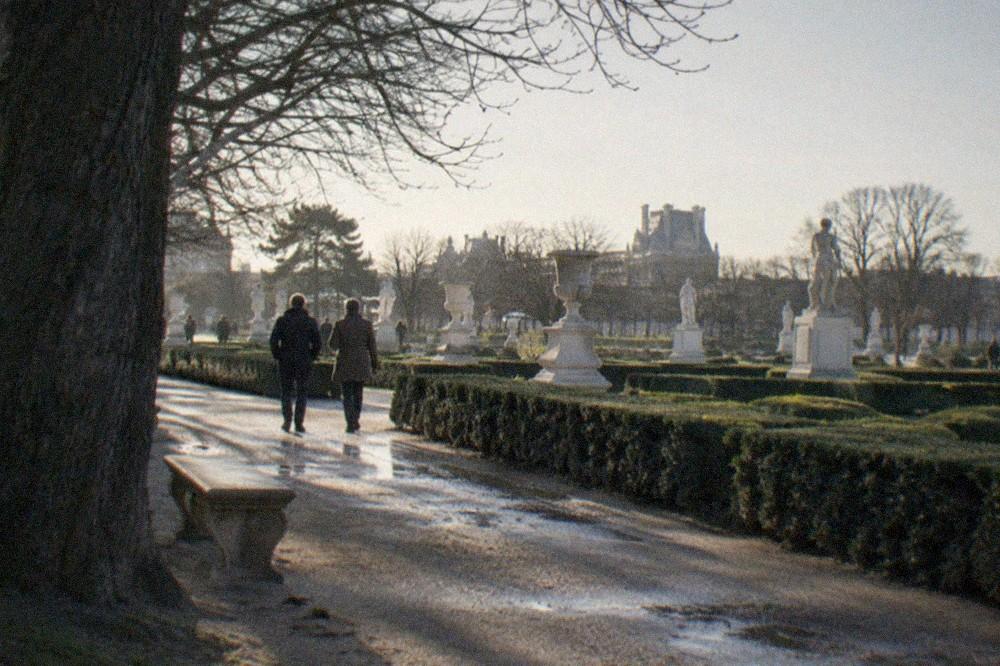
The Musée Rodin is the paid option that behaves like a free one for this age. Admission is €14, it rates 4.7 across 2,519 reviews, and it closes on Mondays like the Orsay, which makes it a Tuesday fallback rather than a Monday one when the closure calendar catches the family out. The attraction for a small child is the garden: sculpture can be looked at from a stroller, at a distance, at speed, and the visit scales naturally from fifteen minutes to an hour. Rodin is also free the first Sunday of the month from October to March, with no booking needed, one of the few free days in Paris that does not demand a slot.
The Musée du quai Branly is the wildcard. It charges €14, closes Mondays, and rates 4.6 across 3,401 reviews. What it offers small children is scale and strangeness: masks, textiles and instruments arranged along a gently sloping ramp rather than a grid of rooms. It is free the first Sunday of the month too. Keep the visit short and it lands. Two rules of thumb hold across all of it: go early, and treat the museum café as a planned reward rather than an emergency.
The Cité des sciences et de l'industrie Is The One Built For Children
It is a purpose-built science centre in the 19th arrondissement, closed Mondays, rated 3.8 across 1,212 reviews, and bookable from $15.12. Hands-on galleries and the surrounding Parc de la Villette make it the closest thing Paris has to a children's museum, and the only one of the major venues designed with young visitors as its main audience rather than a tolerated sideline.
The Cité des sciences is the honest answer to the question most family guides dodge. The Louvre is a palace, the Orsay is a railway station, the quai Branly is a curated collection; the Cité des sciences was built to be touched. Its children's zone is aimed squarely at young visitors, and the building sits inside a park designed for wandering, with playground-scale structures between the halls. A morning inside and an afternoon outside is the natural shape of the day. Its 3.8 rating across 1,212 reviews sits lower than the art museums' scores, which says more about what reviewers came for than about what a family will find.
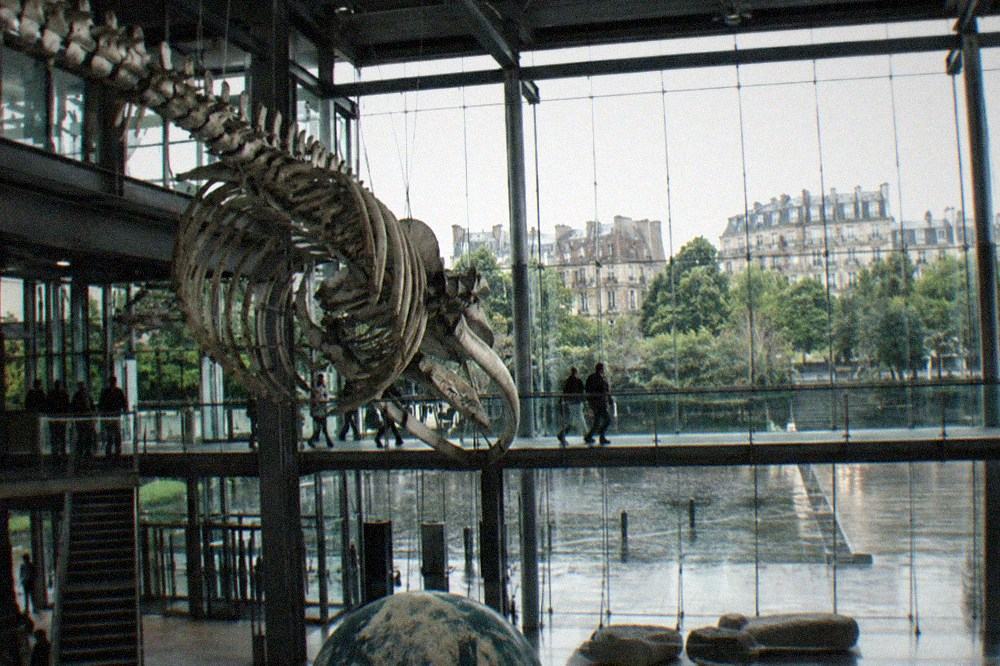
The practical details for families are on the Cité des sciences and industry tickets page, and the booking price reads from $15.12. One warning belongs here rather than buried later: the Cité closes on Mondays, alongside the Orsay, the quai Branly and every free city museum, so it cannot rescue a Monday. It never closes on Tuesdays, which makes it the natural Tuesday plan when the Louvre shuts.
Everything around it reinforces the point. La Villette is the park the building sits in, and families regularly treat the two as a single outing, half science, half grass. For a city where so much of the museum offer is centuries old and fragile behind rope, the Cité is the venue where the request "can we touch it" gets a yes. If the children in your group are under seven and you only book one thing, book this.
For families weighing three good options in one decision, the Cité pairs naturally with two very different venues: the Musée des Arts et Métiers for older children who like machines, and the Musée du quai Branly for the visual feast.
Which Museums Suit Ages Seven To Twelve?
The Musée des Arts et Métiers at €12, free every Friday from 18:00 to 21:00, with its flying machines and clockwork, the Musée de l'Armée at €17 with its armour and Napoleon's tomb, and the Louvre itself, where a child given three things to find will stay engaged for an hour, are the strongest picks. Seven to twelve is the golden age for museums, provided the visit stays short and has a mission.
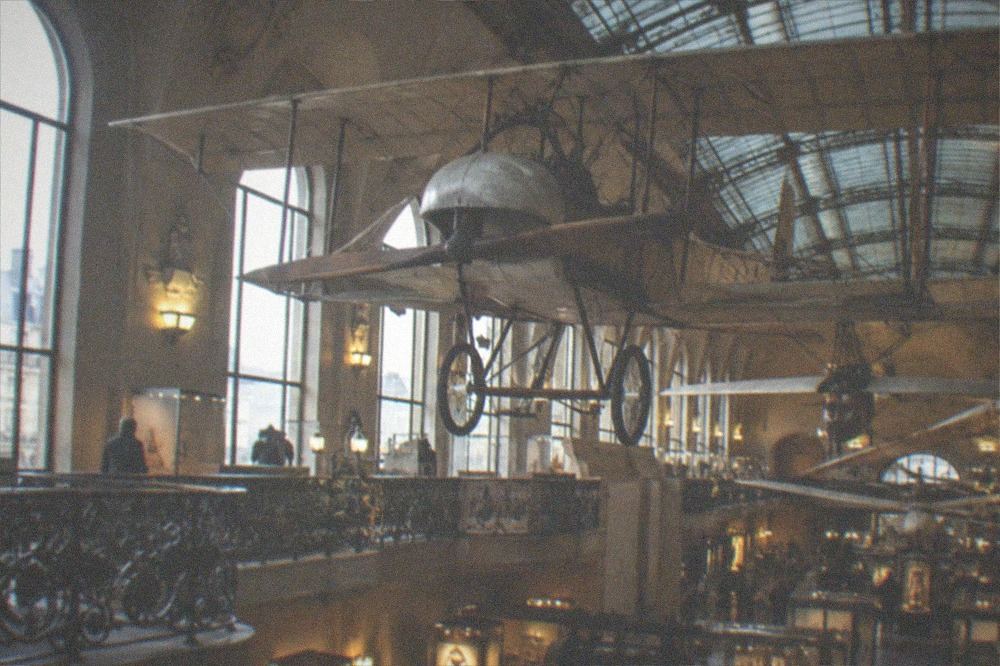
This is the age band where the great collections start to pay off. The Musée des Arts et Métiers is the sleeper hit: €12 at the door, closed Mondays, and free every Friday evening, a rule unique to this museum in all of Paris, as its own site confirms. Its halls hold real aircraft, astrolabes and the original laboratory equipment of Lavoisier, objects that reward exactly the questions a curious ten year old already asks. Friday evening is the quietest and cheapest way in, and an evening slot doubles as a rest-day activity after a heavy morning elsewhere. The Arts and Métiers tickets page covers the booking details.
The Musée de l'Armée at the Invalides is the other reliable win. Admission is €17 and includes the Dôme and Napoleon's tomb; it rates 4.6 across 10,794 reviews, and it never closes on a weekly day, which families underestimate until a Monday ruins their alternative. Armour, swords, cannons and uniforms are precisely the material that holds a nine year old, and the scale of the building does half the work. The tour of Napoleon's tomb at Les Invalides is covered in depth elsewhere on this site for anyone building a history-heavy itinerary.
The Louvre belongs on this list, with a caveat. Admission is €22 for EEA visitors and €32 for everyone else, it rates 4.6 across 7,769 reviews, and it closes Tuesdays. A seven-to-twelve year old does not want the Louvre; a seven-to-twelve year old wants three things in the Louvre: an Egyptian sarcophagus, a suit of armor, a ceiling. Name them in advance, let the child be the navigator, and the visit works. Arrive without a plan and the size of the building defeats everyone, including the adults.
| Museum | Adult price | Closed day | Why it works at this age |
|---|---|---|---|
| Musée des Arts et Métiers | €12 | Monday | Working machines, aircraft, instruments; free Friday evenings |
| Musée de l'Armée | €17 | never | Armour and weapons, Napoleon's tomb, open every day |
| Louvre | €22 EEA / €32 non-EEA | Tuesday | Treasure-hunt structure: pick three objects, let the child lead |
| Musée du quai Branly | €14 | Monday | Masks and instruments, ramp layout, first Sunday free |
| Musée Rodin | €14 | Monday | Sculpture garden plus the Hôtel Biron, short and outdoor-friendly |
The one thing to lock in early on a family trip is the venue built for this exact audience, before the dates you want are gone.
What About Teenagers?
Teenagers can take the full length of the Louvre, the Musée d'Orsay (€16 online, €14 at the door) and the Catacombes at €31, and EEA residents under 26 enter the national museums free with proof of residence, which at 17 can save a family the full adult price. Versailles, at €35 in high season, is the strongest day trip for this age group.
The under-26 residency rule is the one teenagers can use that small children cannot. An 18-to-25 year old resident of the EU or EEA, permit holders included, walks into the Louvre and the Orsay at no charge, and the desk checks residency documents rather than passports. For a mixed group of teenagers, the savings land on the oldest, which is exactly where the budget usually breaks.
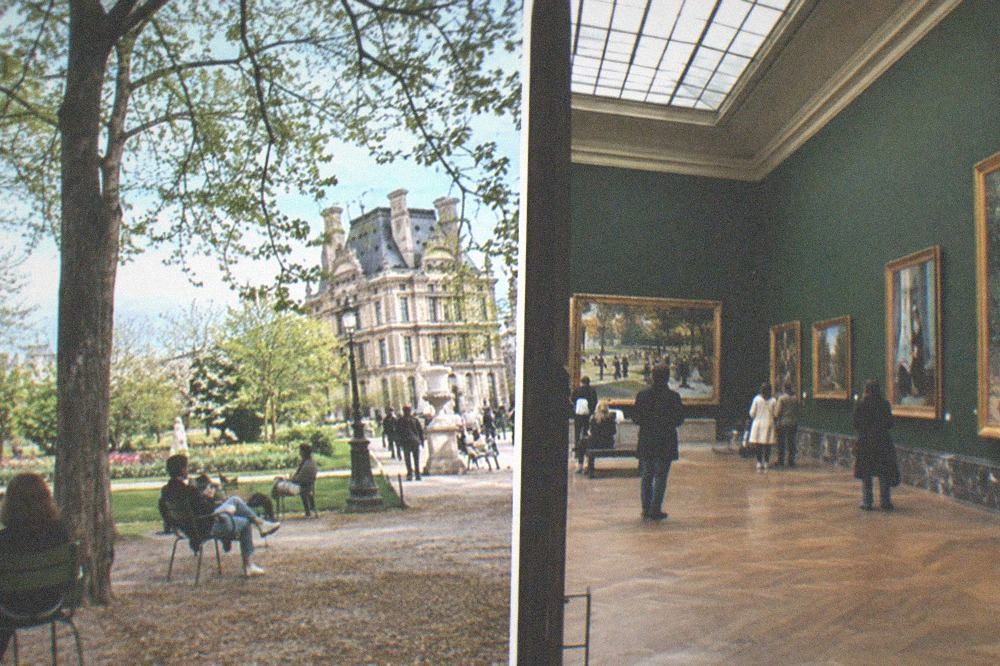
The Musée d'Orsay is the canonical teenage museum in Paris, and the pricing quirk is worth knowing: the online ticket costs €16 against €14 at the museum, one of the few venues where booking ahead costs more. It rates 4.7 across 27,881 reviews and closes Mondays, and its free first Sunday requires a booked slot, which sells out. The Catacombes at €31 divide opinion sharply even among adults, and timed slots there sell out days ahead, so it is a book-early-or-skip venue rather than a spur-of-the-moment one.
Versailles is the day trip that earns its travel time for teenagers. The Passport ticket is €35 from 1 April to 31 October and €25 the rest of the year, the estate rates 4.7 across 11,852 reviews, and it closes Mondays, like most of the city's children's museums. It is on the Paris Museum Pass, but a pass still requires a separate timed reservation for the estate, a detail that strands families every week. The palace is vast and the gardens are free to walk outside high season, which lets a teenager set their own pace between the two.
Which Great Collections Will Bore A Seven Year Old?
The long painting rooms are the risk, not the museums. A seven year old will rarely enjoy the full five floors of the Orsay, the manuscript rooms of the Musée de Cluny at €14, or the Musée Jacquemart-André at €19, where the visit is slow and the price is the highest of the house museums. Pick one wing, give the child a find-it mission, and leave before the boredom does the deciding.
Honesty is more useful here than enthusiasm. The collections this site covers at length are magnificent, and a seven year old will still flatten against some of them. The pattern is consistent: rooms of small framed works, low light, reading-heavy labels and nowhere to sit. The Musée de Cluny's medieval collection is a historian's joy and a child's trudge once the unicorn tapestries have been seen. The Jacquemart-André, €19 and open daily, is a house museum built for a slow adult pace; the tea room in its former ballroom is genuinely good, which can redeem the visit for the adults, but that is a rescue, not a plan.
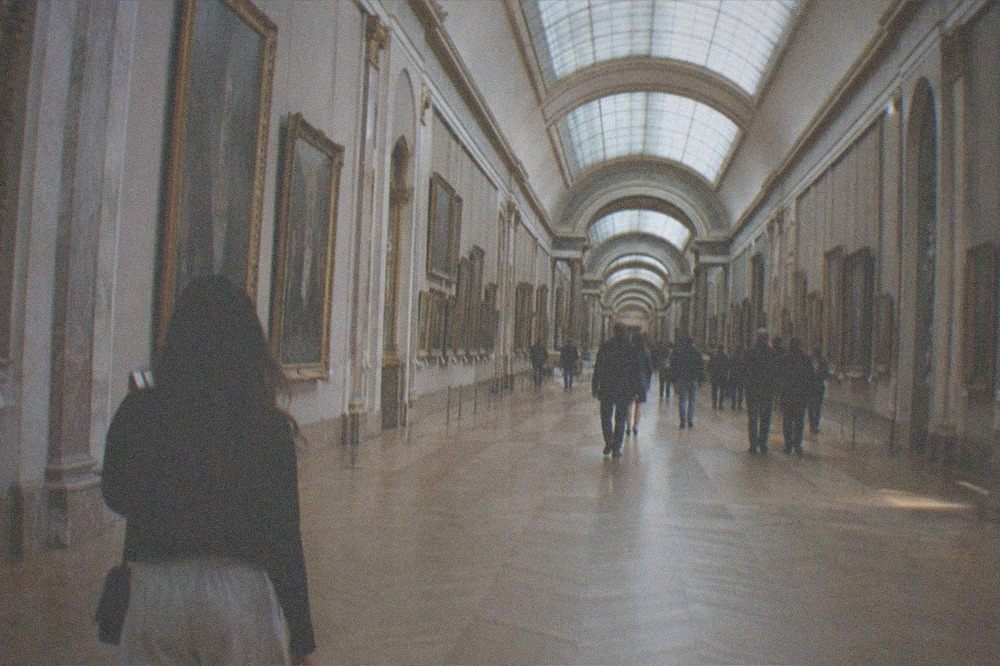
The Musée Marmottan Monet, €14 and closed Mondays, is a borderline case: the water lilies hold some children completely and lose others in minutes, and at 4.8 it is the best-rated museum on this site's roster, but the rating measures adult satisfaction. The Atelier des Lumières at €19.50 flips the problem: it is an immersive projection hall with no collection at all, and the ticket buys whatever show is running, which can be exactly right for a child bored by canvases. It is not on the Paris Museum Pass, and it never closes weekly.
The working method, for any of them, is the mission structure. Three objects, named before entry, the child holding the mental list. It converts the biggest museums in the world into a scavenger hunt and it costs nothing. The failure mode is equally predictable: trying to justify the ticket price by staying longer than the child's attention. With under-18s free at the nationals, the ticket price does not need justifying, so leave.
What Does A Family Day Out Actually Cost?
For a family of two adults and two children at the national museums, only the adults pay: two Louvre tickets at €32 each outside the EEA, €22 each for EEA visitors, two Orsay tickets at €14 each at the door, two at the Musée de l'Armée at €17, or two at arts et métiers at €12. The free city museums cost nothing at all, and every child walks in beside the adults.
Because the arithmetic is unusual, it is worth laying out what a day actually costs at the door, with each price printed so the totals can be checked. The pattern that surprises families is that the second-biggest line item after accommodation is usually nothing at all.
| Museum | Adult price | Each child under 18 | Two adults, two children |
|---|---|---|---|
| Louvre | €32 non-EEA, €22 EEA | free with photo ID | two adult prices, nothing else |
| Musée d'Orsay | €14 at the museum, €16 online | free with photo ID | two adult prices |
| Musée de l'Orangerie | €11 at the museum | free with photo ID | two adult prices |
| Musée de l'Armée | €17 | free with photo ID | two adult prices |
| Musée Carnavalet, Petit Palais, Musée d'Art Moderne | free, permanent collections | free, no ticket | nothing |
| Cité des sciences et de l'industrie | bookable from $15.12 | check the child rate when booking | varies by age and booking |
Two cautions keep this honest. The Eiffel Tower charges everyone: the summit by lift is €36.70, the second floor by lift €23.50, the stairs €14.80. The Catacombes at €31 are the most expensive single museum ticket in the city's roster, and children pay there as well. For families leaning on the Paris Museum Pass, the exclusion list matters more than the inclusion list: the pass never covers the Eiffel Tower, the Catacombes, the Opéra Garnier, the Marmottan or the Atelier des Lumières, it never covers temporary exhibitions, and it buys nothing at the free city museums. Whether it pays for itself is a separate question with its own walkthrough.
Rainy Days, Mondays And Closed Days
Most of the children's museums close on Mondays: the Musée d'Orsay, the Musée du quai Branly, the Musée des Arts et Métiers, the Cité des sciences, Versailles and every free city museum. The Louvre, the Orangerie, the Musée Guimet and Fontainebleau close Tuesdays instead. Open every single day: the Musée de l'Armée, Sainte-Chapelle, the Panthéon, the Arc de Triomphe, the Eiffel Tower and the Jacquemart-André.
The closed-day map is the second most common way a family day collapses, after the timed-slot problem, and Paris splits cleanly into two camps. The city museums and most of the independents shut Mondays. The nationals shut Tuesdays. Only a short list runs seven days, and that list is where Monday and Tuesday planning should start: the Musée de l'Armée is the standout, open daily, €17, with armour and a tomb and enough scale to absorb a whole wet afternoon.
| Day of the week | Closed | Open |
|---|---|---|
| Monday | Orsay, quai Branly, arts et métiers, Cité des sciences, Versailles, Picasso, all free city museums | Louvre, Musée de l'Armée, Rodin, Jacquemart-André, Atelier des Lumières |
| Tuesday | Louvre, Orangerie, Guimet, Fontainebleau | Orsay, quai Branly, arts et métiers, Cité des sciences, Rodin |
The Musée Curie deserves its own warning, because it is free and therefore tempting, and it is the free museum most likely to be shut when a family turns up: it closes Sundays, Mondays and Tuesdays, all of August, and 20 December to 5 January. The full Monday picture, with every venue that helps and hinders, is laid out in the Paris museums open on Monday guide. Rain, for what it is worth, is better handled by booking a timed slot at the Cité or the Orsay than by joining an uncovered queue anywhere.
Timed Slots, Queues And Planning The Day
The Louvre, the Orsay, the Orangerie, the Catacombes and the Cité des sciences all require timed entry, and Catacombes slots sell out days ahead. Book morning slots for young children, plan one museum per half day, and leave the ticketed temporary exhibitions to the adults. The free city museums are the only Paris venues where a family can genuinely just walk in.
Timed entry is the last piece of the puzzle and the one that punishes improvisation. The rule of thumb: if the museum is famous, it needs a slot. The Catacombes are the extreme case, where the door price is €31 and resale skip-the-line products cost several times that precisely because the timed slots vanish. The Louvre, the Orsay and the Orangerie are more forgiving but still compulsory, and the Orangerie's online ticket costs €12.50 against €11 at the museum, another of the city's booking-inversions worth knowing.
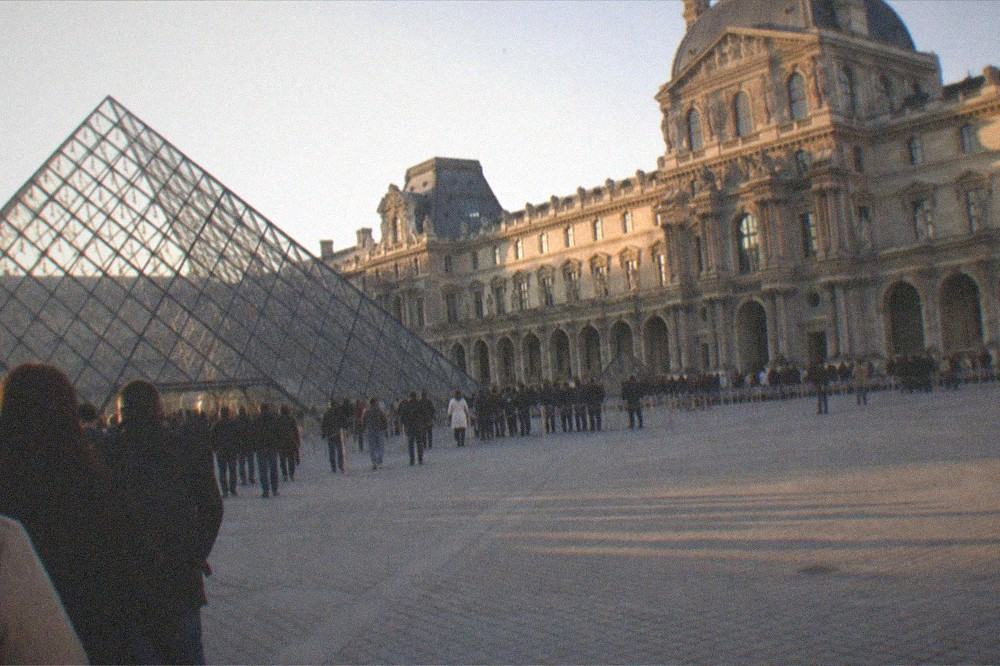
The structure that works for families is one anchor museum per half day, free museums as fillers, and the closed-day table above as the weekly skeleton. Morning slots suit young children because patience is a morning resource; the Friday free evenings at the Musée des Arts et Métiers suit older ones because 18:00 to 21:00 is a quiet, cheap window after a full day elsewhere. The Paris Museum Pass guide covers which of the big venues still demand a separate reservation even with a pass, the Louvre and Versailles included, and it is worth reading before buying anything, because a pass that does not book the Louvre slot is a pass that buys a queue.
One last honest note, since this guide has said it about the others: the Cité des sciences is the venue families return to, and the Cité des sciences and arts et métiers and quai Branly between them cover science, machines and the wider world, three moods for one week.
Common Questions About Museums In Paris For Kids
Are museums in Paris free for kids?
Yes, at the national museums. Under 18s enter free with a photo ID at the Louvre, the Musée d'Orsay, the Musée Rodin, the Musée de Cluny and the rest, and EU and EEA residents under 26 are free too, including holders of a long-stay residence permit or visa. The Eiffel Tower and the Catacombes charge children, and so do Palais Galliera and the other paid city sites.
Which Paris museums are best for toddlers?
The free city museums work best at this age because a twenty-minute visit costs nothing: the Musée Carnavalet, the Petit Palais and the Musée d'Art Moderne de Paris. The Musée Rodin's sculpture garden at €14 lets a toddler wander outdoors, and the Cité des sciences et de l'industrie is the one big venue with galleries built for small children.
Is the Louvre good for a seven year old?
It can be, with structure. Admission is €32 for non-EEA visitors, €22 for EEA visitors, and children under 18 are free with a photo ID. Give a seven year old three named objects to find across the Egyptian, armor and painting wings, and an hour of the Louvre works better than three hours of it. It closes Tuesdays.
Which day are most Paris museums closed?
Mondays for the city museums, the Musée d'Orsay, the quai Branly, the arts et métiers, the Cité des sciences and Versailles; Tuesdays for the Louvre, the Orangerie, the Guimet and Fontainebleau. The Musée de l'Armee, the Panthéon, Sainte-Chapelle, the Arc de Triomphe, the Eiffel Tower and the Jacquemart-André open every day.
Is the Cité des sciences good for children?
It is the one major Paris venue built for them, with hands-on galleries and a children's zone, closed Mondays, rated 3.8 across 1,212 reviews, and bookable from $15.12. The surrounding Parc de la Villette makes it a full-day outing, half science, half park.
How much does a family museum visit cost in Paris?
At the national museums a two-adult family with children under 18 pays only the adult prices: €32 each at the Louvre outside the EEA, €14 each at the Orsay door, €17 each at the Musée de l'Armée, €12 each at the arts et métiers. The free city museums cost the family nothing. The Eiffel Tower and Catacombes charge children as well as adults.
Do kids need ID to get in free in Paris?
For the age-based free entry at national museums, yes, a photo ID for anyone under 18, and for 18-to-25s from the EU or EEA an ID or an official document confirming the age category. Non-citizen EEA residents under 26 need a photographic residence permit valid longer than 90 days, because the desk checks residency, not nationality.