Should You Buy Musée d'Orsay Tickets In Advance?
Yes, and here is why: the door price is €14, the online price is €16, the free Sunday needs a booked slot, and the museum shuts on Mondays. A full planning guide to Musée d'Orsay tickets.
Should You Buy Musée d'Orsay Tickets In Advance?
Yes. Musée d'Orsay runs compulsory timed entry, so an advance ticket with a fixed slot is the only version that guarantees a time you chose yourself. The museum is also free the first Sunday of every month, but only for visitors who booked the free slot in advance, and it is closed all day every Monday. Planning beats queueing here.
The honest answer has a twist in it: the advance ticket is not the cheap option. The museum's own tariffs are the reverse of what most people expect. Buying online costs €16 while walking up to the door costs €14, so the convenience of a timed slot is priced at two euro more than the same entry bought on the spot. That inversion is printed on the museum's own rates page, not inferred from a reseller's markup.
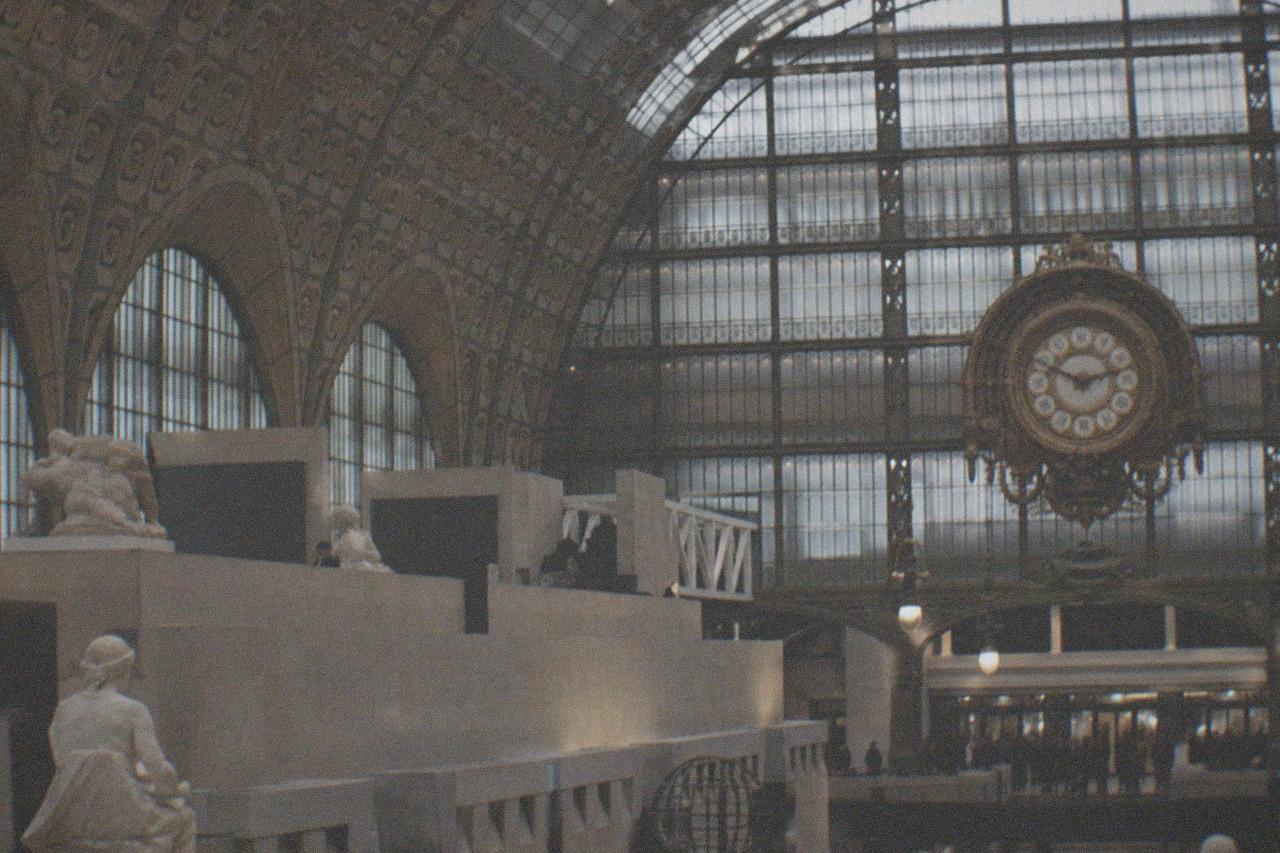
What you are actually buying with an advance ticket is certainty. Orsay admits visitors in timed windows, and a traveller arriving mid-afternoon in high season with no booking can be handed the last slot of the day or told to come back tomorrow. The queue outside is a real feature of this museum, a Beaux-Arts railway station on the Left Bank that holds the world's largest collection of Impressionist painting under one glass roof.
There is one more reason the question matters more at Orsay than at most Paris museums: the building is in the middle of a renovation. Work began on 10 March 2026 and runs to summer 2028, with access routes inside modified while it carries on. All collections remain accessible, the museum states, but the flow of visitors through a partly re-routed building makes a booked arrival time even more valuable than usual.
Before the detail, here are the three bookable options that cover Orsay and the two nearest alternatives in the Impressionist camp:
What Is Actually Inside The Musée d'Orsay?
The Musée d'Orsay holds the world's largest collection of Impressionist and Post-Impressionist art: Monet, Renoir, Degas, Cézanne, Van Gogh and Gauguin in depth, plus the Beaux-Arts railway station itself with its giant platform clock. The permanent collection spans 1848 to 1914. A single ticket covers all of it, including the temporary exhibitions.
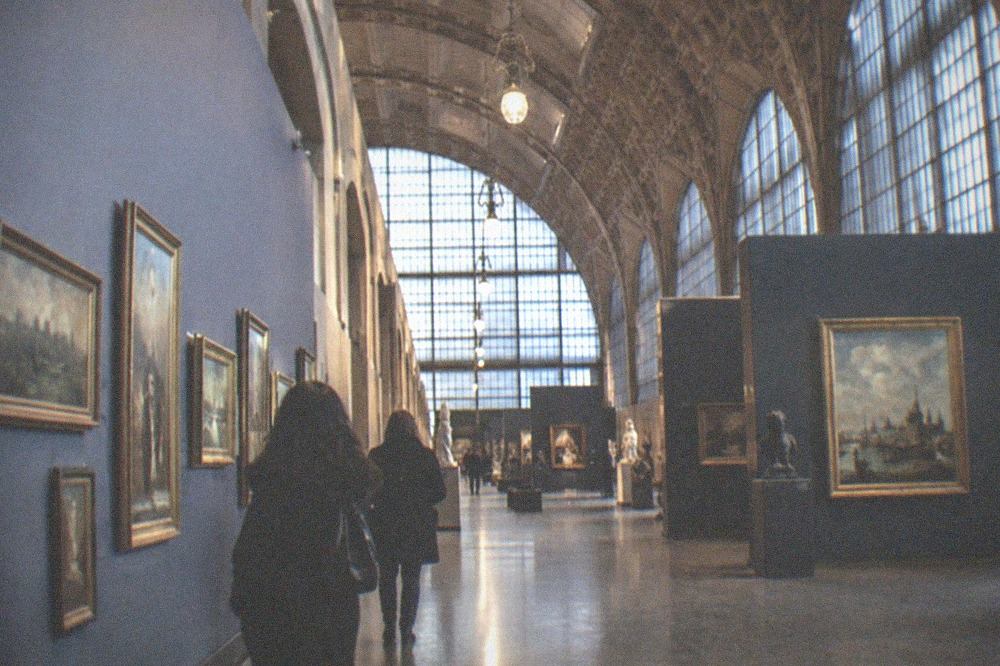
The building was the Gare d'Orsay, a railway terminus built for the 1900 Universal Exhibition, and its main hall still reads as a train shed with a clock the size of a rose window. Visitors regularly report that the architecture alone justifies the visit, and reviewers consistently describe the fifth floor as the payoff: a long gallery lined with the canvases most people came for, under a vaulted ceiling of iron and glass.
The painting collection is the headline. Van Gogh's self-portraits and his Starry Night over the Rhône hang here, not to be confused with the Starry Night in New York, a mix-up addressed in our piece on where Starry Night actually hangs. Monet's Blue Water Lilies, Renoir's Dance at the Moulin de la Galette, Manet's Olympia and Whistler's Arrangement in Grey and Black all sit in the permanent displays, alongside sculpture by Rodin, Bourdelle and Camille Claudel.
The middle floors carry the pre-Impressionist nineteenth century: academic painting, the official Salon art the Impressionists rebelled against, decorative arts from the same decades, and a set of scaled architectural models. The mix is deliberate. You see the art world the Impressionists were arguing against before you reach the floors where they won the argument, which is why the museum rewards a slow, bottom-to-top walk rather than a dash to the famous names.
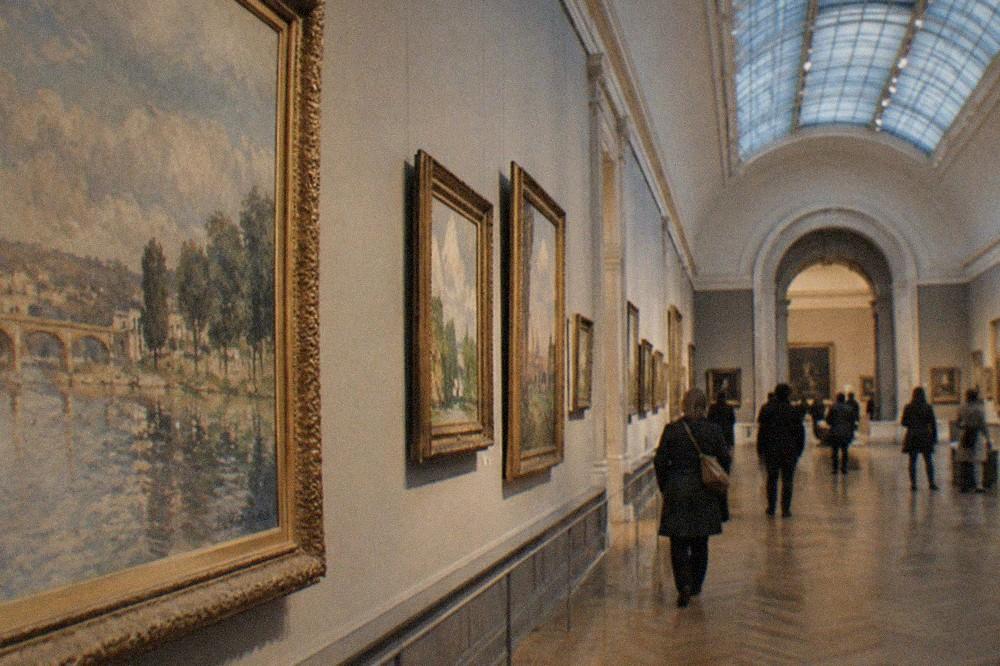
A practical note on scale: the collection runs to thousands of works across three principal floors and a sculpture terrace. Nobody sees it all. Reviewers consistently say the mistake to avoid is treating Orsay as a one-hour stop between the Louvre and the Eiffel Tower, and the ratings bear that out, with reviewers rating it 4.7 across 27,881 reviews, one of the strongest scores of any major Paris museum.
What Does The Ticket Cover And What Does It Cost?
A standard adult ticket costs €14 at the door and €16 online, and it covers the permanent collection plus the temporary exhibitions in one entry. There is no cheaper exhibition-only or collection-only version. Under-18s and EU and EEA residents under 26 get in free with photo ID, as the museum's own conditions state.
The pricing deserves a slow read because it behaves unlike most Paris attractions. Online booking costs more, not less. The €16 online ticket and the €14 door price are the same product, the same collections, the same day of validity; the extra two euro is the price of a guaranteed slot chosen in advance. A bookable timed-entry ticket from a resale platform runs from $15.12, and that price is a platform from-price, never the same figure as the door price in euro, so compare it against €16 rather than assuming a discount.
| Ticket version | Price | What it covers | Notes |
|---|---|---|---|
| At the door | €14 | Permanent collection and exhibitions | Timed entry still applies, queue can be long |
| Museum's online ticket | €16 | Same entry, chosen slot | Costs more than the door price |
| Bookable timed entry | from $15.12 | Same entry via a reseller | Platform from-price, not the door figure |
| Under 18 | Free | Everything | Photo ID required |
| EU and EEA residents under 26 | Free | Everything | Residency is what gets checked |
| First Sunday of the month | Free | Everything, with a booked slot | The free slot must be reserved |
Who qualifies for the free rates matters, because the rule is broader than many visitors assume. Under-18s are free with a photographic identity document. So are young people from the EU and the EEA under 26, and the wording includes holders of a long-stay residence permit or visa over four months. Residency, not nationality, is what staff actually check at the desk, a detail the national monuments' own gratuity conditions page spells out for the whole French national system.
The Paris Museum Pass also covers Orsay, at €85 for 2 days, €105 for 4 days and €125 for 6 days, with validity counted in hours from the first scan rather than calendar days. But the pass does not wave you in. Orsay is one of the eight pass sites that still demand a separate timed reservation, so a pass holder needs to book a free slot exactly as a free-Sunday visitor does. Our full Paris Museum Pass breakdown covers which of the 55 pass sites need reservations.
If you are simply deciding whether to commit now, this is the natural moment:
Who Gets In Free, And When Is The Museum Free?
Everyone gets in free the first Sunday of every month, all year, but only with a timed reservation booked in advance; the free slot is obligatory, not optional. Under-18s and EU and EEA residents under 26 are free every day with photo ID. There is no other free window, and Monday closures remove one day in seven entirely.
The first-Sunday rule at Orsay is generous and strict at the same time. It runs every month of the year, unlike the Rodin, which is free on first Sundays only from October to March, and unlike the national monuments, which drop their free Sundays from April to October. But Orsay attaches a condition: the free ticket must be reserved, and the reservation is compulsory. Turning up on the free Sunday without a booked slot is the classic way to end the day looking at the river from the terrace instead of the paintings from the inside.
The age and residency exemptions run every day the museum opens, Sunday or not. Bring the photo ID. The checked document for a non-citizen EEA resident under 26 is a valid photographic and residency permit longer than 90 days with name and photograph, in the Louvre's published wording for the same national rule; Orsay applies the same standard.
One trap worth naming plainly: the Paris Museum Pass still gets you in free too, and pass holders are exempt from the obligatory first-Sunday booking rule that applies to the general free ticket, but they do need a timed reservation for a normal visit. The reservation is free. The pass itself buys the entry. Two separate steps, both required, and skipping either one of them is the most common reason a valid pass holder is turned away.
How Long Should You Spend At The Musée d'Orsay?
Two to three hours covers the Impressionist floor and the highlights comfortably; half a day lets you take the collection in the order it was meant to be read, floor by floor. Reviewers consistently report that ninety minutes is the realistic minimum before the visit starts feeling like a corridor. The building rewards the slower pace.
The single most common planning error at Orsay is scheduling it like a checkpoint. It sits physically between the Louvre and the Eiffel Tower, and plenty of itineraries treat it as a two-hour connector. The collection's size makes that a rushed walk past the reason you came. Two hours on the fifth floor alone is easy to spend if you like Monet, and the gallery of the same artist's late decorative panels demands its own unhurried quarter hour.
A practical structure that works for most first visits: start in the main hall to see the station shell, take the mid-level floors for the academic painting and the sculpture terrace, then give the top floor the largest block. Finish with the terrace view over Montmartre and the Seine, which is included in the ticket and is one of the better free photo positions on the Left Bank. Our three-day Paris museum itinerary places Orsay on day two for exactly this reason.
Families have a different calculation. The building is stroller-navigable and the cafeteria sits under the station clock, but the density of the collection means younger children burn out on the upper floors. If you are travelling with kids, the Paris museums for children guide suggests pairing Orsay with a shorter stop and a park, rather than the full vertical sweep.
Fatigue is a real factor. The museum's own flow, especially while the renovation runs, pushes most visitors up to the Impressionist floor and back down in a loop. Wear the shoes you would wear for a long walk, because the loop is measured in kilometres, not rooms.
Which Day Is The Musée d'Orsay Shut?
The Musée d'Orsay is closed every Monday, all day, and that is its only weekly closure. It opens Tuesday through Sunday, including the free first Sunday. Monday is the day the whole Paris museum map reshuffles: the Louvre and the Orangerie close Tuesday instead, so Orsay is a Monday answer only in reverse.
The closed days split Paris into two camps, and misreading them strands a day. The national camp, the Louvre among them, closes on Tuesdays. The Orsay, the Rodin, the Picasso, the quai Branly, the Cluny, the Arts et Métiers and the Marmottan all close on Mondays, along with every free city museum. The practical consequence is brutal on a Monday: a visitor standing in front of the Orsay doors with a morning to spend should be walking toward the Louvre or the Musée de l'Orangerie, both open, rather than waiting for Tuesday.
Late opening changes the calculus too. Orsay runs a late night on Thursday, and the evening rooms are emptier than any morning slot. An evening arrival with a timed ticket is the closest thing this museum has to a secret door: the same collections, the same ticket, a fraction of the crowd density.
The renovation adds a moving variable. Work has been under way since 10 March 2026 and runs to summer 2028, with modified access routes inside the building while all collections stay open. Individual galleries can rotate closed during the works. If one specific painting is the purpose of your visit, it is worth checking the museum's own site for the current gallery list before you lock a date, because a room-by-room schedule is published there.
Orsay Or Orangerie: Which Impressionist Museum Suits You?
Musée de l'Orangerie is the shorter, calmer visit: two oval rooms of Monet's Water Lilies lit by skylight, plus a compact collection, for €11 at the door against Orsay's €14. Orsay is the full collection. The Orangerie closes Tuesday, Orsay closes Monday, so the two never share a closed day and pair well in one trip.
The two museums are a ten-minute walk apart through the Tuileries garden, and treating them as rivals misses the point: they are different formats of the same story. The Orangerie was built around Monet's Nymphéas, the panoramic water-lily panels the painter designed for those rooms specifically, and the visit runs about an hour at a relaxed pace. Orsay is the encyclopaedia, three floors of the whole Impressionist century with every name in depth.
Price is close enough not to decide it. The Orangerie costs €11 at the door and €12.50 online, the same two-step inversion as its big sibling, and it is free the first Sunday of the month with an obligatory timed reservation, exactly like Orsay. A bookable Orangerie entry runs from $15.70 and carries a 4.7 score across 7,188 reviews, the same rating as Orsay's 4.7 from a much larger pool.
| Musée d'Orsay | Musée de l'Orangerie | |
|---|---|---|
| Door price | €14 | €11 |
| Online price | €16 | €12.50 |
| Closed day | Monday | Tuesday |
| Realistic visit | 2 to 3 hours | about 1 hour |
| Signature works | Van Gogh, Cézanne, Monet, Renoir, Degas | Monet's Water Lilies cycle |
| Rating | rated 4.7 across 27,881 reviews | rated 4.7 across 7,188 reviews |
The honest recommendation splits by visitor type. If Impressionism is the reason you came to Paris, do both on consecutive days, Orsay on the day it is open with the bigger block, the Orangerie on the other morning. If you have one slot only, choose Orsay for depth and the Orangerie for the single overwhelming room. Our Louvre versus Orsay comparison covers the third leg of that choice for visitors fitting the Louvre into the same week.
What About Seeing Monet's Garden At Giverny?
Fondation Claude Monet at Giverny is the day-trip version of the same painter: the actual house and water garden he painted, 75 km from Paris, open only from 1 April to 1 November, at €13 at the gate. It is not on the Paris Museum Pass, and it shuts entirely all winter. A bookable trip runs from $118.66.
Giverny answers a different question than the Orsay does. Orsay holds the paintings; Giverny holds the pond, the Japanese bridge and the flower beds the paintings depict. The two visits rhyme with each other in a way no other pairing in the region does, and travellers who book both consistently describe the combination as the full Monet. The train from Paris Saint-Lazare to Vernon-Giverny takes roughly 45 to 60 minutes, then a short shuttle, bike or taxi ride covers the last stretch to the village.
The seasonality is the hard limit. The gardens run 1 April to 1 November and close completely for the rest of the year, and a winter visitor to Paris simply cannot add Giverny to any itinerary. Orsay, by contrast, is a year-round museum that shuts only on Mondays. That contrast is the practical reason to decide on Giverny first and build the Paris days around whatever time is left.
Booking works differently there too. The gate price is €13, and because Giverny sits outside every pass, timed entry is the standard route in the season, with the 4.5 rating across 404 reviews reflecting a venue that is loved but reviewed by a smaller, more committed audience, mostly people who took the train on purpose.
The Short Verdict On Buying Ahead
Buy the timed ticket ahead if you want a chosen hour and a guaranteed entry, or buy at the door for €14 if your schedule is flexible, and book the free Sunday slot in advance either way if you want the museum for nothing. Avoid Monday entirely. The €16 online price is the cost of certainty, not a mark-up to avoid.
Every version of this decision comes back to the same three facts. Entry is timed, so the day has a shape whether you chose it or not. The free Sunday is reservation-only, so even free costs a booking. And Monday is dead, a full seventh of the calendar wiped out, so the remaining days carry the crowds that Monday would have absorbed.
For the comparison shopper, the shape of the market is this: €14 at the door, €16 from the museum online, from $15.12 through a bookable platform, and free for under-18s, EU and EEA residents under 26, and everyone on the first Sunday with a reserved slot. This site, Paris Museums, keeps those figures verified venue by venue so the comparison stays honest, and the Orsay's own tariff page remains the final word if a number here ever looks off.
If Orsay is the anchor of your museum week, the Orangerie and Giverny complete the Impressionist arc, and the timed-entry options across all three are here:
For visitors who would rather walk in on the day, the Musée d'Orsay tickets page lays out the current entry options and timings, and our skip-the-line guide for the Louvre applies the same logic to the one museum in Paris where the queue is longer still.
Common Questions About Musée d'Orsay Tickets
Should You Buy Musée d'Orsay Tickets In Advance?
Yes, if you want a chosen time slot: entry is timed and advance booking guarantees the hour. No, if saving money is the goal, because the online ticket costs €16 against €14 at the door. Either way, book the free Sunday slot in advance if you are going on the first Sunday of the month, since it is reservation-only.
Is Musée d'Orsay free on the first Sunday?
Yes, every month of the year, but the free slot must be reserved in advance. It is not a walk-up offer. Under-18s and EU and EEA residents under 26 are free every day the museum opens, with photo ID.
Is it cheaper to buy Musée d'Orsay tickets online?
No. The online ticket costs €16 and the door price is €14, an inversion the museum prints on its own rates page. What the online ticket buys is a chosen timed slot, not a discount.
Which day is the Musée d'Orsay closed?
Every Monday, all day. It opens Tuesday through Sunday, with a late night on Thursday. The Louvre and the Orangerie close Tuesday instead, so the two Impressionist museums never share a closed day.
How long do you need at the Musée d'Orsay?
Two to three hours for the highlights and the Impressionist floor, half a day to read the collection floor by floor. Ninety minutes is the realistic minimum before the visit turns into a corridor walk.
Does the Paris Museum Pass cover the Musée d'Orsay?
Yes, but it does not skip the booking step. Orsay is one of the eight pass sites that require a separate timed reservation, so a pass holder still books a free slot for entry. The pass never covers temporary exhibitions at any site.
Can I just turn up at the Musée d'Orsay without a ticket?
You can buy at the door for €14, but entry is still organised in timed windows, so in high season you may be offered a slot hours later or the next day. The queue outside is a genuine feature of this museum; a booked slot is the only way around it.