Is Starry Night At The Musée d'Orsay?
No, The Starry Night is not at the Musée d'Orsay. The famous 1889 canvas hangs in New York. Orsay owns Starry Night Over the Rhône, plus ticket prices, free days and visit planning.
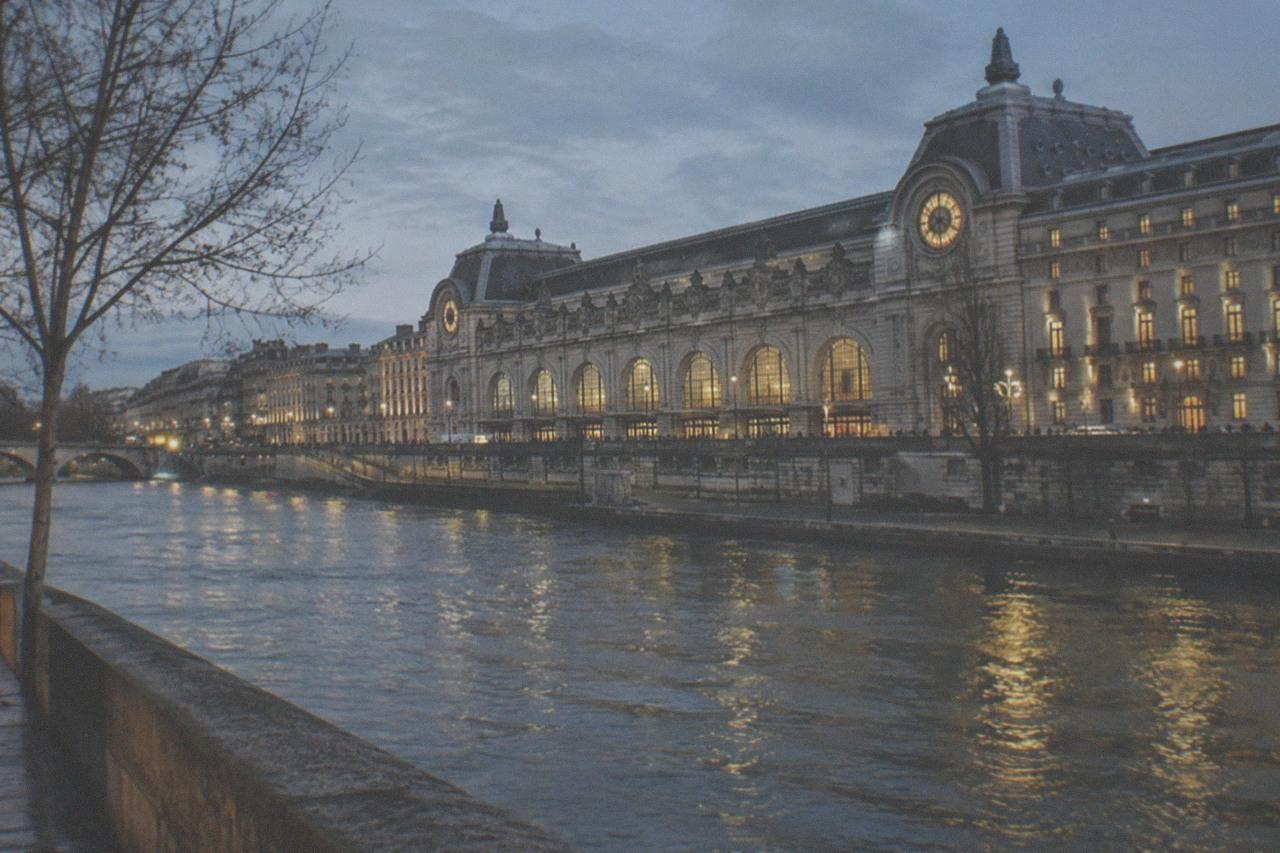
Is Starry Night At The Musée d'Orsay?
No. The Starry Night, the swirling canvas Van Gogh painted from his room in the asylum at Saint-Rémy, is at the Museum of Modern Art in New York and has been for generations. The Musée d'Orsay owns a different starry night: Starry Night Over the Rhône, painted in Arles, which shows the river, the gas lamps on the quay and the constellation the artist actually saw.
The mix-up is understandable, and it is one of the most common questions visitors arrive at the Orsay carrying. Two paintings, both genuine Van Gogh, both night skies, both painted within a year of each other, and they live on different continents. The one in New York was painted looking east from the asylum window, a scene half observed and half invented, with a cypress tree standing in for a church spire. The one in Paris was painted outdoors, on the quay, with the gas lamps of Arles reflected in the Rhône and the Great Bear glittering over the water. Van Gogh wrote to his brother Theo about the Rhône version in terms that make clear how proud he was of getting the night sky right.
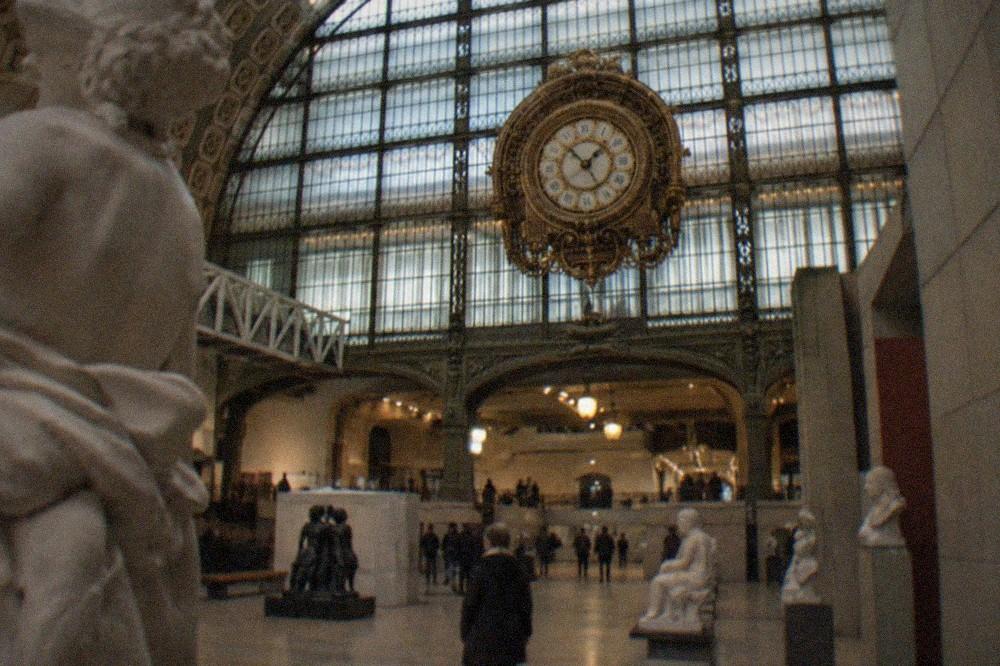
So if your plan was to walk into the Musée d'Orsay, head straight for The Starry Night and leave, the honest answer is that the plan needs revising. What the Orsay offers instead is one of the deepest Impressionist collections anywhere, housed in a former railway station on the Left Bank of the Seine, and the Rhône painting sits inside it alongside the works of Monet, Manet, Degas, Cézanne, Gauguin and a room devoted to Van Gogh himself. Visitors regularly report that the building, with its giant clock windows and its iron arch, is worth the ticket on its own.
The practical detail that matters most before you go: the museum charges €16 for a ticket booked online and €14 bought at the museum itself, an inversion of the usual pattern, and a timed slot is compulsory. It is closed on Mondays. It is free the first Sunday of every month, but the free slot has to be booked in advance, so the free day sells out like a paid one. The museum is also in the middle of a renovation running from 10 March 2026 to summer 2028, with modified access routes but all collections still on show. Full planning, including what the ticket covers and who gets in free without paying anything at all, is on our Musée d'Orsay tickets page.
If seeing a night sky by Van Gogh in Paris is the goal, the Orsay delivers it, just under the painting's other name. And if the goal is the New York canvas specifically, no amount of museum hopping in France will find it.
Which Van Gogh Paintings Hang At The Musée d'Orsay?
The Musée d'Orsay holds Starry Night Over the Rhône, painted on the quay at Arles, together with a cluster of late works from the final months of the artist's life at Auvers-sur-Oise, including The Church at Auvers and Portrait of Dr Gachet. The Van Gogh room sits at the top of the building, in the galleries devoted to Post-Impressionism, and it is one of the most crowded rooms in the museum.
The Rhône painting is the headline. Van Gogh placed his easel on the quay at Arles, worked by the light of a candle stuck to his hat, and produced a sky in which the stars are laid on in thick, unblended points of colour. The couple in the foreground, two small figures by the water, are often read as the artist and the companion he wished he had. Reviews on the operator's listing call the room where it hangs the moment the whole visit builds toward.
Around it, the Orsay's Van Gogh holdings run from the Arles period through Saint-Rémy to Auvers. The Church at Auvers shows the village church under a swirling sky that many read as a calmer cousin of the New York painting, and Portrait of Dr Gachet, his doctor in those last weeks, sits near it. There are self-portraits in the collection as well, including one painted in the asylum period, in which the background rolls with the same restless line that made his skies famous. The museum's own page lists the current room closures, which rotate during the renovation, so a specific canvas can occasionally be off the wall.
What trips people up is that the museum is not a Van Gogh museum. It is a museum of art from the middle of the nineteenth century to the First World War, and the Van Gogh room is one room among floors of painting, sculpture, decorative art and photography. Give it twenty minutes on a first visit and it delivers; plan a whole day around it and the Millet, the Manet, the Cézanne card players and the entire upper floor of Impressionists will quietly outvote you.
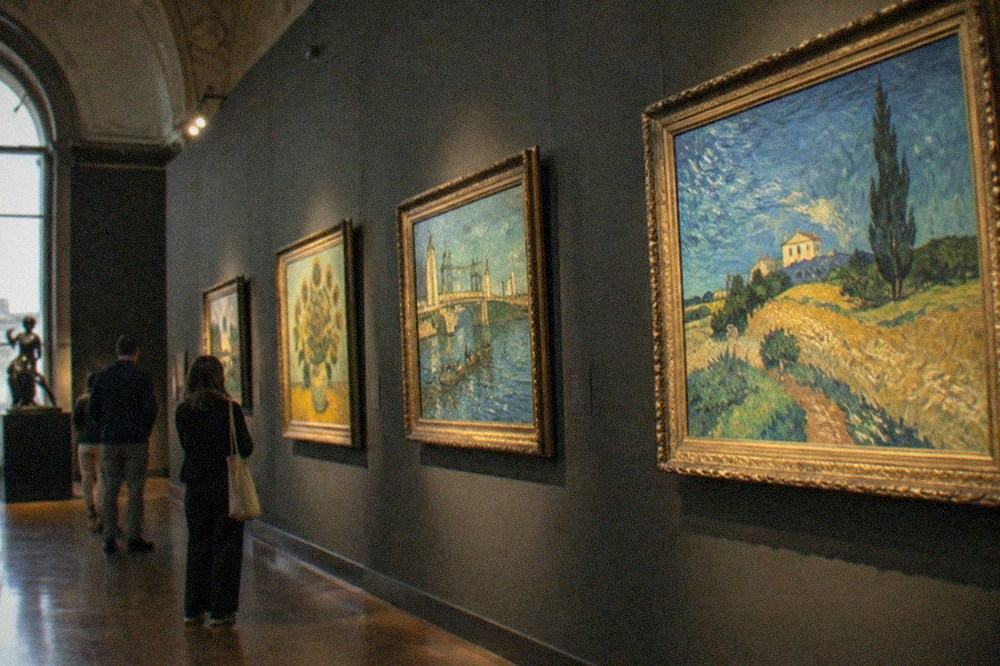
One honest warning for the itinerary builders: the room is small and it is never quiet. The museum receives its heaviest flow in the first two hours after opening and again in late afternoon, and the Post-Impressionist galleries absorb the worst of it. Arriving at opening and going straight upstairs, then working back down through the Impressionists, is the sequence experienced visitors describe most often in reviews. It puts you in front of the Rhône canvas while the crowd is still photographing the ground floor.
A related question comes up constantly: where else in Paris can you see Van Gogh? The answer is that the Orsay is by far the largest holding in the city. The Musée d'Orsay's collection dwarfs what remains elsewhere, and the Orangerie next door, which we cover below, is about Monet's Water Lilies rather than Van Gogh. For depth on the Impressionist circuit overall, our guide to where to see Monet in Paris maps the whole trail, and our post on buying Musée d'Orsay tickets in advance goes deeper on the timing question.
How Much Do Musée d'Orsay Tickets Cost And Who Gets In Free?
A standard adult ticket is €16 booked online or €14 bought at the museum, and timed entry is compulsory either way. Under-18s are free with photo ID, and so are EU and EEA residents under 26, including holders of a long-stay permit or visa over four months; residency is what gets checked, not nationality. Everyone else pays, and the first Sunday of the month is free for all, provided the free timed slot has been booked.
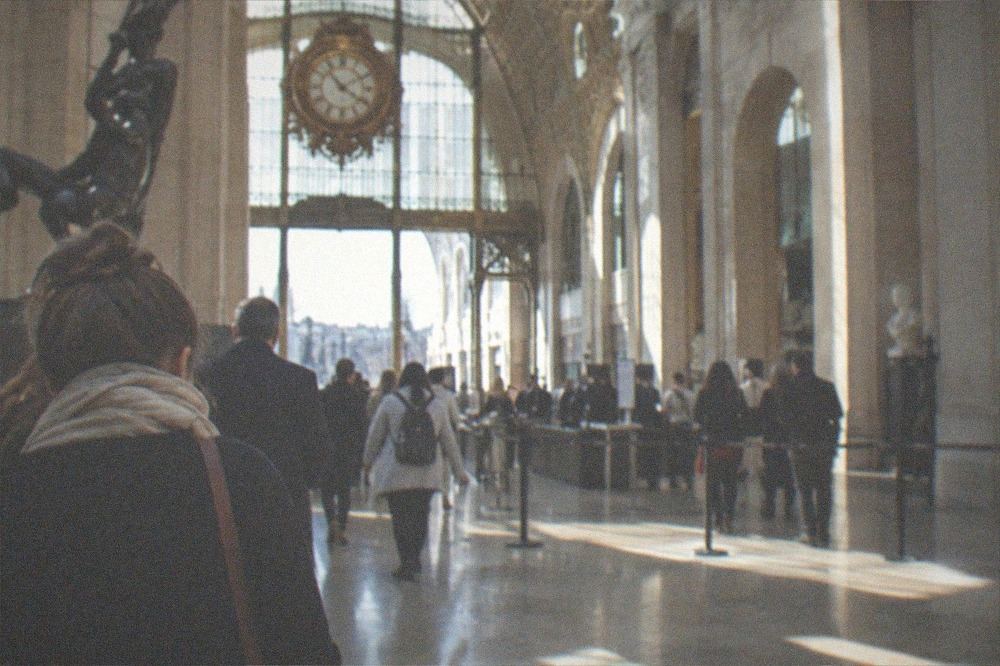
The two-price structure is the detail almost everyone gets wrong. In most cities the online ticket is cheaper than the door, a reward for pre-committing. At the Orsay the relationship runs the other way: the museum's own ticketing page sets €16 online against €14 at the museum. The premium buys certainty, a guaranteed slot and no queue at the desks, which matters in peak season when the door queue can stretch along the rue de Bellechasse. A skip-the-line product on a booking platform starts from $15.12, which sits between the two museum prices, and is the option to take when you want the slot locked in before leaving home.
Free entry splits into two groups. The first is age and residency based: children under 18 with a photographic identity document, and young people from the EU and EEA under 26, a category that explicitly includes holders of a long-stay residence permit or visa of more than four months. The second is calendar based: the first Sunday of every month, all year, the museum is free to everyone, but the free slot has to be booked online in advance. A Paris Museum Pass holder also needs a timed reservation; the pass covers the entry but not the queue-free right to skip booking, and the pass site's own list badged the Orsay as reservation required. The museum's tariff detail is published on its own rates page.
| Museum | Adult price at the museum | Booked online or via platform | Free first Sunday | Closed |
|---|---|---|---|---|
| Musée d'Orsay | €14 | €16 online, from $15.12 booked | Yes, timed slot obligatory | Monday |
| Musée de l'Orangerie | €11 | €12.50 online, from $15.7 booked | Yes, timed slot obligatory | Tuesday |
| Musée Marmottan Monet | €14 | from $16.89 booked | No, not on the Paris Museum Pass | Monday |
| Musée Rodin | €14 | €15 skip-the-line | October to March only | Monday |
For a household of two adults and two teenagers, the arithmetic changes quickly: the teenagers walk in free with ID, and only the adults pay, so the question is not the headline price but whether €16 each of certainty beats €14 each of queue. In July and August, and on any free Sunday, certainty wins.
The Pass question deserves one line of honesty, because the answer is not obvious. The Orsay is on the Paris Museum Pass, but so are eight other sites that still demand a separate reservation, the Louvre and the Orangerie among them. The pass covers entries, never temporary exhibitions, and never transport. Whether the pass pays at all is a longer calculation with its own full comparison here.
When Is The Musée d'Orsay Closed And How Long Should You Stay?
The museum is closed every Monday, and a first visit needs about two hours if you go straight for the highlights or half a day if you work through the floors properly. Timed slots are spaced through the day, the heaviest crowds arrive in the first two hours after opening, and the renovation that began in March 2026 modifies access routes without closing any collection. Plan the Van Gogh room first, then descend through the Impressionists.
Mondays are the trap. A large share of Paris museums shut on Monday, the city museums included, so a Monday in Paris funnels the whole visiting public toward the handful of open doors, and the Orsay is not one of them. If your trip includes a Monday, spend it at the Musée de l'Orangerie or at one of the daily-open monuments, the Arc de Triomphe, the Panthéon, Sainte-Chapelle or the Musée de l'Armée, all of which open every day. The reverse trap is Tuesday, when the Orsay is open but the Louvre, the Orangerie and the Guimet all shut, which makes Tuesday the Orsay's heaviest day of the week in practice.
Two hours is the honest minimum. The building is long, the collections are dense, and the layout runs vertically: sculpture and the ground-floor academic painting at the base, the Impressionists one level up, the Post-Impressionists and the Van Gogh room at the top. A focused visit goes top down, catching the Rhône painting while fresh, then the Monet, the Renoir and the Manet on the way through. Half a day lets you add the Cézannes, the Gauguins from Tahiti, and the museum's own architecture, the iron arch of the station and the terrace view across the Seine toward the Louvre. Reviews on the operator's listing, 4.7 across 27,881 of them, are dominated by exactly this observation: people underestimate the building and come out having spent far longer than they budgeted.
| Day | Musée d'Orsay | Musée de l'Orangerie | Musée du Louvre | Musée Rodin |
|---|---|---|---|---|
| Monday | Closed | Open | Open | Closed |
| Tuesday | Open | Closed | Closed | Open |
| First Sunday | Free, slot booked | Free, slot booked | Open, no free Sunday | Free Oct to Mar |
The clock inside the station, visible from the fifth floor, is the single most photographed object after the paintings, and the window behind it frames Montmartre in a way no postcard manages. Budget ten minutes for it that you will spend twenty on anyway, then head down. As reviewers put it, the museum rewards slow looking but punishes a slow start: the queues build from mid-morning and the timed slots thin after four.
How Does The Orsay Compare With The Other Impressionist Stops?
The Orsay is the essential single stop, but it is not the only one: Van Gogh fans need no other Paris museum, while Monet fans should add the Orangerie's two oval Water Lilies rooms, which take barely an hour, and consider Giverny, 75 km away and open 1 April to 1 November, as a separate day trip. Most visitors can pair Orsay and Orangerie in one long day.
The Orangerie sits in the Tuileries garden, a fifteen-minute walk across the Seine from the Orsay, and it holds exactly the experience Monet designed it for: Nymphéas, eight canvases in two white oval rooms, lit from above, painted as a gift to the French state the day after the Armistice. It costs €11 at the door, €12.50 online, is closed Tuesdays, and rates 4.7 across 7,188 reviews on the operator's listing. Pairing the two museums is the classic Impressionist day: the full sweep of the movement at the Orsay in the morning, the single overwhelming statement at the Orangerie in the afternoon, with the walk between them along the river as the intermission. A combined ticket sometimes appears on booking platforms; otherwise buy separately or let the Paris Museum Pass cover both, remembering that both require a timed reservation even with the pass.
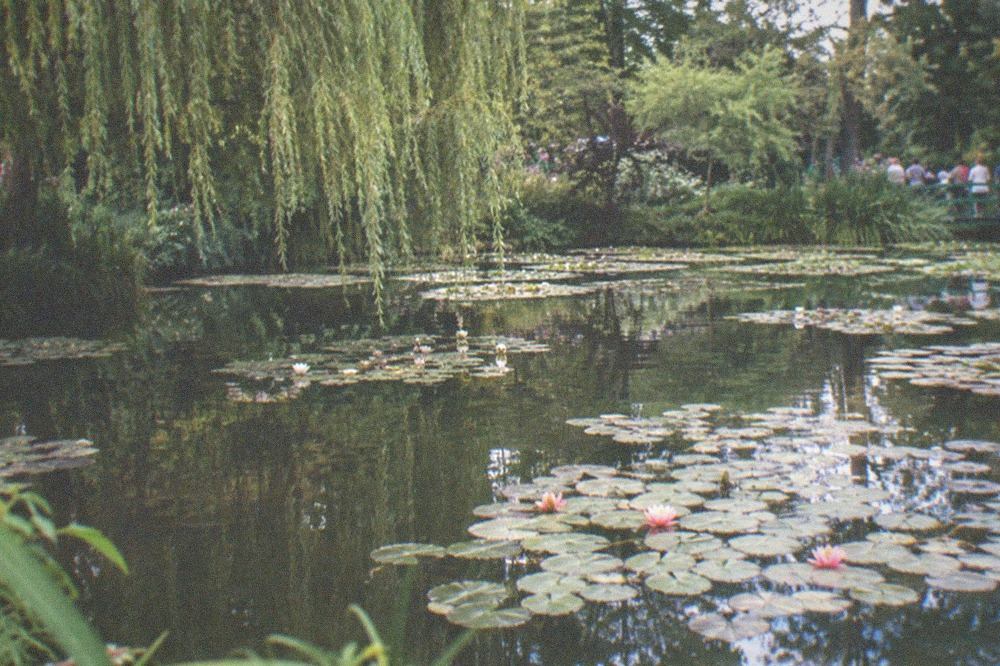
Giverny is a different proposition. The Fondation Claude Monet is the house and gardens where the Water Lilies were painted, 75 km from Paris, closed from 2 November to the end of March and open the rest of the season with no weekly closing day. Entry at the gate is €13, a modest figure that gets inflated by the journey, which is why the bookable day-trip products on booking platforms start from $118.66: you are paying for the transport from Paris and the timed logistics, not a different ticket. Reviewers rate it 4.5 across 404 reviews, and the tone of those reviews is strikingly uniform: the garden in flower is unforgettable, and half a day of travel for it divides opinion less than you would expect.
The fourth name in the comparison is the Musée Marmottan Monet, a smaller museum in the 16th arrondissement holding the canvas that gave Impressionism its name, Monet's Impression, Sunrise. It costs €14, is closed Mondays, rates 4.8 across a small base of 18 reviews, and is not on the Paris Museum Pass. It is the connoisseur's stop, one the crowds have not found, and a pleasant counterweight to the packed rooms at the Orsay.
None of these answers the Van Gogh question, which is the point. The Orangerie is Monet. Giverny is Monet. Marmottan is Monet. For the Rhône night sky and the late Van Gogh, the Orsay stands alone in Paris, and the collection is deep enough that the trip justifies itself even after you learn the New York painting is elsewhere.
What Else Should You Know Before Booking An Orsay Visit?
Book a timed slot before you travel, because walk-up tickets are capped and the door price of €14 only helps you if a slot is left. Aim for the first slot after opening or the last two hours, avoid Tuesday if you can, and fold in the renovation: routes through the building have changed, but every collection remains accessible. Free-entry claims should always be checked against your own age and residency documents.
The booking decision comes down to when you are travelling. In the shoulder months a same-week booking is usually fine; from June through August, and across the free first Sundays, slots go days ahead. The door price at €14 against €16 online means the platform options, from $15.12, are buying you the slot and the skip, and reviews consistently describe that as the part worth paying for rather than the entry itself. Cancellation terms on the operator's listing are generous, pay-later options appear on most products, and the button below holds live availability.
For the free categories, the documents matter more than the claims. An under-18 needs a photo ID. An EU or EEA national under 26 needs the same. A non-EU visitor under 26 who lives in the EEA, on a long-stay permit or a visa of more than four months, is also free, and the check at the desk is for the residency document, not the passport nationality. This catches a lot of students and exchange visitors by pleasant surprise, and it is worth carrying the permit even on days you expect to pay.
The last practical note is the surrounding district. The museum faces the Seine, with the Tuileries across the river, the Louvre a bridge away, and the rue Cler market street a few minutes south. An Orsay morning followed by a walk through the Tuileries to the Orangerie is the single most efficient Impressionist circuit in Paris, and Paris Museums covers every stop on it in detail. If Monday falls in the middle of your stay, flip the plan: Orangerie and monuments that day, Orsay on Tuesday, accepting the heavier rooms in exchange for an open door.
Whatever you decide, do not build the day around a painting that is three thousand miles away. Build it around the one that is here, under the station clock, beside the river he painted.
Common Questions About Starry Night At The Musée d'Orsay
Is Starry Night At The Musée d'Orsay?
No. The Starry Night painted at Saint-Rémy is at the Museum of Modern Art in New York. The Musée d'Orsay holds Starry Night Over the Rhône, painted in Arles, which shows the river, the quay gas lamps and the Great Bear.
Which Van Gogh paintings are at the Musée d'Orsay?
The collection includes Starry Night Over the Rhône, The Church at Auvers, Portrait of Dr Gachet, a self-portrait from the asylum period, and other late works. The Van Gogh room sits in the Post-Impressionist galleries at the top of the museum.
How much does the Musée d'Orsay cost?
The ticket is €14 bought at the museum and €16 booked online, with timed entry compulsory. Skip-the-line products on booking platforms start from $15.12. The museum is free the first Sunday of every month, but the free timed slot has to be booked.
Who gets into the Musée d'Orsay for free?
Under-18s with photo ID, EU and EEA residents under 26 including holders of a long-stay permit or visa over four months, and everyone on the first Sunday of the month with a booked slot. Residency is what is checked, not nationality.
What day is the Musée d'Orsay closed?
Every Monday. Tuesday is its heaviest day in practice, because the Louvre and the Orangerie both close Tuesday and push visitors toward the Orsay.
How long should I spend at the Musée d'Orsay?
About two hours for the highlights, half a day for a proper pass through the floors. The rating on the operator's listing is 4.7 across 27,881 reviews, and the most common note in them is that the visit ran longer than planned.
Can I see The Starry Night anywhere in France?
No. The canvas has been at the Museum of Modern Art in New York for generations and does not travel. The closest experience in Paris is Starry Night Over the Rhône at the Orsay, painted the year before with the same night-sky intensity.
Is the Musée d'Orsay affected by the renovation?
Yes, but only in its routes. The renovation runs from 10 March 2026 to summer 2028, access routes are modified, and every collection remains accessible. Check the museum's own page for any room temporarily off display.