Sainte-Chapelle is a 13th-century Gothic royal chapel on Île de la Cité, built by Louis IX to house relics of the Passion. Its stained glass fills nearly every wall. It suits anyone who wants a short, intense hit of medieval art rather than a long museum day.
What You Actually See Inside
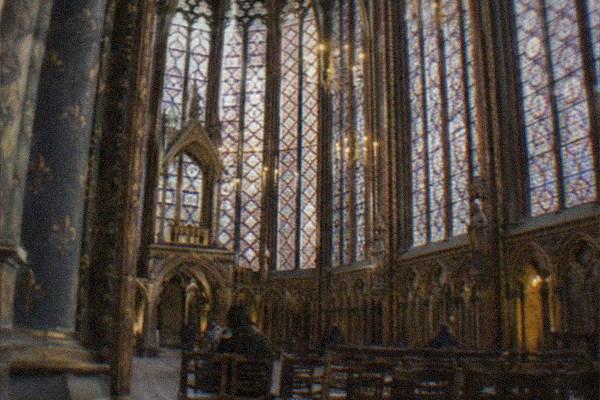
The visit is dominated by fifteen stained glass windows holding 1,113 scenes, arranged across two levels of a royal chapel that Louis IX built in the 1240s to house relics of the Passion. The upper chapel is the destination: glass from floor to vault on three sides, with the rose window at the west end. Expect the security queue to move slowly, and expect the interior to answer for the wait.
The building is deliberately split in two. You enter through the lower chapel, a low, blue-and-gold vaulted space originally used by the palace staff, then climb a narrow staircase to the upper chapel, which was reserved for the king and his court. That reversal is the whole trick of the architecture: the lower level feels like a crypt, the upper level feels like a glass box suspended in light. Reviewers consistently say the moment they step into the upper chapel is the single most striking interior in Paris, and the structure of the visit, dark staircase then sudden wall of color, is engineered to produce exactly that effect.
The windows read as a picture book of medieval theology and French royal politics. The scenes move through the books of the Old Testament, the story of the Passion, and the translation of the relics from Constantinople to Paris, presented as a legitimizing journey of the French crown. Standing in the center of the chapel and turning, you can trace the narrative clockwise as the designers intended. The glass also serves as political advertising: Louis IX wanted the chapel to assert that Paris, and he personally, stood at the center of the Christian world. The building was consecrated in 1248, and the relic project, including what was believed to be the Crown of Thorns, cost the crown more than the construction itself.
Look, too, at the painted columns and the vault bosses, which were restored in the 19th century under Viollet-le-Duc alongside much of the rest of the building. The apostle statues along the nave are largely 19th-century replacements, so treat the glass as the authentic core of the visit and the sculpture as careful reconstruction. Visitors regularly report that twenty minutes of slow looking in the upper chapel rewards more than a rushed hour, and that the glass rewards the patience of the slow-moving security line outside. Bring binoculars or use the zoom on a camera if you want to read individual scenes high in the lancets; the detail at that height is otherwise invisible to the naked eye.
Tickets, Prices And Entry Routes
Standard adult admission is €22, with €16 for visitors from the EEA and €22 from outside the EEA. Timed entry is compulsory for everyone, so every visit needs a slot. Under 18s are free with photo ID, and EU and EEA residents under 26 enter free, including holders of a long-stay permit or visa. A bookable ticket starts at $26.17, which may include a guide or a timed slot and is not the same thing as the door price in euro.
The pricing structure reflects a two-tier system aimed at European residents. The free-under-26 rule is broad: it covers EU and EEA residents, and the museum's own page states that long-stay permit and visa holders resident in the region qualify as well. Proof is checked, so carry photo ID and, for the resident concession, the relevant permit or visa documentation. Children under 18 are free regardless of nationality, again with photo ID. There is no weekly closing day, which matters when planning, because unlike many Paris institutions this one does not shut one day a week.
The free-day rule deserves precision. Free entry applies on the first Sunday of the month from January through March and from November through December only. There is no free first Sunday in April, May, June, July, August, September or October. If you are visiting in high summer, plan on paying, and plan on a timed slot, because the compulsory reservation system applies year-round. Travelers who prefer to have the logistics handled before leaving home often reserve a timed ticket in advance through the booking panel on this page rather than sorting a slot on arrival.
One practical note on comparing prices: the euro figures above are the museum's own door prices, while the $26.17 figure is a booking from-price for a ticket that may include a guide or a timed slot. They are different products measured in different currencies, so compare what each covers, not just the number. The bookable option carries a 4.3 rating across 141 reviews, which gives a reasonable sense of how visitors rate that route after using it.
How Long To Allow And When To Go
Allow between one and two hours door to door, of which roughly thirty to forty minutes is usually inside the chapel itself. The balance goes to the security queue, which visitors regularly report moves slowly, plus ticket checks and the timed-entry window. Late afternoon on a weekday is generally the calmest period; mornings and weekends draw the heaviest crowds, and sunny days draw the most photographers.
The interior visit is short by museum standards, and that is part of the design. There are no galleries of paintings or long collections to circulate through: there are two chapel levels, one staircase, and glass. What stretches the visit is the entry process. Security screening on Île de la Cité is thorough, and the queue can add a meaningful wait in front of a visit that itself takes less than an hour. Booking a timed slot narrows the wait but does not eliminate the screening line, so build slack into any onward plans, whether that is a lunch reservation or a second monument the same day.
Light is the variable that changes the experience most. The upper chapel reads differently through the day: morning sun comes in low from the east and sets the windows on the north side glowing, while late afternoon warms the western rose window. On a grey Paris day the glass still works, because saturated color is the point, but the room loses some of its luminosity. Visitors who arrive early on a bright day often report the strongest impressions. The chapel also sits steps from the Seine, so pairing the visit with a riverbank walk before or after is easy and costs nothing.
Seasonally, the free first Sundays from January to March and November to December are the busiest free days of the year for that reason, so weigh the saving against the crowd. Summer brings the peak tourist season and no free Sunday at all. Shoulder seasons give the best balance of weather and crowd levels, and the absence of a weekly closing day means you can plan around any day of the week that suits your itinerary. If your schedule is rigid, reserve the earliest timed slot you can get: the first entries of the day face the shortest screening line, and the glass is at its sharpest before the room fills.
Know Before You Go
Sainte-Chapelle sits on Île de la Cité in the 1er arrondissement, at coordinates 48.85539, 2.34499. There is no weekly closing day, and timed entry is compulsory for all visitors. The nearest Metro connection is a short walk across the island, and the security queue outside moves slowly, so arrive ahead of your slot. Large bags are a problem anywhere on Île de la Cité, where police presence is heavy.
The island is the historic heart of Paris and it functions as a security zone. Expect checkpoints and bag inspection in the surrounding streets, which is the main reason the entry queue moves at the pace it does. Travel light: a small bag speeds up screening, and anything bulky will slow you down or keep you outside longer. Give yourself a buffer of twenty minutes or more before your timed slot in busy periods.
For the practicalities, the museum's own page on practical information is the reference for entry conditions, and the chapel sits within the coverage of the Paris Museum Pass network of monuments, which some travelers use to bundle several sites. Accessibility inside a 13th-century building has natural limits: the lower chapel is reachable, but the upper chapel, where the celebrated glass lives, is reached by a narrow staircase, so visitors who cannot manage steps should check the current arrangements directly with the chapel before booking. Photography without flash is generally accepted, and tripods are not practical in the confined space.
The chapel shares its island with the Palais de Justice complex, and the entrance sits within the walled courtyard, so trust the queue as your landmark rather than looking for a grand street facade. Signage on the island directs foot traffic between the chapel and Notre-Dame nearby, and the walk between the two takes only a few minutes. On rainy days the interior is fully covered, which makes this a dependable wet-weather stop, and the visit is short enough to slot between other commitments on a packed day.
Getting There And The Layout Of The Island
Île de la Cité sits in the middle of the Seine between the Right and Left Banks, in the 1er arrondissement, and the chapel is reached on foot across the island from any of the bridges linking it to both banks. Metro lines on both riverbanks stop within a short walk of the bridges. Because the island is pedestrian-friendly but security-controlled, walking is the final stage of every journey there, whatever line or bus brought you into central Paris.
The island is small enough that orientation is simple. Sainte-Chapelle and the neighboring Conciergerie occupy the western half within the former royal palace complex, while Notre-Dame occupies the eastern end. The flower market and the tree-lined Quai des Fleurs along the southern edge make the approach pleasant in any season. Visitors arriving from the Right Bank cross at the Pont au Change or the Pont Notre-Dame; from the Left Bank the Pont Saint-Michel is the natural route. All of these drop you within a ten-minute walk of the chapel entrance.
The chapel's position makes it one of the most naturally combinable sites in Paris. You are already standing in the place where the medieval kings of France kept their palace, and the neighborhood around the island is dense with monuments. For a day of royal and monumental Paris, the chapel pairs naturally with the opulent opera house covered in our Palais Garnier tickets guide, and the neoclassical necropolis covered in our Panthéon tickets page sits just across the river in the Latin Quarter, a pleasant walk away. Visitors with broader ambitions for royal residences can also look at our Palace of Versailles tickets guide, though Versailles demands a full day of its own and does not combine well with an island morning.
Two practical warnings finish the picture. First, the queue for security is outdoors, so in summer take water and sun protection, and in winter dress for standing still in the cold. Second, because timed entry is compulsory, arriving too late for your slot can cost you the visit, so treat the published slot time as firm rather than approximate. Visitors regularly report that the walk across the island is the pleasant part of the approach and the screening line the tedious part, and that planning for both turns a good visit into a smooth one.
What To Pair It With Nearby
Sainte-Chapelle anchors the west end of Île de la Cité, with Notre-Dame a few minutes' walk east and the Conciergerie sharing the same palace complex. The Latin Quarter sits just across the Seine, so a morning at the chapel converts easily into a half-day of monuments and riverbank walking. Budget an hour for the chapel, then let the island and the Left Bank fill the rest of the day.
The most natural pairing is the one directly across the courtyard: the Sainte-Chapelle and the Conciergerie occupy the same former royal palace, and visitors regularly treat them as a single stop. The Conciergerie's medieval halls and its prison history, most famously as the place where Marie Antoinette was held, give a secular counterweight to the chapel's devotional glass. From there, walking east along the island brings you to Notre-Dame and its square, which remains a destination in its own right even as the cathedral's own reopening has changed the rhythm of the island. The eastern tip of the island, the Square du Vert-Galant's counterpart on the Île de la Cité side, gives quiet views over both banks of the Seine.
Cross the river and the options widen. The Latin Quarter's churches, bookshops and smaller museums fill an afternoon without much planning, and the walk south from the Pont Saint-Michel reaches the Panthéon, the resting place of France's honored dead, which we cover in our Panthéon tickets guide. Travelers building a themed day around French state and royal iconography can go bigger still: our Arc de Triomphe tickets page covers the monumental arch at the other end of the historic axis, and our Palace of Versailles tickets guide handles the royal residence that outgrew this island palace entirely.
For a relaxed close to the day, the quays along both banks of the Seine are pedestrian-friendly and photogenic at golden hour, when the light that makes the chapel's glass sing also softens the stone of the island. A practical sequencing tip: do the chapel first while energy and patience for the security queue are highest, then let the walking, riverbank and neighborhood visits follow at an unhurried pace. Visitors consistently say the chapel works best as the sharp first hour of a longer day rather than as a rushed add-on squeezed between heavier commitments, and its position at the center of Paris makes that sequencing easy to arrange.
Questions People Ask
How Much Does Sainte-Chapelle Cost?
Standard adult admission is €22, with €16 for visitors from the EEA and €22 from outside the EEA. A bookable ticket starts at $26.17 and may include a guide or a timed slot, which is not the same product as the door price in euro. Timed entry is compulsory for everyone.
When Is Sainte-Chapelle Free?
Entry is free on the first Sunday of the month from January to March and from November to December only. There is no free first Sunday during the rest of the year, including all of summer. Under 18s and EU and EEA residents under 26 enter free at any time with the right documents.
Is Sainte-Chapelle Free For Children And Students?
Visitors under 18 are free with photo ID. EU and EEA residents under 26 also enter free, including holders of a long-stay permit or visa, with proof. Students from outside the EEA who are 18 or older pay the standard adult price of €22.
Do I Need A Timed Ticket?
Yes. Timed entry is compulsory for all visitors, so you cannot simply walk up and buy entry at any moment of your choosing. A bookable ticket starts at $26.17 and may include a guide or a timed slot, and it is rated 4.3 across 141 reviews.
How Long Should I Allow For A Visit?
Plan on one to two hours door to door. The interior visit itself is short, roughly thirty to forty minutes across the lower and upper chapels, but the security queue moves slowly and the timed-entry window adds structure to your arrival. Arrive ahead of your slot.
What Is Sainte-Chapelle Known For?
The chapel is known for its fifteen stained glass windows containing 1,113 scenes, filling the upper chapel of a 13th-century Gothic building constructed by Louis IX to house relics of the Passion. The glass covers the walls from floor to vault, with a rose window at the west end.
Where Is Sainte-Chapelle Located?
It stands on Île de la Cité in the 1er arrondissement of Paris, at coordinates 48.85539, 2.34499, inside the former royal palace complex it shares with the Conciergerie. It is a short walk from Notre-Dame at the eastern end of the same island.
Does Sainte-Chapelle Close On Mondays Or Another Day?
No. There is no weekly closing day, so the chapel can be planned for any day of the week. The only seasonal restriction to remember is that free first Sundays apply from January to March and November to December, never in summer.