The Panthéon is a neoclassical mausoleum in the Latin Quarter holding the remains of Voltaire, Victor Hugo, Marie Curie and other French luminaries. It suits travelers interested in history, architecture and national memory, and pairs easily with other central Paris sights.
What You Actually See Inside
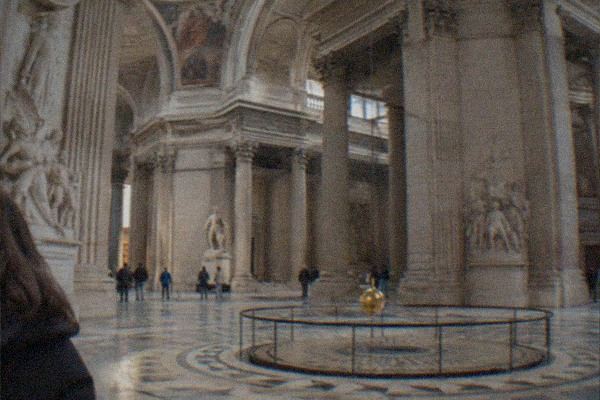
Two things define a visit right now: the crypt, where France's honored dead lie in stark vaulted corridors, and the Foucault pendulum, swinging above the nave to demonstrate the Earth's rotation. The third, the dome colonnade with its rooftop circuit of Paris, is closed. The monument's own practical-information page states that the panorama is shut for works, so a ticket buys the nave and the crypt and nothing above them. Around those sit murals, sculpture and a nave built on a scale most Paris churches cannot match.
The building began as a church. Louis XV vowed to build it after recovering from illness, and construction ran through the second half of the eighteenth century. After the Revolution, the new republic converted it into a mausoleum for the nation's great men and, eventually, women. The result is an odd and powerful hybrid: a Greek-cross temple on the outside, a vast empty nave on the inside, and a secular tomb beneath it all. That emptiness is not neglect. The nave was deliberately stripped of religious function, and its scale is part of the point.
The crypt is the heart of the visit. Corridors of stone open into small chambers where groups of celebrated figures rest together. Voltaire and Rousseau, the two Enlightenment rivals, lie near each other. Victor Hugo and Émile Zola share a vault. Marie Curie, interred in 1995 on her own merits as a Nobel-winning scientist rather than as a spouse, lies with Pierre Curie. Josephine Baker, Maurice Genevoix, and more recent panthéonisations keep the list current. Reviewers consistently say the crypt feels somber in a way the bright nave above does not, and many visitors report the names hit harder than expected.
The Foucault pendulum hangs near the center of the nave. Léon Foucault first demonstrated it here in 1851, using the dome's height to suspend a pendulum long enough for its swing plane to visibly drift as the Earth turned beneath it. A copy swings today, and the museum's own page presents it as a working demonstration rather than a decoration. Visitors regularly report that the surrounding floor markings make the physics legible even if you arrive knowing nothing about it.
The dome walk used to be the physical finale, and it is the one thing you cannot currently do. A spiral staircase climbs to an exterior colonnade with a full circuit of Paris rooftops, the Eiffel Tower, the Louvre, the towers of Notre-Dame and the whole sweep of the Latin Quarter below, and it is one of the best views in the center of the city because the Panthéon sits on the Montagne Sainte-Geneviève, higher than most of its surroundings. It is closed for renovation work, with no reopening date published, and the monument states plainly that the ticket covers the nave and the crypt only. Anyone planning a visit around the view should read that line first and pick a different high point. The monument's official practical information page carries the closure notice and is the page to check before any visit planned around the view.
Tickets, Prices And Entry Routes
Standard adult admission at the door is €16 from April to September, dropping to €13 on Wednesdays and €13 all winter. Entry is free the first Sunday of the month from January to March and November to December. Under-18s are free with photo ID, and EU and EEA residents under 26 enter free, including holders of a long-stay permit or visa. There is no weekly closing day.
The pricing structure rewards timing. A Wednesday visit outside the summer months costs less, and the winter season, October through March, carries the lower price across the board. The seasonal swing also means the shoulder months are the sweet spot: October and March combine the cheaper winter rate with a quieter nave, and since the panorama is shut there is no longer a weather gamble attached to the climb.
Free entry deserves attention because it is broader than many visitors assume. The under-26 rule applies to EU and EEA residents, and the museum's own terms extend it to long-stay permit and visa holders, so some non-EU students and residents qualify too. Bring photo ID. Non-EU visitors over 26 pay the standard rate. First-Sunday free entry runs only in the January-to-March and November-to-December windows, so April through October offers no free Sunday at all, a common point of confusion.
A bookable ticket starts at $15.12, a from-price that is not the same thing as the euro door rate, since bookings may bundle a guide or a timed slot. With 7,272 reviews behind a 4.6 rating, the bookable option is well tested by other visitors, and reviewers consistently say a guided version helps because the Panthéon explains itself poorly without context. If you want someone to walk you through the crypt's residents and the Revolution-era history, that is the route the booking panel on this page handles.
Do the arithmetic before choosing. A family with teenagers over 18 who are not EU residents pays full price for everyone, and the winter and Wednesday discounts add up quickly across a group. Solo travelers visiting on a first Sunday between November and March get in for nothing at all. There is no wrong answer, only a cheap one you might be missing.
How Long To Allow And When To Go
Allow roughly ninety minutes, which now covers the whole visit: the nave, the pendulum, the murals and the crypt. The old two-hour figure assumed the dome climb, and the panorama is closed for works. The Panthéon has no weekly closing day, so the choice is about crowds rather than which day of the week it opens, and early morning on a weekday is the calmest window.
The visit itself has a natural sequence. Most people enter the nave, spend time with the pendulum and the murals, then descend to the crypt, and with the colonnade shut that is the end of it. The crypt requires stairs, since it sits below ground level, and the descent is short but unavoidable.
Timing within the year matters less than it used to, because the view was the weather-sensitive part and it is out of the equation. Summer brings tour groups in volume, and the nave echoes, which makes crowded visits noisier. Winter visits are quieter and cheaper, and the crypt is unaffected by what the sky is doing. Wednesday's lower door price makes midweek visits attractive for budget-conscious travelers at any time of year.
Within the day, the first hour after opening is the most reliable slot. Late afternoon can work too, since tour groups tend to thin, though the building closes early enough that a 5pm arrival is tight. Visitors regularly report that the pendulum area and the crypt never feel unmanageable, and with the colonnade shut the old pinch point, the queue for the dome staircase, has gone with it.
Pair your timing with the neighborhood. The Latin Quarter fills with students and tourists by lunchtime, so a morning Panthéon visit followed by a walk down toward the Seine toward lunch is the pattern many visitors fall into and few regret. An evening arrival is the one mistake worth flagging: the building closes well before sunset for most of the year, and last admission is 45 minutes before that.
Know Before You Go
The Panthéon sits on Place du Panthéon in the 5e arrondissement, coordinates 48.84619, 2.34605. The nearest Metro is Cardinal Lemoine on line 10, a short walk downhill. There is no weekly closing day, the crypt involves stairs, and the dome panorama is closed for works so the visit stays at ground level and below. Photo ID is required for free-entry categories.
Getting there is simple from almost anywhere in central Paris. Line 10 from Cardinal Lemoine serves the Left Bank east-west, and several bus lines stop within a block or two of the square. Walking is often the better choice: from Notre-Dame the walk is about fifteen minutes up through the Rue de la Montagne Sainte-Geneviève, a climb that gives you the Montagne Sainte-Geneviève in the most literal way. From the Luxembourg Garden, the Panthéon dominates the skyline, and the walk is downhill most of the way. The transport operator's RATP journey planner covers Metro and bus options for whichever direction you come from.
The location on the hill has a practical consequence. The square in front is exposed and windy, and queues form outside with little shelter, so in winter arrive close to opening or be dressed for standing around. Inside, the nave is vast and cool even in summer, and the crypt is warmer. Layers work better than a single heavy coat.
Accessibility has real limits here, and it is fair to set expectations. The crypt is reached by stairs. The nave and ground-floor level are reachable for wheelchair users, but the crypt is not, and the colonnade, which was never accessible, is closed to everyone at the moment. The museum's own practical information page is the place to confirm current arrangements before committing to a visit built around either.
Bags follow the standard French monument pattern: large suitcases and bulky backpacks are not welcome, and small bags may be inspected. Travelers coming straight from a hotel checkout should plan luggage storage elsewhere, because the Panthéon is a working state monument with no room for a roller bag. Photography is permitted, and with the terrace shut the nave and the pendulum are where most visitors spend their camera battery.
One last logistical note. The square is one of the classic gathering points in Paris, which means tour groups assemble on the steps. Entering early means passing through a building that feels like a temple, not a queue. Visitors consistently describe the interior in the quiet morning hours as a completely different experience from a midday arrival.
What Is Nearby Worth Pairing With
The Panthéon anchors the Latin Quarter, so the natural pairing is a walking loop rather than a Metro hop. The Luxembourg Garden sits one street over, the Latin Quarter and Sorbonne quarter surround it, and the Seine crossings lead toward Notre-Dame's square and the islands. Sainte-Chapelle is the strongest same-day pairing, and the Catacombs make a loose thematic bookend for visitors drawn to the underground.
Sainte-Chapelle deserves the top slot. It lies across the river on the Île de la Cité, about twenty minutes on foot, and the contrast could not be sharper: the Panthéon is stone, secular and monumental, while Sainte-Chapelle is glass, royal and almost weightless. Doing both in one day works well as a morning Panthéon followed by an early-afternoon Sainte-Chapelle visit, when the stained glass is at its brightest. Buy the Sainte-Chapelle ticket in advance, because its security line, shared with the law courts, can move slowly even with a timed entry.
Closer to home, the Luxembourg Garden is a five-minute walk up the Boulevard Saint-Michel and works as a rest stop after the crypt. The Panthéon still gives you a useful view from outside: standing on the square and looking up at the colonnade is the shot most visitors leave with, and while the panorama is closed for works that outside view is the only one on offer here.
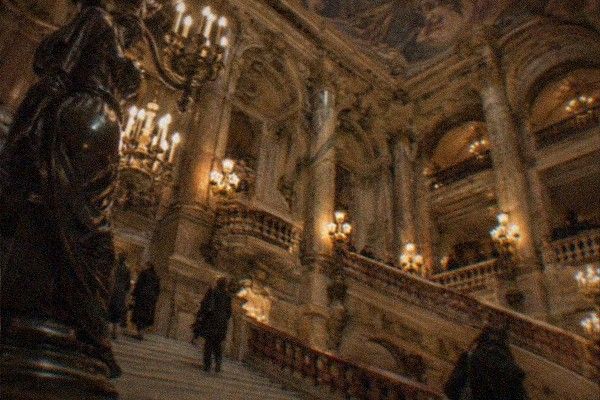
For a second half-day, Palais Garnier makes an interesting counterpoint. The opera house is another Beaux-Arts monument to French grandeur, but built for the living rather than the dead, and a Palais Garnier visit pairs gilded interiors against the Panthéon's bare stone within the same trip. It sits on the Right Bank near the Grands Boulevards, so treat it as a separate outing rather than a same-walk stop.
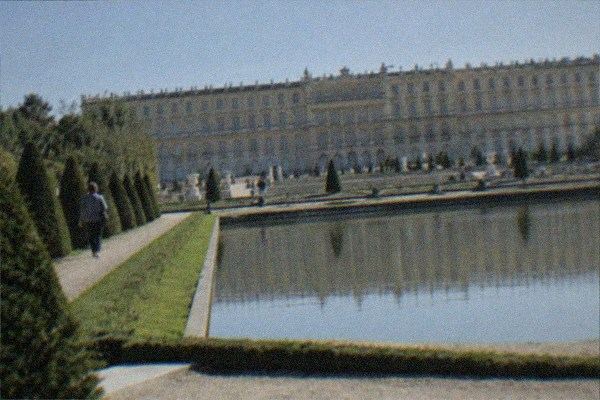
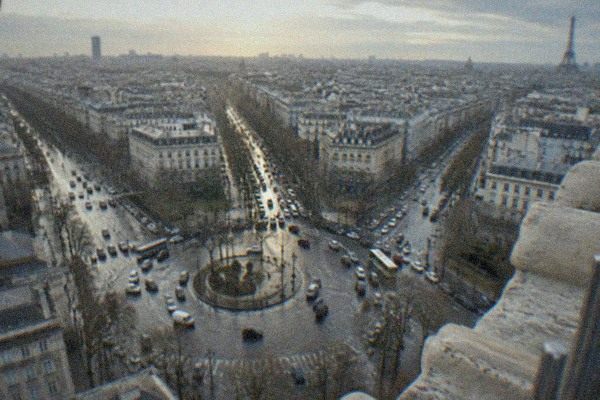
Travelers with a monument-heavy itinerary should think about sequencing the whole set. The Arc de Triomphe's rooftop terrace matters more than usual while the Panthéon's colonnade is shut for works, because it is now the open half of what used to be a pair of great free-standing views from opposite ends of the historical axis, and an Arc de Triomphe visit at sunset after a morning Panthéon is the substitution most visitors land on. Those with more time and a taste for royalty can add the Palace of Versailles as a full-day trip, though it needs its own day and its own planning; it is not a neighborhood pairing.
Finally, eat near the Panthéon rather than returning to a hotel district. The streets immediately south, Rue Mouffetard and the lanes around it, hold some of the densest clusters of bistros and bakeries on the Left Bank. The building sits high on its hill, and the walk down toward dinner is the pleasant downhill half of a Latin Quarter afternoon.
Questions People Ask
How Much Does The Panthéon Cost?
Standard adult admission at the door is €16 from April to September. It drops to €13 on Wednesdays and €13 all winter. Under-18s and EU and EEA residents under 26 enter free with photo ID, as do long-stay permit and visa holders under 26.
When Is The Panthéon Free?
Entry is free the first Sunday of the month from January to March and from November to December. There are no free first Sundays between April and October. Free entry for under-18s and qualifying EU and EEA residents under 26 applies on any day with photo ID.
Is The Panthéon Closed On Mondays Or Any Other Day?
No. The Panthéon has no weekly closing day and operates every week of the year. The closure that catches visitors out is the dome panorama, which is shut for renovation work with no published reopening date, so the terrace is unavailable even on a clear day when the building itself is open.
How Long Should I Plan For A Visit?
Roughly ninety minutes covers the nave, the Foucault pendulum and the crypt. The dome climb used to add half an hour on top of that, but the panorama is closed for works, so ninety minutes now covers everything a ticket opens. Visitors with limited mobility may need less time, since the crypt involves stairs.
What Is The Panthéon Famous For?
It is a neoclassical mausoleum housing the remains of French luminaries including Voltaire, Victor Hugo and Marie Curie. Its hallmarks are the crypt and the Foucault pendulum demonstrating the Earth's rotation above the nave. The dome walk with its rooftop view over Paris is closed for renovation work.
Can I Book A Ticket In Advance?
Yes. A bookable ticket starts at $15.12, a from-price that may include a guide or a timed slot and is not the same as the euro door price. It is rated 4.6 across 7,272 reviews, and reviewers say the guided versions help unpack the crypt's history.
How Do I Get To The Panthéon?
It sits on Place du Panthéon in the 5e arrondissement, at coordinates 48.84619, 2.34605. The nearest Metro station is Cardinal Lemoine on line 10, a short walk downhill. It is also an easy walk from Notre-Dame or the Luxembourg Garden.
What Happens If The Weather Is Bad?
The terrace is out of the visit regardless of weather, because the dome panorama is closed for works. The nave and the crypt are indoors and unaffected by rain. If the view matters to you, go early in your trip so you have a backup day, and check the museum's official practical information page before planning around it.