Musée Picasso Paris holds the largest public collection of Pablo Picasso's work, paintings, sculptures, drawings and ceramics, inside the Hôtel Salé, a 17th-century Marais mansion. It suits art lovers who want depth rather than a quick photo stop, and pairs easily with a Marais walk.
What Is The Museum Known For?
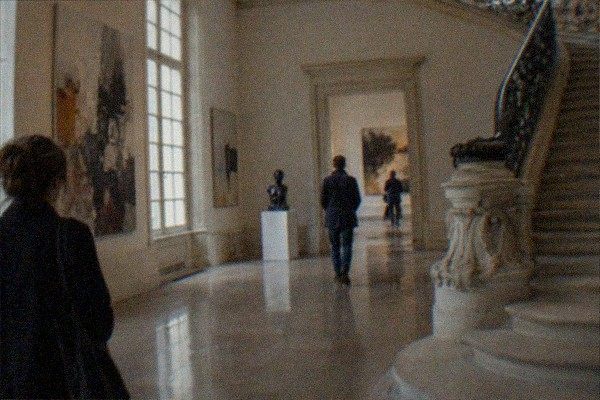
Musée Picasso Paris is known for two things at once: it houses the largest public collection of Pablo Picasso's works anywhere, and it displays the artist's own personal collection inside the Hôtel Salé, a grand 17th-century mansion in the Marais. The building itself is half the attraction, with a sweeping stone staircase and period interiors.
The collection came together in an unusual way. After Picasso died in 1973, his heirs settled inheritance taxes by handing over works to the French state, and the state added pieces of Picasso's personal holdings, works he had kept for himself across his life. That is why the galleries read like a walk through his private studio rather than a curator's selection. You see what he chose to live alongside.
The range is broad. Paintings from his Blue Period through his late years hang alongside sculptures in sheet metal and wood, thousands of works on paper shown in rotating selections, and a notable group of ceramics. The museum also owns works Picasso collected by other artists, including Cézanne and Matisse, which give a sense of what he looked at and argued with. Reviewers consistently say the painting rooms on the upper floors are the strongest part of the visit.
The Hôtel Salé shapes how the visit feels. Built in the 1650s for a salt-tax farmer, which is where its nickname comes from, the mansion has vaulted cellars, carved staircases and salons of real architectural weight. The renovation a few years ago expanded the display space and added a proper research library. Visitors regularly report that the building's scale makes the crowd flow calmer than at Paris's heavier-hit museums, though rooms do fill in peak afternoon hours.
If your interest is twentieth-century art, this is one of the essential Paris stops, standing alongside the impressionists at Musée d'Orsay as a single-artist deep dive. If you want light entertainment rather than close looking, an immersive space such as Atelier des Lumières is a better fit.
Tickets And Entry: What You Pay And What You Get
Standard adult admission is €16, and a skip-the-line timed ticket costs the same €16. Timed entry is compulsory, so every visitor needs a booked slot or must join the free-entry rule. The museum is free on the first Sunday of every month, no reservation needed. The bookable ticket is rated 4.5 across 3,696 reviews.
Because entry is timed, showing up without a booked slot is risky on any day other than the first Sunday of the month. The door price and the pre-booked priority price are identical at €16, so there is no saving for waiting in line at the entrance. Booking a time slot simply removes the gamble of a long queue or a sold-out window.
The free first Sunday is the budget play, and it genuinely works: no reservation is needed, you just walk up. The trade-off is that free Sundays draw the biggest crowds of the month, so expect the busiest galleries and the longest waits for popular rooms. Arriving close to opening gives the calmest version of the free day.
Tickets can be bought directly through the museum's official ticketing page, which is the primary source for prices and conditions. As a reader service, the booking panel on this page lets you reserve a timed slot at the standard €16 without opening another window. Check what each ticket covers before completing a purchase, since temporary exhibitions can carry separate terms on the museum's own page.
Under-18s and EU residents aged 18 to 25 are entitled to free admission under French national museum policy; the museum's own site confirms eligibility details. Bring proof of age, because it is checked at the door.
How Long To Allow And The Best Time To Visit
Allow roughly two hours for a full visit to Musée Picasso Paris, longer if you read labels closely or catch a temporary exhibition. The museum is closed every Monday. Weekday mornings, especially early in the week, are the calmest slots; free first Sundays are the busiest days of the month.
The visit is sequenced across the mansion's floors. Most visitors start in the vaulted basement rooms with sculpture and ceramics, then climb the main stone staircase to the painting galleries, which follow the artist's career in broadly chronological order. Works on paper are shown in rotating selections because of light sensitivity, so repeat visitors often find something new on the walls.
A quick pass of the highlights takes about an hour. Two hours is the comfortable pace for the permanent collection, and anyone with a serious interest in a particular period should budget three. If you are combining the museum with a Marais walk, plan the visit for the morning and keep the neighborhood for lunch and the afternoon.
Timing matters more here than at many Paris museums because timed entry spreads arrivals unevenly. Late morning and mid-afternoon slots fill first on weekends. Visitors regularly report that the opening hour feels the emptiest, and that the mansion's stairwell and upper painting rooms are where the crowd feeling concentrates around lunchtime.
Seasonally, the museum is busiest during summer holidays and the Christmas period, like every major Paris attraction. The Paris transport operator's journey planner is useful for checking Metro frequency when you pick an early slot, since line 1 can be crowded in the morning rush toward the Marais.
Know Before You Go
Musée Picasso Paris sits at 5 rue de Thorigny in the Marais, 3e arrondissement, inside the Hôtel Salé. Metro line 1 to Saint-Paul is the closest stop on the north side, with line 8's Saint-Sébastien Froissart a short walk south. The museum is closed every Monday, and timed entry is compulsory, so book a slot before traveling.
The Marais streets around the museum are narrow and largely residential, so the approach on foot from Saint-Paul takes you through some of the neighborhood's prettiest blocks. Give yourself a few extra minutes, the mansion's entrance is easy to miss because the facade reads as a private hôtel particulier rather than a museum forecourt. There is no on-site parking worth relying on, and driving in this part of the 3e is awkward on market days.
Accessibility is decent but not perfect. The mansion's renovation included step-free routes to the main display floors, with elevators connecting the levels, and accessible restrooms are available inside the building. The historic staircase remains the visual centerpiece, so wheelchair users should expect an elevator-based route rather than full access to every architectural feature. The museum's own site carries the accessibility details current for your visit date.
Bag rules follow the standard French national pattern. Small day bags are generally admitted, but large backpacks, wheeled luggage and oversized items are not permitted in the galleries and must be left in the cloakroom or lockers where space allows. Photography without flash is allowed in the permanent collection rooms, though tripods and selfie sticks are not. Sketching with pencil is usually tolerated; paint is not. Conditions for special exhibitions can differ from the permanent collection, so check the museum's own page before arriving with a specific plan.
Visitors regularly report that the front-of-house staff handle bag checks efficiently and that security screening is quicker than at larger institutions such as the Louvre. The compact scale of the building means exit and re-entry are simple if you leave for lunch in the Marais, though re-entry is subject to capacity, so treat a visit as single-entry in practice.
What Is Nearby Worth Pairing With It
The Marais packs several worthwhile stops within a short walk of Musée Picasso Paris. Place des Vosges is minutes away, the Musée Carnavalet history museum and the Jewish quarter of rue des Rosiers are close by, and the Panthéon and Île de la Cité sit across the river for a longer loop. Most visitors pair the museum with a half-day in the neighborhood.
Heading east from the museum brings you to Place des Vosges, Paris's oldest planned square, with arcaded cafés under red brick. From there it is a few minutes to rue des Rosiers and the heart of the historic Jewish quarter, which means excellent falafel and bakery stops. The Musée Carnavalet, the city's own museum of Paris history, is free for its permanent collections and occupies another Marais mansion, making it a natural double-header on a museum-heavy day.
Crossing the river to the Île de la Cité adds Notre-Dame's exterior and Sainte-Chapelle's stained glass, and the Marais itself can absorb an entire afternoon with its boutiques and gallery scene. Visitors regularly report that two museums plus lunch is the practical daily maximum in this district before museum fatigue sets in.
If you want to widen the day into a Paris classics itinerary, the city's monument circuit works well. A morning at Musée Picasso Paris followed by an evening at Palais Garnier balances art with architecture, and a next-day plan built around Arc de Triomphe puts you on the Right Bank's grand axis instead. Mixing one deep single-artist museum with one panoramic monument is a rhythm many travelers enjoy: the Picasso museum rewards slow, close looking, while the rooftop views elsewhere give you the city at a glance.
For a different kind of art experience on a rest evening, the immersive shows on the edge of the 11th arrondissement offer projection-based spectacles that ask nothing of your feet. They are a good counterweight to a day of small galleries, especially for families whose patience for 17th-century staircases runs short.
Who Will Get The Most From The Visit
Musée Picasso Paris rewards visitors who want to study one artist's whole arc in a single building. It is strongest for people with a genuine interest in modern art, for students of painting and sculpture, and for anyone curious about what Picasso kept for himself. It is weaker for visitors expecting an immersive spectacle or a quick highlights stop, since the museum asks for close, unhurried looking.
Families with older children tend to enjoy the visit, because the collection spans playful ceramics, rough metal sculpture and late-career paintings with an energy that holds young attention. Families with toddlers find it harder: the mansion's scale and the timed-entry system are not built for improvised stops, and stroller space in some historic rooms is limited. A shorter one-hour pass may be the realistic plan with very young children.
Returning visitors have a real reason to come back. The works on paper rotate, temporary exhibitions change, and the mansion's rooms are periodically rehung, so a second visit rarely duplicates the first. Reviewers consistently say the late-career rooms and the sculpture basement are the parts they remember and return for, and that a first visit often leaves threads to follow on a second pass.
Visitors regularly report one practical point worth planning around: because the museum is compact, a long queue moves fast once entry starts, but a missed slot is hard to recover on busy days. Arriving fifteen minutes before your booked time, with your ticket ready on your phone, is the smooth version of the visit. The first Sunday free-entry crowd is the one scenario where no slot exists and patience does the work instead.
For travelers building a multi-museum Paris itinerary, this museum earns its place on merit rather than by fame alone. The Marais setting, the mansion and the collection together make it one of the city's most distinctive art visits, and the compact size means it never eats a whole day the way the Louvre can.
Questions People Ask
How Much Does A Ticket To Musée Picasso Paris Cost?
Standard adult admission is €16, and a pre-booked priority-entry ticket costs the same €16. There is no price advantage to waiting and buying at the door, so booking a timed slot in advance is the practical choice. The bookable ticket is rated 4.5 across 3,696 reviews.
Is Musée Picasso Paris Free On Certain Days?
Yes. The museum is free on the first Sunday of every month, and no reservation is needed for the free entry. Those free Sundays are the busiest days of the month, so arriving close to opening time gives the calmest experience.
Do I Need A Timed Ticket Or Can I Just Walk In?
Timed entry is compulsory at Musée Picasso Paris, so every visitor needs a booked slot. The only exception is the first Sunday of each month, when entry is free and no reservation is needed. On all other days, arrive within your booked time window.
When Is Musée Picasso Paris Closed?
The museum is closed every Monday, with no exceptions among its regular weekly days. Plan your visit for Tuesday through Sunday. Booking a slot in advance also confirms that your chosen date falls on an open day.
How Long Should I Plan For A Visit?
Most visitors should allow about two hours for the permanent collection, including the sculpture and ceramics in the basement and the painting galleries upstairs. A quick highlights pass can be done in an hour, while anyone with a deep interest in a particular period may want closer to three.
Where Is The Museum And How Do I Get There By Metro?
The museum is at 5 rue de Thorigny, inside the Hôtel Salé in the Marais, 3e arrondissement. Metro line 1 to Saint-Paul is the closest stop on the north side, and line 8's Saint-Sébastien Froissart station is a short walk south. The walk from either passes through narrow Marais streets.
Can I Visit With Reduced Mobility Or A Wheelchair?
The post-renovation Hôtel Salé includes step-free routes and elevators connecting the main display floors, along with accessible restrooms. The historic stone staircase remains a visual centerpiece but wheelchair users follow an elevator-based route. The museum's own site carries the accessibility details current for your visit date.
What Will I Actually See Inside?
The museum houses the largest public collection of Pablo Picasso's works, spanning paintings, sculptures, drawings and ceramics, plus works he collected by other artists, including Cézanne and Matisse. Works on paper rotate for light-sensitive reasons, so repeat visits often show something new.