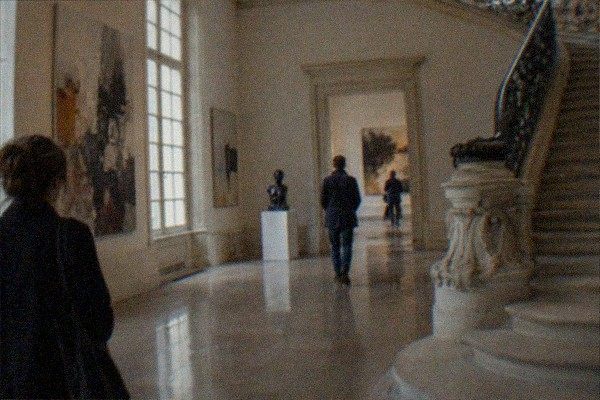
Musée Picasso Paris
3e arrondissement · The artist's own collection, kept in a 17th-century Marais mansion.
Houses the largest public collection of Pablo Picasso's works, spanning paintings, sculptures, drawings and ceramics.
Check availability →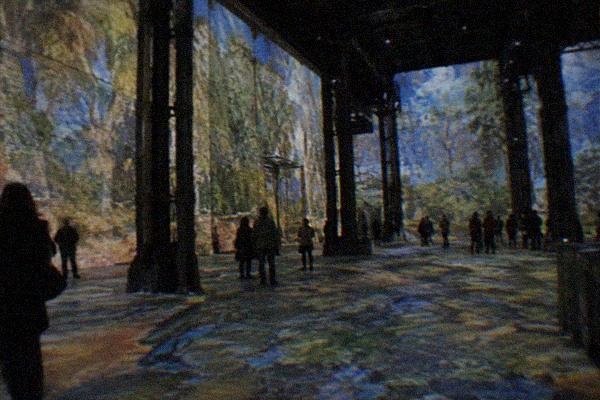
A former foundry where the paintings are projected 10 metres high, open daily.
Current price on the listing
Check Price & Availability →Opens the official listing with live dates and prices. Book there; nothing is charged on this site.
Atelier des Lumières is an immersive digital art center in a former foundry in Paris's 11th arrondissement, where famous paintings are projected 10 metres high across the walls and floor. It suits travelers who want spectacle over artifacts, and families with older children.
A former 19th-century foundry where artworks are projected 10 metres high across the walls, floor and pillars of a vast industrial hall. There is no physical collection at all. The visit is a looping audiovisual show built around one or two artists or themes, and the ticket always covers whatever show is running that day, never a permanent display.
The building itself does half the work. Before a single image appears, the raw shell of the former foundry sets the mood: high iron trusses, exposed brick, concrete floors and the deep gloom of a space built for casting metal rather than hanging canvases. The main hall, called La Halle, is the largest of the projection surfaces. A second, smaller space known as La Forge and a third room, Le Studio, round out the visit. The design of the venue means the show swallows you rather than standing in front of you, which is the entire appeal.
What plays on those surfaces changes completely every few months. Past programs have built full-length sequences around single painters, projecting the full sweep of a career in motion across the walls, paired with a shorter contemporary piece in the side room by digital artists who work with light and movement rather than paint. Because there is no permanent collection, two visits a year apart can feel like two entirely different attractions. Reviewers consistently say the long main program is the heart of the experience and the shorter contemporary piece in Le Studio is a contrast rather than the main event.
The practical rhythm of a visit is simple. You walk in, you stand or sit where you like on the open floor, and the program loops. Visitors regularly report that most people stay through at least one full loop of the main show, drifting around the hall to see the same images from different angles, sitting on benches along the sides, or lying back near the center. Photography is generally tolerated without flash, and the dark, moving room makes it a forgiving venue for casual phone shots. Photography policies do shift between shows, so follow staff instructions on the day. What you get is spectacle on a scale that a frame on a wall cannot match, and that is the honest pitch of the place.
It is not a museum in the conventional sense, and travelers who expect wall text, cases and chronology will be disappointed within ten minutes. Visitors regularly report that the people who love it most come expecting a light-and-sound show and give it a full hour of their attention.
Standard adult admission is €19.50, whether you buy at the door or online, and it is a timed-entry ticket for the show running on the day of your visit. There is no permanent collection ticket because there is no permanent collection. The bookable ticket is rated 4.1 across 670 reviews, a solid score for a single-venue immersive attraction.
Because entry is timed and compulsory, the ticket you buy is tied to a slot. You arrive within your window, join the queue for that slot, and enter with the rest of the group assigned to it. This is why buying ahead matters more here than at a conventional museum: the slots for popular evening hours can go first, and a walk-up visitor may be offered a much later entry than they hoped for. On the day's practicalities, the museum's own page at atelier-lumieres.com is the source for the current show and slot availability.
One point that catches Paris visitors out: Atelier des Lumières is not on the Paris Museum Pass. The pass covers the Louvre, Musée d'Orsay and dozens of state and city museums, but this is a private commercial venue and it has never been part of that scheme. If you built a Paris itinerary around the pass, budget this one separately. For what a pass-based itinerary looks like elsewhere, our pages on Musée d'Orsay tickets and the Arc de Triomphe break down the entries that are covered.
| Entry Route | What It Costs | What It Covers |
|---|---|---|
| Standard adult admission | €19.50 | Timed entry to the show running that day, all projection rooms |
| Online timed ticket | €19.50 | Same entry, pre-assigned time slot, skip the on-site purchase queue |
| Paris Museum Pass | Not accepted | Not on the pass under any tier |
The ticket price is flat for adults at the door and online, which removes any incentive to gamble on availability at the door. What varies is the slot. Evening showings tend to be the busiest, and weekend afternoons fill with families. If your schedule is fixed, lock a slot early; if it is flexible, a weekday slot usually means a thinner crowd in the hall, which for a projection show is a genuine quality difference. To secure a timed slot before you travel, the booking panel on this page does that in a couple of minutes.
Allow 60 to 90 minutes inside, which covers one full loop of the main program and time to explore the smaller rooms. There is no weekly closing day, so the venue runs every day of the week, and the best moments are off-peak weekday slots and evenings when the hall is quieter and the projections feel more concentrated.
The structure of the show dictates the timing. The main program runs on a continuous loop, and the side rooms run their own shorter loops on their own schedules. Nobody ushers you out after a fixed duration, so the honest answer to "how long" is really "how many loops do you want to watch." Visitors regularly report that one loop of the main show plus a look at the contemporary piece feels complete, and that staying for a second loop from a different position in the hall is the move of people who came specifically for the photography or the music.
Time of day matters more here than at most Paris museums because the crowd behaves differently. The hall holds a lot of people at once, and a packed show means benches fill early and the floor gets dense. Weekday mornings and the first slots after opening tend to be the calmest. Evenings draw a livelier crowd, couples and after-work groups, and the atmosphere shifts accordingly. Because entry is by timed slot, the venue never becomes the free-for-all crush that a popular permanent museum can, but the difference between a quiet and a busy loop is still very visible in the room.
Seasonally, the venue is busiest during French school holidays and the summer tourist peak, because it is an all-weather, all-age attraction that families reach for when the Louvre feels exhausting. There is no closed day to plan around and no seasonal shutdown, which makes it a useful fallback on Mondays when classics like Musée Picasso Paris, covered in our Musée Picasso Paris tickets guide, traditionally close. If rain settles over the city for a day, this is one of the better indoor hours in Paris precisely because the show is the point and the weather is irrelevant.
The venue sits at 38 rue Saint-Maur in the 11th arrondissement, with Metro lines 3, 5, 8, 9 and 2 all within a reasonable walk of the door. It is a timed-entry, standing-and-wandering experience rather than a seat-and-watch show, so wear comfortable shoes and expect a dark room with loud music for the duration.
The nearest stations depend on which direction you come from. Rue Saint-Maur station on line 3 is the closest stop by name, Parmentier on the same line is a few minutes further along the boulevard, and Oberkampf, served by lines 5 and 9, sits a short walk to the southeast. From line 2, Père Lachaise and Philippe Auguste both put you within range of a ten-minute walk. The surrounding Oberkampf and Saint-Maur quarter is one of the more agreeable neighborhoods in Paris to arrive in early: cafés, small restaurants and bars line the streets on every side, so a pre-show meal or an after-show drink needs no planning at all.
Accessibility is straightforward in the parts that matter. The main hall and the entry sequence are at ground level in a converted industrial building, and the museum's own page at atelier-lumieres.com carries the current practical guidance for visitors with reduced mobility and for wheelchair users. The venue states its visitor conditions directly there, which is the reliable source rather than secondhand summaries. For transport planning to the door, the operator's own pages at ratp.fr give live line status and station access details.
A few practicalities worth knowing. The projection rooms are dark, with music at a volume you will notice for the full loop, so anyone sensitive to sound or flashing light should think it through; the shows use large-scale moving light and, in some sequences, rapid visual change, which matters for visitors with photosensitive epilepsy and for very small children who may find the noise and darkness unsettling. Cloakroom and bag policy vary between shows, so travel light and check the practical details in your booking confirmation before you set out. Photography without flash is generally accepted, but staff instructions on the day always take precedence. There is no café inside the venue itself, and the neighborhood outside covers that need better than most museum districts in Paris.
Atelier des Lumières is an immersive digital art venue in a former foundry at 38 rue Saint-Maur, Paris, in the 11th arrondissement, open every day with no weekly closing day, timed entry compulsory, standard adult admission €19.50, and 60 to 90 minutes as a realistic visit length.
| Detail | Value |
|---|---|
| Address | 38 rue Saint-Maur, Paris, France |
| Arrondissement | 11th |
| Venue type | Immersive digital art center in a former foundry |
| Standard adult admission | €19.50 |
| Timed entry | Compulsory, all tickets |
| Weekly closing day | None, open daily |
| Time to allow | 60 to 90 minutes |
| Paris Museum Pass | Not included |
| Ticket rating | 4.1 across 670 reviews |
| Official site | atelier-lumieres.com/en |
The single row that changes itineraries most often is the Museum Pass one. Travelers who bought a pass expecting it to sweep up every major attraction in Paris discover that the immersive venues sit outside the system, and this one is no exception. The other row that surprises people is the absence of a closing day. Most of the classic Paris museums shut at least one day a week, and visitors who plan Monday around that fact can slot this venue in without checking anything, because it runs all seven days.
Treat the 60-to-90-minute figure as a floor rather than a ceiling. The loop structure means you can stretch the visit to two hours without effort if the show grabs you, and reviewers consistently say the main program rewards a second pass from a different corner of the hall. Conversely, there is no way to make the visit much shorter than the loop itself: you cannot see Atelier des Lumières in twenty minutes the way you can sprint a highlight or two at a giant permanent museum. Budget accordingly when you build the day.
The 11th arrondissement around the venue is one of Paris's best eating and wandering quarters, with Père Lachaise Cemetery within easy reach and the Marais, Musée Picasso Paris and Place des Vosges a short Metro ride away. The natural pairing is an immersive show here plus a conventional museum or a long neighborhood walk in the same afternoon.
Closest at hand is Père Lachaise, the great cemetery of the east, whose entrances sit roughly ten minutes on foot from rue Saint-Maur. It is one of the few Paris sights that pairs perfectly with an immersive venue, because it is slow, outdoor and free-form, the exact opposite of a dark timed-entry hall. Do the cemetery in the morning light, take lunch in the Saint-Maur and Oberkampf streets, then enter the foundry for an afternoon slot, and the day balances itself.
Westward, the Marais cluster makes a strong second half. Musée Picasso Paris occupies the Hôtel Salé, a grand 17th-century townhouse, and it delivers exactly what Atelier des Lumières does not: the physical objects, sketches and studios of a single towering artist. Coming from a projection show to actual canvases by the same era of painters is a juxtaposition visitors regularly report enjoying. Place des Vosges, the oldest planned square in Paris, is one street further and works as the sit-down-and-digest stop between the two. For a different register of pairing, the Palais Garnier offers an evening of gilded architecture and performance a short ride across the city, and the rooftop view from the Arc de Triomphe makes a fine bookend if you want the imperial axis of Paris after days spent in the eastern quarters.
Food and drink need no planning in this district, which is part of why the venue sits where it does. The streets around rue Saint-Maur and rue Oberkampf are dense with small restaurants, wine bars and bakeries at every price level, and the pre-show or post-show meal is a two-minute decision rather than an itinerary item. That makes Atelier des Lumières one of the easiest evening attractions in Paris to build a full night around: show, dinner, walk home through a lively quarter. Very few museums in the city offer that combination, and none of them project paintings ten metres high while doing it.
Standard adult admission is €19.50, and the same price applies online. The ticket covers timed entry to whichever immersive show is running on the day of your visit, since the venue has no permanent collection. Booking ahead assigns your slot in advance.
No. The venue is a private immersive attraction and it is not on the Paris Museum Pass under any tier. If your Paris itinerary is built around the pass, budget this ticket separately at €19.50 for standard adult admission.
Allow 60 to 90 minutes inside. That covers one full loop of the main projection program plus time in the smaller rooms. The show runs on continuous loops, so you can stay longer if you want to watch a second loop from a different position in the hall.
No, there is no weekly closing day. The venue is open daily, which makes it a useful option on days when conventional Paris museums close, and a reliable fallback during rain at any point in the week.
Entry is by timed slot and it is compulsory for every ticket. Walk-up visitors may be offered a later slot than they hoped for, especially in the evenings and on weekends, so buying a timed ticket in advance is the smoother route.
A former foundry where artworks are projected 10 metres high across the walls, floor and pillars of the industrial hall. The program changes every few months, and the ticket always covers whatever show is running rather than a permanent collection.
At 38 rue Saint-Maur, Paris, France, in the 11th arrondissement. Metro line 3 stops at rue Saint-Maur and Parmentier nearby, and lines 5 and 9 at Oberkampf are a short walk away, with Père Lachaise Cemetery about ten minutes on foot.
The bookable ticket is rated 4.1 across 670 reviews. Reviewers consistently say the main long program is the highlight, and visitors regularly report staying for at least one full loop of the projections before leaving.
3e arrondissement · The artist's own collection, kept in a 17th-century Marais mansion.
Houses the largest public collection of Pablo Picasso's works, spanning paintings, sculptures, drawings and ceramics.
Check availability →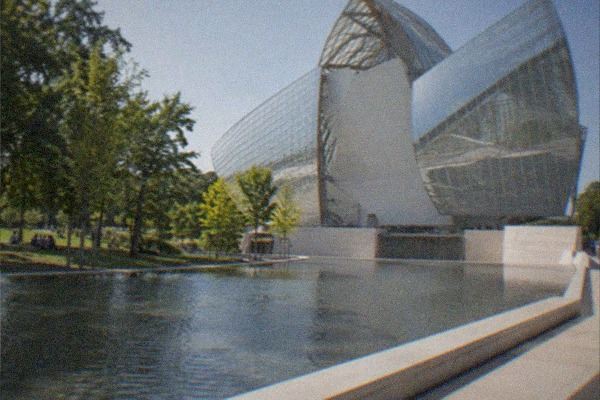
16th arrondissement · Shut right now. It reopens on 9 October 2026 with the Gustave Fayet collection.
Contemporary art foundation in a Frank Gehry-designed building hosting major modern and contemporary exhibitions.
Visitor info →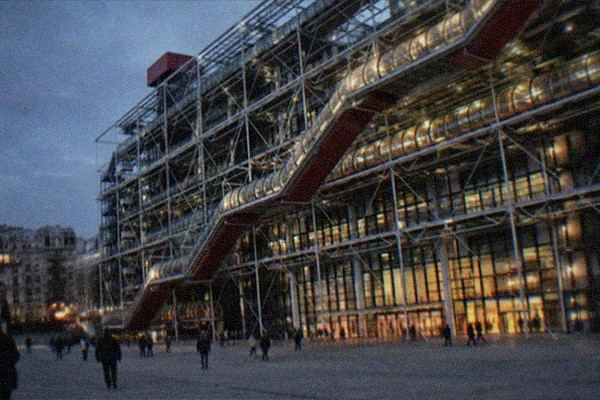
4th arrondissement · Closed since 22 September 2025 and not reopening until 2030. There is no ticket to buy.
Iconic multidisciplinary centre housing the Musée National d'Art Moderne with extensive modern and contemporary art collections.
Visitor info →