Musée de Cluny is France's national museum of the Middle Ages, built into the ruins of Roman baths and a medieval abbot's house in the Latin Quarter. It suits travelers who want one concentrated dose of Gothic art, illuminated manuscripts and the famous Lady and the Unicorn cycle, and it rewards an unhurried half day.
What Is The Museum Known For?
The headline attraction is The Lady and the Unicorn, a cycle of six fifteenth-century tapestries displayed in a purpose-built gallery within the museum. Beyond them, Musée de Cluny holds French national collections of medieval art, from illuminated manuscripts and stained glass to sculpture, all housed in a building that is itself half Roman, half Gothic.
The Lady and the Unicorn is the reason many people book a ticket in the first place. Woven in Flanders around the end of the fifteenth century from designs painted in Paris, the six panels present five allegories of the senses plus a famous sixth whose meaning is still debated. Most scholars now read the final panel, with its tent and the words "À mon seul désir," as a meditation on will, love or renunciation rather than a simple moral. Whatever the interpretation, the craft is extraordinary: millefleurs backgrounds crowded with rabbits, monkeys, hounds and small trees, and a palette of reds and blues that has survived five centuries remarkably intact. The room is dim by design, which protects the wool and silk, so give your eyes a minute to adjust before leaning into the details.
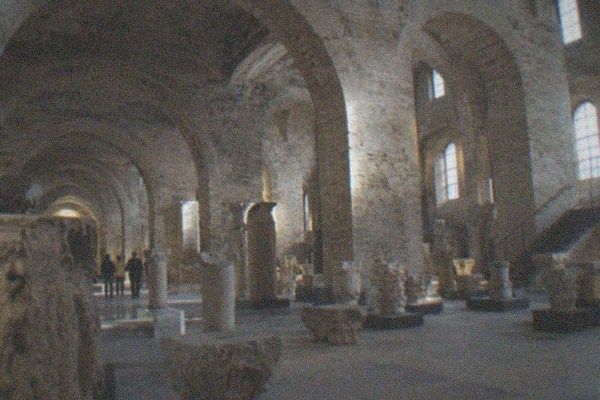
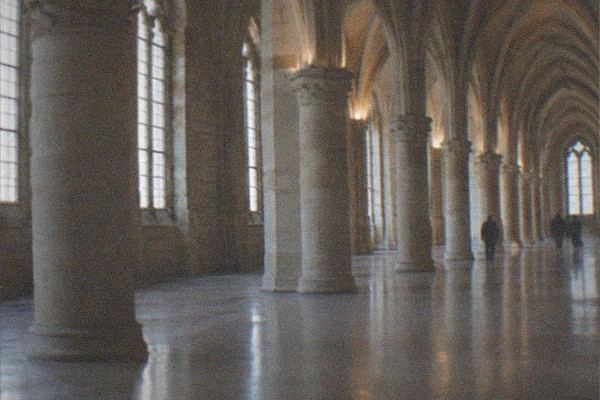
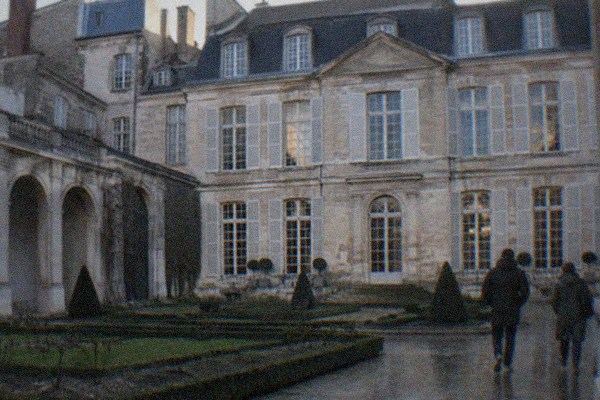
The building deserves nearly equal billing. The museum straddles two structures that could not be more different. The frigidarium of the Gallo-Roman baths, built when Lutetia was a provincial Roman town, still stands with its vaulted stone ceiling, and it is among the best preserved ancient interiors north of the Alps. The Hôtel de Cluny, the townhouse of the abbots of Cluny, was raised in the late fifteenth century and gives the museum its name. Walking between the two is a history lesson in itself: Roman engineering into flamboyant Gothic. The chapel, the vaulted cellars and the crenellated wall along the boulevard Saint-Michel all reward a slow look.
The rest of the collection fills in the medieval world with objects rather than paintings. There are the heads of the statues of the kings of Judah from Notre-Dame's facade, smashed during the Revolution and unearthed in a Parisian bank courtyard centuries later. There are chests, altarpieces, engravings, ivories, enamels from Limoges, weapons and armor spanning the medieval and Renaissance periods, plus a small but beautiful group of antique Roman objects collected by the de Somrard family who lived here before the abbots. Visitors regularly report that the sculpture floor, including vestiges from Sainte-Chapelle and other demolished Paris churches, is the quiet surprise of the visit.
If your taste runs to monumental French art of a later century, the Musée d'Orsay covers the 1848 to 1914 period in a former railway station, which makes a natural contrast with Cluny's medieval focus. But resist the temptation to cram them into the same morning. Cluny works best at the pace of someone actually looking at things.
Tickets And Entry: What You Pay And What You Get
Standard adult admission at the door is €14. A bookable ticket starts at $18.65 and costs about two euro more than buying in person, but it secures a timed slot and removes the risk of queueing at the entrance. The museum is free on the first Sunday of every month, so that is the budget play if your dates allow it.
The pricing picture is simple once you separate the two routes. Pay at the museum and the standard adult rate is €14. Book ahead and you are paying a modest premium, roughly two euro over the door price, for the convenience of a reserved time. That premium buys certainty on busy days rather than extra content, though some bookable options bundle a guide or an audio component. Anyone keeping a tight budget should simply join at the door; the euro difference is small but real, and the money saved buys a coffee on the boulevard Saint-Michel.
The first Sunday rule deserves emphasis because it is the single best deal in this guide. Free entry applies every first Sunday of every month, no special event required. The trade-off is purely logistical: everyone else knows about it too, so arrive near opening and expect the Lady and the Unicorn room to feel busy by midday. On paid days the museum is rarely oppressive, since its rooms are large and visitor flow is managed, but the free Sunday concentrates demand. If you are set on unhurried tapestry viewing, a paid weekday visit beats a free Sunday every time.
The museum's own visitor information page states current practical details, including free-entry conditions beyond the monthly Sunday rule, such as provisions for visitors under 26 who are residents of the European Economic Area and other reduced or free categories. Rather than restate categories here, use that page to confirm which concession applies to you before you travel, since eligibility rules can shift. For the one-ticket-for-many-sites approach, the Paris Museum Pass is a separate option that bundles dozens of Paris museums and monuments into a single pass, and Cluny has historically been among the participating institutions, though you should confirm current participation when you buy.
How Long To Allow And When To Go
Plan on two hours as a comfortable baseline for the permanent collections, and closer to three if you want to read labels closely or revisit the tapestry room after the crowd thins. The museum is closed every Monday, so build your itinerary around Tuesday through Sunday. Midweek mornings are the calmest window.
The visit sequence matters more here than at most museums. Many people head straight for the Lady and the Unicorn, which is a defensible instinct, but it can leave the Roman baths and the sculpture galleries feeling like a downhill run afterward. A better route is to start with the frigidarium and the Gallo-Roman remains on the ground floor, work through the medieval sculpture and stained glass, then arrive at the tapestry gallery with context already loaded. The cycle lands harder when you know what millefleurs weaving involves and how Parisian design workshops fed Flemish looms. Visitors regularly report that the final room of the six tapestries is worth a second pass once the initial group has moved on.
Season matters. Summer brings the densest tourist flow to the Latin Quarter, and the free Sundays in July and August are the museum's most crowded days of the year. Late autumn and winter weekdays, outside French school holidays, offer the most relaxed conditions, and the Gothic interiors have a genuine atmosphere advantage when it is gray outside. The medieval garden along the boulevard Saint-Germain side is best in the warmer months, since it is planted with species cultivated in the Middle Ages and functions as a small outdoor wing of the collection.
Pair your timing with what else you want in the Latin Quarter. The Sorbonne, the Panthéon and the Rue Mouffetard market street are all within a short walk, so a Cluny morning followed by a long lunch in the 5e is an easy, satisfying day. Avoid scheduling Cluny immediately before or after a heavy hitter like the Louvre on the same day, not because of distance but because medieval art rewards attention, and attention runs out.
Know Before You Go
Musée de Cluny sits at 6 place Paul Painlevé and 28 rue Du Sommerard in the 5e arrondissement, in the heart of the Latin Quarter. The nearest Metro stations are steps away on lines serving the Left Bank, and the museum is closed every Monday. Give yourself two hours and you will not be rushing.
Getting there is straightforward because the 5e is one of the best-connected quarters of Paris. The closest stations are Cluny-La Sorbonne and Odéon, both a few minutes' walk from the entrance, and Saint-Michel is only slightly farther. If you are coming by RER, the Saint-Michel stop on the RER B line puts you roughly five minutes away on foot, convenient if you are arriving from the airports or from Gare du Nord. Bus lines along the boulevard Saint-Michel also stop nearby. This is a neighborhood designed for walking, so most visitors simply fold the approach into a stroll through the Latin Quarter. The RATP, the Paris transport operator's site, has current Metro and RER service information, which is worth checking if you are traveling during a strike period or a weekend with scheduled work on the lines.
Inside, expect a building with genuine medieval bones, which means the accessibility picture is imperfect. The main route has been improved in recent renovations, with the new reception area and the principal galleries reachable for wheelchair users, but some historic spaces, particularly parts of the Roman baths complex with their original stone stairways, cannot all be fully adapted. If accessibility is central to your visit, contact the museum ahead of time or check its official practical information page for the current layout. Large bags are subject to the usual French museum rules, meaning bulky luggage and wheeled cases are not welcome inside, and the entrance area has limited room for stowing things, so travel light.
Photography is generally permitted in the permanent collections for personal use, without flash, but policies on tripods and specific loan exhibitions vary, so follow the signs in each room. The museum shop is small and genuinely good, with serious books on medieval art that are hard to find elsewhere, plus a decent selection around tapestry reproduction. There is no reason to arrive hungry, since the Latin Quarter around the entrance has one of the densest concentrations of cafés, bakeries and bookshops in Paris. The medieval garden is free to view from the street and is a pleasant spot to decompress after the galleries.
Who It Suits And Who It Does Not
This museum suits anyone curious about the Middle Ages, lovers of textiles and craft, and visitors who want depth over spectacle. It does not suit travelers chasing big-name Impressionist paintings or those with only one hour in the 5e, and very young children will find more stone and glass than interactive display.
The ideal Cluny visitor enjoys close looking. The collection is object-based rather than canvas-based, so the rewards go to people willing to lean into a carved misericord, read a label about a knight's sword, or trace the symbolism in an allegorical garden. Reviewers consistently say the museum rewards preparation, even modest preparation: knowing that the Lady and the Unicorn cycle consists of six panels, five senses plus one mystery, turns a pretty room into a puzzle. History students, textile enthusiasts, architecture nerds and anyone who has ever enjoyed a Gothic cathedral will be at home here within minutes.
By contrast, visitors who measure museums by the fame of their paintings should calibrate expectations. Cluny has almost no panel paintings to speak of; its treasures are woven, carved, forged and painted onto parchment and glass. If your Paris priority list is Monet, Van Gogh and the Mona Lisa, spend your hours at the Orsay and the Louvre instead, and come to Cluny on a second or third trip. The museum is also a poor fit for a whirlwind schedule. It is not a drive-by photo stop; the entrance alone, through the Gothic porch and into the Roman remains, sets a pace that resists rushing.
Families with older children, roughly eight and up, tend to do better than those with toddlers. The unicorn cycle has genuine kid appeal, unicorns being what they are, and the armor and sword displays reliably capture the ten-year-old imagination. Toddlers have less to grip, climb or push. For a family itinerary that leans military rather than medieval, the Musée de l'Armée at Les Invalides offers armor, uniforms and Napoleon's tomb on a grander physical scale, and it pairs well with a Cluny visit across two days.
Solo travelers and small groups get the best value, simply because the galleries reward lingering and the free Sunday crowds reward flexibility. If you are a photographer of detail, the tapestry room and the Roman vaults will consume you. If you need a café and Wi-Fi every forty minutes, the surrounding quarter handles that better than any museum could.
What Is Nearby Worth Pairing It With
The 5e arrondissement around Musée de Cluny is one of the densest sightseeing zones in Paris. The Panthéon, the Sorbonne quarter, the Rue Mouffetard and the Roman remains of the Arènes de Lutèce all sit within a short walk, making Cluny the natural anchor of a full Latin Quarter day.
Start with the Panthéon, about ten minutes north, where the crypt holds the tombs of Voltaire, Rousseau, Hugo, Curie and other French luminaries, under a dome with a Foucault pendulum swinging in the nave. From Cluny it is an easy and pleasant walk. East of the Panthéon, the Rue Mouffetard market street runs downhill with cheese shops, wine bars and one of the oldest café concentrations in the city, ideal for the post-museum lunch. South of the museum, tucked behind apartment blocks near the Rue Monge, lie the Arènes de Lutèce, the exposed seats of a Gallo-Roman amphitheater where you can sit in a structure nearly contemporary with the baths inside the museum. The pairing is thematically perfect: see the Roman frigidarium under glass at Cluny, then picnic in an actual Roman arena twenty minutes later.
Cross the river and the options multiply. The Île de la Cité holds Notre-Dame and Sainte-Chapelle, and Sainte-Chapelle's stained glass is the single best companion piece to Cluny, since the museum displays vestiges from Sainte-Chapelle itself. On the same island stands the Conciergerie, the former royal palace turned revolutionary prison, and the Conciergerie makes a strong half-day pairing with Cluny for anyone tracing medieval and revolutionary Paris in one itinerary. Both island sights are reachable on foot across the Seine in about twenty minutes.
For a purely monumental finish, the Arc de Triomphe sits across the city on the Right Bank, so it belongs on a different day, but its viewing terrace offers the long view of the Haussmann grid that the medieval Latin Quarter never can. Closer to home, bookshops along the Rue des Écoles and the Jardin des Plantes with its natural history museum and gardens fill any leftover hours. Realistically, the strongest single plan is Cluny in the morning, lunch on Rue Mouffetard, the Arènes in the afternoon, and the Panthéon last. That is a full day that never requires a Metro ride, which in the 5e is exactly the point.
Questions People Ask
How Much Does Musée de Cluny Cost?
Standard adult admission is €14 paid at the museum. A bookable ticket starts at $18.65, which works out to about two euro over the door price, and it secures a timed slot. Bookable options may include a guide depending on the option chosen.
When Is Musée de Cluny Free?
The museum is free on the first Sunday of every month. It is the best budget option available, but it is popular, so arrive near opening time if you want a calm look at The Lady and the Unicorn. A paid weekday visit is far quieter.
Is Musée de Cluny Closed On Mondays?
Yes, the museum is closed every Monday. Plan your visit for Tuesday through Sunday. Midweek mornings are the calmest time, especially outside the summer months when the Latin Quarter is at its busiest.
What Is The Most Famous Thing At Musée de Cluny?
The Lady and the Unicorn, a cycle of six fifteenth-century tapestries displayed in a dedicated gallery. Five panels represent the senses and the sixth remains debated, with its tent and motto. They are woven in wool and silk with crowded millefleurs backgrounds.
How Long Should I Spend At Musée de Cluny?
About two hours is a comfortable baseline for the permanent collections. Allow closer to three if you read closely or want a second pass through the tapestry room. The route runs from Roman baths through medieval sculpture to the tapestry gallery.
How Do I Get To Musée de Cluny?
The museum sits at 6 place Paul Painlevé and 28 rue Du Sommerard in the 5e arrondissement. The nearest Metro stations are Cluny-La Sorbonne and Odéon, with the Saint-Michel RER B stop about five minutes away on foot. Most visitors simply walk in from the Latin Quarter.
Is Musée de Cluny Worth It If I Only Like Paintings?
Probably not as a priority. Cluny's treasures are woven, carved, forged and painted on parchment and glass, not hung canvases. If Monet and Van Gogh drive your itinerary, spend your hours at the Musée d'Orsay instead and save Cluny for a longer trip.
Is The Museum Building Itself Historic?
Yes, remarkably so. It combines the frigidarium of Gallo-Roman baths, among the best preserved ancient interiors north of the Alps, with the fifteenth-century Hôtel de Cluny, a medieval abbot's townhouse. The building is nearly as much of the attraction as the collection inside it.