Musée Carnavalet tells the story of Paris itself, from prehistory to the present, inside two connected Marais mansions. It suits anyone curious about how the city grew, and it costs nothing to walk in. This guide covers what you see, how entry works, and what to pair with a visit.
What Is Musée Carnavalet?
Musée Carnavalet is the museum of the history of Paris, tracing the city from prehistoric settlements to the present day. It occupies two historic mansions in the Marais, the Hôtel Carnavalet and the Hôtel Le Peletier de Saint-Fargeau, linked by a gallery. Entry to the permanent collection is free, no ticket needed.
Most Paris museums collect art, or a single artist, or a single era. This one collects a city. Its galleries walk you through how a riverbank settlement became a medieval capital, then a revolutionary crucible, then the Paris of department stores and metro lines. The objects are what you would expect from four thousand years of urban life: carved stone from long-demolished churches, shop signs, revolutionary-era relics, paintings of streets that no longer look the way painters saw them, and room interiors reconstructed whole, walls and paneling included.
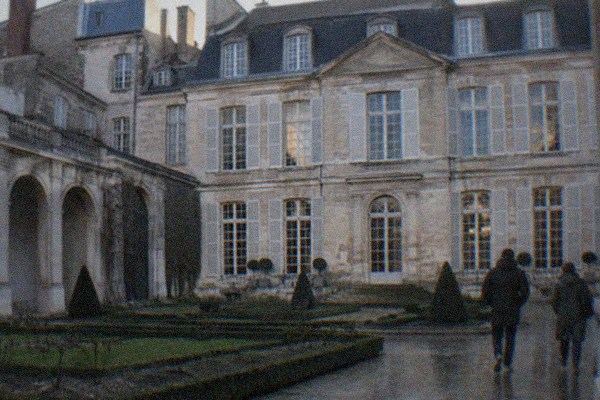
The buildings deserve as much attention as the display cases. The Hôtel Carnavalet dates from the mid-16th century and is one of the finest Renaissance houses in the Marais. Madame de Sévigné, the letter writer whose name now labels the street outside, lived here for years. The Hôtel Le Peletier de Saint-Fargeau, added to the museum in the 19th century, extended the display space northward. Walking between the two, you cross courtyards, gardens, and a connecting gallery, and the architecture does some of the storytelling on its own.
After a major renovation completed in 2021, the museum reopened with a rethought route. The visit now moves more or less chronologically: ancient Paris on the ground level, the medieval and Renaissance city above it, then the upheavals of the 18th and 19th centuries, ending with the 20th century. Visitors regularly report that the sequence makes a huge subject feel navigable, and that even a fast pass through leaves you with a clearer mental map of the city than you arrived with. If your trip includes the medieval collections of Musée de Cluny, this museum picks up roughly where the Middle Ages end and carries the story forward.
The museum's own page states that the permanent collection has been free to everyone, with no ticket, since December 2001, and that policy continues today, as set out on its official site.
Entry, Tickets, And What It Costs
Entry to the permanent collection is free to everyone, with no ticket and no age condition. You simply walk in during opening hours. The only thing that costs money at Musée Carnavalet is the temporary exhibition program, which is ticketed separately from the free permanent galleries.
There is no booking step, no time slot, and no voucher to redeem. The free entry applies to every visitor without exception: children, students, adults, seniors, French or foreign. This is unusual among Paris's large museums, and it is the single best argument for putting the museum on any itinerary, because you can enter with zero commitment and stay as long or as briefly as the galleries hold you. Arrive, join whatever line exists at the door, and go in.
Temporary exhibitions are the exception. These are curated shows, often drawing on the museum's deep reserves or on loans, and they carry an admission charge set by the museum. There is nothing wrong with paying for one if the subject grabs you, but it is worth knowing that the permanent collection, which is the substance of the museum and the reason most people come, never requires a cent. Skip a temporary show and you miss nothing of the city's core story.
The contrast with other Paris institutions is stark. The Conciergerie and the Musée de l'Armée both charge for their collections, and the Arc de Triomphe charges for its terrace. At Musée Carnavalet, the equivalent experience, the permanent galleries, costs nothing. For a family, a student, or anyone stretching a travel budget across an expensive city, that matters.
The free-entry policy is a deliberate civic choice, not a temporary promotion. It has held since December 2001, through renovations and reopening, and it reflects the museum's founding idea: the history of Paris belongs to the people of Paris and to its visitors alike, and the permanent collection should be as open as a public library.
What You See Inside
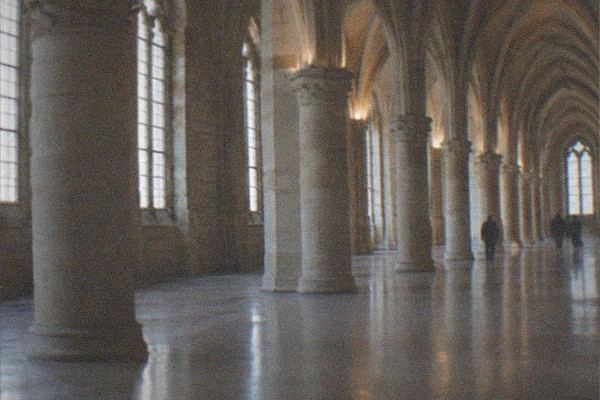
Inside, you follow Paris across centuries of rooms: Gallo-Roman stonework and ancient finds, medieval sculpture, Renaissance paneling, the Salons of the Hôtel Le Peletier, revolutionary artifacts, and painted views of the 19th-century city, ending with the 20th century. The two mansions themselves, with their courtyards and gardens, are part of the display.
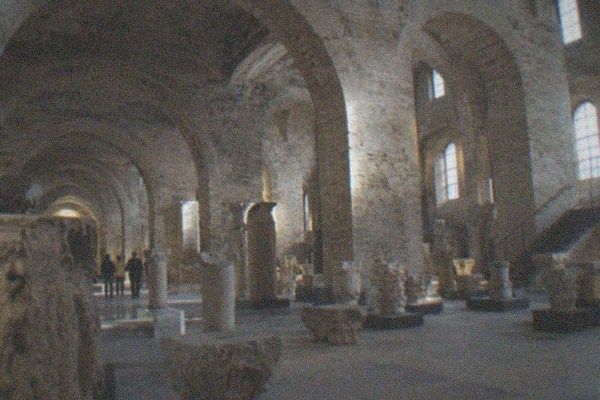
The ground floor starts with the city before it was Paris. Archaeological material from the Gallo-Roman town of Lutetia sits alongside older traces of settlement on the Seine, and the scale is intimate: small objects, inscriptions, and architectural fragments rather than monumental showpieces. From there the route climbs through the medieval city, with carved stone rescued from churches demolished under Haussmann's transformations, and into the Renaissance, where the Hôtel Carnavalet's own history takes over the narrative.
The later floors are where many visitors slow down. The French Revolution rooms hold the museum's most famous material: objects connected to the period's key figures, models of the Bastille, and pieces of the prison fortress itself, which is a genuine crowd-puller. Room after room of reconstructed interiors follows, including the rooms associated with Madame de Sévigné and the ornate state rooms of the Hôtel Le Peletier de Saint-Fargeau, moved and rebuilt panel by panel. Then comes 19th-century Paris: paintings of boulevards and barricades, the city of Hugo and Zola rendered in oil, and the everyday material culture of shopfronts and street signs that gives this museum its distinct flavor.
Reviewers consistently say the reconstructed interiors are the hallmark experience, rooms you step into rather than cases you peer at. Visitors also regularly report that the museum rewards slow looking more than a hit-list approach, because much of the pleasure is in the accumulation of small, specific Paris things rather than in a handful of star objects. Photography is part of the visit for many: the courtyards, the staircase, and the period rooms are among the most photographed spaces in the Marais. There is a garden courtyard between the two houses, and it works as a natural pause point halfway through.
How Long To Allow And When To Go
Allow around two hours for the permanent collection at a steady pace, more if you read panels closely or catch a temporary exhibition. The museum is closed every Monday, so plan any other day of the week. A rainy weekday morning is the calmest window in the Marais.
The chronological route makes time budgeting straightforward. If you have one hour, do the revolution-era rooms and the reconstructed interiors, which sit near the heart of the museum's identity, and skip the prehistoric galleries. If you have three, walk the whole sequence and spend the last stretch in the 19th-century rooms, where the density of painted city views rewards lingering. Because entry is free, there is no pressure to extract value from a ticket, and short visits are entirely legitimate.
Mondays are the one hard planning fact: the museum is closed every Monday, no exceptions. On weekends and during school holidays the Marais fills up, and the museum fills with it, though the free entry means queues move quickly once doors open. Weekday mornings are noticeably calmer, and the surrounding streets are at their best then too. The museum sits in a neighborhood people visit anyway, so timing it against the rhythm of the Marais, quiet mornings, busy afternoons, works well.
For transport planning in Paris generally, including connections into the Marais, the RATP, the city's transport operator, publishes route information that helps with arrival timing. The museum's address places it a few minutes' walk from the heart of the Marais shopping streets, so many visitors fold it into a neighborhood loop rather than treating it as a destination requiring its own journey.
Know Before You Go
Find Musée Carnavalet at 23 rue de Sévigné, Paris, in the 3e arrondissement of the Marais. It is closed every Monday. Entry needs no ticket and no booking for the permanent collection. The museum is housed across two mansions, so expect stairs, courtyards, and a fair amount of walking.
The coordinates are 48.85768, 2.36271, which is useful for ride-hailing or map apps if your French street navigation is shaky. The rue de Sévigné is named for Madame de Sévigné herself, the museum's most famous former resident, and the street is short, calm, and easy to miss from the busier streets a block away. Most people arrive on foot from elsewhere in the Marais; the neighborhood is one of the most walkable in Paris, and the museum sits within easy strolling distance of the Place des Vosges and the rue des Francs-Bourgeois.
Practical details worth knowing: because the museum spans two historic buildings, accessibility varies by wing and by floor, and visitors with reduced mobility should check current conditions with the museum directly before counting on full step-free access. Historic mansions were not built to modern circulation standards, and even after the 2021 renovation, some sequences involve more stairs than a purpose-built gallery would. For the same reason, allow more time than a floor plan suggests, since moving between the two houses and across levels adds distance.
Bag rules are not published here because they change and vary; large bags are generally unwelcome in Paris museums, so travel light. As with any free museum, there may be a short line at the entrance for security screening even when no ticket is involved, so build in a few minutes. Check opening times for your specific date on the official Musée Carnavalet site, since hours can shift seasonally, and confirm whether a temporary exhibition you care about is running. The official site is also where any announcement about closures or special events will appear first.
What To Pair It With Nearby
Pair Musée Carnavalet with the Marais itself: the Place des Vosges, the Picasso museum area, and the shopping streets between them, all within a short walk. For a fuller Paris history day, combine it with the Conciergerie on the Île de la Cité, or with the Musée de l'Armée for the revolutionary and imperial chapters of the same story.
The museum's location is its best pairing asset. You exit into the middle of the Marais, a district of hotels particuliers, hidden courtyards, falafel lines, and small galleries, and the museum functions almost as an interpretive center for the neighborhood around it. Many of the mansions you pass on nearby streets are cousins of the ones you just walked through. A natural circuit: the museum first, then a slow wander through the Marais ending at the Place des Vosges, Paris's oldest planned square, which the museum's paintings help you see with new eyes.
For a day themed around the city's history, head west afterward. The Conciergerie, the medieval royal palace turned revolutionary prison on the Île de la Cité, picks up the darker thread the Carnavalet's revolution rooms introduce, and the two museums share objects and a cast of characters. Alternatively, the Musée de l'Armée at Les Invalides carries the military side of the same national story, from the armies of the kings through Napoleon and beyond. Both are ticketed, which makes the free Carnavalet an economical anchor for a day of paid visits.
Visitors who fall for the Carnavalet's approach, history told through the city's own objects, often go on to Musée de Cluny for the medieval chapter on the Left Bank. The pairing works in either order: Cluny's Roman baths and Gothic art, then the Carnavalet's Renaissance-to-modern sweep. In between, the Seine crossings of central Paris stitch the itinerary together, and the whole arc, ancient Lutetia to modern Paris, becomes one continuous story told across two buildings at opposite ends of the old city.
One last planning note: because Musée Carnavalet is closed Mondays, treat Monday as the day for the neighborhood itself, shops and squares, and save the museum for any other day of the week, when you can walk in for nothing and stay as long as the history of Paris holds you.
Questions People Ask
Is Musée Carnavalet Really Free?
Yes. Entry to the permanent collection is free to everyone, with no ticket needed, and this has been the policy since December 2001. There is no booking step and no voucher. The only paid element is the temporary exhibition program, which is ticketed separately.
Do Children Need A Ticket?
No. Entry is free for everyone with no age condition, so children and young visitors walk in exactly like adults, with no ticket and no booking. A family can visit the permanent galleries without spending anything.
What Costs Money At Musée Carnavalet?
Only the temporary exhibitions. These curated shows are ticketed, while the permanent collection, the galleries telling the story of Paris across the two mansions, is free to everyone with no ticket.
When Is Musée Carnavalet Closed?
The museum is closed every Monday. It is open the rest of the week, so plan any other day for your visit. For specific opening hours on the date you plan to come, the official museum site carries current details.
Where Is Musée Carnavalet Located?
The address is 23 rue de Sévigné, Paris, France, in the 3e arrondissement, in the heart of the Marais. The coordinates are 48.85768, 2.36271. The street is named for Madame de Sévigné, who lived in the building.
How Long Should I Spend There?
Around two hours covers the permanent collection at a steady pace. Fast visitors can do the revolutionary rooms and reconstructed interiors in an hour, while slower visitors reading panels can easily use three. Entry is free, so any length of visit is fine.
What Is Musée Carnavalet About?
It is the museum of the history of Paris, from prehistory to the present, displayed across two Marais mansions, the Hôtel Carnavalet and the Hôtel Le Peletier de Saint-Fargeau. Galleries span Gallo-Roman finds, medieval sculpture, the French Revolution, and 19th-century Paris.
Do I Need To Book In Advance?
No. The permanent collection requires no ticket and no advance booking of any kind, for any visitor. You may need to join a short line at the door. Only the ticketed temporary exhibitions involve a purchase.