The Conciergerie is a medieval royal palace turned prison on Île de la Cité, best known as the place where Marie-Antoinette was held before her execution. It suits history-minded visitors who want Gothic architecture and Revolution history, and it pairs naturally with Sainte-Chapelle next door.
What You Actually See Inside
The Conciergerie is a surviving piece of the medieval palace of the kings of France, later a prison, and its single most famous sight is the reconstructed cell where Marie-Antoinette was held in 1793. You also walk through three low vaulted Gothic halls, the palace guardrooms and a memorial chapel built on the spot of the queen's original cell.
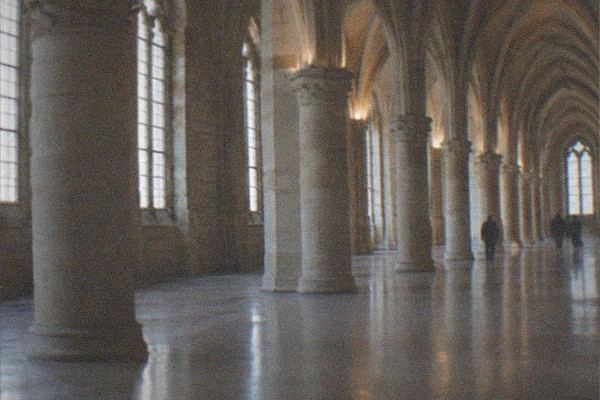
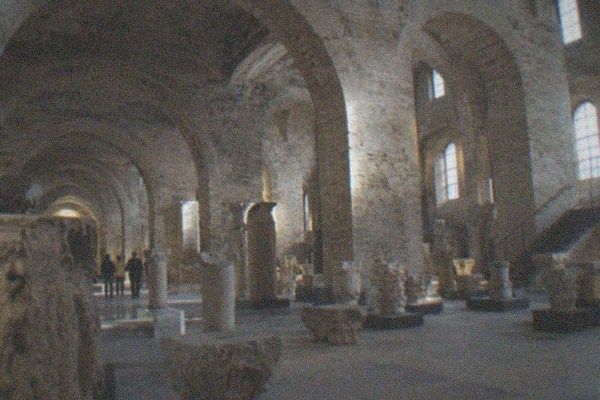
The visit begins, for almost everyone, with the halls themselves. The Salle des Gens d'Armes, the Hall of the Men-at-Arms, is one of the largest surviving medieval secular rooms in Europe: four rib-vaulted naves resting on columns, built in the 14th century under Philip the Fair as a dining and working space for the palace's army of servants. The Salle des Gardes above it and the Rue de Paris, a paved lane that ran through the palace kitchens, complete the ground-floor sequence. Visitors regularly report that these stone halls are colder and darker than expected, and that this is part of the point: the building has barely been heated since the 1300s.
From the medieval palace the route moves to the prison story. After the kings moved to the Louvre and then Versailles, the palace was handed to the Concierge, the keeper of the king's palace, hence the name, and much of it became a detention and judicial center. During the Revolutionary period it served as the antechamber to the guillotine: the Tribunal sat here, prisoners were held here before trial, and carts left from the courtyard for the execution grounds. The exhibition rooms lay out this history with documents, artifacts and the list of names, and reviewers consistently say this section is sobering rather than theatrical.
The emotional center is Marie-Antoinette's cell. The original cell was converted into a memorial chapel in the 19th century by royalist sympathizers, and the space you visit today is a reconstruction furnished as it would have looked in 1793, with a small cot, a screen for the guard's surveillance and a tablet listing the queen's companions in captivity. The chapel next door, with its simple stained glass and its sculpture of the queen awaiting her fate, marks the exact footprint of the original room. Visitors regularly report that this single room is what they remember a year later.
Tickets And Prices
Standard adult admission at the door is €13, and under-18s enter free with photo ID. EU and EEA residents under 26 also enter free, including holders of a long-stay permit or visa. A bookable combined ticket covering the Conciergerie and Sainte-Chapelle starts at $34.95, which only makes sense if you plan to see both monuments on the same trip.
The door price is the museum's own euro price, paid on site with no intermediary. The bookable product is a different animal: a combined Sainte-Chapelle and Conciergerie ticket, priced in dollars, sometimes bundled with a guide or a timed slot. If you only want the Conciergerie, buying at the door in euros is the cheaper route. If you want both buildings, and most visitors on Île de la Cité do, the combined ticket is the one to compare against two separate door payments. The bookable ticket carries a 4.2 rating across 291 reviews, a solid if unremarkable score, and reviewers consistently say the convenience of skipping the two separate lines is the real product.
Free entry has a schedule worth knowing. The Conciergerie is free the first Sunday of the month from January to March and from November to December only. In other words, the free Sundays cluster in the cold half of the year and disappear entirely between April and October, the exact months when tourist pressure is highest. A visitor planning a spring trip should not count on a free Sunday. The museum's own page carries the current terms and any temporary arrangements.
One practical note on the booking panel on this page: it sells the combined ticket, so if your plan is the Conciergerie alone, the door in euros is the honest answer. The booking from-price is not the same thing as the euro door price, and the two should never be compared as equals. The official practical information page at paris-conciergerie.fr states the door terms.
How Long To Allow And When To Go
Allow roughly an hour to an hour and a half for the Conciergerie itself, longer if you read the exhibition texts in full. There is no weekly closing day, so the building opens on every day of the week, and the quietest stretch is usually the first hour after opening and the late afternoon on weekdays outside French school holidays.
The visit is short by Paris museum standards, and that is a feature. The route is essentially linear: Gothic halls first, then the prison exhibition, then the Marie-Antoinette cell and chapel, then out. There is no maze of wings and no great painting collection to linger over. Visitors regularly report finishing in about an hour, and reviewers consistently say that a fast pass through the halls in forty-five minutes is entirely possible if you are not reading everything. Anyone doing the combined ticket should budget the extra time for Sainte-Chapelle's line, which moves slowly and is the bottleneck of Île de la Cité.
Timing matters more here than at most Paris sights because the island gets brutally crowded in summer. Midday in July and August brings tour groups through both monuments, and the queues for Sainte-Chapelle can wrap around the courtyard. Early morning, before 10, or the last opening hour are the calmer windows. The cold-season free Sundays, from January to March and again in November and December, are also low-crowd months in general, though the free Sunday itself naturally draws locals and bargain hunters.
Rain is a real consideration on this island. The Conciergerie is one of the few central Paris monuments that is fully indoors and almost queue-free compared with its neighbor, so a wet afternoon is when it earns its keep. Pair that with the fact that there is no closed weekday, and the building works as a reliable fallback whenever another sight falls through. For a similar indoor reliability with more depth of collections, our pages on the Musée de Cluny, the medieval history museum, and on Musée de l'Armée cover two heavier-weight alternatives, but neither offers the Revolution history that makes this building distinct.
Know Before You Go
The Conciergerie sits on Île de la Cité in the 1er arrondissement, at coordinates 48.85595, 2.34603. There is no weekly closing day, so any day of the week works for a visit. The nearest transit is on the island itself and on both banks a short walk over the bridges.
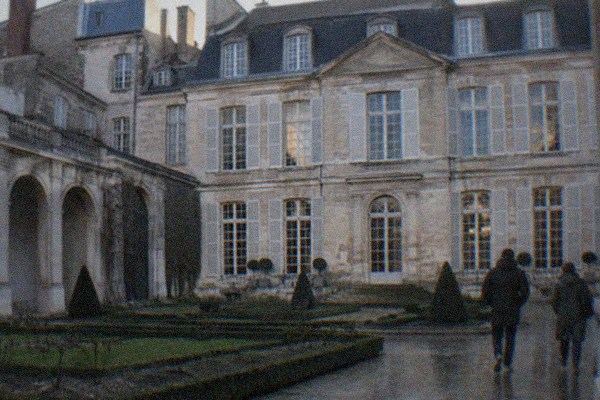
The address to give a taxi or drop into a map is simply Île de la Cité, Paris, France. The building is the long, dark Gothic block on the river's edge west of the Sainte-Chapelle tower, unmistakable from the Right Bank with its three round towers, the Tournelle, the César and the Bonbec, rising out of the water. The entrance faces the courtyard it shares with Sainte-Chapelle and the Palais de Justice, and wayfinding is well signed from the Métro exits. Cité station on line 4 lands you practically at the door, and Saint-Michel on the RER B, plus lines 4 and 10 at Saint-Michel Notre-Dame, put you on the Left Bank a bridge crossing away. The transport operator's site, ratp.fr, carries current line status, which matters on weekends when maintenance work can shift the fastest route.
Accessibility deserves a candid sentence. The medieval halls are at street level and step-free from the main entrance, and their scale makes them easy to move through. Parts of the prison circuit involve older stairways and uneven medieval paving, so visitors with limited mobility should expect the ground-floor halls to be the comfortable core of the visit and should ask staff at the desk about the current state of the upper route before buying. The stone halls are genuinely cold in winter, several degrees below street temperature, and visitors regularly report wishing they had brought an extra layer.
Security screening is in force on the island, as it is at Sainte-Chapelle and the courthouse next door, and large bags will slow you down or be refused outright. Travel light, keep bags small, and expect a bag check at the entrance even with a prebooked ticket. Photography inside is generally tolerated without flash in the halls, though the chapel is a quieter space where discretion is the norm. There is no cafe of note inside, but the island and the Left Bank across the Pont au Change are dense with cafes, so plan food outside the visit rather than inside it.
What To Pair It With
The obvious pairing is Sainte-Chapelle, the Gothic chapel directly next door, and the two monuments are sold as a combined ticket starting at $34.95. Beyond the island, the Conciergerie sits in the 1er arrondissement with the Louvre, Notre-Dame and the flower market all within a short walk, making it easy to fold into a half-day along the Seine.
Sainte-Chapelle first, because it is the reason most people are on the island at all. The upper chapel's stained glass is one of the great interiors of Europe, and the combined ticket exists precisely because the two buildings share a courtyard, a security perimeter and a history as two halves of the same royal palace. Reviewers consistently say doing both back to back, roughly two and a half hours door to door, is the right dose. Walk out of the dark vaulted halls of the prison and into a glass box of 13th-century light, and the contrast is the lesson.
The rest of the island takes another hour. Notre-Dame reopened after the fire restoration and its square is a two-minute walk east. The Marché aux Fleurs, the flower market, sits just north of the Conciergerie, and the bird market joins it on Sundays. The Pont Neuf and the western tip of the island, the Place Dauphine with its arcaded restaurants, are a stroll rather than a sight. Cross the Seine either way and you land in heavyweight museum territory: our Musée d'Orsay guide covers the 19th-century collections across the river, while the Arc de Triomphe page covers the monumental viewpoint up the Champs-Élysées, both reachable by Métro in well under half an hour.
For visitors whose interest in the Conciergerie is medieval rather than Revolutionary, the better pairing is not on the island at all. The Musée de Cluny in the 5th arrondissement holds the Lady and the Unicorn tapestries and the fullest medieval collection in the city, and it complements the palace halls you just walked through. Do the Conciergerie in the morning, take line 4 south three stops, and you have a coherent medieval day with lunch in the Latin Quarter between. Visitors regularly report that this pairing satisfies them more than rushing a second monument on the island itself.
Who It Suits And Who It Does Not
The Conciergerie suits visitors with a specific interest in the French Revolution, medieval architecture or the story of Marie-Antoinette, and it rewards a slower, reading visit of about an hour. It does not suit anyone expecting a large museum with varied collections, and families with restless small children may find the exhibition rooms heavy going.
Be concrete about the fit. If your Paris list is driven by history and you have read anything about the Terror, this building is a pilgrimage site, and the reconstructed cell delivers what the guidebooks promise. If you are a medieval architecture enthusiast, the Salle des Gens d'Armes alone justifies the door price: it survives from the reign of Philip the Fair and few rooms of its scale and date exist anywhere in Europe outside religious buildings. Reviewers consistently say that visitors arriving with that background rate the Conciergerie highly, while visitors arriving cold, expecting another Louvre-adjacent attraction, are the ones who leave disappointed.
Who should adjust expectations. The building is not an art museum, there is no permanent painting or sculpture collection worth the name, and the interpretive exhibition leans on text panels, documents and reproduced material rather than objects of beauty. The halls are dark and the prison rooms are deliberately somber. A visitor who wants visual spectacle should put Sainte-Chapelle first and treat the Conciergerie as its shadow, which is a fair reading of how the two were designed to be seen together. The combined ticket from $34.95 exists for exactly that itinerary.
Practical fit for groups. Under-18s enter free with photo ID, and EU and EEA residents under 26 free as well, including long-stay permit and visa holders, which makes the building a rare budget-friendly stop for students and school groups. An hour of Gothic architecture and Revolution history, free for most teenagers, is good value by any standard. The free first Sundays, January to March and November to December, extend the same logic to everyone, though the April-to-October gap means summer visitors should simply budget the €13 door price and move on. For a fuller comparison of Paris tickets and free-entry rules across the major museums, the Paris Museum Pass site lays out the multi-monument option for visitors packing several sights into one week.
Questions People Ask
How Much Does The Conciergerie Cost?
Standard adult admission at the door is €13. Children under 18 enter free with photo ID, and EU and EEA residents under 26 also enter free, including holders of a long-stay permit or visa. A bookable combined ticket with Sainte-Chapelle starts at $34.95 and only pays off if you plan to visit both monuments.
Is The Conciergerie Free On The First Sunday Of The Month?
Only in certain months. The Conciergerie is free the first Sunday of the month from January to March and from November to December only. From April through October there is no free Sunday, so summer visitors should plan on paying the standard €13 door price.
What Is The Conciergerie Famous For?
It is famous as the prison where Marie-Antoinette was held before her execution, within a medieval royal palace that predates her by four centuries. The reconstructed cell and the memorial chapel built on the spot of her original room are the centerpiece of the visit, alongside three vast Gothic halls from the 1300s.
How Long Does A Visit Take?
Most visitors spend about an hour to an hour and a half inside. The route is linear, from the Gothic halls through the prison exhibition to Marie-Antoinette's cell, so there is no sprawling collection to get lost in. If you take the combined ticket with Sainte-Chapelle, budget extra time for the neighboring chapel's slower entry line.
Is The Conciergerie Open Every Day?
Yes, the Conciergerie has no weekly closing day, so you can visit on any day of the week. This makes it a reliable fallback when another sight on your list falls through, and a practical choice for visitors with an irregular schedule or a short stay in Paris.
Where Is The Conciergerie Located?
The Conciergerie is on Île de la Cité in the 1er arrondissement of Paris, at coordinates 48.85595, 2.34603. It is the long Gothic block on the river's edge, sharing a courtyard with Sainte-Chapelle and the Palais de Justice. Cité station on Métro line 4 is the closest stop.
Should I Buy The Combined Ticket With Sainte-Chapelle?
It depends on your plan. The bookable combined ticket starts at $34.95 and covers both Sainte-Chapelle and the Conciergerie, and it may include a guide or a timed slot. If you are only visiting the Conciergerie, the €13 door price in euros is cheaper. If you are doing both, the combination is the sensible comparison.
How Is The Bookable Combined Ticket Reviewed?
The bookable ticket is rated 4.2 across 291 reviews. Reviewers consistently say the main value is skipping separate lines at two adjacent monuments that share one courtyard, so the score reflects convenience as much as the sights themselves.