Do You Need Tickets For The Musée de l'Orangerie, And How Long Do You Need Inside?
Yes, you need a timed ticket for the Musée de l'Orangerie: it costs €11 at the door, €12.50 booked online, and most visitors need one to two hours inside. Here is what the ticket covers, who gets in free, and how to plan the visit.
Do You Need Tickets For The Musée de l'Orangerie, And How Long Do You Need Inside?
Yes, you need a ticket, and timed entry is compulsory: the Musée de l'Orangerie does not admit walk-ups without a slot, even paying ones. The door price is €11, the online price is €12.50, and the museum is closed on Tuesdays. Most visitors need one to two hours inside, and the whole building is small enough that even a slow, absorbed visit rarely runs past two.
That is the short version. The longer version matters, because this is one of the few Paris museums where the ticketing system and the visiting experience are unusually tightly bound together. The Orangerie sits at the corner of the Jardin des Tuileries, in the 1er arrondissement, facing Place de la Concorde across the garden. It was built in 1852 as an orangery, a greenhouse to shelter the Tuileries' orange trees in winter, and it became a museum in 1927 specifically to house the painting cycle Monet donated to the French state.
The museum's own visit page states the rules plainly: timed entry is compulsory, and the online ticket costs more than the door ticket. That inversion surprises people. Booking ahead at the Orangerie costs €12.50, while turning up and buying at the desk costs €11. You are paying €1.50 for the slot, not for the art, and in peak season that premium is the cheapest insurance in Paris, because the timed slots are what sell out, not the tickets themselves.
The three products above are the natural companions to an Orangerie visit: the Orangerie's own timed entry, the Musée d'Orsay across the river, which is the closest heavyweight alternative and closes on a different day, and the Fondation Claude Monet at Giverny, which is the full Monet day trip for anyone who leaves the oval rooms wanting more.
Before going further, one planning note that changes itineraries every week: the Orangerie closes on Tuesdays, while the Musée d'Orsay closes on Mondays. Visitors who assume both impressionist museums keep the same weekly rhythm lose a morning to a shuttered door. The two closures are mirror images, which is either an itinerary problem or an itinerary gift, depending on which day you read this.
What Is Actually Inside The Musée de l'Orangerie?
The museum holds two things: Monet's Nymphéas cycle, eight panoramic compositions mounted in two oval, daylit rooms built to the painter's own specification, and the Jean Walter and Paul Guillaume collection, a floor of impressionist and post-impressionist painting beneath the water lilies. Everything fits in one compact building, and the Nymphéas rooms are the reason the museum exists.
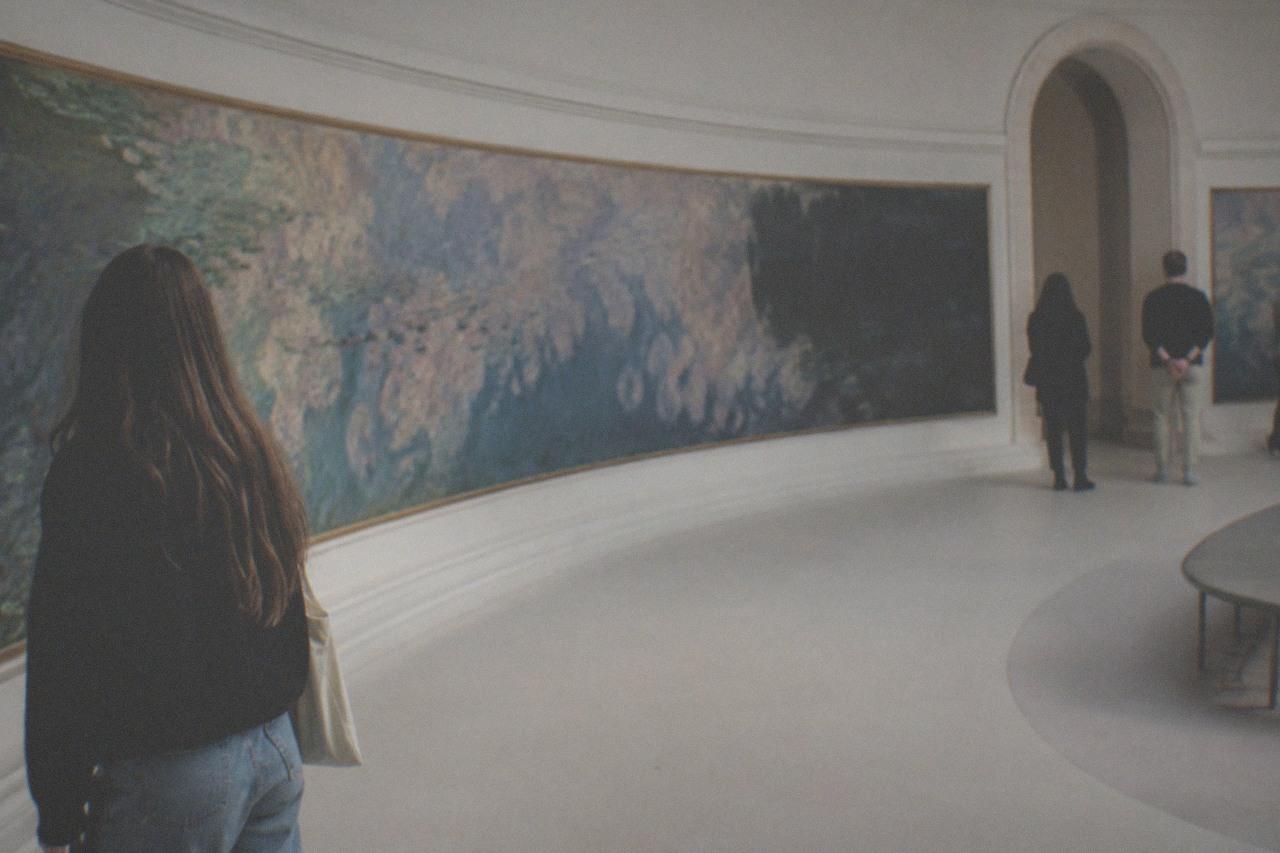
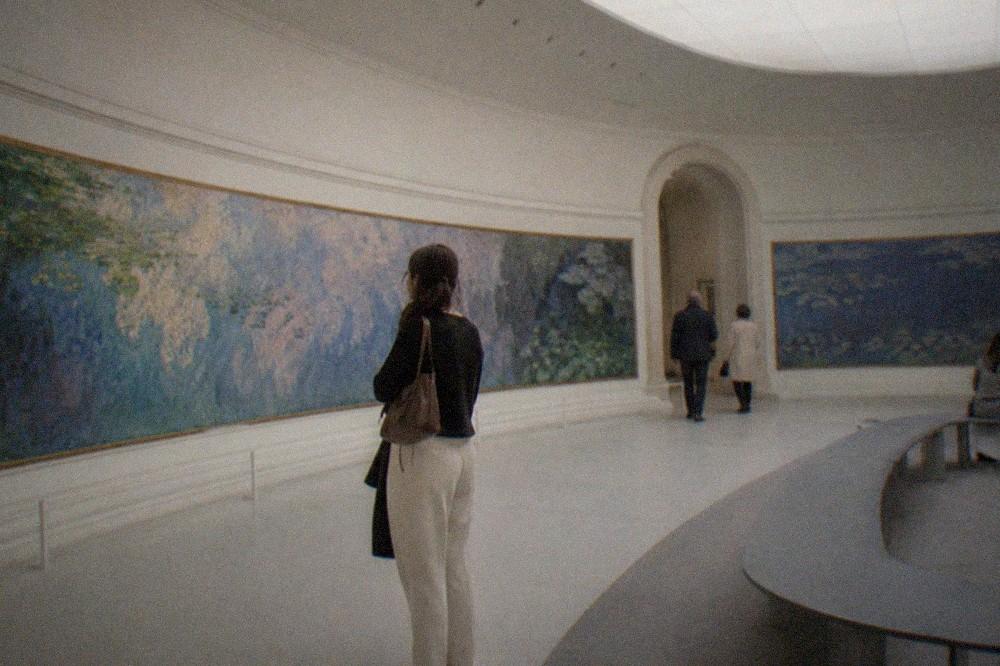
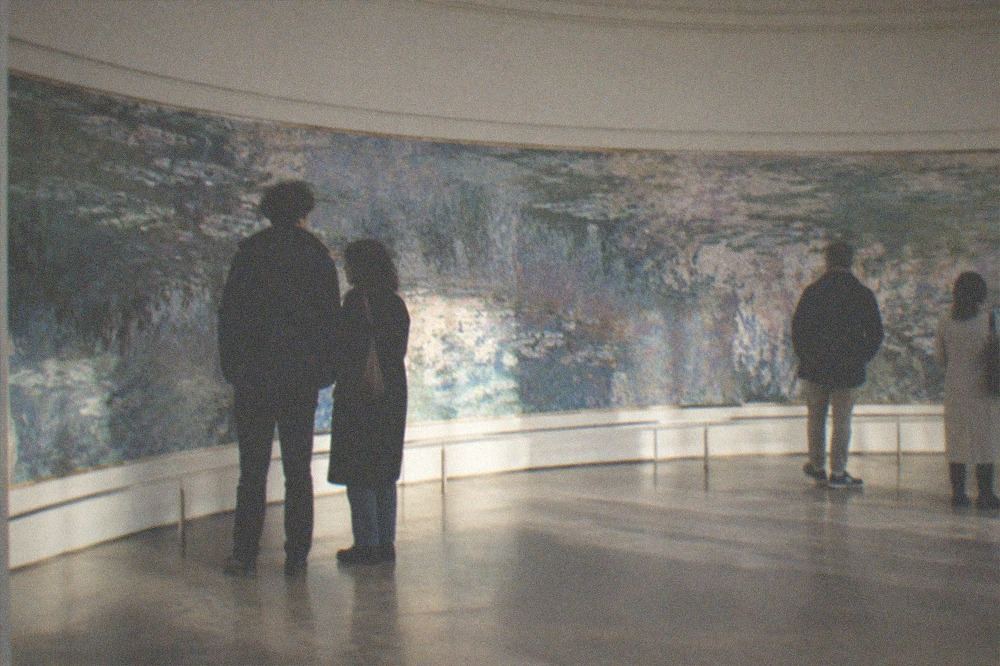
The two oval rooms at ground level are the heart of the visit. Monet gave the state the Nymphéas series as a monument to peace after the First World War, and he was involved in the hanging: the canvases are curved to follow the walls, lit from above through filtered skylights, and arranged so the viewer stands inside the painting rather than in front of it. The effect is deliberate and famous. Visitors regularly report losing track of time in these rooms, which is why the honest answer to "how long do you need" starts with the oval rooms and works outward.
Downstairs, the Walter-Guillaume collection carries the visit once you leave the water lilies. It runs from Renoir and Cézanne through Matisse, Modigliani, Rousseau and Picasso, assembled by the art dealer Paul Guillaume and later shaped into a public collection by his widow Domenica and her second husband Jean Walter. It is a dense, small-scale survey of exactly the decades the Orangerie's upstairs rooms belong to, and it rewards slow looking far more than its floor plan suggests.
What there is not matters too. There is no sculpture court, no decorative-arts wing, no café-sized grand hall, no labyrinth of interlinked wings. The building is a single rectangle in a garden. That is the entire argument for the museum, and also the reason a visit here is measured in hours, not days: the collection is finite, deliberately so, and the museum's designers wanted it that way.
For visitors building a Monet-themed trip around the city, our guide to where to see Monet in Paris maps the Orangerie against the other rooms holding his work, including the Musée Marmottan Monet, which holds its own substantial Nymphéas but sits off the Museum Pass, unlike the Orangerie.
What The Ticket Covers And What It Costs
The standard ticket costs €11 at the door and €12.50 booked online, and it covers the whole museum: both Nymphéas oval rooms and the entire Walter-Guillaume collection downstairs, with no separate add-on ticket inside the building. There is no cheaper partial ticket and no more expensive full ticket. One price, one building, one timed slot.
The online-versus-door inversion is the detail most guides get wrong or skip. At the Orangerie, as at the Musée d'Orsay, the online ticket costs more than the counter ticket: €12.50 against €11 here, €16 against €14 there. The extra euro and a half buys the reservation, and the reservation is what the museum actually rations. On a quiet February afternoon you can walk up, pay €11 and walk in. On an August morning the walk-up queue can outlast the slots, and the online premium looks trivial.
A bookable timed-entry ticket to the Orangerie starts from $15.70 on a booking platform, a from-price that sits above the €11 door cost and bundles the reservation work for you. The museum is rated 4.7 across 7,188 reviews, a score held by very few museums of any size, and reviewers consistently point at the same two things: the oval rooms, and how manageable the visit is compared with the giant institutions nearby.
Here is the honest cost picture in one table, using the museum's own published figures:
| Ticket | Price | What it covers |
|---|---|---|
| At the door | €11 | Whole museum, both floors, timed slot subject to availability |
| Booked online | €12.50 | Same coverage, slot guaranteed in advance |
| First Sunday of the month | Free | Same coverage, but an obligatory timed reservation |
| Bookable platform ticket | from $15.70 | Timed entry sold through a reseller, usually skip-the-line |
One thing the ticket does not buy: the Paris Museum Pass question runs in the opposite direction from what most people expect. The Orangerie is on the pass, but the pass's own site badges it as requiring a separate timed reservation, so a pass holder still has to book a free slot before arriving. The pass never covers temporary exhibitions either, and the Orangerie does run them. The museum's own admission page carries the current conditions, and the official pass site at parismuseumpass.fr lists the reservation requirement venue by venue.
Who Gets In Free At The Musée de l'Orangerie?
Three free routes exist. Under-18s get in free with photo ID, EU and EEA residents under 26 get in free, including holders of a long-stay residence permit or visa, and everyone gets in free on the first Sunday of the month, provided a timed slot is booked, because the free Sunday still carries an obligatory reservation. Free here never means unbooked.
The age and residency rules come from the national gratuity system, and the wording is broader than most visitors assume. The official conditions table for the national monuments states that young people from the EU and EEA under 26 are free, including holders of a long-stay residence permit or visa over four months, with an identity document with a photograph as proof. Residency is what gets checked, not nationality: a non-citizen EEA resident under 26 qualifies, and the Louvre's own admission page spells out the same residency logic for its two-tier pricing. The full index of guides sits on Paris Museums.
The first-Sunday rule is where the Orangerie is at its most Parisian. The museum is free the first Sunday of every month, all year, but the free slot has to be booked, exactly like a paid one. Free entry is not the same as free access: a €0 ticket with no reservation gets you a closed door. Visitors who turn up on the first Sunday assuming the free day overrides the timed system are the ones writing the frustrated one-star reviews.
There is one more quirk worth knowing. The Musée des Arts et Métiers, a science museum in the 3e, is free every Friday evening from 18:00 to 21:00, a rule no other Paris museum shares, but that is a different system entirely. The Orangerie's free routes are the standard three: age, residency, and the first Sunday. Nothing else applies, and there is no student rate beyond the under-26 residency rule, no Paris resident discount stacked on top, and no free evening.
How Long Should You Allow Inside?
Most visitors need one to two hours. The Nymphéas oval rooms deserve 30 to 45 minutes on their own, the Walter-Guillaume collection downstairs adds another 45 minutes to an hour at museum pace, and the building's small footprint means nothing is lost to transit between rooms. A rushed visit can be done in 40 minutes, and an absorbed one rarely exceeds two hours.
The honest answer depends on what you came for. If the answer is "the water lilies and nothing else", the visit is short: the oval rooms are at ground level, immediately inside the entrance, and a visitor can be standing in front of the first panorama within minutes of their timed slot. People who came only for Monet routinely report 30 to 40 minutes inside and consider it complete. The rooms are designed for standing and sitting and looking, and the light changes with the sky, so the time expands if you let it.
If the answer is "the whole museum", add the lower floor. The Walter-Guillaume collection is hung in compact rooms, and at a steady pace it takes 45 minutes to an hour. Add the time to re-enter the oval rooms on the way out, which most visitors do, and the realistic total is 90 minutes to two hours. Reviewers consistently describe the visit as the most relaxed hour-and-a-half in Paris museum-going, precisely because the building caps its own crowd.
Two practical notes stretch the time budget. First, the timed slot is an entry window, not a duration limit: once inside, the museum does not eject you at a fixed hour, though closing time still applies. Second, the Tuileries garden wraps the building on all sides, and the classic Orangerie visit ends with a walk through the garden toward Place de la Concorde, which adds nothing to the museum time but everything to the morning. Plan the slot, then let the visit run to its own length.
Booking a timed slot, whether through the museum's own system or a reseller, is what converts "how long do you need" from a hope into a plan: the slot fixes your entry, and the museum's size fixes the rest.
Which Day Is The Musée de l'Orangerie Shut?
The Orangerie is closed every Tuesday, all year, with no seasonal exception. It is open the rest of the week including Mondays, which is the day its neighbour the Musée d'Orsay shuts, so the two impressionist museums never share a closing day and never share an open day off either. Plan around Tuesday the way you plan around the weather.
The Tuesday closure places the Orangerie in the national-museum camp, the same weekly rhythm as the Louvre, the Musée Guimet and the Château de Fontainebleau. The city museums, and the Musée d'Orsay, close on Mondays instead. The practical consequence for a Paris itinerary is a clean swap: on a Monday, the Orangerie is open and Orsay is not; on a Tuesday, the reverse. A visitor who checks nothing and turns up on the wrong day loses a morning, and this is the single most common Orangerie planning error after the reservation rule.
The mirror-image closures create the city's most useful pairing. The Orangerie and the Musée d'Orsay sit roughly fifteen minutes' walk apart, across the Seine from each other, and a two-day plan that puts one on each day loses nothing to closures. Our comparison guide to the Louvre versus the Musée d'Orsay covers the same logic for the larger pair, and the Orangerie slots into the Orsay day or the day after it more naturally than anywhere else in the city.
One caution about the free first Sunday: it is a free day, not an extra open day. If the first Sunday of the month falls adjacent to your Tuesday, the museum is still shut on the Tuesday, and the free Sunday still requires the booked slot. The closure rule never bends for the free rule.
How Does The Musée de l'Orangerie Compare With The Musée d'Orsay?
The Orangerie is small, single-theme and calm, with one great painting cycle and one compact collection, at €11 at the door. The Musée d'Orsay is vast, encyclopedic across the whole impressionist century, at €16 booked online and €14 at the museum, closed Mondays rather than Tuesdays. If you want Monet's masterwork in silence, choose the Orangerie; if you want the whole movement, choose Orsay.
The comparison is not really a competition, because the two museums do different jobs. The Orangerie delivers one transcendent room and a tight supporting collection in under two hours. The Musée d'Orsay delivers a former railway station holding the world's largest impressionist and post-impressionist holdings, rated 4.7 across 27,881 reviews, and it eats half a day from anyone who lets it. Reviewers consistently describe Orsay as overwhelming in the best and worst senses at once, and the Orangerie as the antidote.
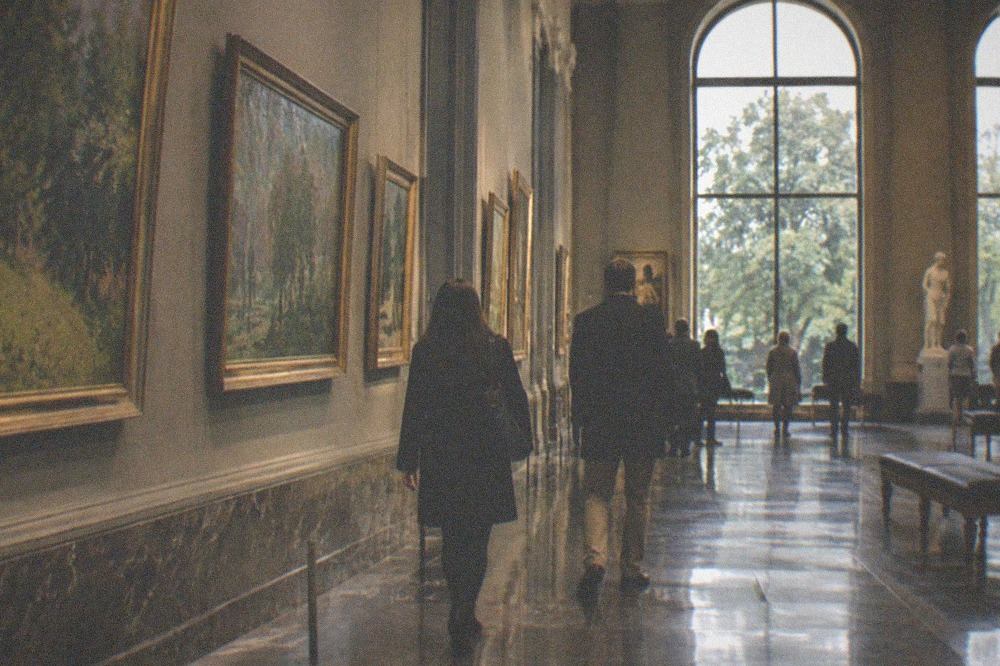
The ticketing systems rhyme but do not match. Both charge more online than at the door: €12.50 against €11 at the Orangerie, €16 against €14 at the Orsay. Both require timed entry. Both are free the first Sunday of the month, and both demand a booked slot for that free entry. But the Orsay is closed Monday and the Orangerie Tuesday, and the Orsay's renovation, running from 10 March 2026 to summer 2028, has modified its access routes while keeping all collections reachable, a detail worth checking before a long-planned visit.
For Monet specifically, the Orangerie holds the Nymphéas cycle and Orsay holds the broader sweep of his earlier work alongside his contemporaries, so the two are sequential rather than competing. The visitor who does the Orangerie first usually arrives at the Orsay already fluent in what Monet was reaching for.
The third option is the biggest commitment: the Fondation Claude Monet at Giverny, Monet's house and gardens 75 km from Paris, open 1 April to 1 November, entry €13 at the gate, closed in winter and not on any pass. It is a full day trip from Paris Saint-Lazare, and it is the only one of the three where the gardens, not the canvases, are the exhibit. A spring or autumn itinerary can chain all three: Giverny for the gardens, the Orangerie for the cycle the gardens produced, and Orsay for everything around it.
Common Questions About Musée de l'Orangerie Tickets
Do You Need Tickets For The Musée de l'Orangerie, And How Long Do You Need Inside?
Yes, a timed ticket is compulsory. It costs €11 at the door and €12.50 online, covers the whole museum, and most visitors need one to two hours, with the Nymphéas oval rooms alone deserving 30 to 45 minutes.
How much does a ticket to the Musée de l'Orangerie cost?
€11 at the door and €12.50 booked online, where the extra €1.50 buys the guaranteed timed slot. A reseller ticket starts from $15.70. The ticket covers both the Nymphéas rooms and the Walter-Guillaume collection.
Is the Musée de l'Orangerie free on the first Sunday?
Yes, every first Sunday of the month all year, but the free slot must be booked in advance because the timed reservation is obligatory even when the ticket costs nothing.
Which day is the Musée de l'Orangerie closed?
Tuesday, every week, all year. The Musée d'Orsay is closed Monday instead, so the two museums never shut on the same day and can be split across consecutive days.
Does the Paris Museum Pass cover the Musée de l'Orangerie?
Yes, but the pass still requires a separate free timed reservation for the Orangerie, one of eight pass sites with that rule, and the pass never covers temporary exhibitions.
Can you buy Musée de l'Orangerie tickets at the door?
Yes, at €11, but entry is by timed slot, so on busy days the walk-up option only works if a slot is still free. Booking online at €12.50 guarantees the entry window.
Is the Musée de l'Orangerie worth it if you have already seen the Musée d'Orsay?
Most visitors say yes: the Nymphéas oval rooms are a single-room experience the Orsay cannot replicate, and the visit takes under two hours, so it fits neatly beside a bigger museum day.
Who gets in free at the Musée de l'Orangerie?
Under-18s with photo ID, EU and EEA residents under 26 including holders of a long-stay permit or visa over four months, and everyone on the first Sunday of the month with a booked slot.