What Is The Musée du quai Branly Known For, And Is It Worth Visiting?
What the Musée du quai Branly shows, what the €14 ticket covers, who gets in free, which day it is shut, and how it compares with the Musée Guimet.
What Is The Musée du quai Branly Known For, And Is It Worth Visiting?
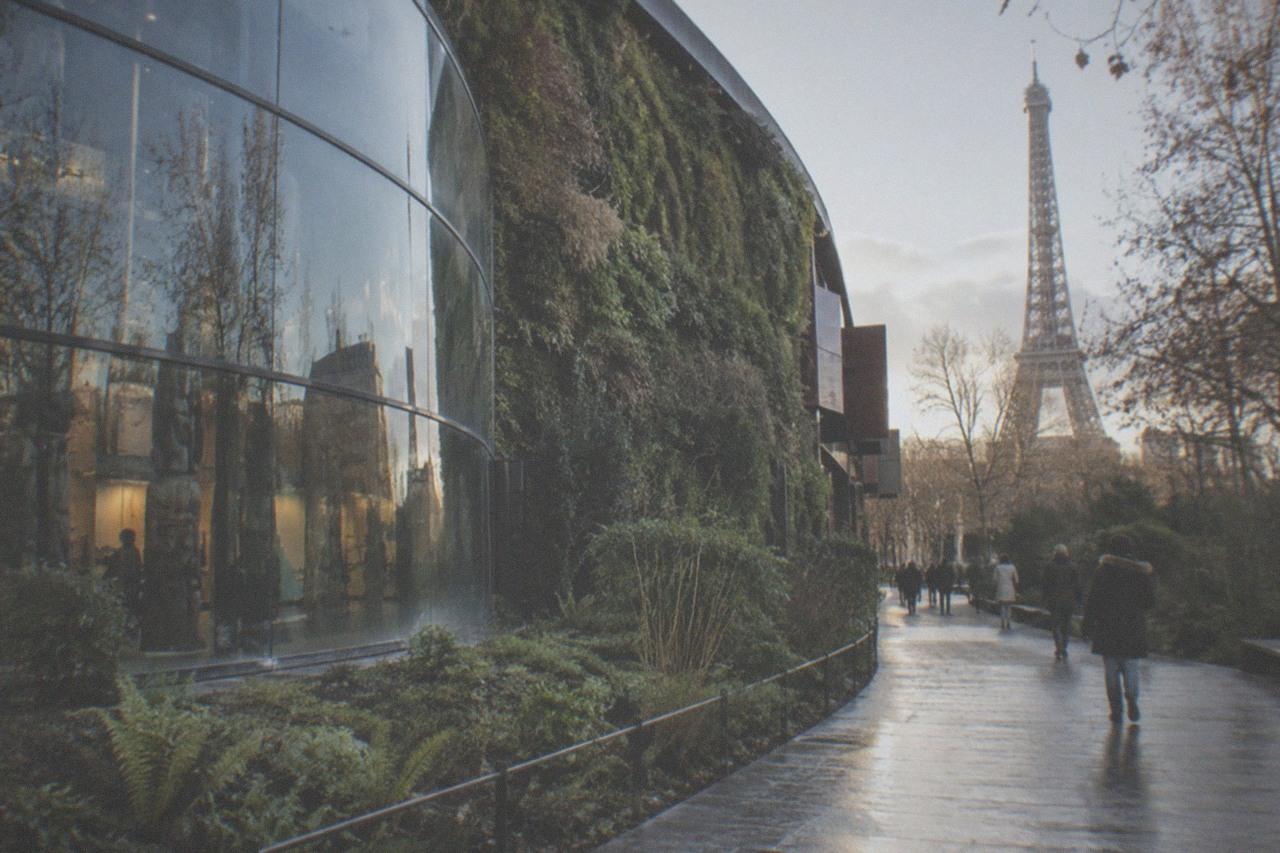
The Musée du quai Branly is Paris's museum of the arts and cultures of Africa, Asia, Oceania and the Americas, housed in a single-purpose building on the Seine opposite the Eiffel Tower. It is worth visiting for anyone with two to three hours to spare: the collections are strong, the crowds are gentler than at the Louvre, and admission is €14. It sits in the 7e arrondissement at 37 quai Branly, a short walk from the Eiffel Tower and the Musée d'Orsay, which makes it an easy add-on rather than a trip in itself.
That geography matters. Most visitors pair it with something else on the Left Bank, and the museum rewards that pairing: it is compact enough that you are not choosing between it and the Louvre, you are filling a morning or an afternoon that the bigger houses would have swallowed whole. Reviewers regularly describe it as one of the more restful major museums in the city, and its 4.6 rating across 3,401 reviews on the live booking listings reflects that.
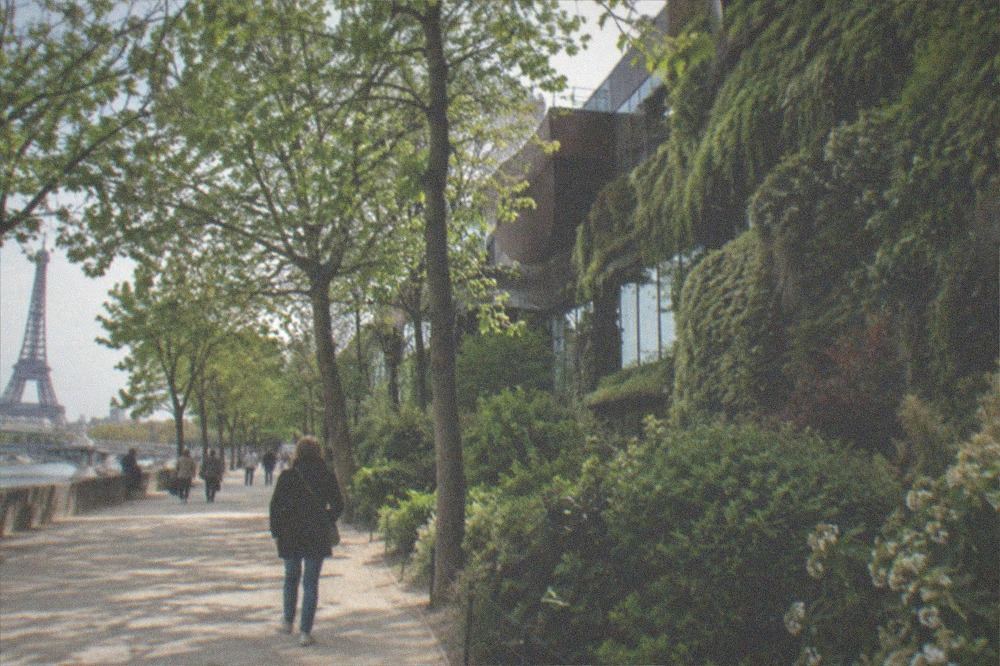
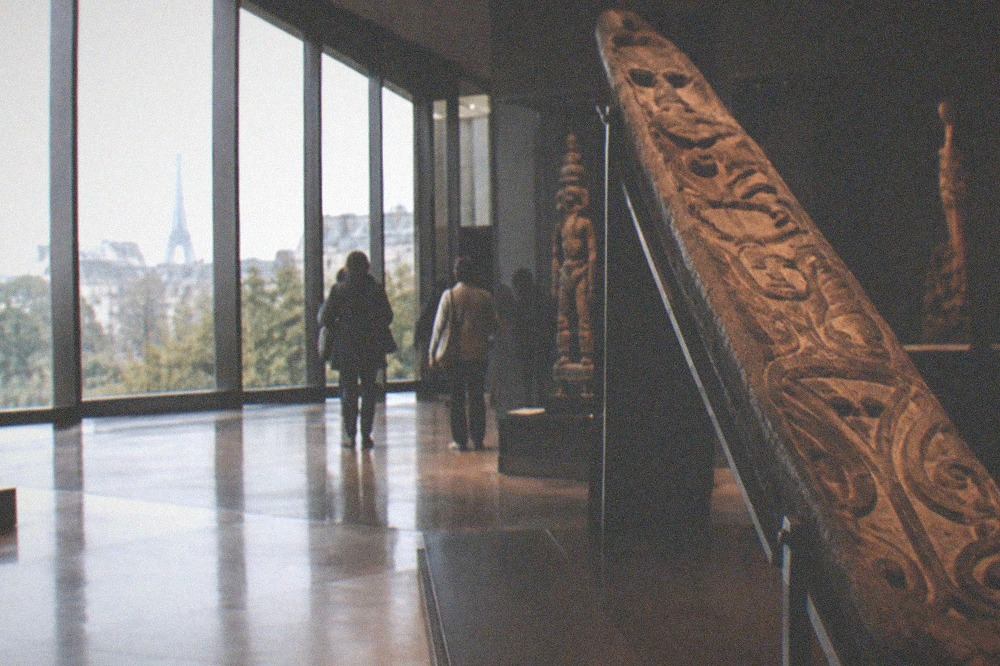
What it is known for, specifically, is a collection scope no other Paris museum claims. The Louvre, Orsay and Cluny all trace European stories. The quai Branly was created to hold everything the French national collections gathered from outside Europe, and the display philosophy follows that: dim galleries, objects mounted as art rather than as ethnographic specimens, and long sightlines that let large pieces dominate their rooms. The building itself is part of the draw, a low, deliberately shadowed structure half-hidden behind a planted wall along the quay.
Is it worth visiting? For most travellers, yes, with one honest caveat. If your Paris list is the Louvre, Orsay, Orangerie and Versailles and nothing more, the quai Branly is a cut, not a swap. If you have a fifth or sixth slot open, or you have already had your fill of European painting, it is one of the best uses of a spare half-day in the city, and the price of entry, €14, is among the gentler ones for a national collection of this scale.
The site's own Paris Museums coverage keeps a full page on the house, and you can book Musée du quai Branly tickets ahead if you already know it is for you. For everyone else still weighing it against the alternatives, the rest of this page goes through what is inside, what the ticket covers, who gets in free, and how the museum compares with its nearest rival.
What Is Actually Inside The Musée du quai Branly?
Inside, the Musée du quai Branly holds the national collections of arts from Africa, Asia, Oceania and the Americas: masks, textiles, sculpture, ceremonial objects and musical instruments, displayed in low-lit galleries arranged by region rather than by chronology. There is no European painting here at all, which is the point: the museum exists to show what the rest of the Louvre-era collections do not.
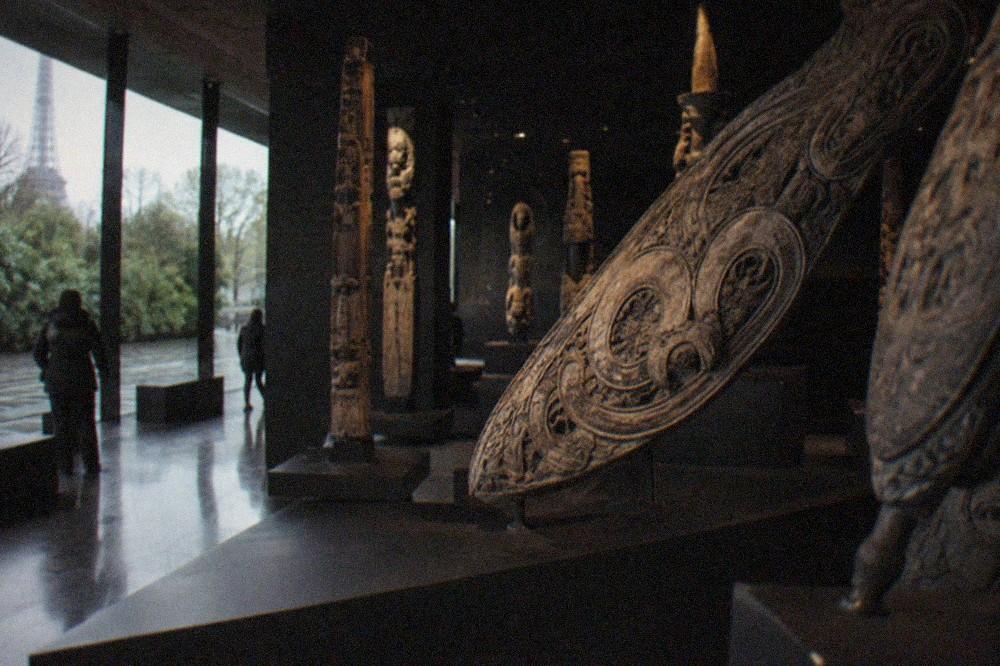
The permanent display is organised by origin, and the four broad zones each get substantial space. The African collections are the largest single presence, with sculpture and masks that most visitors come specifically to see. The Oceania galleries carry the museum's most photographed pieces, large-scale works from Papua New Guinea and the wider Pacific. Asia and the Americas round out the floor, with textiles and ceramics sitting beside ceremonial material.
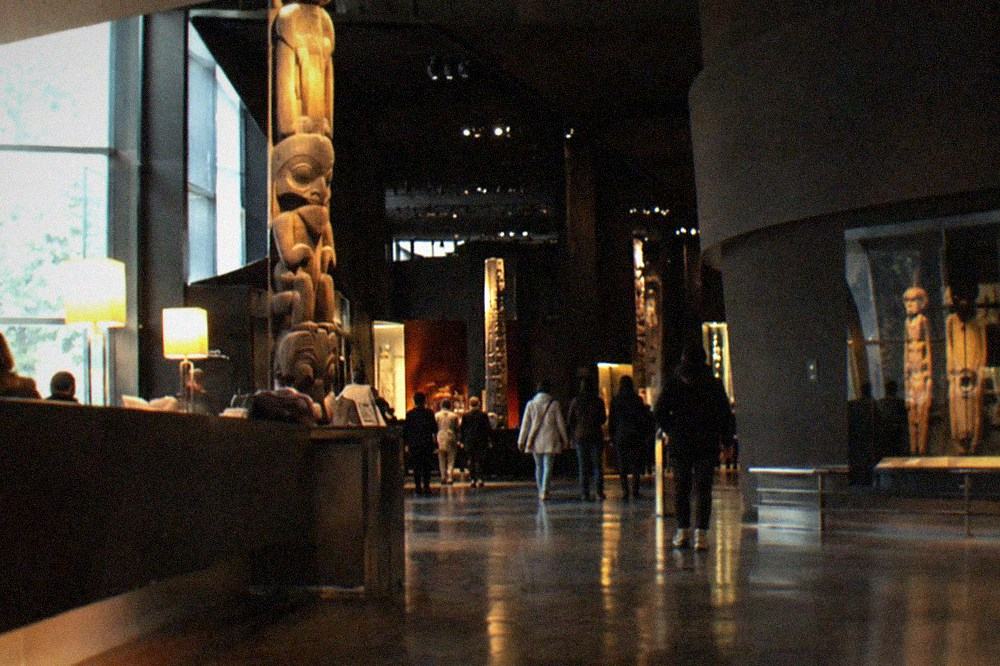
The presentation is deliberately theatrical. Lighting is kept low, partly for conservation and partly by design, and objects sit on long slopes and plinths rather than in glass cases in rows. Reviewers split on this: many praise it as the most atmospheric permanent display in Paris, while a few find the darkness makes reading labels harder than in a conventionally lit museum. Both readings are fair, and if you are someone who likes bright, didactic galleries, the quai Branly will feel unusual on first entry.
One practical note that shapes the visit: temporary exhibitions here are treated as first-rank programming, not as side shows. The museum's free first Sunday of the month covers the permanent and the temporary collections alike, which is genuinely rare, and it means a well-timed visit can catch both at no cost. The trade-off is that first Sundays are the museum's busiest days, precisely because the free rule is unusually generous here.
The museum also runs a garden and a small theatre space, and the building's planted wall along the quay is worth a pause on the way in or out. Most of a visit, though, happens in the main hall and the permanent galleries above it, and the honest summary of what is inside is: a focused, well-mounted collection covering four continents of material that the rest of Paris's museums largely ignore.
If non-European art is the reason you travel to museums at all, this stop belongs on your itinerary alongside the city's other world-cultures houses, and our best museums in Paris guide places it in that wider context.
What Does The Ticket Cover, What Does It Cost, And Who Gets In Free?
A full adult ticket to the Musée du quai Branly costs €14, and timed entry is compulsory. The permanent and temporary collections are both included in that price. Under 18s are free with photo ID, and EU and EEA residents under 26, including holders of a long-stay permit or visa over four months, are free too. The museum is free for everyone on the first Sunday of the month.
Those are the essentials, and the detail below fills them out. The one structural point worth fixing in your head before reading further: like the rest of the national museums, the quai Branly separates who pays (the ticket price) from when nobody pays (the free days), and the two systems do not overlap.
The under-26 rule is broader than most visitors assume. The check is on residency, not nationality: a non-citizen who lives in the European Economic Area with a valid long-stay permit counts, and the proof asked for is a photographic identity document or an official document confirming the age category. Families travelling with teenagers should carry ID for the children as well, since the free under-18 rule applies at national museums generally, not just here.
| Who or when | Price | Notes |
|---|---|---|
| Adult, standard | €14 | Timed entry compulsory; permanent and temporary collections both covered |
| First Sunday of the month | Free | Permanent and temporary alike; the busiest day of the museum's month |
| Under 18 | Free | Photo ID required |
| EU and EEA residents under 26 | Free | Residency is checked, not nationality; long-stay permit or visa over four months counts |
| Paris Museum Pass holders | Included | On the pass's own site list, and no timed reservation is needed here |
That last row deserves its own sentence, because the pass relationship is where the quai Branly is genuinely convenient. The Paris Museum Pass, at €85 for 2 days, €105 for 4 days and €125 for 6 days, includes the quai Branly, and unlike the Louvre, Orsay, Orangerie, Sainte-Chapelle, Conciergerie, Hôtel de la Marine, the Tours de Notre-Dame and Versailles, this museum does not require a separate timed reservation from pass holders. You can walk in on the pass, within its counted hours, at any point in opening time. The pass's own official pass page carries the current site list, and the quai Branly sits on it without a reservation badge.
The museum's own official site is the place to confirm opening hours and exhibition schedules for a specific date, since programming changes more often than prices do here.
How Long Should You Spend, And Which Day Is It Shut?
Plan on two to three hours at the Musée du quai Branly for the permanent collection, and around three if a temporary exhibition is running and you want both. The museum is closed on Mondays, like Orsay, Rodin, Picasso, Cluny, Arts et Métiers, Marmottan, the Catacombes, the Cité des sciences and Versailles, so a Monday visit is the one planning error that costs you the whole stop.
The two-to-three-hour figure reflects the museum's real layout rather than its reputation. The permanent display is a single coherent circuit, and there is no Louvre-style problem of choosing wings or cutting floors. Reviewers who report finishing faster than expected usually skipped the temporary exhibition; reviewers who stayed four hours usually did the permanent collection slowly, then added the show. Both patterns are common, and the honest planning answer sits between them.
Choosing the day matters almost as much as choosing the length. First Sundays are free and therefore the most crowded. Monday is out entirely, which is why our Paris museums open on Monday guide exists: on Mondays the city's free museums and the always-open houses, the Eiffel Tower, the Arc de Triomphe, the Panthéon, Sainte-Chapelle, the Conciergerie, Jacquemart-André, the Atelier des Lumières and the Musée de l'Armée, are what remain. Any other weekday, the quai Branly is at its calmest in the first hour after opening.
| Visit style | Time to allow | Best paired with |
|---|---|---|
| Permanent collection only, at pace | Around 2 hours | A morning or afternoon left free on a Left Bank day |
| Permanent collection plus a temporary exhibition | 3 hours or more | Nothing else major the same day |
| First-Sunday free visit | Add 30 to 45 minutes for crowds | Arrive at opening; the free day fills by midday |
Timed entry being compulsory cuts both ways here. It protects you from the long general queue the bigger museums suffer, but it also means an unplanned afternoon stroll to the quay can end at the door if the day's slots are gone. In high season the practical advice is simple: book the slot before you plan the rest of the day around it, the same advice that applies to Musée d'Orsay tickets and every other timed national museum in the city.
One more scheduling note that has nothing to do with the clock. The quai Branly's location, opposite the Eiffel Tower and a flat walk from the Orsay, means the museum shares its neighbourhood with the two most visited ticketed sites in western Paris. If you are combining all three in one day, the quai Branly is the natural middle stop: the smallest of the three, the least queue-affected, and the one where arriving without a plan hurts least.
How Does The Musée du quai Branly Compare With The Nearest Alternative?
The nearest real alternative is the Musée Guimet, the national museum of Asian art at place d'Iéna, which costs €15 with a €12 reduced rate and no age-based reduction at all. For world cultures more broadly, the free Musée Cernuschi, the city's Asian art museum, costs nothing all year. The quai Branly wins on scope: it is the only one of the three covering Africa, Oceania and the Americas as well as Asia.
The comparison is worth making carefully, because the three houses sound interchangeable on a list and are not in person.
The Guimet is the specialist's choice. Its collections are deeper in Asian art than the quai Branly's Asian galleries, it is free the first Sunday of the month, permanent and temporary alike, and it closes Tuesday rather than the quai Branly's Monday. Its pricing is unusual: €15, or €12 reduced, with no age-based reduction at all, so a family with teenagers pays full price at the Guimet while paying nothing at the quai Branly. Our Musée Guimet ticket guide goes through that in detail.
The Cernuschi is the budget choice. It is one of the eleven City of Paris museums whose permanent collections are free to everyone all year with no ticket, though its temporary exhibitions charge €10, and it is closed Monday with the rest of the city museums. For a visitor whose interest is specifically Asian art and who is watching spend, free permanent galleries in a handsome townhouse are hard to argue against.
The quai Branly's claim, against both, is breadth and atmosphere. Neither the Guimet nor the Cernuschi covers African, Oceanian or American material in any depth, and neither displays its collection in the quai Branly's deliberately theatrical style. If what drew you to this page was the Oceania galleries or the African sculpture, there is no alternative in Paris: the quai Branly is the only house that holds that material at national scale.
| Museum | Adult price | Free rule | Closed | Scope |
|---|---|---|---|---|
| Musée du quai Branly | €14 | First Sunday of the month, permanent and temporary | Monday | Africa, Asia, Oceania, the Americas |
| Musée Guimet | €15, €12 reduced | First Sunday of the month, permanent and temporary | Tuesday | Asian art only |
| Musée Cernuschi | Free | Free all year; temporary exhibitions €10 | Monday | Asian art, city collection |
For most itineraries the two national houses complement rather than compete. A visitor with three hours for Asian art goes to the Guimet; a visitor with three hours for the widest possible non-European sweep goes to the quai Branly; a visitor with no budget and a Monday-adjacent free morning goes to the Cernuschi. The trap the comparison table half hides is that they do not share a closed day: the quai Branly and the Cernuschi shut Monday, the Guimet shuts Tuesday, so no single day covers all three.
One final honest word on worth. The quai Branly's rating, 4.6 across 3,401 reviews, sits level with the Guimet's reputation among people who visit both, and ahead of the Cité des sciences, at 3.8. What separates it in visitor feedback is not the objects, which almost nobody criticises, but the presentation: the dark galleries polarise a little, while the crowd levels and the riverside setting draw consistent praise. If you want the objects without the theatre, the Guimet is your house. If the theatre is part of what you are buying a ticket for, the quai Branly delivers it more completely than anywhere else in the city.
Common Questions About The Musée du quai Branly
What Is The Musée du Quai Branly Known For, And Is It Worth Visiting?
It is Paris's museum of the arts and cultures of Africa, Asia, Oceania and the Americas, at 37 quai Branly in the 7e arrondissement. It is worth visiting if you have two to three hours and any interest in non-European art: admission is €14, the crowds are gentler than at the Louvre, and no other museum in the city covers the same scope.
How Much Does The Musée du Quai Branly Cost?
€14 for an adult, covering the permanent and temporary collections, with timed entry compulsory. Under 18s are free with photo ID, and EU and EEA residents under 26, including holders of a long-stay permit or visa over four months, are free too. A Paris Museum Pass also covers it, with no separate reservation needed.
Is The Musée du Quai Branly Free On The First Sunday?
Yes, every first Sunday of the month, and unusually the free entry covers the temporary exhibitions as well as the permanent collection. Expect it to be the museum's busiest day of the month, and arrive close to opening time if you go on that day.
Which Day Is The Musée du Quai Branly Closed?
Monday. It shares that closing day with Orsay, Rodin, Picasso, Cluny, Arts et Métiers, Marmottan, the Catacombes, the Cité des sciences and Versailles, so do not plan it as part of a Monday museum day.
Do You Need To Book Musée du Quai Branly Tickets In Advance?
Timed entry is compulsory, so you need a slot either way. Booking ahead guarantees the time you want and is the sensible move in high season or on first Sundays, when the free day fills by midday. Pass holders can enter without a separate reservation.
How Long Should You Spend At The Musée du Quai Branly?
Two to three hours for the permanent collection, and around three if a temporary exhibition is running and you want both. The permanent display is one coherent circuit, so the visit length depends mainly on pace, not on route-finding.
How Does The Musée du Quai Branly Compare With The Musée Guimet?
The Guimet, at €15 with a €12 reduced rate and no age-based reduction, is the deeper collection if your interest is Asian art specifically. The quai Branly, at €14 with free entry for under-18s and EEA residents under 26, covers Africa, Oceania and the Americas too, which the Guimet does not. They close on different days: the quai Branly on Monday, the Guimet on Tuesday.