How Much Is Entry To The Musée Guimet, And Can You Visit Without Booking?
Musée Guimet entry costs €15, or €12 reduced, with no age-based discount. Here is the full price picture, the free first Sunday, the Tuesday closure, and whether you can just turn up.
How Much Is Entry To The Musée Guimet, And Can You Visit Without Booking?
Entry to the Musée Guimet costs €15 for an adult, with a €12 reduced rate as the only discount on offer. No, you do not need a timed booking for a normal paid visit: the museum has no compulsory slot system, so you can turn up and buy at the door. It is closed on Tuesdays, open the rest of the week, and free the first Sunday of every month.
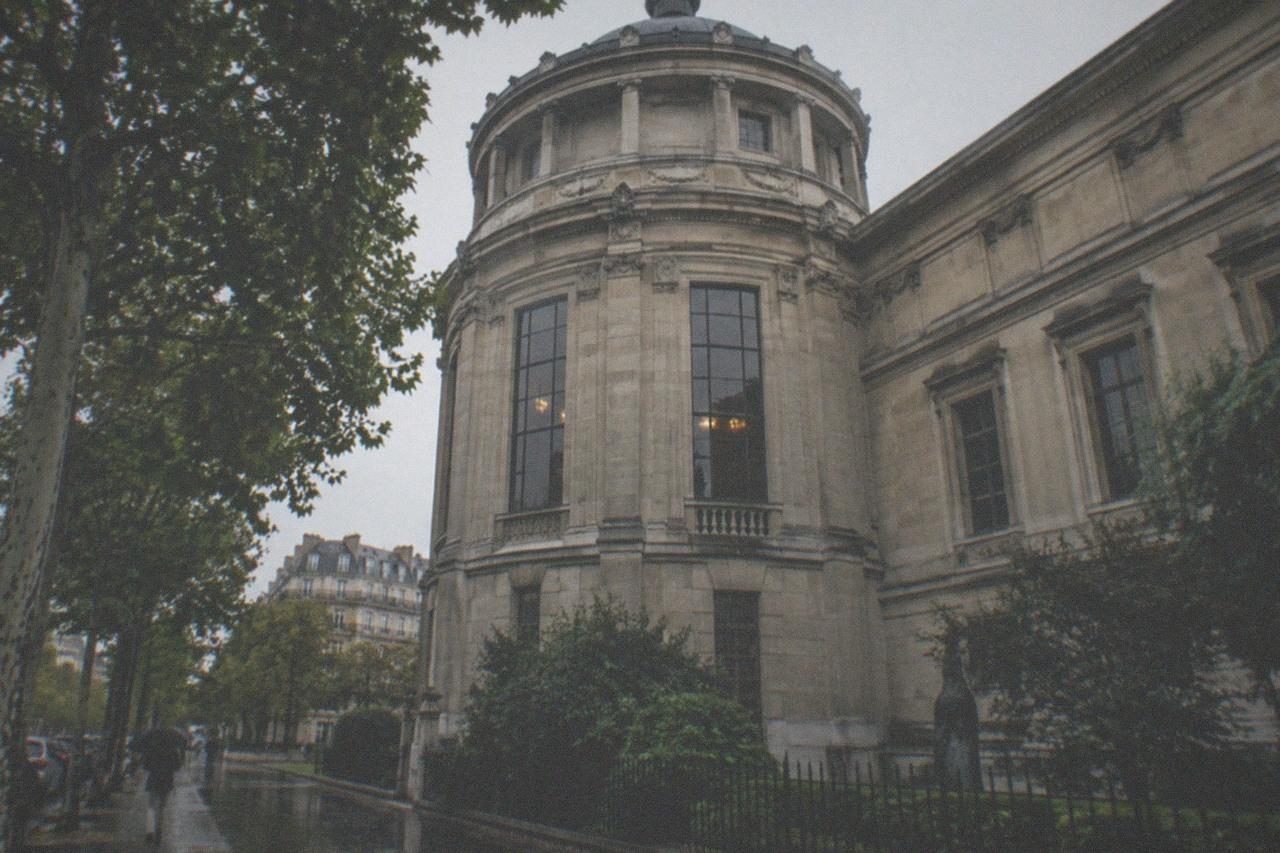
That €15 is the museum's own door price, printed on its tariff page, and the €12 sits beside it as the single reduced rate. What makes the Guimet unusual is what is missing from that tariff: there is no age-based reduction at all. Most Paris museums wave under-18s through on age alone, and several extend that to young European residents. The Guimet does not. A twelve-year-old and a seventy-year-old pay the same €15 unless one of them qualifies for the €12 rate on other grounds. Families budgeting a Paris trip tend to notice this, and it is worth knowing before you arrive at 6 place d'Iéna with three children in tow.
The booking half of the question has a simple answer for the Guimet specifically. Unlike the Musée d'Orsay or the Musée de l'Orangerie, both of which run compulsory timed entry, the Guimet's own conditions list no obligatory reservation for an ordinary paid visit. You can buy at the museum on the day. The one exception is the free first Sunday, which falls on the museum's busiest day of the month, and arriving early is the practical move there rather than a formal requirement. This site does not sell a Guimet ticket at all, and says so plainly: for admission, the museum's own tariff page at guimet.fr is the source. Our full museum page, at Guimet facts and planning, collects everything we have verified in one place.
| What | Price | Notes |
|---|---|---|
| Adult entry | €15 | The museum's own door price |
| Reduced rate | €12 | The only reduction; no age-based discount exists |
| First Sunday of the month | Free | Permanent and temporary collections both, at the place d'Iéna site |
| Under 18s | €15 or €12 | Not free here, unlike most national museums |
The pricing shape matters more than the headline number. Fifteen euro sits mid-table for Paris: cheaper than the Louvre at €32 for non-EEA visitors, cheaper than the Catacombes at €31, and cheaper than the Fondation Louis Vuitton's €18 when that building reopens. It is level with the Musée Picasso Paris at €16, and a euro or two more than the Musée Rodin and the Musée du quai Branly, each at €14. What you get for it is the single largest holding of Asian art in France, gathered by one industrialist in the late nineteenth century and kept whole in the 16th arrondissement ever since.
If you are planning a wider museum itinerary rather than a single visit, three bookable alternatives cover different ground: the Musée du quai Branly for world cultures across the river, the Arc de Triomphe for the city view most visitors rate above every rooftop bar, and the Musée d'Orsay for the impressionists.
What Will You See Inside The Musée Guimet?
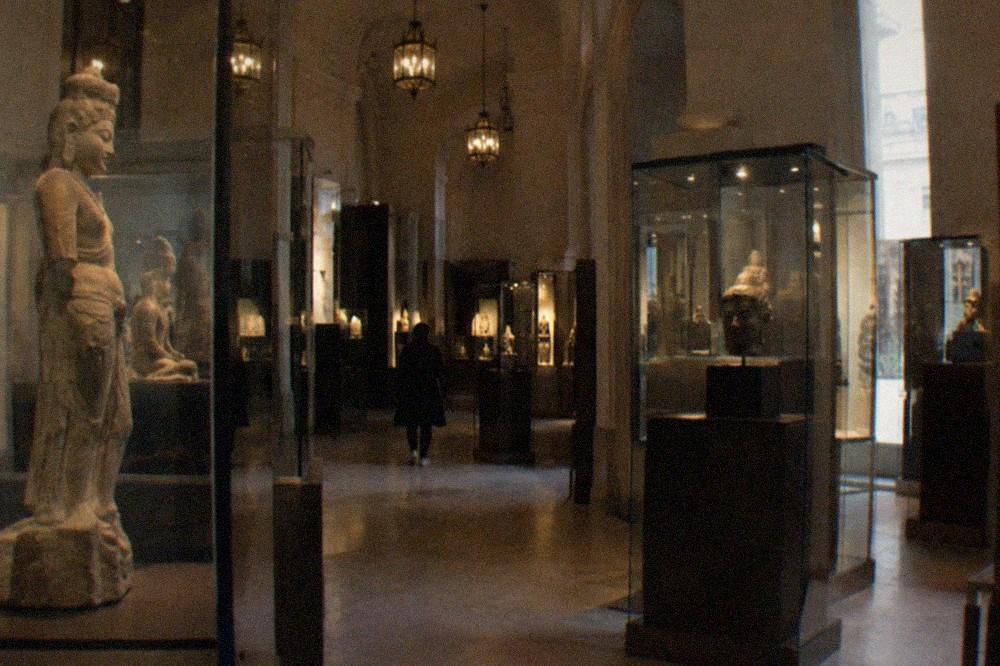
The Guimet holds France's national collection of Asian art: Khmer sculpture, Chinese bronzes and ceramics, Japanese screens, and a run of Himalayan and Indian material that fills several floors. Most visitors come for the Khmer rooms and the Japanese pavilion, then find the Chinese galleries hold the quietest masterpieces. The Ennery annex nearby is closed for renovation until 2028, so everything visitable sits at place d'Iéna.
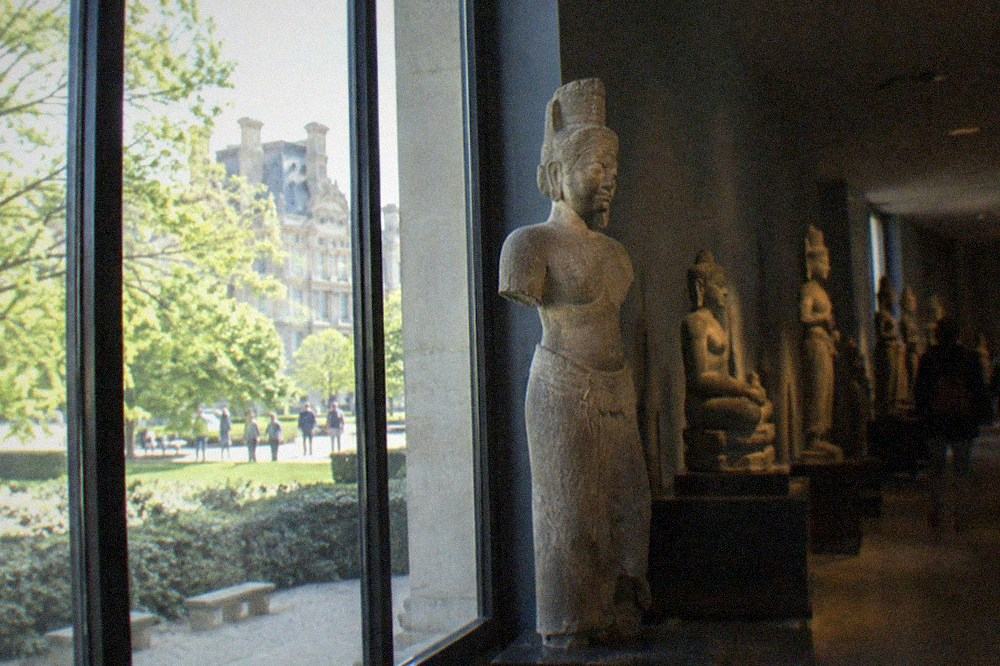
Émile Guimet, a Lyon industrialist who made his money in chemicals, built the collection through buying trips across Asia in the late nineteenth century, then gave it to the state with the building built to house it. The museum still occupies the purpose-built palace on place d'Iéna, a short walk from the Trocadéro and the river. The ground floor carries the Southeast Asian and Khmer material, which is where the museum's reputation was made: the Cambodian sculpture gallery is the single most photographed room. Above it, the Chinese and Japanese collections run room after room of bronzes, lacquer and painting, and the top floors hold the Himalayan and Indian Buddhist material that most visitors reach last and remember longest.
The visit is quieter than the Louvre or the Orsay on any comparable day. Reviewers consistently describe the Guimet as the museum where you can stand in front of a major object for ten minutes without a crowd, and the building's layout, a series of descending and ascending galleries around a central stair, makes a natural loop rather than a maze. There is no Mona Lisa moment here, no single painting everyone queues for, which is exactly why the rooms stay calm. If you have already done the big three and want one more serious collection, this is the usual recommendation, and the price of €15 reflects that: high enough to feel like a real museum, low enough that a two-hour visit does not feel like a gamble.
It is also a museum that rewards slow looking rather than checklist sightseeing. The labels are thorough, the lighting is designed for stone and lacquer rather than crowds, and several galleries are deliberately kept dim to protect fragile pigments on the Japanese screens. Visitors who come expecting a quick highlight reel tend to slow down within the first half hour, and the room guards are, by common report in guest reviews, among the most helpful in the city for pointing out objects you would otherwise walk past. Bring reading glasses if you use them; the small bronzes in the Chinese galleries repay a long look.
The natural pairing is the Musée du quai Branly, which sits directly across the Seine, a fifteen-minute walk along the river. Where the Guimet is Asia in a nineteenth-century palace, the quai Branly is Africa, Oceania and the Americas in a twenty-first-century building designed around a single collection. The two between them cover most of the world's art outside Europe, on opposite banks, at a combined door price of €14 plus €15. Our museum page for that one, Musée du quai Branly tickets and facts, carries the verified numbers, and the longer read at what the Musée du quai Branly is known for goes deeper on the collection.
When Is The Musée Guimet Free, And Which Day Is It Shut?
The Guimet is free the first Sunday of every month, all year, and unusually the free entry covers the temporary exhibitions as well as the permanent collection. It is shut every Tuesday and open the rest of the week from 10:00 to 18:00. Monday, the day most Paris museums close, is a normal open day here.
That free-Sunday rule deserves a closer look, because it is rarer than it sounds. The first-Sunday landscape in Paris is fragmented: the Musée Rodin is free only from October to March, the big national monuments run free first Sundays from January to March and November to December, and the Louvre, the one everybody assumes, has no first Sunday at all, freeing the first Friday evening instead. The Guimet is in the small all-year camp, alongside the Musée d'Orsay and the Musée de l'Orangerie, and it goes one better than either: the Orsay and Orangerie free Sundays cover the permanent collections, while the Guimet's free Sunday includes whatever temporary show is running. For a museum that charges separately for nothing, that is the whole building, free, twelve times a year.
The closed day is Tuesday, which places the Guimet firmly in the national-museum camp rather than the city camp. This matters for planning more than it first appears. Paris splits its closures into two blocs: the national museums, including the Louvre, the Orangerie and the Musée Guimet, shut Tuesday; the city museums plus the Orsay, the Rodin, the Picasso, the Cluny and the Catacombes shut Monday. A visitor who assumes every museum closes Monday will turn up at the Louvre on a Tuesday, find it shut, and walk straight into the Guimet's closed doors the same week. The honest rule of thumb: on Monday the national museums are open and the city ones are shut, on Tuesday the reverse.
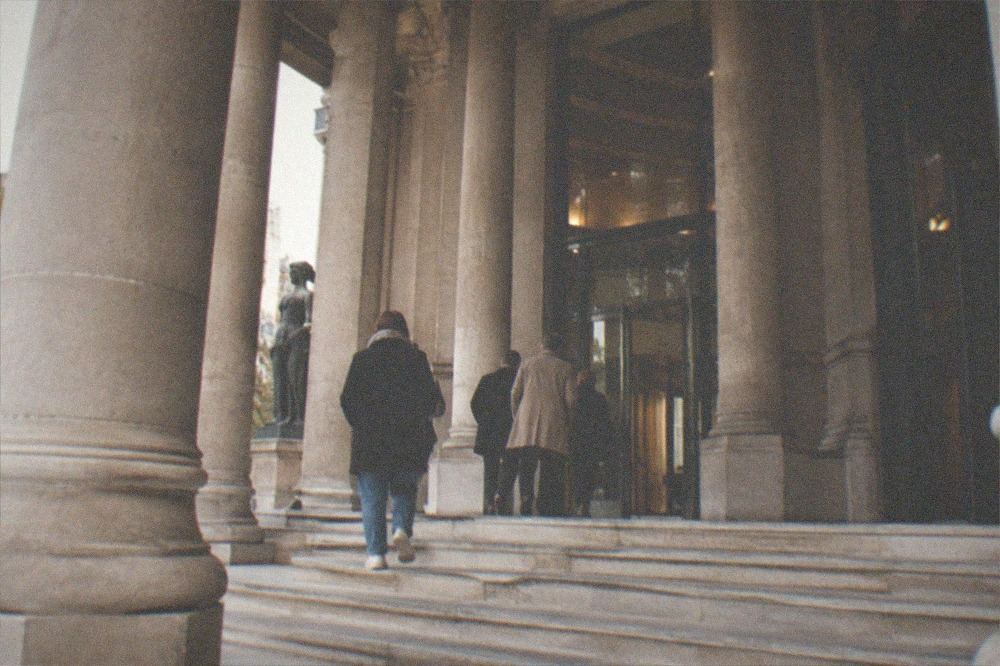
If a free Sunday visit is the plan, go early. The free day is the museum's busiest, and the queue at opening is the price of the €15 you are saving. There is no separate booking mechanism for the free Sunday beyond turning up, which keeps it simple but also means no way to secure a slot in advance. A paid visit on any other open day has no such pressure: you can arrive at 14:00 on a Wednesday and walk in, which is precisely the without-booking flexibility the question asks about.
Planning around the two closure camps across a whole week? Our guide to Paris museums open on Monday maps the full open-day picture, and it is the page that saves most people a wasted metro ride.
Wondering whether the quai Branly pairing is worth locking in before you leave?
How Long Should You Spend At The Musée Guimet?
Two to three hours covers the Guimet comfortably for most visitors: the Khmer gallery, the Japanese rooms and the Chinese bronzes in one loop, plus time in front of whatever temporary show is running. Serious students of any single tradition stay a half day. The museum is compact enough that it pairs naturally with the quai Branly or the Trocadéro in one afternoon.
The building's size is its quiet advantage. It is a palace, but not a vast one, and the loop layout means no backtracking through finished galleries to reach an exit. A first visit that moves at museum pace, reading room labels and stopping at the objects that stop you, runs about two hours. Add a temporary exhibition and the number drifts toward three. There is a café and a bookshop strong on Asian art titles, and the benches in the Cambodian gallery are where most people end up sitting longest.
The pairing question is where the 16th arrondissement earns its half-day. The Guimet is ten minutes on foot from the Trocadéro esplanade, the classic postcard view of the Eiffel Tower, and the quai Branly is a river walk away. A realistic plan is the Guimet in the morning, lunch near the Trocadéro, and the quai Branly after, which at door prices of €15 plus €14 is a full two-museum day without any booking obligation on either side. In the other direction, deeper into the 16th, sits the Musée Marmottan Monet, the impressionist counterweight to the Guimet's Asia, at €14 and closed Mondays. Two world-culture museums and one monet room in one arrondissement is a strong day.
What Should You Know Before You Turn Up?
Know three things. The Guimet has no age-based reduction at all, so the €12 rate, not a child's age, is the only discount. The first Sunday is free but busy, with no slot system to beat the queue. And the annex museum, the Musée d'Ennery, is closed for renovation until 2028, so nothing beyond place d'Iéna is visitable.
The children point deserves repeating, because it surprises people who have read that under-18s go free in Paris. That rule is real, but it is the national-monument and national-museum gratuity table, and at the Guimet the tariff page simply does not carry an age line. The €12 rate is the only reduced price, and the museum's own conditions make no exception for age. Budget €15 per person for the whole family and treat any reduction as a pleasant surprise rather than the plan.
If you are weighing the Guimet against a multi-museum pass, the arithmetic is unforgiving. The Paris Museum Pass costs €85 for two days and €105 for four, counted in hours from first scan, per the pass's own site at parismuseumpass.fr. A pass also never covers temporary exhibitions anywhere, and the Guimet's temporary shows are among the reasons to go. Against a two-museum day at door prices of €15 plus €14, a pass only pays if you are packing in the big ticketed sites, the Louvre and Versailles and the Arc, in a tight window. One further honest note from our side: this site sells no Guimet ticket, so nothing on this page routes you to one. The facts page, Musée Guimet tickets and entry, is the planning resource; the museum's own tariff page is where admission is bought.
How Does The Guimet Compare With Other Ticketed Paris Museums?
On price the Guimet sits mid-table: above the €14 cluster of the Rodin, the Cluny and the quai Branly, below the Louvre's €32 and the Catacombes' €31. On free days it beats nearly all of them, because its first Sunday covers everything. On convenience it is average: no compulsory booking, but a Tuesday closure that catches the Louvre crowd off guard.
The clearest way to see the Guimet's position is next to the museums a visitor is most likely to be choosing between. The table below uses each museum's own door price, verified individually, and each museum's real closure day, because the published closure lists that circulate online get the Guimet's day wrong constantly.
| Museum | Door price | Closed | Free rule |
|---|---|---|---|
| Musée Guimet | €15 (€12 reduced) | Tuesday | First Sunday monthly, all year, temporary shows included |
| Musée du quai Branly | €14 | Monday | First Sunday monthly, permanent and temporary |
| Musée d'Orsay | €16 booked online, €14 at the museum | Monday | First Sunday monthly, slot must be booked |
| Musée Rodin | €14 | Monday | First Sunday, October to March only |
| Louvre | €22 EEA / €32 others | Tuesday | No Sunday; first Friday evening after 18:00, July and August excepted |
Read as a row, the Guimet is the balanced choice: a real collection at a fair price, an easy walk-up policy, and the one free Sunday that leaves nothing out. Its weaknesses are the Tuesday closure and the absence of any age discount, both of which cost the visitor money or a wasted trip if unplanned. Its strength is everything else. For the visitor doing two museums rather than five, the Guimet plus the quai Branly, at combined door prices of €15 plus €14 with no booking obligations on either side, is the least complicated serious day in the city.
Whatever the final itinerary holds, Paris Museums carries a verified page for every museum in this table, with the door price, the closure day and the free rule read from each museum's own site rather than recycled from the guides that got the Guimet's Tuesday wrong.
Common Questions About The Musée Guimet
How Much Is Entry To The Musée Guimet, And Can You Visit Without Booking?
Entry costs €15, or €12 at the only reduced rate. You can visit without booking: the Guimet has no compulsory timed slot for a paid visit, so you can buy at the door on any open day. It is closed Tuesdays and free the first Sunday of the month.
Is The Musée Guimet Free On The First Sunday?
Yes, and unusually the free entry covers both the permanent collection and the temporary exhibitions at the place d'Iéna site. There is no booking mechanism for the free day, so arrive near the 10:00 opening to beat the queue.
What Day Is The Musée Guimet Closed?
Tuesday, every week. The Guimet sits in the national-museum camp that closes Tuesdays, alongside the Louvre and the Orangerie, while Monday remains a normal open day. City museums do the reverse, closing Mondays.
Do Children Get In Free At The Musée Guimet?
No. The Guimet has no age-based reduction at all, which sets it apart from most national museums in Paris. The €12 reduced rate is the only discount on the tariff page, and it is not triggered by age.
How Long Does A Visit To The Musée Guimet Take?
Two to three hours for a full loop of the Khmer, Chinese, Japanese and Himalayan galleries plus the temporary show. The building is compact and laid out as a single circuit, so nothing needs backtracking.
Where Is The Musée Guimet?
At 6 place d'Iéna in the 16th arrondissement, a short walk from the Trocadéro and the river, with the Musée du quai Branly directly across the Seine.
Is The Musée d'Ennery Annex Open?
No. The Ennery annex is closed for renovation until 2028. Everything visitable in the Guimet collections is at the place d'Iéna building.