What Are The Big Three At The Louvre?
The Mona Lisa, the Venus de Milo and the Winged Victory of Samothrace explained: where each one sits, what a ticket costs, who gets in free and how to route all three in one visit.
What Are The Big Three At The Louvre?
The Big Three at the Louvre are the Mona Lisa by Leonardo da Vinci, the Venus de Milo, and the Winged Victory of Samothrace. All three live in the Denon wing, the same wing that holds the Italian paintings, so one loop of that wing takes you past every one of them. They are the three works the crowd routes toward first, and the three most visitors remember.
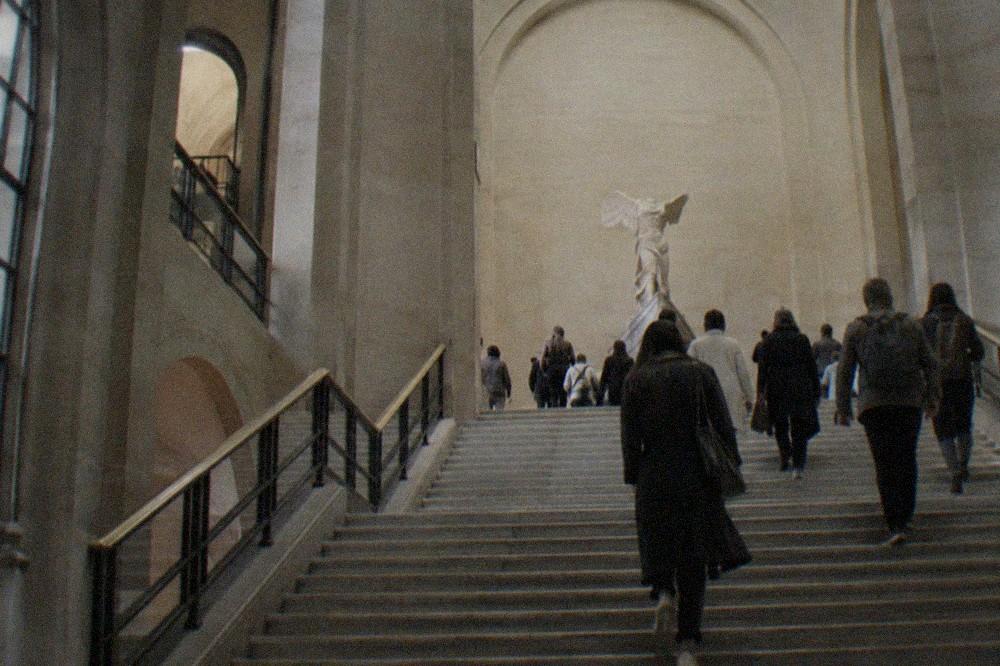
Ask a hundred people leaving the palace what they saw and the same three names come back. The Mona Lisa, small, dark and behind its protective glass in the Salle des États. The Venus de Milo, armless and serene, standing alone at the end of her ground-floor gallery. And the Winged Victory of Samothrace, the Hellenistic Nike perched on a ship's prow at the head of the Daru staircase, which is the single most theatrical arrival in any museum in Paris.
The three works could hardly be more different from one another. The Mona Lisa is a Renaissance oil portrait, painted by the most famous artist in the Western canon, and it draws a crowd that behaves like a crowd at a stadium. The Venus de Milo is ancient Greek marble, a representation of Aphrodite whose missing arms have fed two centuries of guessing. The Winged Victory is older still, carved to celebrate a naval battle, and much of its power comes from where the museum chose to put her: you climb toward her, she does not come to you.
That placement is deliberate. The Louvre is a former royal palace, and its geography, long corridors, grand staircases, dead ends, is not a neutral container. The Denon wing was laid out in the nineteenth century to build drama toward exactly these destinations, and the plan still works a hundred and fifty years later. Most first-time visitors follow the current without ever noticing it was designed.
Here is where each of the three actually sits, so you can picture the loop before you arrive.
| Work | What it is | Where to find it |
|---|---|---|
| Mona Lisa | Oil portrait by Leonardo da Vinci, behind protective glass | Salle des États, Denon wing, first floor |
| Venus de Milo | Ancient Greek marble statue of Aphrodite | Denon wing, ground floor, near the Salle des Caryatides |
| Winged Victory of Samothrace | Hellenistic marble figure of Nike on a ship's prow | Top of the Daru staircase, Denon wing |
The practical point buried in that table: you never need to cross the whole palace to see all three. The Victory greets you at the top of the Daru staircase, the Mona Lisa waits one floor up in the Salle des États, and the Venus de Milo sits below on the ground floor. Visitors who plan badly cross the Cour Carrée three times chasing wings that were next to each other all along.
If you are still choosing how to buy your way in, these three options are the ones our research keeps returning to for this exact visit.
What Does A Louvre Ticket Actually Cover?
A standard adult ticket covers the entire permanent collection, every department, every wing, and all three of the Big Three. There is no separate Mona Lisa ticket and no premium gallery. The catch is the slot: entry is by a compulsory timed reservation, and the ticket is valid for one entry, so the planning question is not what you can see but when you can get in.
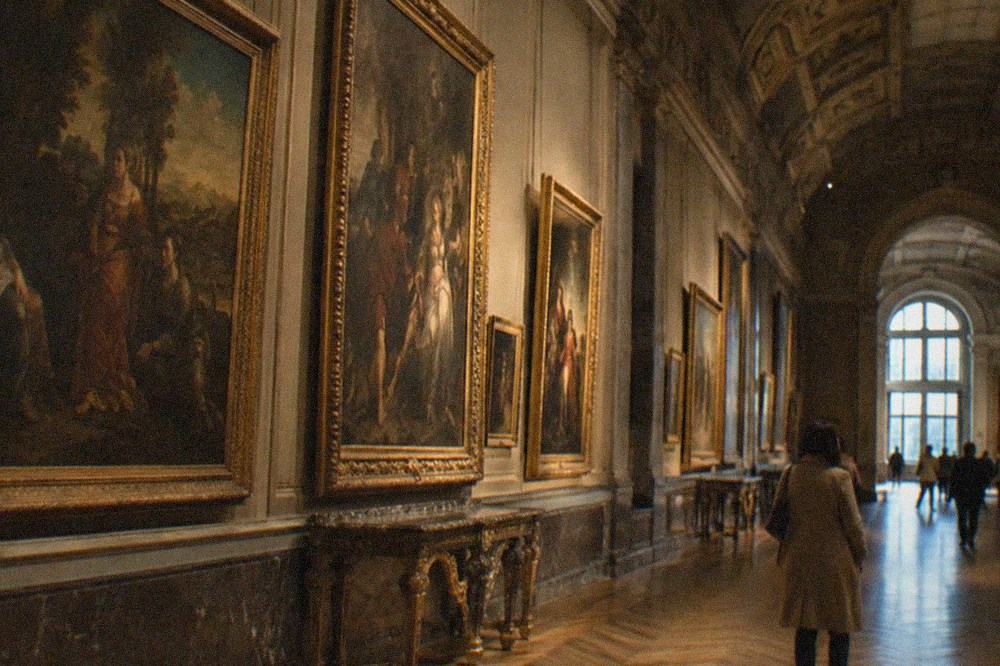
The Louvre is not one collection but several stacked inside a palace. Paintings, obviously, the Italian rooms and the French grands formats above all. But also Egyptian antiquities, Greek and Roman sculpture, Near Eastern antiquities, Islamic art, and the decorative arts of the French crown, including the Apollo Gallery, a ceiling of gold that most Mona Lisa pilgrims walk straight past. A full-price ticket does not sort these into tiers. The Apollo Gallery, the Egyptian rooms, the Marly courtyards and the Salle des États all cost the same thing.
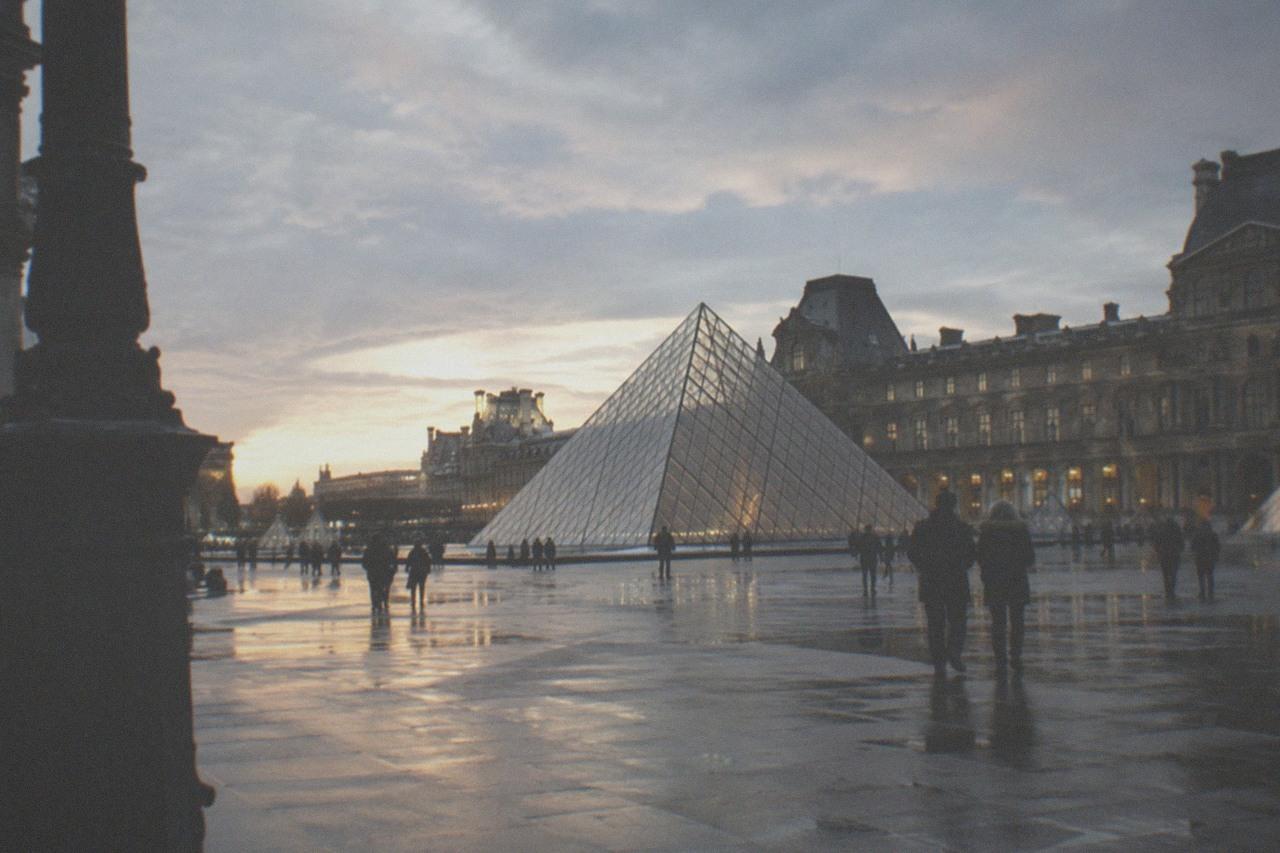
That breadth is what separates the Louvre from almost every other museum in the city. The collection runs from cuneiform tablets to Napoleonic state rooms, and the building itself, three wings around the Cour Napoléon with the glass pyramid in the middle, is as much an exhibit as anything inside it. Give yourself permission to skip. Nobody has ever seen the whole Louvre in a day, and the people who try leave having seen nothing properly.
The rest of our Paris Museums coverage breaks the departments down room by room, but for the Big Three visit the honest summary is this: the Denon wing is your day, and everything else is a bonus if your legs hold out. Reviewers consistently report the same pattern, that visitors who targeted the three stars and then wandered enjoyed the day more than visitors who tried to audit the palace.
One more thing the ticket buys you that almost nobody mentions: the views out. The Denon wing's windows look over the Seine and the Tuileries, and the landing near the Salle des États frames the river better than any paid viewpoint nearby. Visitors regularly report pausing there mid-visit, and it is the best free rest stop in the building.
How Much Does A Louvre Ticket Cost And Who Gets In Free?
The Louvre now charges two door prices: €22 for visitors from the EEA and €32 for everyone else, a two-tier system that is in force, not announced. Under 18s are free with photo ID, and EU and EEA residents under 26 are free too. There is no free first Sunday at the Louvre at any point in the year.
The two-tier price is the single biggest recent change at the museum, and plenty of published guides have not caught up. The Louvre's own admission page states both figures plainly, and it is the authority on this: the official hours and admission page lists €22 for EEA visitors and €32 for everyone else. The free rules sit on the same page.
For the younger and luckier, the exemptions are generous and strictly documented. Anyone under 18 walks in free with a photo ID, no ticket, no charge. So does any EU or EEA resident under 26, and the wording is broader than citizen: a long-stay permit or a visa over four months counts, and what gets checked at the desk is the document, not the passport colour. Bring the proof. Visitors regularly report being turned from the free lane for having nothing to show.
| Visitor | What they pay |
|---|---|
| Adult from outside the EEA | €32 |
| Adult from the EEA | €22 |
| Under 18 | Free with photo ID |
| EU and EEA residents under 26 | Free with photo ID or a long-stay permit or visa over four months |
| Bookable skip-the-line ticket | From $69.80, a platform price that includes a timed slot |
Note the last row, because it confuses people. The €32 and the $69.80 are two different things and never the same number: the euro figures are the museum's own door prices, while $69.80 is a booking platform's from-price for a skip-the-line product that carries a timed entry. Whether that premium is worth paying depends entirely on the date, a Tuesday in February needs no help, a summer Saturday does. The booking details and current availability sit on the Louvre timed entry page.
Free entry, when you can catch it, is real but narrow. First Friday of the month after 6pm, never in July or August, plus 14 July. That is the complete list. Visitors who build a Paris itinerary around a free first Sunday at the Louvre, and thousands do every month, arrive to find a full-price door and a closed museum, since the first Sunday of the month has nothing to do with it. Plan the Friday evening instead, and expect company.
How Long Should You Allow And When Is The Louvre Shut?
The Louvre is closed on Tuesdays, every week, all year. For the Big Three themselves, plan on three to four hours, which covers the Denon loop at a human pace with room for one detour. The rest of the palace swallows whole days, so decide before you arrive whether you are a three-star visitor or a department-by-department visitor.
The Tuesday closure shapes every Paris itinerary more than any price does, because the national museums close on a different day from the city ones. On a Tuesday the Louvre, the Orangerie, Guimet and Fontainebleau are all shut, while the Orsay, Rodin, Picasso and the free city museums are open. Flip the day and the reverse holds: on a Monday the Louvre is one of the few giants standing. If your trip is short, build your museum days around that pattern before booking anything.
Rooms also rotate closed inside open weeks. The museum publishes a running list of which galleries are available, and it is worth a look before a visit that depends on a specific painting: the available galleries list on the Louvre's own site is updated as rooms close for conservation. The Big Three themselves are effectively permanent fixtures, but the rooms around them move.
Timed entry is compulsory, and this is the part that actually ruins days. A ticket without a slot, or a slot missed by an hour, is a ticket that does nothing, and the queues at the pyramid are mostly people discovering that. The bookable skip-the-line product exists precisely for this bottleneck, and reviewers rate it 4.6 across 7,769 reviews, which tells you how many visitors choose it over gambling on the door. Check availability for your date before you commit to a morning.
The rhythm of the day matters as much as the date. The Denon wing is thickest from late morning through mid afternoon, when tour groups move in waves. The first hour after opening and the last two hours before closing are visibly calmer, and the late slot has a second advantage: the light in the Italian galleries goes gold, and the crowd at the Salle des États thins enough that you can stand at the front rail for more than a few seconds.
How Does The Louvre Compare With The Musée d'Orsay?
The nearest true alternative is the Musée d'Orsay: €16 booked online against €14 at the door, closed Monday, and rated 4.7 across 27,881 reviews. The contrast is sharp. The Louvre is breadth, palace and antiquity, the Orsay is one railway station, one century, and the largest impressionist collection in the world.
Visitors with time for only one museum face a genuine choice, and the honest answer depends on what they want from a museum. The Louvre is overwhelming by design, a palace you could spend a week in and still exit through the wrong door. The Orsay is legible in a single visit, its galleries wrapped around one great avenue under the station clock. Our full Louvre vs Musée d'Orsay comparison breaks this down category by category, but the short version follows.
| Musée du Louvre | Musée d'Orsay | |
|---|---|---|
| Door price | €32, or €22 for EEA visitors | €16 online, €14 at the museum |
| Closed day | Tuesday | Monday |
| Reviews | Reviewers rate it 4.6 across 7,769 reviews | It is rated 4.7 across 27,881 reviews |
| Core strength | Antiquity to the nineteenth century, palace itself | Impressionists, one coherent century |
| Free day | First Friday after 6pm, except July and August, plus 14 July | First Sunday of the month, slot must be booked |
Note the Orsay's odd inversion: booking online costs more, €16 against €14 at the door. Almost every other major museum in Paris prices the other way, or at least evenly, and it is worth knowing before you pre-purchase. Our piece on buying Orsay tickets in advance covers when the online premium pays for itself, and the Orsay timed entry page carries the live options.
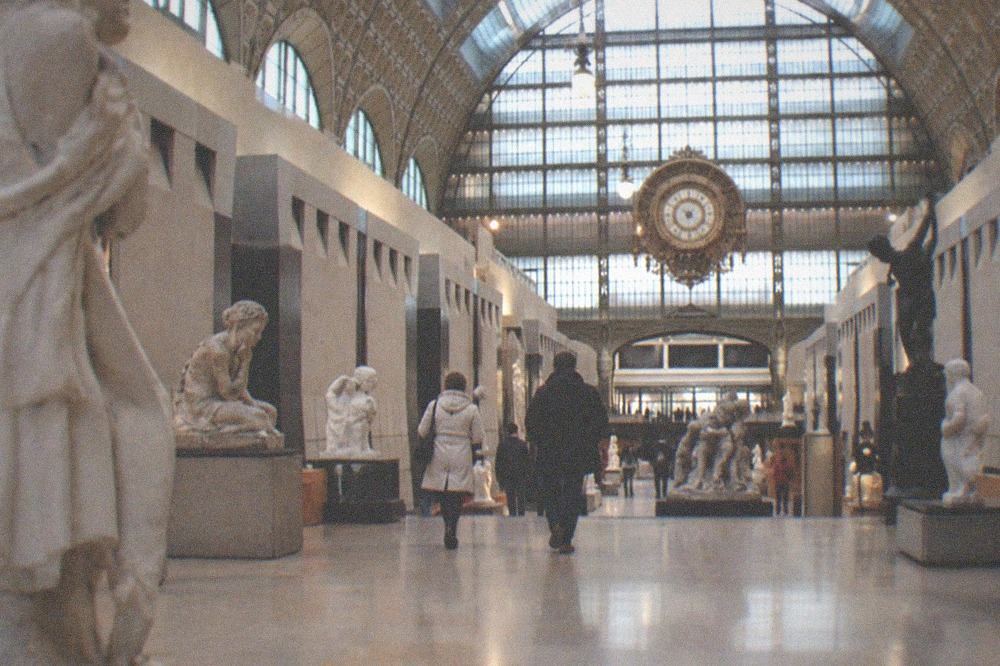
For visitors whose real interest is sculpture and the masters rather than the impressionists, there is a quieter third answer. The Musée Rodin charges €14, opens Tuesday to Sunday, and is rated 4.7 across 2,519 reviews, in a mansion with a garden where the Thinker sits outdoors under the sky. It is free the first Sunday of the month from October to March, with no booking needed, which makes it one of the easiest free museum mornings in the city to actually pull off. A morning of Rodin and an afternoon of the Louvre's Denon wing is a genuinely great art day, and almost nobody plans it.
Can You See All Three Works In One Visit?
Yes, comfortably, because all three sit in the Denon wing. A brisk loop takes under an hour, a proper one with breathing room takes two, and the only real bottleneck is the Salle des États, where the Mona Lisa crowd moves at its own pace. Start at the Winged Victory while your legs are fresh and finish at the Venus when you want calm.
The route that works, and that the museum's own flow pushes you toward: enter under the pyramid, head for the Daru staircase, and climb to the Winged Victory first. She is the announcement of the wing, and seeing her before the crowds arrive is worth the early start. From the top of the stairs turn into the Italian galleries and follow the paintings toward the Salle des États. The Mona Lisa hangs at the far end behind glass, and the room, the largest in the palace, is really a corridor with a shrine at the end of it.
Then descend. The Venus de Milo stands on the ground floor below, in the Greek sculpture galleries near the Salle des Caryatides, and after the press of the Salle des États her gallery feels almost private. Visitors regularly report spending their longest unhurried minutes of the whole visit right there, in front of the least marketed of the three stars.
Two practical warnings worth repeating in one place. The Tuesday closure, covered above, empties your plan entirely if you forget it. And the timed slot: your reservation window, not your arrival at the pyramid, is what gets you in, so build the walk from the metro, or from a coffee, backwards from the slot time rather than forwards from your alarm.
If the day has hours left once the Venus is behind you, walk out through the Tuileries toward the Place de la Concorde and keep going up the Champs-Élysées, because the Arc de Triomphe is open every day, charges €22, and reviewers rate it 4.7 across 37,709 reviews, with a viewing platform that frames the whole axis you just walked. It rounds out a Louvre day better than a second museum does, and it is a different kind of climb, an open-air staircase rather than a gallery.
However you assemble the day, these three options cover the main combinations our research keeps landing on for a first Louvre visit.
Common Questions About The Big Three At The Louvre
What Are The Big Three At The Louvre?
The Mona Lisa by Leonardo da Vinci, the Venus de Milo, and the Winged Victory of Samothrace. All three are in the Denon wing, so one loop of that wing covers all three in a single visit.
How Much Does It Cost To See The Mona Lisa?
There is no separate Mona Lisa ticket. The standard Louvre admission covers it: €32 at the door for visitors from outside the EEA, €22 for EEA visitors, with under 18s and EU and EEA residents under 26 free.
Which Wing Holds All Three Works?
The Denon wing. The Winged Victory stands at the top of the Daru staircase, the Mona Lisa in the Salle des États on the floor above, and the Venus de Milo on the ground floor below them both.
Is The Louvre Open On Mondays?
Yes. The Louvre closes on Tuesdays, not Mondays, which makes it one of the few giant museums standing on a Monday, since the Orsay, Rodin, Picasso and the free city museums all close that day.
Do Under 18s Pay For The Louvre?
No. Under 18s enter free with a photo ID, and so do EU and EEA residents under 26, including holders of a long-stay permit or visa over four months. What is checked is residency and documentation, not nationality.
Does A Paris Museum Pass Cover The Louvre?
It covers admission, but the pass does not skip the reservation system. The Louvre is one of the eight pass sites that still require a separate free timed slot, so a pass without a booked slot still leaves you outside.
Is The Mona Lisa Behind Glass?
Yes, it hangs in a protective climate-controlled case on the far wall of the Salle des États, with a rail managing the crowd in front of it. Viewing is from a distance, which is why the room is arranged as an amphitheatre facing her.
How Long Should I Allow For All Three Works?
As a planning range, budget one to two hours for the three-star loop itself, and three to four hours if you want to add the Egyptian rooms or the Apollo Gallery. The Salle des États is the only section where the crowd sets your pace rather than you.