How Much Does It Cost To Visit The Musée Rodin, And Is The Garden-Only Ticket Enough?
The Musée Rodin costs €14 at the door for the mansion and garden together. Here is what each ticket covers, who gets in free, and whether the cheaper garden-only rate is enough for your visit.
How Much Does It Cost To Visit The Musée Rodin, And Is The Garden-Only Ticket Enough?
A full adult ticket to the Musée Rodin costs €14 at the door and covers both the Hôtel Biron mansion and the sculpture garden together. The museum also sells a reduced garden-only rate for visitors who want The Thinker and the outdoor bronzes without going inside the house at all. Whether that lighter ticket is enough depends almost entirely on how much Rodin's marble work indoors matters to you.
The headline price is simple. Fourteen euro buys the complete site: the rooms of the Hôtel Biron, where Rodin lived and worked in the early twentieth century, and the three-hectare garden around it, where his best-known monumental pieces stand outdoors among the hedges. There is no complicated tiered pricing here of the kind the Louvre now runs, no EEA against non-EEA split, no separate charge per floor. One price, one ticket, the whole museum.
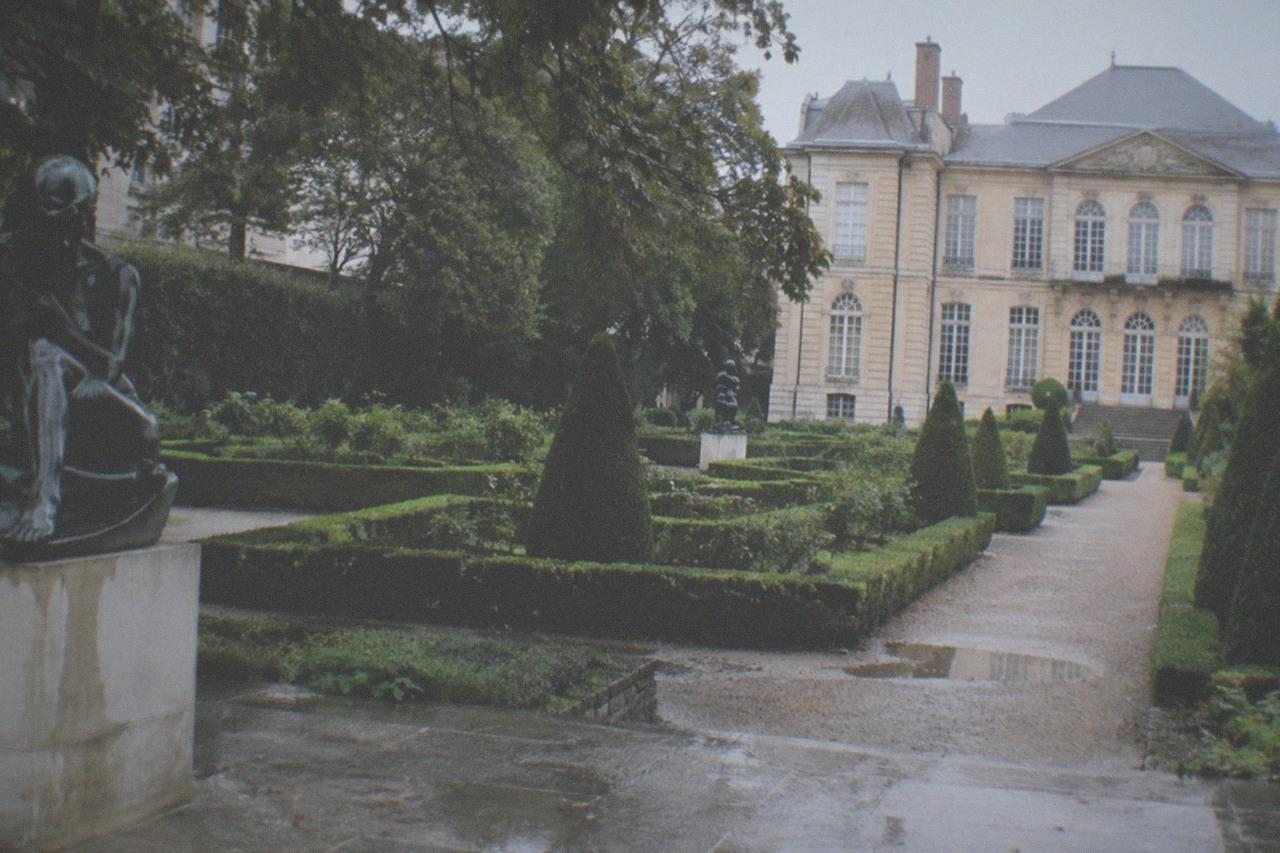
The garden-only question is the one visitors actually wrestle with, and the honest answer is that the split exists for a reason. The garden holds the pieces most people come for: The Thinker on its pedestal in front of the mansion, the Burghers of Calais in their group, The Gates of Hell against the garden wall. On a warm afternoon you can see a remarkable amount of Rodin without ever showing a ticket to the house. The garden-only rate is set lower than the full €14, and it exists precisely for that visit.
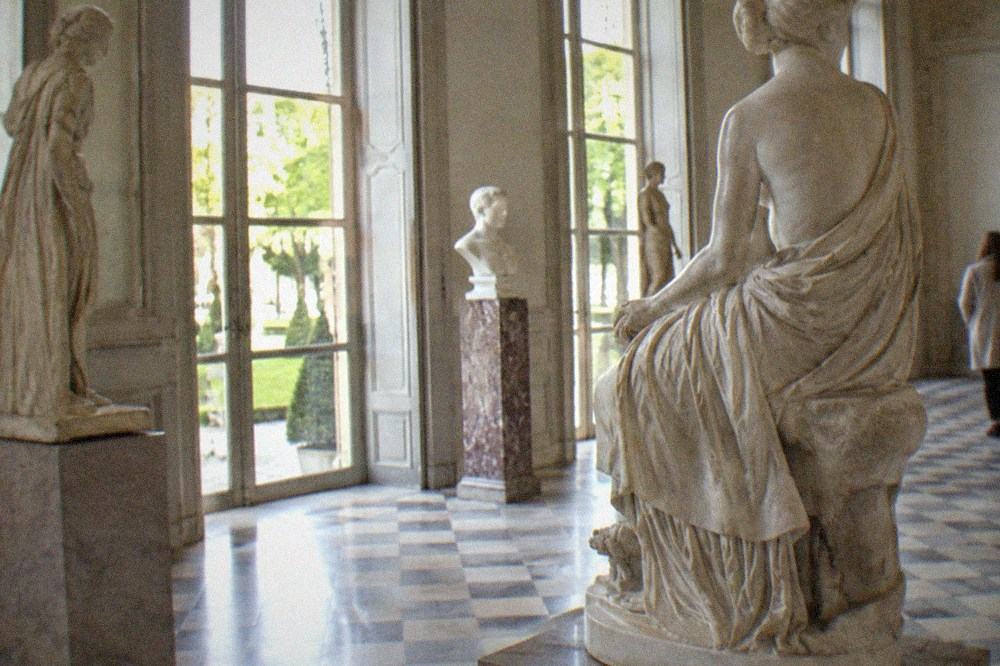
What the lighter ticket cannot give you is the interior. The mansion's rooms hold the marbles: The Kiss in its carved intimacy, the hands, the portrait busts, the plaster studies, and the works of Camille Claudel, whose presence in this collection says a great deal about Rodin's circle and his debts. Reviewers consistently describe the house as the quieter, more surprising half of the visit. If marble is why you came to Paris, the full ticket is the one to buy.
This site, Paris Museums, exists to make these decisions easier with verified figures rather than guesses. If you already know you want the full visit, the entry options and what each one covers are laid out on the Musée Rodin tickets page.
What Is Actually Inside The Musée Rodin?
The Musée Rodin holds the largest single collection of Auguste Rodin's work anywhere, spread across the Hôtel Biron mansion and a three-hectare garden at 77 rue de Varenne. Inside the house: the marbles, the plasters, the drawings and the Claudel room. Outside: The Thinker, the Burghers of Calais, The Gates of Hell, and a roster of monumental bronzes that most visitors find themselves photographing for an hour.
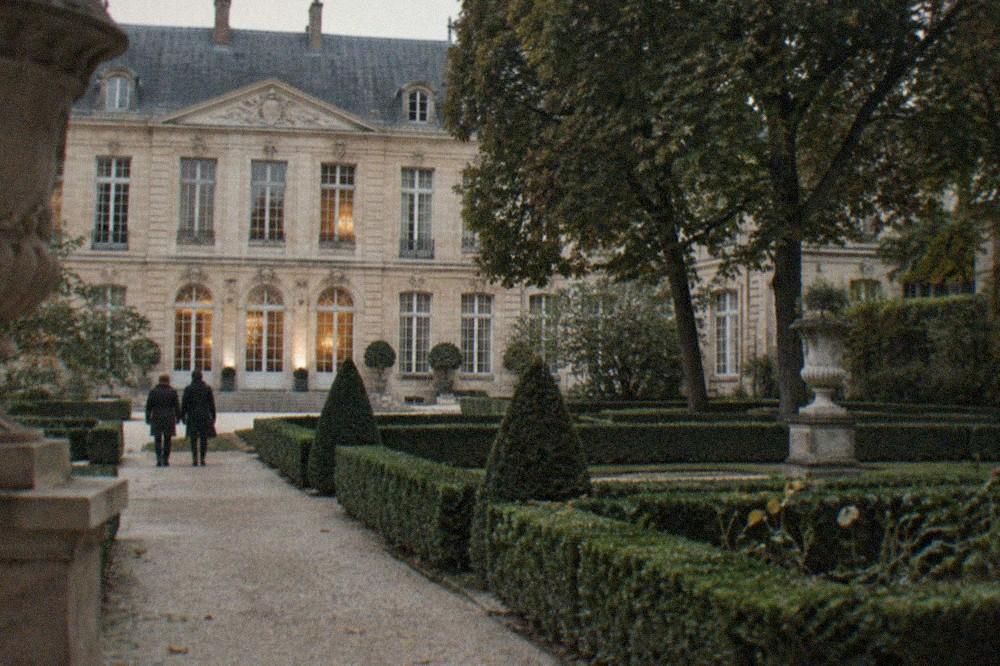
The Hôtel Biron is itself part of the exhibit. Built in the eighteenth century as a private mansion, it passed through a convent, a school and a series of artist tenants before Rodin moved in. He worked there for the last decade of his life and, in the arrangement that created the museum, handed over his entire personal collection to the state on the condition that the building become a museum devoted to his work. The state agreed, and the museum opened shortly after his death in 1917. That origin explains why the collection is so complete: it was not assembled by purchase, it was the sculptor's own estate.
Indoors the route moves roughly from Rodin's early breakthroughs to his late experiments. The Kiss, in marble, is the room most visitors remember, and the portrait busts show the range that made him wealthy: writers, politicians, society figures, all rendered with the same restless surfaces. A room is devoted to Camille Claudel, his student, collaborator and partner, whose own sculptures stand on their merits rather than as footnotes, and visitors regularly report that this room is the part of the visit they did not expect. The top floor rotates drawings and studies.
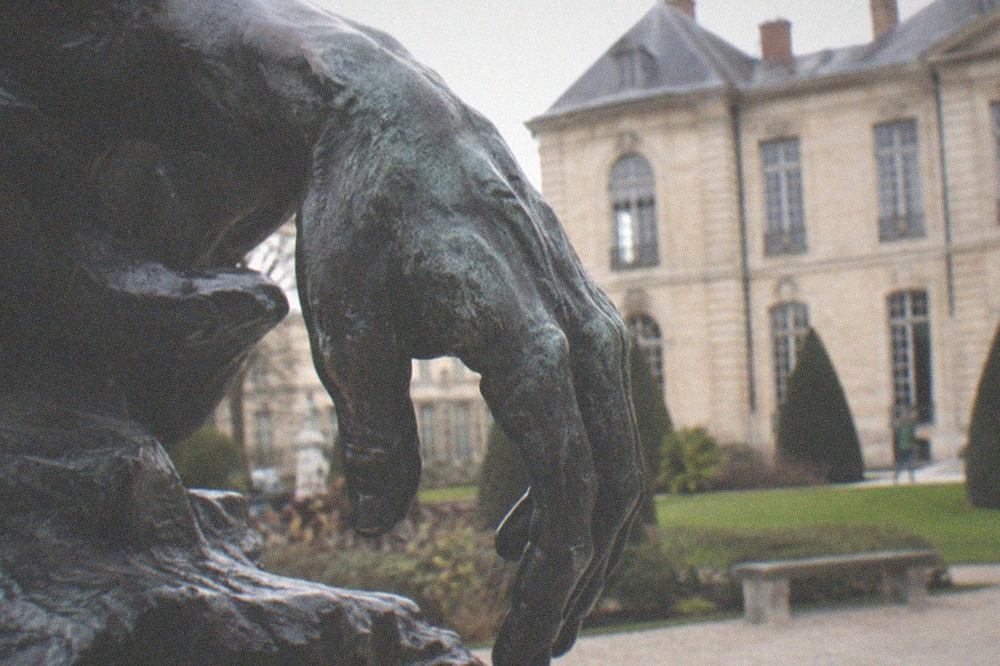
Outdoors, the garden is organised around the monumental scale. The Thinker faces the mansion from the front terrace. The Burghers of Calais stand in a loose group near the garden's depth, close to eye level, which is unusual for a piece designed to be seen on a plinth. The Gates of Hell, the vast composite doorway Rodin reworked for decades and mined for figures that became standalone works, stands against one wall. Visitors regularly report spending as long in the garden as in the house, and on a good weather day the split is roughly even.
None of this needs a guided tour to make sense of, and the museum's own labels do solid work in French and English. But the skip-the-line angle is real in high season: the single entrance queue on rue de Varenne can stretch in summer, and a pre-booked slot removes the wait entirely.
What The Ticket Covers And What It Costs
The full adult ticket is €14 at the door and covers the mansion, the permanent collection and the garden. A skip-the-line reseller ticket sells at €15, exactly one euro over the museum's own price. Under-18s and EU and EEA residents under 26 get in free with photo ID, and the museum is free on the first Sunday of the month from October to March, with no booking needed.
The price structure is refreshingly flat compared with the rest of Paris. The museum's own page states the €14 full rate, and the Musée Rodin's visitor information is the source to trust for any change. There is no online premium of the kind Musée d'Orsay runs, where the online ticket costs more than the door. Rodin charges the same €14 whether you buy it at the window or in advance through a reseller, with the reseller adding a single euro for the convenience of a confirmed timed slot.
Here is the full price picture in one table:
| Ticket | What it covers | Price |
|---|---|---|
| Full adult, at the door | Mansion, permanent collection, garden | €14 |
| Skip-the-line, reseller | Same coverage, confirmed timed slot | €15 |
| Garden-only rate | Garden and outdoor sculptures only, no house | Reduced rate below €14 |
| Under 18 | Everything, with photo ID | Free |
| EU and EEA residents under 26 | Everything, with photo ID and proof of residency | Free |
| First Sunday, October to March | Everything, no booking needed | Free |
The garden-only rate is the one line in that table without a printed figure, and that is deliberate. It is a real, cheaper ticket the museum sells at its window, and it buys the garden and the outdoor bronzes without the house. What matters for planning is not the number but the shape: it is meaningfully cheaper than €14, and it exists for exactly one kind of visitor, someone who wants the outdoor sculptures and an hour of garden, not the marbles.
The museum is rated 4.7 across 2,519 reviews, which places it among the best-regarded mid-sized museums in the city. Reviewers consistently praise two things: the density of major work relative to the museum's size, and the garden itself. Complaints cluster around the café prices and the size of the shop, which tells you the visit itself is rarely the problem.
Who Gets In Free, And When?
The Musée Rodin is free on the first Sunday of every month from October to March only, with no booking needed, and free every day for under-18s and EU and EEA residents under 26 with photo ID. Outside those rules there is no free window, no free evening, and no free first Sunday between April and September, because this museum runs its free season in winter, not summer.
The winter-only free Sunday is the detail most guides get wrong, or at least flatten. The standard line about Paris is that national museums are free on the first Sunday of the month, full stop. Rodin follows a seasonal version of that rule: the free Sundays run from October to March. If you are visiting in April with a first-Sunday plan, Rodin will charge you. The summer logic is crowd management: the museum does not need to give away entry in the months when it is busiest.
The age and residency rules are the broader ones. Under-18s are free at national museums with a photo ID, and so are EU and EEA residents under 26, including holders of a long-stay permit or visa over four months. The wording on the official gratuity rules is about residence, not citizenship: a non-citizen who lives in the EEA with the right paperwork gets in free, and a citizen under 26 living outside it does not. Bring the document that shows both age and residency if you are claiming that exemption.
For the free-sunday landscape across the whole city, including the eleven city museums that are free every single day, the guide to free museums in Paris lays out the two systems side by side. The short version: the Musée Rodin's winter free Sundays sit alongside a completely separate rule for the city's own museums, and the two systems do not overlap.
One pass note worth having. The Paris Museum Pass publishes its own exclusion list, and the Musée Rodin is not on it, unlike the Musée Marmottan Monet and the Musée Jacquemart-André, both of which the pass explicitly leaves out. If you are running the arithmetic on whether a pass pays, Rodin counts as a covered stop rather than an exclusion, and its €14 door price is part of that sum.
How Long Should You Allow, And When Is It Open?
Most visitors spend between ninety minutes and two and a half hours at the Musée Rodin, with the garden roughly half of that time. The museum opens Tuesday to Sunday and closes every Monday, the same day the Musée d'Orsay shuts, so a Tuesday, when the Louvre is closed, is the day it rescues. In high season, aim for the opening hour or the last two.
The closed day is worth more than it first appears. The 7th arrondissement's other heavyweights keep Paris's two great closure camps: Orsay closes Monday, the Orangerie and the Louvre close Tuesday. Rodin sits with Orsay in the Monday camp, so the two cannot rescue each other, and a Monday in the 7th leaves only the Musée de l'Armée a short walk away at the Invalides, which really is open every day. On a Tuesday the picture flips and Rodin is the obvious fill while the Louvre is dark.
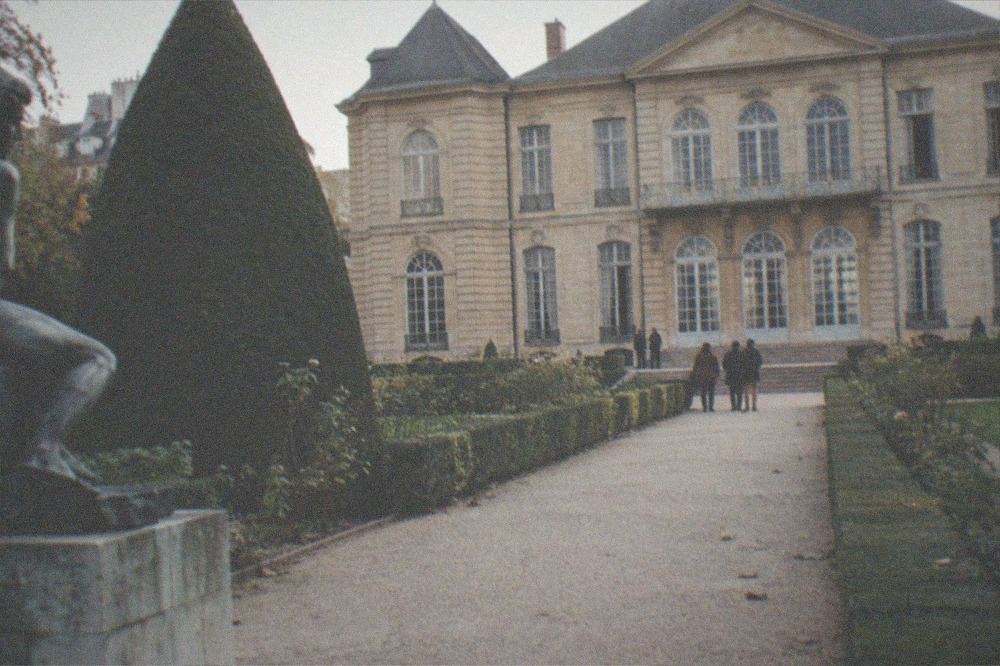
The timing advice is standard Paris logic but applies strongly here. The garden is the crowd magnet on warm afternoons, and the indoor rooms stay manageable even when the terrace is busy, because the house's capacity spreads people across three floors. Arriving in the first hour buys you The Thinker with fewer phones held up around it. The last two hours of the day do the same, and the museum's own page states its hours plainly, so confirm the closing time for your date before planning an evening visit. Late openings and seasonal hour shifts exist in Paris museums generally, and Rodin follows the pattern rather than an exception to it.
Ninety minutes works if you treat the garden as the main event and walk the house briskly. Two and a half hours is what the collection actually rewards, and visitors who report the most satisfying visits are the ones who gave the Claudel room and the drawing galleries their full attention rather than beelining from one famous bronze to the next. The café in the garden is pleasant and pricey; the benches are free.
How The Musée Rodin Compares With Its Nearest Alternatives
Against its two nearest heavyweight neighbours, Rodin is the cheapest major ticket in the 7th arrondissement: €14 against the Musée d'Orsay's €16 and the Musée de l'Armée's €17. It is also the smallest of the three and the fastest to see, which makes it the best value per hour for visitors with a tight schedule, and the weakest choice for anyone who wants a half-day museum.
The Musée d'Orsay is the obvious comparison, and the price gap is the start of it. Orsay charges €16 for a ticket booked online against €14 bought at the museum itself, an inversion worth knowing about, and the Musée d'Orsay's own rates page states both figures. Orsay is a half-day commitment that most visitors stretch to three or four hours, it closes on Mondays, and its free first Sunday runs all year but requires a booked slot. Rodin is smaller, cheaper, closed the same Monday Orsay is, and free on winter Sundays with no reservation at all. If Impressionism is the point of your trip, Musée d'Orsay tickets belong on your list and Rodin is the warm-up or the wind-down. If sculpture is the point, reverse the order and you will save money and time.
The Musée de l'Armée at the Invalides is the other near neighbour, and the two pair naturally because they sit within an easy walk of each other. The Armée charges €17, a price that covers the Dôme and Napoleon's tomb, and it is rated 4.6 across 10,794 reviews. Where Rodin is intimate and quiet, the Invalides is grand and dense, armour halls and war history at a scale that wants half a day. For the pairing question, including what the tomb ticket buys and how the two sites split a day, the guide to Napoleon's tomb at Les Invalides covers it in detail.
| Museum | Door price | Closed day | Rating | Free first Sunday |
|---|---|---|---|---|
| Musée Rodin | €14 | Monday | 4.7 across 2,519 reviews | October to March only, no booking |
| Musée d'Orsay | €16 online, €14 at the door | Monday | 4.7 across 27,881 reviews | All year, booked slot required |
| Musée de l'Armée | €17 | None | 4.6 across 10,794 reviews | No first-Sunday free entry |
The bigger-name comparison is the Louvre, and it works mainly as a lesson in price structure. The Louvre now runs a two-tier door price, €22 for EEA visitors and €32 for everyone else, closed on Tuesdays, rated 4.6 across 7,769 reviews. Rodin's flat €14 against the Louvre's split pricing is the clearest example in this comparison set of how differently Paris museums are priced for the same kind of visitor. For a one-hour art hit at a flat price on any day but Monday, Rodin wins outright; for the obvious reasons, the Louvre is the Louvre.
Whichever way you build the day, the honest summary is this: Rodin is the least expensive major museum ticket in its district, open Tuesday to Sunday, free in winter on first Sundays, and small enough that a well-planned visit fits between lunch and a walk along the rue de Varenne. The full €14 ticket is the right call for almost everyone. The garden-only rate is the right call for a warm afternoon when the bronzes are the goal and the house can wait for another trip.
Common Questions About The Musée Rodin
How Much Does It Cost To Visit The Musée Rodin, And Is The Garden-Only Ticket Enough?
The full adult ticket costs €14 at the door and covers the Hôtel Biron mansion and the garden together. The garden-only rate is cheaper and covers the outdoor sculptures only. It is enough if the bronzes are your goal; the full ticket is the better choice for the marbles inside, including The Kiss and the Camille Claudel room.
Is The Musée Rodin Garden Free To Walk Into?
No. The garden is part of the museum's paid site, and entry is through the ticketed entrance at 77 rue de Varenne. The garden-only rate is the cheapest way in, but there is no free public path through the sculpture garden.
When Is The Musée Rodin Free?
On the first Sunday of every month from October to March only, with no booking needed. It is also free every day for under-18s and EU and EEA residents under 26 with photo ID. Between April and September there is no free Sunday at all.
Is The Musée Rodin Open On Mondays And Tuesdays?
Tuesday yes, Monday no. The museum's own visitor page says it opens Tuesday to Sunday, so it is shut on the same day as the Musée d'Orsay and useful on the Tuesday when the Louvre and the Musée de l'Orangerie are closed.
How Long Do People Spend At The Musée Rodin?
Most visitors report between ninety minutes and two and a half hours, split roughly evenly between the house and the garden on good-weather days. It is one of the shortest major museum visits in Paris, which is part of its appeal for tight schedules.
Is The Musée Rodin Included In The Paris Museum Pass?
Yes. The pass's own published exclusion list does not name the Musée Rodin, unlike the Musée Marmottan Monet and the Musée Jacquemart-André, which are explicitly excluded. Rodin counts as a covered stop when you run the pass arithmetic.
Can You Buy Musée Rodin Tickets In Advance?
Yes. A skip-the-line reseller ticket sells at €15, one euro over the museum's own €14 door price, and buys a confirmed timed slot. In high season that single euro saves the queue, which is why advance purchase is the usual recommendation.