How Much Do Eiffel Tower Tickets Cost?
Eiffel Tower tickets cost €36.70 to the summit by lift, €23.50 to the second floor by lift, and €14.80 by stairs. Here is what each one covers, who gets in free, and how it compares with the nearest alternatives.
How Much Do Eiffel Tower Tickets Cost?
A ticket to the top of the Eiffel Tower by lift costs €36.70, the second floor by lift costs €23.50, and the stairs to the second floor cost €14.80. Those are the three published prices, and they are the whole tariff. The tower never closes for a weekly rest day, but every ticket is a timed slot, so the price is only half the planning story and availability is the other half.
Three prices, three experiences, one tower. That is the honest summary of the Eiffel Tower's tariff, and it is unusually clean by Paris standards, where the Louvre now charges €22 for visitors from the European Economic Area and €32 for everyone else, and Sainte-Chapelle splits its price the same way at €16 and €22. The Eiffel Tower does not run a two-tier nationality price at all. A visitor from Tokyo and a visitor from Tours pay the same amount for the same ticket, which is worth stating plainly because so many nearby monuments no longer work that way.
The prices come from the tower's own tariff structure: the summit lift at €36.70, the second-floor lift at €23.50, and the stairs at €14.80. The stair ticket covers the climb on foot to the second floor, and the summit ticket covers the full ride. The middle option, the second floor by lift, is the one most visitors actually buy, and the section on what each ticket includes explains why that choice is more interesting than it sounds.
Here is the tariff laid out in one place:
| Ticket | Price | What it covers |
|---|---|---|
| Summit by lift | €36.70 | Lift to the second floor, then the second lift to the top |
| Second floor by lift | €23.50 | Lift ride to the second floor only |
| Stairs to the second floor | €14.80 | The climb on foot to the second floor |
The operator's own site, toureiffel.paris, is the reference for these figures and for the timed-entry rules that sit around them. One point worth internalising early: the tower is not part of any museum pass and never has been, so no pass purchase changes these numbers. A visitor holding a Paris Museum Pass, which runs €85 for two days, still buys an Eiffel ticket at full price, exactly like everyone else standing in the same queue.
That last point, the timed window, is the one that decides whether the price feels cheap or expensive. A €36.70 summit ticket bought for a calm Tuesday morning and a €36.70 ticket fought for at the foot of the tower on an August afternoon are the same product on paper and completely different experiences in practice. Planning around the slot, not just the price, is what separates a good visit from a frustrating one.
What Does Each Eiffel Tower Ticket Actually Include?
The €36.70 summit ticket covers the lift to the second floor, the second lift onward to the top, and the full circuit of both levels. The €23.50 second-floor ticket stops one lift short of the summit. The €14.80 stairs ticket buys the climb on foot to the second floor only, with lift access onward available to buy separately once you are up there.
The summit is the headline product and the reason most people book. Two lift stages, the second floor as a staging point, and then the top platform with the whole of Paris laid out below. Reviewers who write about the tower, and there are 649 of them on the bookable listing giving a 4.2 rating, tend to divide on one question: whether the summit justifies its premium over the second floor. The honest answer from the commentary is that it depends on weather and on whether the visitor has been up before. On a hazy day the higher altitude adds distance without adding detail, and several guests note exactly that.
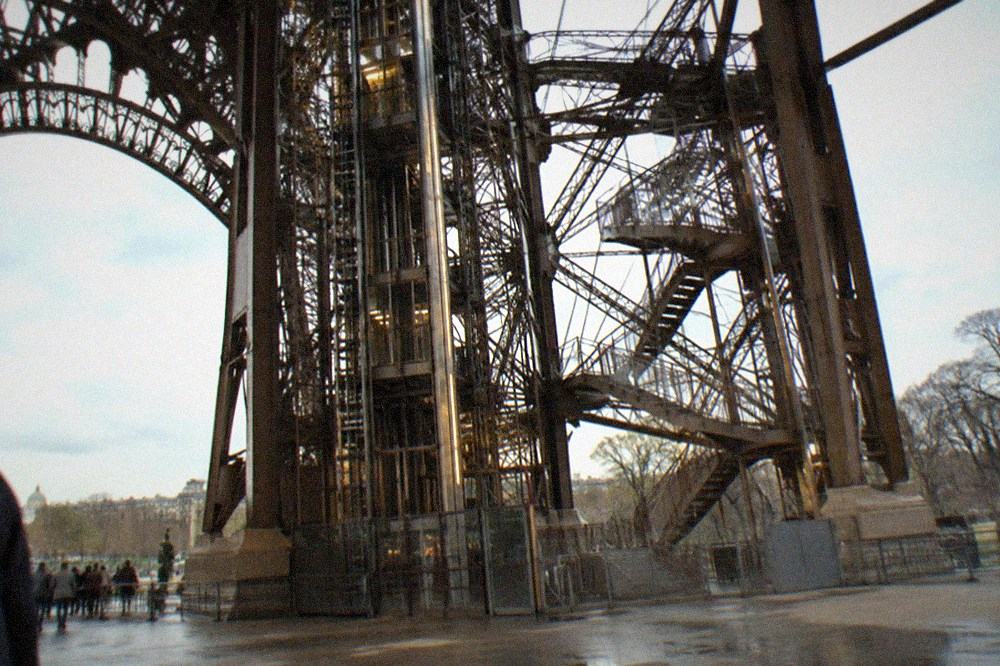
The second floor by lift, at €23.50, is the photographer's choice more often than the first-time visitor's. The reasoning is simple and it recurs in guest reviews: from the second floor you see the tower's own ironwork framing the city, you look across at the Trocadéro rather than down at a dot, and you still get the vertical drop that makes the view dramatic. The summit view is flatter and further away. Anyone torn between the two can read the dedicated comparison, second floor or the top of the tower, which works through the trade-off in detail.
The stairs option deserves more respect than it usually gets. At €14.80 it is the cheapest way up, and the climb to the second floor is a genuinely different experience: you move through the structure rather than past it, you feel the tower rather than observing it, and the queue for the stairwell rarely resembles the lift queues. It is also the only ticket that can realistically be bought closer to the day, because demand for stairs runs consistently lower than demand for lifts. The trade is time and effort, and in summer heat the effort side of that ledger grows.
One warning that belongs here and nowhere else in this article: the stair ticket reaches the second floor, not the summit. Visitors who want to walk part of the way and ride the rest need to allow for buying the onward lift once upstairs, which is a separate transaction from the stairs ticket itself. That detail surprises people standing at the second-floor lift desk, and it is cheaper to know it in advance.
Who Gets In Free At The Eiffel Tower?
Nobody enters the Eiffel Tower free on a calendar rule. It is not a Paris Musées city museum, it is not a national monument, and it is not on the Paris Museum Pass, so it has no first Sunday, no free evening, and no quiet loophole. The published tariff has three prices and three prices only, and age reductions exist only where the operator itself states them.
This is the section where Paris trips usually go wrong, because the free-entry rules that genuinely exist elsewhere are so generous that visitors assume the tower must participate. It does not. The Louvre, for all its €32 price for non-EEA visitors, is free the first Friday of the month after 6pm except in July and August, and free on 14 July. Orsay is free the first Sunday of every month, with a booked slot. The national monuments run a seasonal rule: free the first Sunday from January to March and November to December only. The Eiffel Tower stands entirely outside all of these systems.
The cleanest way to see the tower's position is to set the free-day rules side by side:
| Attraction | Door price | Free-day rule |
|---|---|---|
| Eiffel Tower, summit lift | €36.70 | None, no free day at all |
| Musée du Louvre | €32 non-EEA, €22 EEA | First Friday of the month after 6pm, except July and August |
| Musée d'Orsay | €16 online, €14 at the museum | First Sunday of the month, booked slot required |
| Panthéon | €16 April to September | First Sunday, January to March and November to December |
The Paris Museum Pass question comes up constantly, and the answer is a flat no. The pass site's own coverage list, visible at parismuseumpass.fr, excludes the tower alongside the Catacombes, the Opéra Garnier and the Fondation Louis Vuitton, while the Arc de Triomphe, its near neighbour on the same skyline, is actually included but the tower never is. That asymmetry surprises people: the pass covers more than fifty sites including the Louvre and Versailles, yet the single most visited paid attraction in Paris sits outside it. Anyone building a Paris itinerary around the pass should read the full Paris Museum Pass guide before assuming anything about coverage.
What remains true, and what softens the ticket price for families, is the age and residency structure at the sites the tower is often confused with. Under 18s are free at national museums with photo ID, and EU and EEA residents under 26 are free too, including holders of a long-stay permit or visa over four months. Residency is what gets checked, not nationality. But those rules belong to the national museums and the CMN monuments, and the tower is neither. A family relying on those exemptions at the Eiffel Tower will be buying full tickets.
How Long Should You Allow And When Is The Tower Open?
The tower opens every single day of the year, with no weekly closure, which makes it one of the most reliable appointments in Paris. Timed entry is compulsory, so the practical constraint is not opening hours but the booked window on your ticket. Most visitors budget half a day for a summit round trip including security and lifts, and less for the second floor alone.
Reliability is the tower's underrated virtue. Paris splits its closures into two camps: the national museums shut Tuesdays, the Louvre and the Orangerie among them, while the city museums plus Orsay, Picasso and Versailles shut Mondays. The Eiffel Tower, like the Arc de Triomphe, the Panthéon, Sainte-Chapelle and the Musée de l'Armée, opens daily. A traveller who arrives in Paris on a Monday, when the Orsay and Versailles are shut, or on a Tuesday, when the Louvre is shut, will find the tower running normally on both days. That makes it the natural filler for the two dead days of the Paris week, and many itineraries quietly exploit exactly this. The wider set of guides lives on Paris Museums.
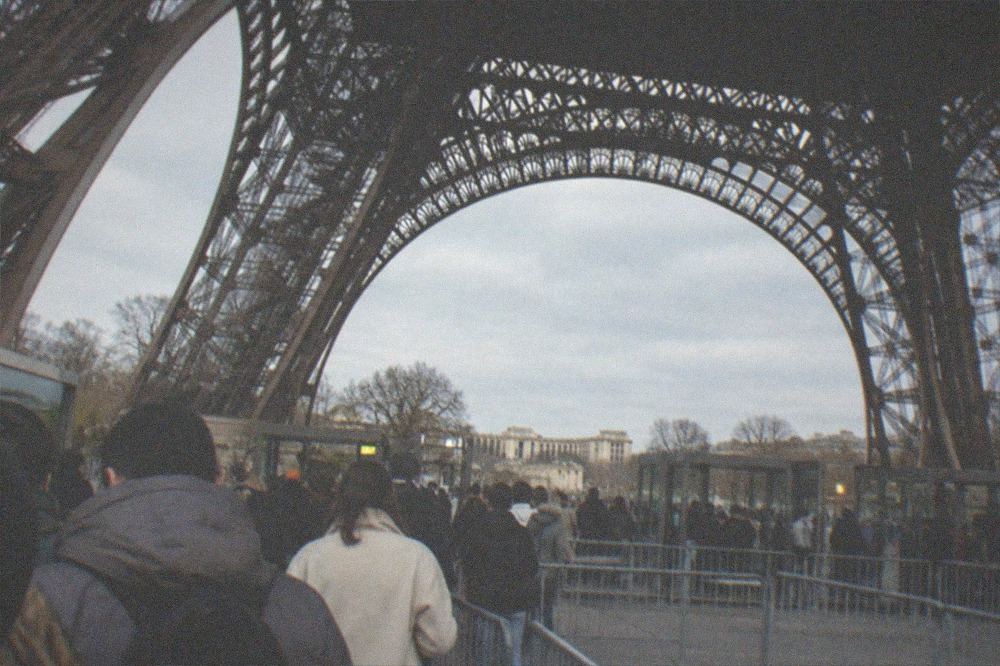
The timed-slot rule deserves its own sentence rather than a passing clause. Every ticket, whichever of the three prices it carries, is a reservation for a fixed entry window. The window is generous enough for a normal arrival, but it is a window, and the tower's security screening sits in front of it, which means the queue that matters is the one before the queue. Guests who miss the lesson in the reviews usually report the same thing: they budgeted for the view and not for the approach. Booking the slot for a morning, when the tower's daily crowd curve is at its lowest, is the single most effective free upgrade available.
On duration, the honest planning advice is to treat the summit visit as a half-day item including travel, screening and both lift stages, and the second-floor visit as something closer to two hours door to door. These are planning ranges, not operator promises, and they flex with season and weather. The fixed facts are the three prices, the daily opening, and the compulsory timed entry; everything about pace is the visitor's own call.
How Does The Eiffel Tower Compare With Other Ticketed Paris Icons?
Against the other big ticketed monuments, the tower sits mid-table: €36.70 at the summit versus €35 for the Versailles Passport in high season, €22 at the Arc de Triomphe from April to September, and €22 at Sainte-Chapelle for a non-EEA visitor. Each of those is a door price in euro, none is bundled with the others, and none shares a ticket with the tower.
Paris does not sell a combined monument ticket, which is worth saying plainly because searches for one are constant. The nearest thing to a bundle in this corner of the city is the combined Sainte-Chapelle and Conciergerie ticket at $34.95 on the bookable listing, covering the two neighbouring monuments on the Île de la Cité. The Eiffel Tower participates in no such product. Its tariff is standalone, its timed slots are its own, and the comparison with other monuments is therefore a genuine choice rather than a bundle decision.
| Attraction | Door price | Closed day | On the Paris Museum Pass |
|---|---|---|---|
| Eiffel Tower, summit lift | €36.70 | Never | No |
| Palace of Versailles, Passport | €35 high season | Monday | Yes, timed reservation required |
| Sainte-Chapelle | €22 non-EEA, €16 EEA | Never | Yes |
| Arc de Triomphe | €22 summer, €16 winter | Never | Yes, no reservation |
The Versailles comparison is the one that actually competes for the same day. At €35 against the tower's €36.70, the two are priced almost identically, and both demand forward planning: Versailles requires a timed reservation even for pass holders, and the tower requires a timed slot for every ticket. The difference is that Versailles is a day trip, reachable by the RER C in roughly half an hour plus a walk, while the tower is inside the city. Travellers weighing the two against each other will find the Versailles ticket guide breaks that choice down further, and the Versailles day trip planner covers the logistics end.
Sainte-Chapelle is the budget contrast in the trio. At €22 for a non-EEA visitor, €16 for EEA visitors, it delivers one of the most concentrated experiences in Paris in under an hour, and its combined ticket with the Conciergerie is the only genuine bundle nearby. Details on timing and queues are in the guide to Sainte-Chapelle waits and combined tickets. The tower and the chapel are different products entirely, but they compete for the same evening slot in many itineraries, and the chapel wins on price every time.
Both of those neighbours have their own ticketed pages on this site: Eiffel Tower tickets and Versailles tickets, alongside the tower's own context in the guide to the best museums in Paris. For anyone deciding between summit and second floor at the tower itself, the gap between the two lift tickets, €36.70 against €23.50, is the whole decision, and it is a decision better made in daylight than at the ticket desk.
What Do Reviews Say About The Eiffel Tower Visit?
The tower carries a 4.2 rating across 649 reviews on the bookable listing, a thinner review base than the Louvre's 7,769 or Versailles' 11,852, partly because the tower sells most of its tickets through its own channel. The pattern in guest commentary is consistent: the view rewards the money, the queues punish the unbooked, and the summit lift is the detail people remember either way.
A 4.2 is a respectable score in a city where the Orangerie runs 4.7 across 7,188 reviews and the Orsay 4.7 across 27,881, but it is notably below the monuments the tower competes with for the same evening. The Arc de Triomphe, which sells a comparable view from a different angle at €22, holds 4.7 across 37,709 reviews. The gap is instructive rather than damning: the Arc's product is a staircase and a terrace, while the tower's product adds two lift stages, screening, and far heavier demand, every one of which is a friction point a review can punish.
Reading the commentary, three threads repeat. The first is that booking ahead is the difference between two different attractions: the booked tower is a smooth ascent, the unbooked tower is a queue with a view at the end. The second is that the summit earns its premium over the second floor in clear weather and squanders it in haze, which is why several reviews suggest the second floor as the value pick. The third is that the stairs ticket, at €14.80, gets the warmest words of the three: the guests who climb report the ironwork, the pace and the sense of the structure as the part no lift ride reproduces.
None of that is a rating claim, it is a pattern in the reviews, and it is the reason the tariff's simplicity is deceptive. Three prices look like a menu. In practice the choice between them is a choice about weather, crowd tolerance and knees, and the reviews are the only place those trade-offs surface.
Which Eiffel Tower Ticket Should You Actually Buy?
Buy the ticket that matches the visit you want: the €36.70 summit lift for the full experience, the €23.50 second-floor lift for the view most photographers prefer, or the €14.80 stairs for the cheapest and most physical way up. Every option is a timed slot, so the real decision is how far up you want to go and how far ahead you are willing to commit.
For a first visit with decent weather, the summit ticket is the one that closes the loop: Paris is a city people climb things to see, and the top of the tower is the canonical climb. For a repeat visit, or for anyone whose priority is photographs rather than altitude, the second floor at €23.50 is the smarter spend, and the reviews back that reading. For the budget traveller and the energetic, the stairs at €14.80 are the best value on the whole Paris monument tariff, and the queue for them behaves better than the lift queues on all but the calmest days.
Two practical rules wrap the whole article. First, the tower opens every day and never participates in any free-day scheme or any pass, so there is no calendar trick to hunt and no pass to buy for its sake. Second, timed entry is compulsory for every ticket at every price, which means the booking date matters more than the ticket type. A €14.80 stairs slot booked for a Tuesday morning in October beats a €36.70 summit slot fought over in August, and the price difference is the smaller part of that comparison.
Anyone building the tower into a bigger Paris plan can anchor it against the best museums in Paris or slot it into a structured three-day Paris museum itinerary, where its daily opening makes it the natural peg for the Monday and Tuesday that the museums shut. The tower is the most flexible appointment in the city, and the only rule it refuses to bend is the one on its own tariff.
The three ways up have not changed and neither has the rule that governs all of them: pick your level, book your window, and arrive before it. That is the entire game, and everything else in this article is detail around it.
Common Questions About Eiffel Tower Ticket Prices
How Much Do Eiffel Tower Tickets Cost?
The summit by lift costs €36.70, the second floor by lift costs €23.50, and the stairs to the second floor cost €14.80. Those three prices are the entire published tariff, and every one of them is a timed slot.
Do You Have To Book Eiffel Tower Tickets In Advance?
Timed entry is compulsory, so every ticket is a reservation for a fixed window. Booking ahead is the difference between walking up at your slot and hoping a window opens on the day, and in summer the popular windows go early.
Is The Eiffel Tower Ever Free?
No. The tower has no free day of any kind: no first Sunday, no free evening, no seasonal giveaway. It stands outside both the city museum system and the national monument system, so none of their free rules apply.
Is The Eiffel Tower On The Paris Museum Pass?
No. The pass excludes the tower along with the Catacombes, the Opéra Garnier, the Atelier des Lumières and every Paris Musées city museum. A pass holder buys an Eiffel ticket at full price like everyone else.
What Is The Cheapest Eiffel Tower Ticket?
The stairs ticket to the second floor at €14.80. It is the cheapest way up, the queue for it runs shorter than the lift queues, and it reaches the second floor, not the summit, with the onward lift available to buy separately upstairs.
Is The Eiffel Tower Open Every Day?
Yes. It opens every day of the year with no weekly closure, which makes it one of the few major Paris attractions that works on both Monday, when the Orsay and Versailles shut, and Tuesday, when the Louvre and the Orangerie shut.
Can You Climb The Stairs All The Way To The Summit?
No. The stair ticket covers the climb to the second floor only. The final section to the summit is reached by lift, bought as a separate onward ticket once you are on the second floor.
Is The Summit Worth The Extra Over The Second Floor?
The summit lift costs €36.70 against €23.50 for the second floor. Reviews consistently say the summit earns the difference in clear weather and less so in haze, while the second floor delivers the view of the tower's own ironwork and the city beyond it that many photographers prefer.