How Long Is The Wait For Sainte-Chapelle, And What Is The Combined Conciergerie Ticket?
Sainte-Chapelle waits run from five minutes to over an hour depending on the hour and the season, and the combined Conciergerie ticket costs $34.95. Here is how both work.
How Long Is The Wait For Sainte-Chapelle, And What Is The Combined Conciergerie Ticket?
The wait at Sainte-Chapelle usually runs from five minutes with a booked timed slot to an hour or more at midday in high season, because airport-style security inside the Palais de Justice is the real bottleneck. The combined ticket is a Sainte-Chapelle plus Conciergerie product, bookable from $34.95, that covers both Île de la Cité monuments and saves queuing twice.
That is the short version. The longer one matters, because Sainte-Chapelle is one of the few Paris monuments where the queue and the ticket are genuinely separate problems. The chapel sits inside the Palais de Justice complex, and everyone, ticketed or not, passes through the same security screening with bag scanners and a walk-through arch. On a quiet February morning that screening takes minutes. On an August afternoon the line stretches along the boulevard du Palais and the wait can exceed an hour, and no ticket of any kind lets you skip it, because it is a police security check rather than a museum entrance control.
The timed-entry rule helps in a different way. Sainte-Chapelle requires compulsory timed entry, so a booked slot fixes the hour you are admitted and stops you joining the general admission crowd at the worst moment. Reviewers rate the chapel 4.3 across 141 reviews, and they consistently say the same thing: arrive at the slot time, not an hour before it, and the whole process compresses to the security line only. The from-price for a bookable timed ticket is $26.17, against a door price of €22 for visitors from outside the EEA and €16 for EEA visitors.
If you want to compare it with two other timed-entry monuments before deciding, this is where a side-by-side helps.
The chapel's own practical information page publishes the opening framework that shapes every queue: the monument's hours and admission details are set by the Centre des monuments nationaux, which runs the site. There is no weekly closing day at all, which sounds convenient but is exactly why the place never gets a rest day to absorb demand. Open every day of the year, it collects the overflow from every other closed monument in the city, so a Monday in Paris, when the Louvre and Orsay camps are shut, pushes more people onto the Île de la Cité than a midweek day in the same season.
The other thing worth knowing early: the two price tiers are real and in force, not a rumour. The Louvre's split, €22 for EEA visitors against €32 for everyone else, is the most famous example, and Sainte-Chapelle runs the same shape at €16 and €22. Which tier you fall into depends on residency documentation, not on passport colour, and the check happens at the desk.
What Is Actually Inside Sainte-Chapelle?
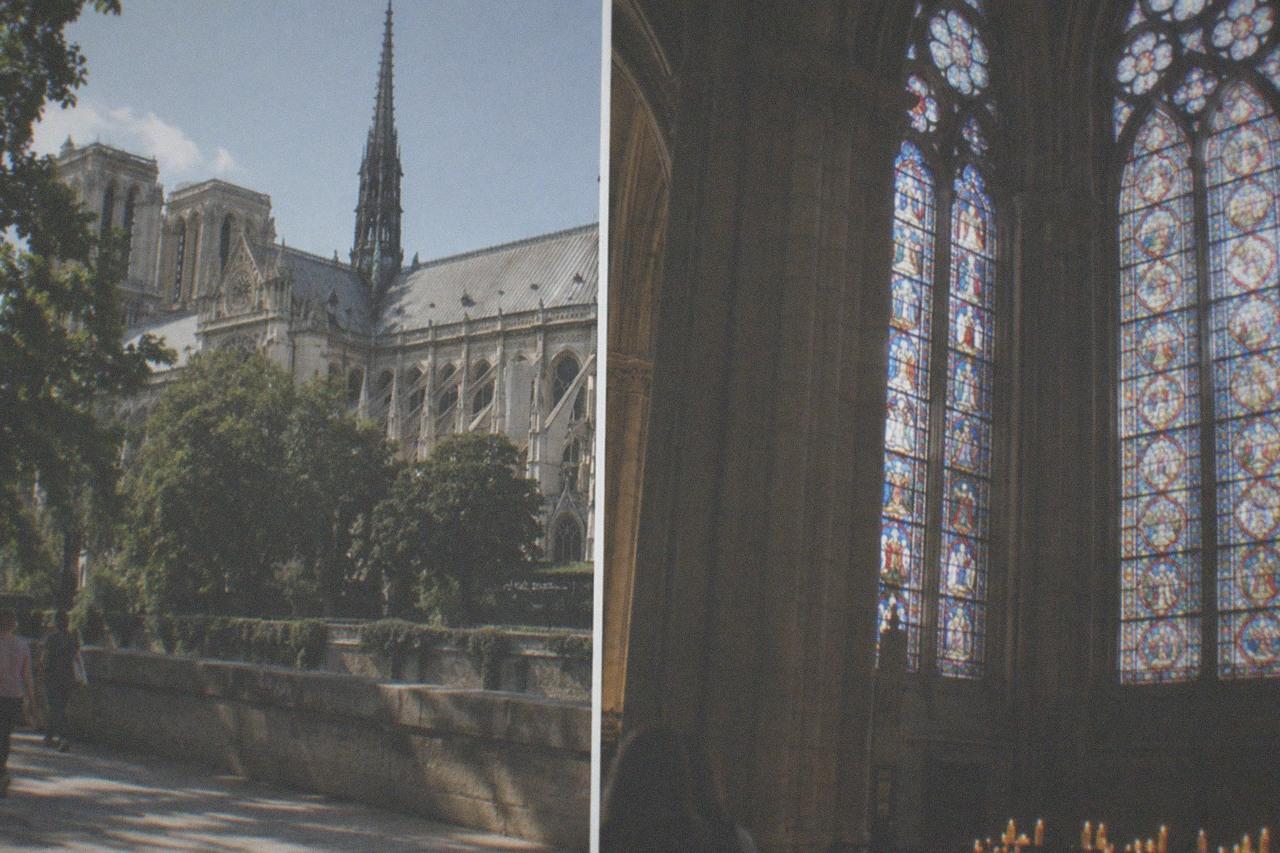
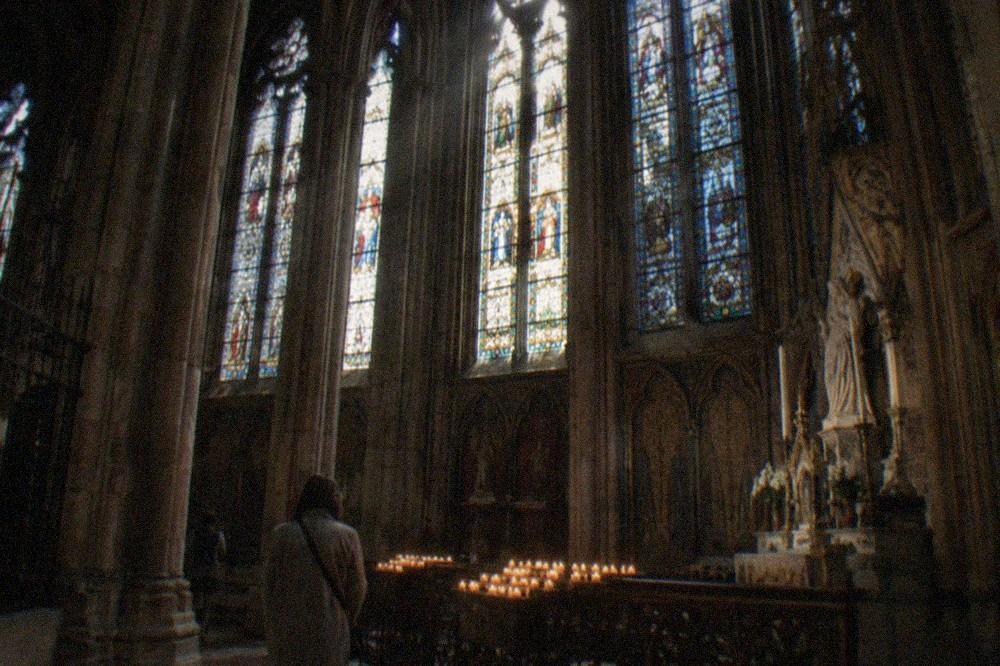
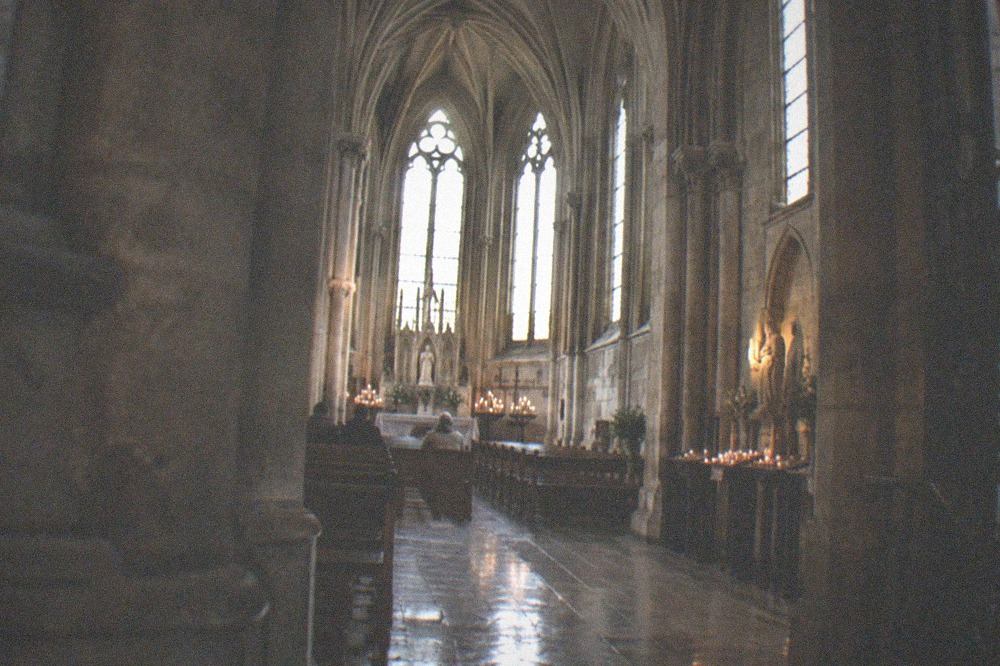
Sainte-Chapelle is a single royal chapel, built in the 1240s for Louis IX to house relics of the Passion, and its interior is essentially two stacked rooms: a lower chapel painted in the colors of the palace, and an upper chapel wrapped in 1,113 stained glass panels across fifteen windows. The visit is short, fifteen meters of floor under a glass wall, and that is the whole point of it.
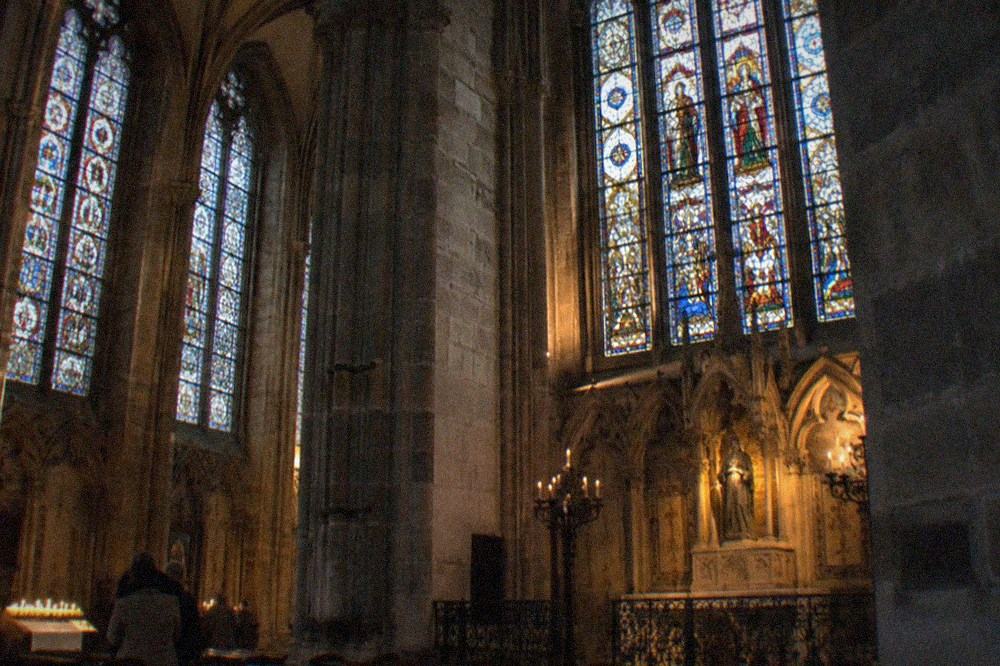
The upper chapel is the reason the queue exists. Fifteen windows, each around fifteen meters high, narrate biblical history from Genesis through the Passion to the Apocalypse, and two thirds of the glass is original to the thirteenth century. The rose window at the west end dates from the fifteenth. In sunlight the room does something no photograph manages, which is why visitors describe it in the reviews as the most concentrated wow-per-minute sight in Paris. Fifteen minutes inside is genuinely enough to see everything, which makes the queue math feel harsher than at the Louvre, where three hours of collection follows the wait.
The lower chapel is easy to overlook because everyone climbs straight to the glass, but it is the part that was actually used by the palace staff, and its painted vaults and slender columns are the quieter reward for arriving early. The relic story is worth a sentence: Louis IX bought what he believed to be the Crown of Thorns, and the chapel was built as its reliquary, a glass box of a building for a fragment of a crown. The relics themselves are gone, dispersed after the Revolution, but the architecture was always the surviving achievement.
Because the interior is small and the experience is light-dependent, timing matters more than at any comparable monument. A winter afternoon with low sun rakes the windows at an angle many photographers prefer; a summer noon gives the brightest but flattest wash of color. None of this changes the wait, but it changes what the wait is for.
Thinking about when to book? You can hold a slot and cancel if plans shift.
What Does The Sainte-Chapelle Ticket Cover, And What Does It Cost?
A standard Sainte-Chapelle ticket covers only the chapel, both levels, with no guided component and no access to any other part of the Palais de Justice, and costs €22 at the door for visitors from outside the EEA against €16 for EEA visitors. A bookable timed ticket starts at $26.17. There is no permanent-collection add-on, because there is no collection beyond the glass.
The door prices are printed plainly and they are not the same number. The €16 EEA rate and €22 non-EEA rate sit side by side on the same tariff, the same two-tier shape the Louvre and the Palais Garnier now use. The bookable timed ticket, at a from-price of $26.17, buys the compulsory reservation slot rather than a different product, and its 4.3 rating across 141 reviews is the rating that follows the timed entry itself.
Here is the cost picture in one place.
| Item | Door price in euro | Bookable from-price | Notes |
|---|---|---|---|
| Sainte-Chapelle, EEA visitor | €16 | $26.17 (timed slot) | Residency, not nationality, is checked |
| Sainte-Chapelle, non-EEA visitor | €22 | $26.17 (timed slot) | Two-tier pricing, in force |
| Conciergerie, single | €13 | $34.95 (combined ticket) | Combined covers both island sites |
| Sainte-Chapelle plus Conciergerie, combined | not sold as one euro door ticket | $34.95 | Pays off only if you visit both |
The combined line deserves its own reading. The $34.95 bookable product is a Sainte-Chapelle and Conciergerie bundle, and against the door math it only pays if you are genuinely doing both, a point the Sainte-Chapelle ticket page spells out for planners comparing options. Two separate door tickets at €22 and €13 are cheaper in euro if you are paying at the monuments themselves and you are a non-EEA visitor; for EEA visitors the comparison tilts the other way, and the bundle's real value is the second timed reservation arriving already arranged, not a discount.
There is no free-first-Sunday coverage in summer, a point worth fixing before any visit. The CMN gratuity conditions{: .noop} state that its monuments are free on the first Sunday of the month only from 1 January to 31 March and from 1 November to 31 December. Sainte-Chapelle follows that rule exactly, so April through October there is no free day at all, and the first-Sunday free slot in the cooler months still needs the timed reservation to be worth anything.
For anyone planning several monuments, the pass angle matters too. The Paris Museum Pass covers both island sites, but Sainte-Chapelle and the Conciergerie are among the eight pass sites that still demand a separate free timed reservation, per the pass's own site badges.
Who Gets Into Sainte-Chapelle For Free?
Under 18s enter free with photo ID, and so do EU and EEA residents under 26, including holders of a long-stay residence permit or visa over four months, with residency rather than nationality being what is checked at the desk. Outside those categories, only the seasonal first Sunday applies, and only from January to March and November to December.
The age-and-residency rule is the one that surprises people most, because it is broader than a nationality rule. A 24-year-old who lives in Paris on a student visa, from any country, qualifies with a permit longer than four months, while a 24-year-old EU citizen resident abroad does not. The desk wants to see a photographic identity document or an official document confirming the age category, and the same wording appears across the CMN network, from the Conciergerie to the Arc de Triomphe.
The first-Sunday window is the second free route, and it is narrower than most guides claim. Because Sainte-Chapelle is a CMN monument rather than a national museum or a city museum, it follows the seasonal rule quoted above: free first Sundays in the five cooler months, full price April to October. The date-specific exemptions, like 14 July at the Louvre, do not apply here.
What almost nobody tells you is that free does not mean unbooked. The free Sunday slots at the CMN monuments are still timed slots, issued through the same reservation system, and in the months when the free Sunday exists the reservation for it can go faster than paid slots in the same week. A free ticket without a booked time in the free window is just a longer wait in the security line.
How Long Should You Allow For Sainte-Chapelle Itself?
The visit inside Sainte-Chapelle takes 30 to 45 minutes at a comfortable pace, with 15 minutes enough for the upper chapel alone and an hour for anyone photographing the glass seriously. The queue is additional, so a realistic total for a booked-slot visit is about an hour door to door, longer in summer without a slot.
The asymmetry between wait and reward is the honest framing. People queue an hour for a monument they experience in twenty minutes, and the reviews reflect that trade rather than complaining about the chapel itself. The room is small, the flow is one-directional on crowded days, and there is no café, no cloakroom drama and no secondary wing to retreat into. You ascend, you look, you come down. The rest of the planning pages sit on Paris Museums.
Photography changes the math. The glass reads differently every hour, and serious visitors often do two rotations, one for each side of the nave, because the color saturates unevenly as the sun moves. Tripods are not welcome in the confined space, and flash is pointless against glass that is lit from outside. If the windows are the whole reason for the trip, the advice that recurs across reviews is simple: book the first slot of the day, when the security line is shortest and the room is quietest.
For context on the other island monument, the Conciergerie visit length question gets a fuller treatment on its own page, since that visit, with its revolution-era cells and its Gothic hall, runs closer to 60 to 90 minutes. Doing both monuments in one island morning is a realistic plan: security at Sainte-Chapelle, a half hour of glass, a walk of a few minutes along the quay, then the Conciergerie's own entrance.
Is The Combined Conciergerie Ticket Worth It?
The combined ticket is worth it when you are certain you will visit both monuments, since it bundles two timed reservations for $34.95 and removes the second booking step. It is not worth it if you are undecided, because the Conciergerie's single door price is €13 and you can buy that alone on the day.
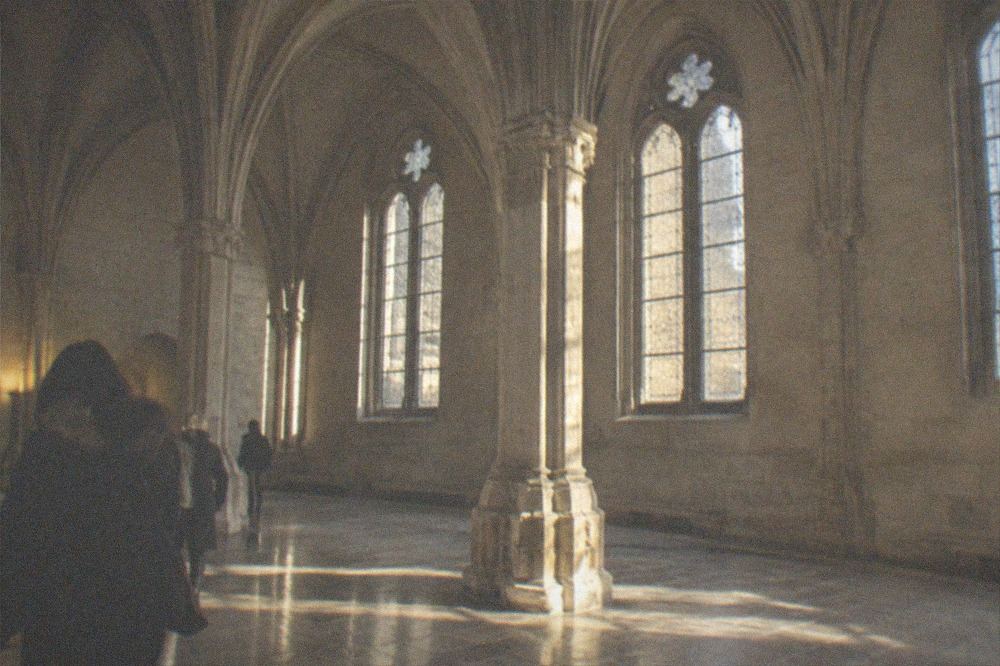
The Conciergerie is a short walk away on the same island, and it is a different kind of sight: a medieval royal palace turned revolutionary prison, with Marie-Antoinette's cell reconstructed among the halls where thousands awaited the tribunal. It carries a 4.2 rating across 291 reviews, it holds the same seasonal first-Sunday rule as Sainte-Chapelle, and it is open every day with no weekly closure. Its door price is €13.
The bundle's arithmetic depends on which door price you face. A non-EEA visitor paying at the doors pays €22 plus €13; the bundle at $34.95 sits in the same neighborhood once card rates settle. An EEA visitor facing €16 plus €13 in euro may find the bundle the simpler route, though not necessarily the cheaper one. The real argument for it is logistics: two reservations arranged at once, one purchase, and a planned island circuit instead of two separate decisions made on a hot quay.
What the bundle never buys is a skip past security, at either monument. The Conciergerie has its own screening, lighter than the chapel's but real, and a combined ticket holder joins the same line as everyone else there. Anyone promising queue-free entry at Sainte-Chapelle is promising something the site's own layout makes impossible, a point this Paris Museums guide family returns to often: the only honest skip-the-line claim at the chapel is "skip the ticket desk," not "skip the scanner."
The other honest caveat is the Palais de Justice itself. The chapel's entrance and its queue sit inside an active judicial complex, and occasionally the whole complex closes or reroutes for state reasons with little notice. On the rare days that happens, a combined ticket is more exposed than a single one, because two plans collapse together. Rare, but worth knowing before you build a tight schedule around it.
What Is The Best Alternative If The Wait Is Too Long?
If the Sainte-Chapelle queue is punishing, the nearest alternatives on the same island are the Conciergerie next door and Notre-Dame's reopened nave across the square, and the strongest contrasting monument in the district is the Panthéon, a 4.6-rated site open every day with a €16 seasonal door price. None of them replaces the glass, but each absorbs a failed queue gracefully.
The Panthéon comparison is the one most worth making, because it shares Sainte-Chapelle's CMN rules: seasonal first-Sunday free entry, January to March and November to December only, under-18 and EEA-under-26 exemptions, compulsory timed comfort, and a seasonal price structure, €16 from April to September with Wednesday and winter rates at €13. Its scale is the opposite of the chapel's, a vast neoclassical interior where you linger among Foucault's pendulum and the crypt of the greats, and reviews, 4.6 across 7,272 of them, reward it for substance over spectacle. The Panthéon ticket question covers whether buying at the door is realistic.
Within sight of the chapel, Notre-Dame's nave is free and now receives visitors again, though the two sources this site's research read disagree on whether the free timed slot is required or merely recommended, so treat that as unresolved until the cathedral's own page settles it. The Conciergerie, covered above, is the natural pivot: if the chapel line is an hour and the day is short, buy the prison instead and come back to the glass at the first slot the next morning.
When Should You Actually Go?
The best slot is the first admission of the day at opening, when the security line is shortest and the glass is at its cleanest light; the worst is midday in July and August, when the queue can exceed an hour and the interior is at its most crowded. Shoulder-season mornings split the difference almost perfectly.
Open daily means the usual Paris rhythm applies with no closure to route around. Mondays funnel the Louvre's would-be visitors across the city; Tuesdays do the same with the Orsay camp. A Wednesday or Thursday morning outside July and August is the statistical sweet spot, and the reviews' recurring praise for "empty at opening" slots bears it out.
One last planning note on the pass angle. The Paris Museum Pass costs €85 for 2 days, €105 for 4 days and €125 for 6 days, counts validity in hours from the first scan, and covers both island sites, but it never includes temporary exhibitions and it never waives the timed reservation at either. A pass holder who arrives at the chapel without a booked slot waits in the same line and then waits again at the desk, which is the single most common pass mistake on the Île de la Cité.
For three timed-entry monuments compared side by side, these are the ones worth weighing.
Common Questions About Sainte-Chapelle
How Long Is The Wait For Sainte-Chapelle, And What Is The Combined Conciergerie Ticket?
The wait runs from about five minutes with a booked timed slot at opening to an hour or more at midday in high season, because security screening inside the Palais de Justice is the bottleneck. The combined ticket is a Sainte-Chapelle plus Conciergerie bundle from $34.95 covering both island monuments.
Can you skip the line at Sainte-Chapelle?
No ticket skips the security scanner, which is a police check inside the Palais de Justice rather than a museum entrance. A timed slot skips the ticket desk and the general admission crowd, which is the only skip that actually exists here.
What does the combined Conciergerie ticket include?
It includes timed entry to Sainte-Chapelle and entry to the Conciergerie, both on the Île de la Cité. It includes no guided component and no temporary exhibitions, and each monument has its own security check.
How much does Sainte-Chapelle cost?
The door price is €16 for EEA visitors and €22 for everyone else. A bookable timed ticket starts at $26.17. Under 18s and EU and EEA residents under 26 enter free with ID.
Is Sainte-Chapelle free on the first Sunday of the month?
Only from January to March and November to December, the CMN seasonal rule. From April to October there is no free Sunday at all, and the free slots in the covered months still need a timed reservation.
How long should I allow for a Sainte-Chapelle visit?
About 30 to 45 minutes inside, with 15 minutes enough for the upper chapel alone. Add the security wait, so plan roughly an hour door to door with a booked slot, longer in summer without one.
Which day is Sainte-Chapelle closed?
None. It is open every day of the year, which means it absorbs overflow from closed museums on Mondays and Tuesdays, so those days draw bigger crowds than midweek.