Do You Need Tickets For The Panthéon In Paris, And Can You Buy Them At The Door?
Find out if you need tickets for the Panthéon, whether you can buy them at the door, ticket prices, free entry rules, what's inside, and how it compares to Sainte-Chapelle and Versailles.
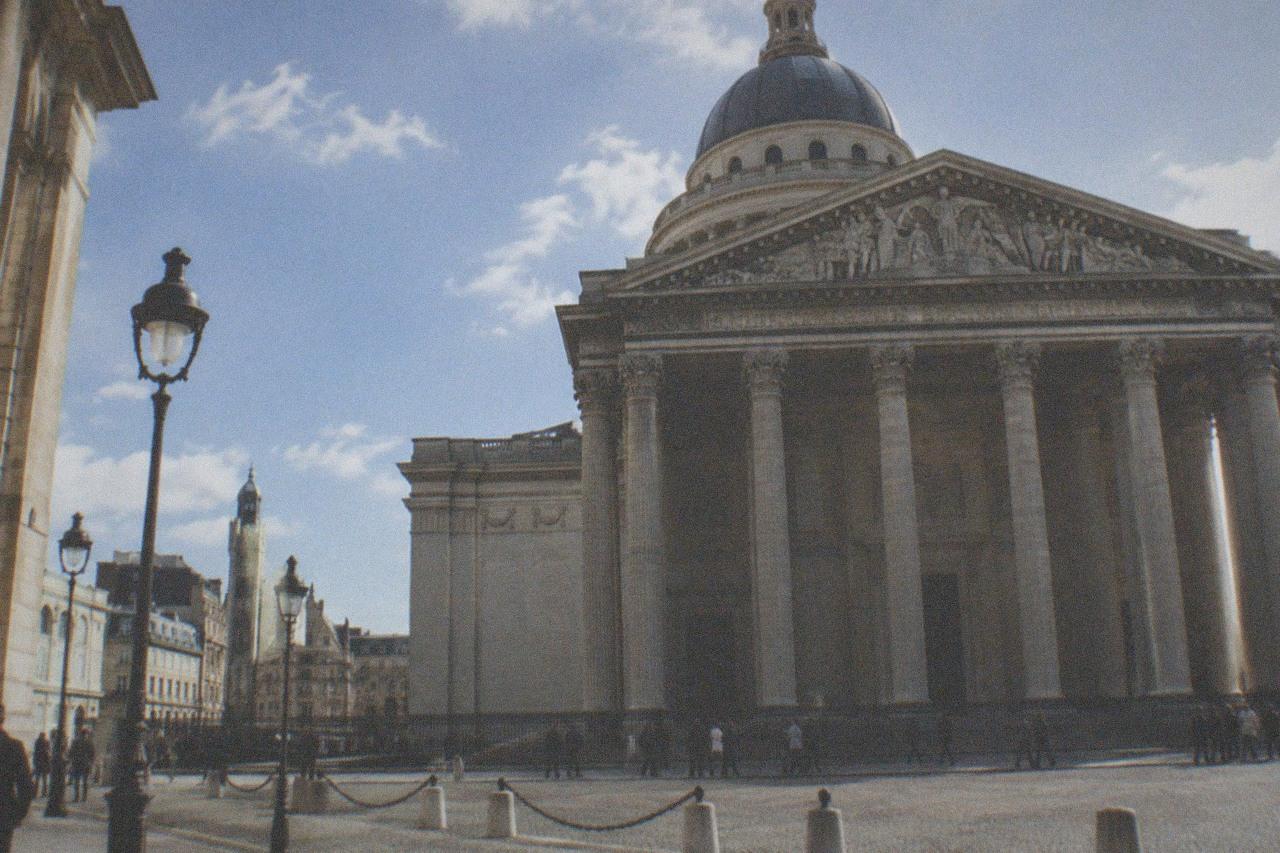
When you are planning a visit to the Panthéon, one of the most iconic landmarks covered by Paris Museums, the first question is usually about tickets. The monument sits high on the Montagne Sainte-Geneviève in the Latin Quarter, its vast dome visible from much of the left bank. It was built as a church, became a secular mausoleum during the Revolution, and has been a burial place for France's most honoured citizens ever since. The ticket system is straightforward, but the pricing has a seasonal and weekly rhythm that is worth understanding before you go.
Do You Need Tickets For The Panthéon In Paris, And Can You Buy Them At The Door?
Yes, you need a ticket to enter the Panthéon. You can buy one at the door with cash or card, and there is no compulsory timed reservation, so walk-up purchase is straightforward. However, booking online in advance guarantees entry and lets you skip the ticket queue, which can be long in peak season.
The Panthéon is a national monument managed by the Centre des Monuments Nationaux (CMN). Unlike the Louvre or the Musée d'Orsay, it does not require a timed entry slot for standard ticket holders. You can simply arrive, buy a ticket, and walk in. That said, the queue at the ticket desk can stretch to 30 minutes or more on busy summer afternoons and during school holidays. An advance online ticket, or a Paris Museum Pass, lets you join a separate, faster access line. The pass covers entry and does not need a reservation here, which makes it one of the easiest monuments to visit with the pass. For a full breakdown of which sites require a reservation even with the pass, read our Paris Museum Pass guide.
What does the ticket actually cover? The monument's own practical-information page answers that in one line: the ticket gives access to the nave and the crypt, and the panorama is not open to visitors. So you get the vast nave with Foucault's pendulum and the crypt where dozens of France's great figures are interred, and nothing above them. The dome colonnade, which used to carry the best left-bank view of the Eiffel Tower and the Sorbonne, is closed for renovation work with no reopening date published. Plenty of guides and resale listings still sell the climb; the monument does not.
How Much Does A Panthéon Ticket Cost And Who Gets In Free?
A standard adult ticket costs €16 from April to September, dropping to €13 on Wednesdays during that period and €13 throughout the winter months from October to March. Children under 18 and EU or EEA residents under 26 enter free with valid photo ID and proof of residency.
The pricing follows the same seasonal model as the Arc de Triomphe. From 1 April to 30 September, the full rate is €16. Every Wednesday in that window, the price is reduced to €13, a discount that is easy to miss if you are not looking for it. From 1 October to 31 March, the flat rate is €13 every day. There is no two-tier EEA/non-EEA pricing at the Panthéon, unlike the Louvre or Sainte-Chapelle. The price is the same for everyone.
Free entry under the CMN's national gratuity scheme applies here. Visitors under 18, of any nationality, are free with a photo ID. EU and EEA residents aged 18 to 25 are also free, but the rule is about residency, not citizenship. The official wording, quoted from the CMN's own conditions, covers "young people from the EU and EEA under 26 years old, including holders of a long-stay residence permit or visa over four months." A passport alone is not enough if you are a non-EU citizen; you need to show a valid residency card or visa. The same rule applies to teachers with a French Education Pass, disabled visitors with one companion, jobseekers, and recipients of French minimum social benefits. Each requires the relevant proof. If you are looking for museums that are free every day with no conditions at all, our free museums in Paris guide lists eleven city museums that never charge for their permanent collections.
The Panthéon also takes part in the CMN's first-Sunday free scheme, but only during the winter window. The monument is free on the first Sunday of every month from 1 January to 31 March and from 1 November to 31 December. Between April and October, first Sundays are charged at the normal rate. This is the same seasonal free pattern that applies to the Arc de Triomphe, Sainte-Chapelle, and the Conciergerie. If you are visiting Paris in the summer and hoping for a free Sunday, the Panthéon will not be on the list.
The Paris Museum Pass covers the Panthéon with no reservation required. You simply show your pass at the dedicated entrance and walk in. This makes it a strong value stop on a pass day, especially if you combine it with other nearby pass sites like the Conciergerie or Sainte-Chapelle. There is no dome supplement to worry about while the panorama is shut.
| Ticket type | Price | Notes |
|---|---|---|
| Adult, 1 Apr–30 Sep | €16 | Wednesday rate €13 |
| Adult, 1 Oct–31 Mar | €13 | All days |
| Dome panorama | Closed | Shut for works; the ticket covers the nave and crypt only |
| Under 18 | Free | Photo ID required |
| EU/EEA resident 18–25 | Free | Residency proof required |
| First Sunday, Jan–Mar & Nov–Dec | Free | No booking needed |
| Paris Museum Pass | Covered | No reservation |
What Is Inside The Panthéon And How Long Should You Allow?
The Panthéon houses the Foucault pendulum and a vast crypt holding the tombs of Voltaire, Rousseau, Victor Hugo, and Marie Curie. The dome panorama, the third thing it is known for, is closed for renovation work. Most visitors spend 60 to 90 minutes inside, which now covers the whole of what a ticket opens.
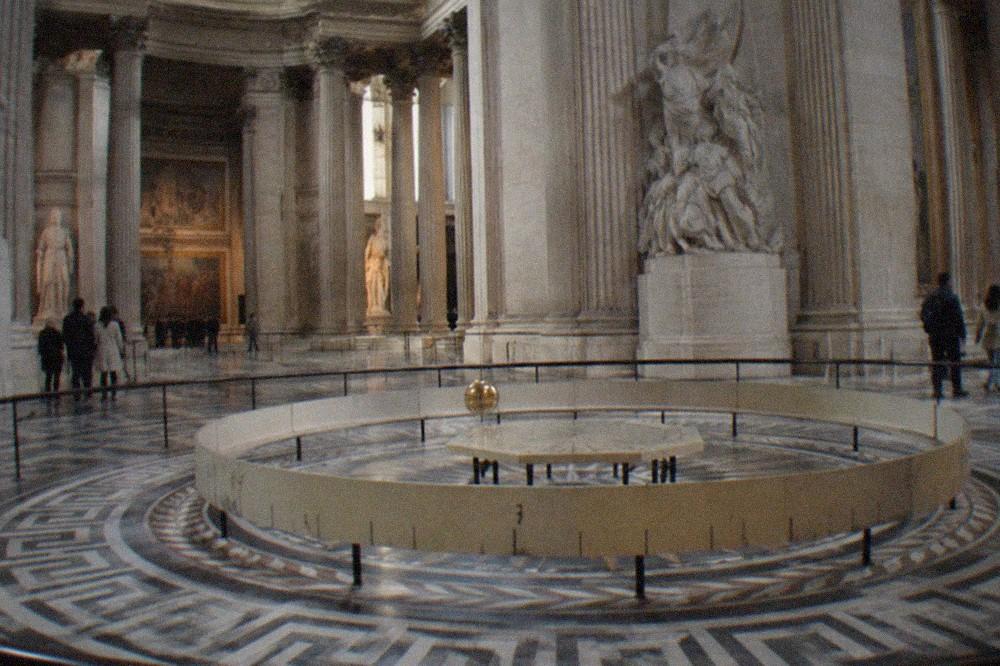
The moment you step inside, the scale of the place hits you. The nave is a huge, open volume beneath a dome that soars high above the floor. Suspended from the centre of the dome is Foucault's pendulum, the original experiment that demonstrated the Earth's rotation. A brass ball swings in a slow, mesmerising arc, knocking over pegs set in a circle of sand. It is the first thing most visitors stop to watch, and it is still the most elegant physics demonstration in Paris.
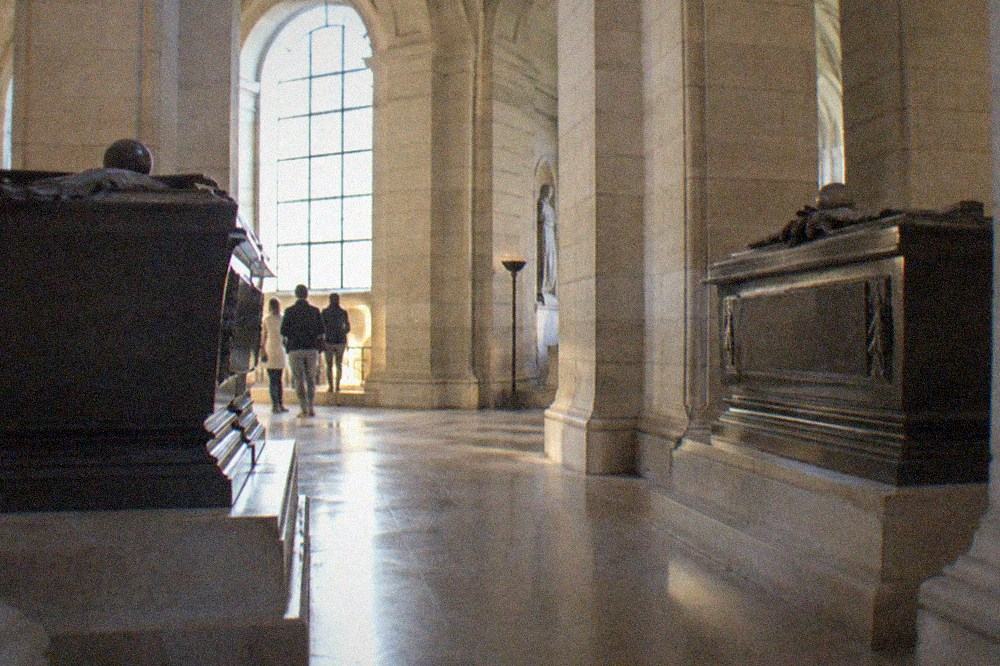
The crypt is the main reason the Panthéon exists. It spreads beneath the entire footprint of the building, a network of vaulted stone galleries lined with tombs. Voltaire and Rousseau face each other in the main hall, their tombs elaborate and theatrical. Victor Hugo lies in a shared vault with Émile Zola and Alexandre Dumas, the three great writers of 19th-century France brought together under one roof. Marie Curie and her husband Pierre were interred here in the late 20th century, the first woman honoured on her own merits. Other names you will recognise: Louis Braille, Jean Monnet, André Malraux, and the Resistance hero Jean Moulin. The crypt is cool, quiet, and unexpectedly moving, even if you arrive knowing nothing about the people buried here. Each tomb carries a short inscription, and the atmosphere is one of quiet reverence rather than a museum hush. You can walk the entire circuit in about 20 minutes, but many visitors find themselves lingering over the names and the history they represent.
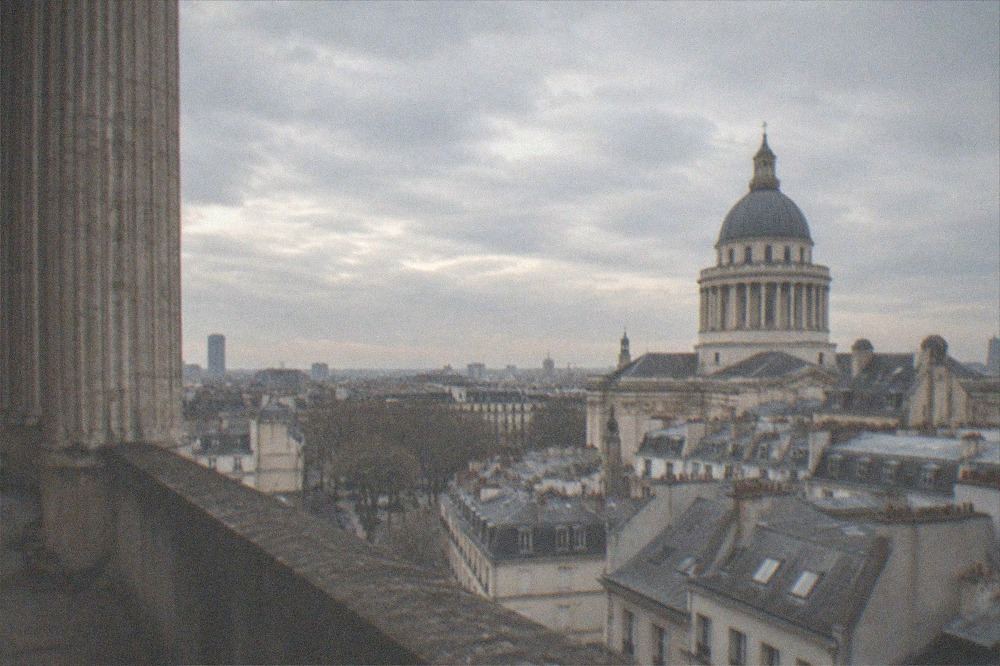
The dome climb is the part you should not plan around. A spiral staircase of a couple of hundred steps used to reach the external colonnade, where you looked straight across to the Eiffel Tower, down over the Sorbonne and the Luxembourg Gardens, and out to Montmartre on a clear day. The monument's own page now reads that the panorama is closed for works and not open to visitors, and it publishes no reopening date. If a rooftop view is the reason you are climbing the Montagne Sainte-Geneviève, the Arc de Triomphe terrace is the substitute worth booking instead.
Most visitors spend an hour inside the nave and crypt, rising to 90 minutes if they read the panels and linger over the tombs. With the panorama closed, that is the whole visit. The monument has a small gift shop and clean toilets, but no café. The Place du Panthéon outside has several brasseries where you can sit and look at the facade over a coffee. If you are building a longer left-bank morning, the Panthéon pairs naturally with the nearby Musée de Cluny or a stroll through the Luxembourg Gardens, both of which are covered in our three-day Paris museum itinerary.
How Does The Panthéon Compare To Sainte-Chapelle And The Conciergerie?
The Panthéon is a mausoleum of national heroes with a dome view, while Sainte-Chapelle is a jewel box of 13th-century stained glass and the Conciergerie is a medieval palace turned Revolutionary prison. All three are CMN monuments on the Île de la Cité or the left bank, and a combined visit is easy in one morning.
These three monuments sit within a 20-minute walk of one another, and they are often bundled on the same ticket or pass day. The Panthéon is the largest and takes the longest to visit. Sainte-Chapelle is the smallest and can be seen in 30 minutes if you are short on time, though the stained glass rewards a longer stay. The Conciergerie is a darker, more sombre experience, with its reconstructed Revolutionary cells and Marie Antoinette's chapel. Walking from the Panthéon down the hill to the Île de la Cité takes about 15 minutes, passing the Sorbonne and the Shakespeare and Company bookshop along the way. The route is flat once you reach the river, and the three monuments together make a coherent historical arc: from the grand tombs of the nation's heroes, to the medieval justice of the Conciergerie, to the divine light of Sainte-Chapelle.
Price-wise, the Panthéon's €13–€16 compares with Sainte-Chapelle at €16–€22 and the Conciergerie at €13. A combined Sainte-Chapelle and Conciergerie ticket is available for $34.95 on booking platforms, which saves a few euros over buying separately. The Panthéon is not part of that combined ticket, but all three are on the Paris Museum Pass. If you hold a pass, you can visit the Panthéon in the morning, walk down the hill to the Conciergerie and Sainte-Chapelle on the Île de la Cité, and still have the afternoon free. The pass also covers the nearby Musée de Cluny, which sits roughly halfway between the Panthéon and the river, making a four-stop morning entirely feasible.
The free-Sunday rules align: all three are free on the first Sunday from November to March, and all three charge on first Sundays from April to October. If you are visiting in January, you can do all three for nothing. If you are visiting in July, you will pay full price at each. The Panthéon is open every day of the week, while Sainte-Chapelle and the Conciergerie are also open daily, so there is no closed-day clash to work around. The one thing none of the three offers at the moment is a view, because the Panthéon's dome panorama is shut for works.
Is The Panthéon Open Every Day And When Is The Best Time To Visit?
The Panthéon is open every day with no weekly closure. It opens at 10:00 AM and closes between 6:00 PM and 6:30 PM depending on the season, with last entry 45 minutes before closing. Mornings right after opening are the quietest.
The monument's opening hours are stable and reliable. From April to September, it runs from 10:00 AM to 6:30 PM. From October to March, it closes half an hour earlier at 6:00 PM. Last entry is always 45 minutes before the doors shut, so aim to arrive no later than 5:15 PM in winter and 5:45 PM in summer. There is no dome tour to time your arrival around while the panorama is closed.
There is no closed day, which makes the Panthéon a useful fallback on a Monday or Tuesday when many other museums are shut. It is open on 1 January, 1 May, and 25 December, though hours may be shortened. The only day it closes entirely is 14 July, when the military parade on the Champs-Élysées takes precedence, and even then the closure is not every year. Check the official website before visiting on a public holiday.
The quietest time to visit is the first hour after opening, especially on weekdays outside school holidays. By 11:00 AM, tour groups begin to arrive, and the nave can feel busy. Late afternoon, after 3:00 PM, is also quieter, and with the dome closed there is no climb to run out of time for. Wednesday mornings are a sweet spot: the reduced €13 rate attracts some extra visitors, but it is still far calmer than a Saturday. If you are using the Paris Museum Pass, you can walk straight in at any time, which makes the timing less critical.
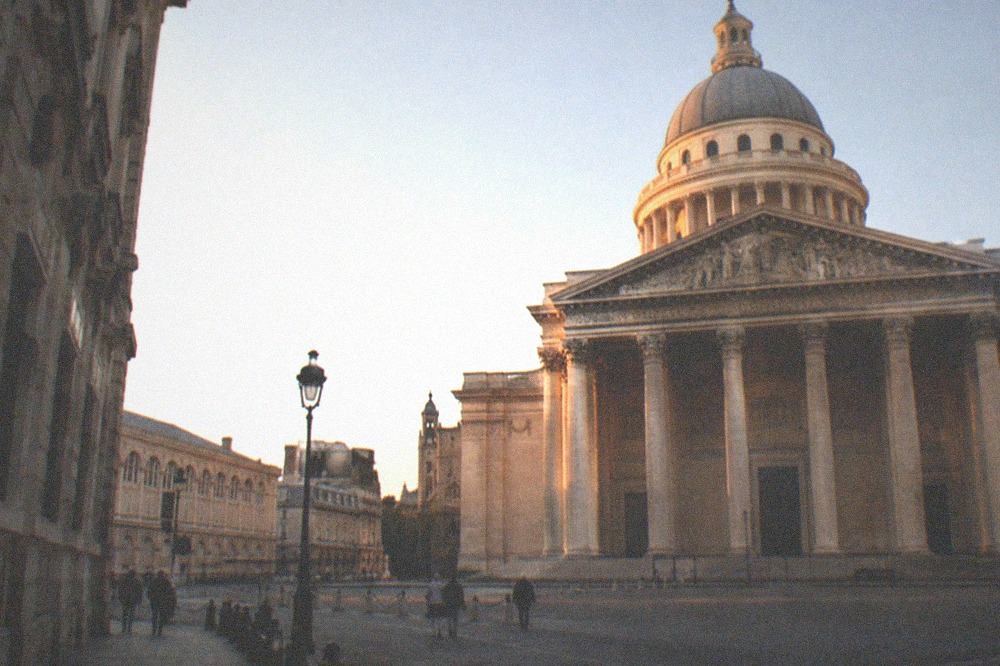
The Panthéon is not a museum with rotating temporary exhibitions, so there is no seasonal rush tied to a blockbuster show. The one exception is the annual "Nuit Blanche" in October, when the monument stays open late and entry is free, drawing large crowds. Outside that single night, the flow of visitors is steady and predictable. The building itself has a fascinating history: commissioned by Louis XV after a serious illness, it was completed just in time for the Revolution to transform it from a church into a temple to the nation's great men. The inscription above the entrance, "Aux grands hommes la patrie reconnaissante," sets the tone before you even step inside. That sense of national purpose, combined with the sheer architectural ambition of the dome, makes the Panthéon feel different from every other monument in Paris.
The Panthéon sits in a neighbourhood that rewards exploration. The Latin Quarter, the Sorbonne, the Luxembourg Gardens, and the Arènes de Lutèce are all within a ten-minute walk. A morning at the Panthéon followed by a stroll through the gardens and lunch on the rue Mouffetard makes a classic left-bank day. If you are building a longer itinerary, our three-day Paris museum itinerary places the Panthéon alongside other left-bank stops.
Common Questions About The Panthéon In Paris
Do You Need Tickets For The Panthéon In Paris, And Can You Buy Them At The Door?
Yes, you need a ticket. You can buy one at the door with cash or card, and there is no compulsory timed reservation. An advance online ticket or Paris Museum Pass lets you skip the ticket queue.
How much does a Panthéon ticket cost?
A standard adult ticket costs €16 from April to September, €13 on Wednesdays in that period, and €13 from October to March. There is no dome supplement, because the panorama is closed for works.
Who gets free entry to the Panthéon?
Children under 18 and EU/EEA residents aged 18 to 25 enter free with photo ID and proof of residency. The rule covers long-stay visa holders, not just citizens. The monument is also free on the first Sunday from January to March and November to December.
Is the Panthéon covered by the Paris Museum Pass?
Yes, the Paris Museum Pass covers entry with no timed reservation required. You can walk straight in, and there is no dome supplement while the panorama is shut.
What is inside the Panthéon?
The Panthéon contains Foucault's pendulum and a vast crypt with the tombs of Voltaire, Rousseau, Victor Hugo, Marie Curie, and many others. The dome panorama is closed for renovation work, so the nave and the crypt are what a ticket opens.
How long do you need at the Panthéon?
Most visitors spend 60 to 90 minutes in the nave and crypt, and with the dome panorama closed for works that covers the whole visit.
Is the Panthéon open every day?
Yes, it is open every day with no weekly closure. Hours are 10:00 AM to 6:30 PM (April to September) and 10:00 AM to 6:00 PM (October to March). Last entry is 45 minutes before closing.
How does the Panthéon compare to Sainte-Chapelle?
The Panthéon is a mausoleum whose dome panorama is currently closed for works, while Sainte-Chapelle is famous for its 13th-century stained glass. Both are CMN monuments and are free on the same winter first Sundays. The Panthéon takes longer to visit and costs slightly less.