Do You Need A Ticket To Enter The Palais Garnier, And Is There A Dress Code?
Yes, you need a ticket to enter the Palais Garnier. Here is what it costs, what it covers, when the building shuts, and what to wear for a visit or a performance.
Do You Need A Ticket To Enter The Palais Garnier, And Is There A Dress Code?
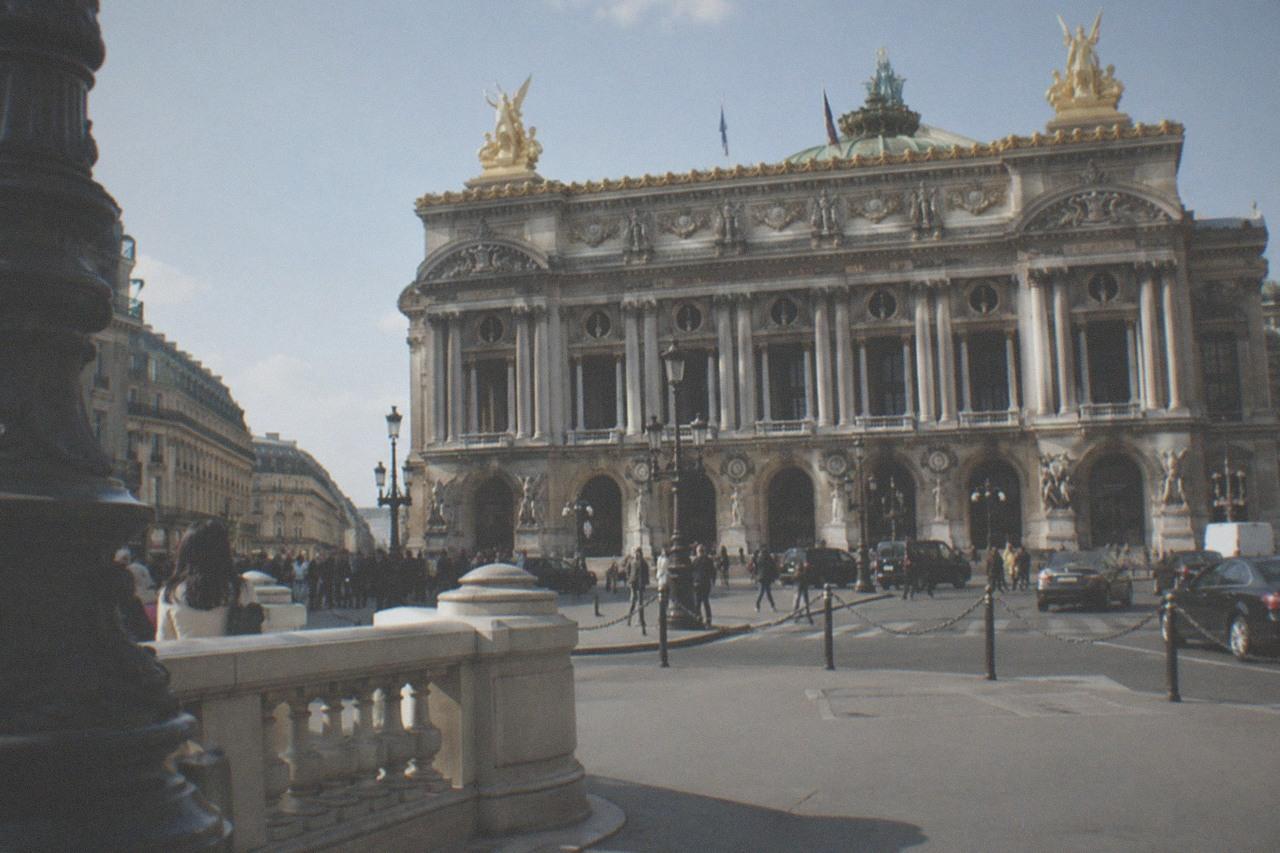
Yes, you need a ticket to enter the Palais Garnier as a visitor: the building is the Opéra's working theatre, not a public lobby, and entry is sold as a timed online ticket at €15 for France and EEA visitors and €25 for everyone else. There is no dress code for a daytime visit. Dress matters only for evening performances.
That is the short version, and it surprises two groups of people. The first group assumes the Palais Garnier works like a church or a city museum, somewhere you drift in off the Place de l'Opéra for a free look. It does not. The opera house on the boulevard des Capucines belongs to the Opéra national de Paris, it hosts rehearsals, stage builds and performances most days of the year, and the areas a tourist can see are managed as a paid attraction with a timed entry slot. The second group assumes the opposite extreme: that a building this formal must enforce black tie at the door. It does not. A daytime visit carries no dress requirement at all, and reviewers regularly describe touring it in exactly the clothes they walked around Paris in all day.
The ticket itself behaves differently from almost every other paid landmark in this city, and the differences are worth spelling out before you buy anything. There are no door sales at all. Whatever you read about turning up and paying at a desk, the current arrangement is online-only purchase, with a timed slot attached, and that slot is what gets you through the security perimeter. The venue's own visit page on the Opéra de Paris site is the source for the current arrangements, and it is the one page worth re-reading close to your travel date because rehearsal calendars shift.
The price is also two-tier, and this is the part most non-European visitors miss. France and EEA visitors pay €15, and visitors from outside the EEA pay €25. The same two-tier shape has appeared at the Louvre, which now charges €22 for EEA visitors against €32 for everyone else, and at Sainte-Chapelle, which charges €16 against €22. If you are planning a Paris itinerary around several major landmarks, that structure can add up meaningfully, and it is one reason the Paris Museums site keeps the two figures separate wherever a venue charges them. A bookable entry option also exists from $29.08, which is a platform from-price and not the same figure as the door price in euro.
If you are weighing this visit against the other big ticketed landmarks of the city, here are the three most commonly compared side by side:
What Is Actually Inside The Palais Garnier?
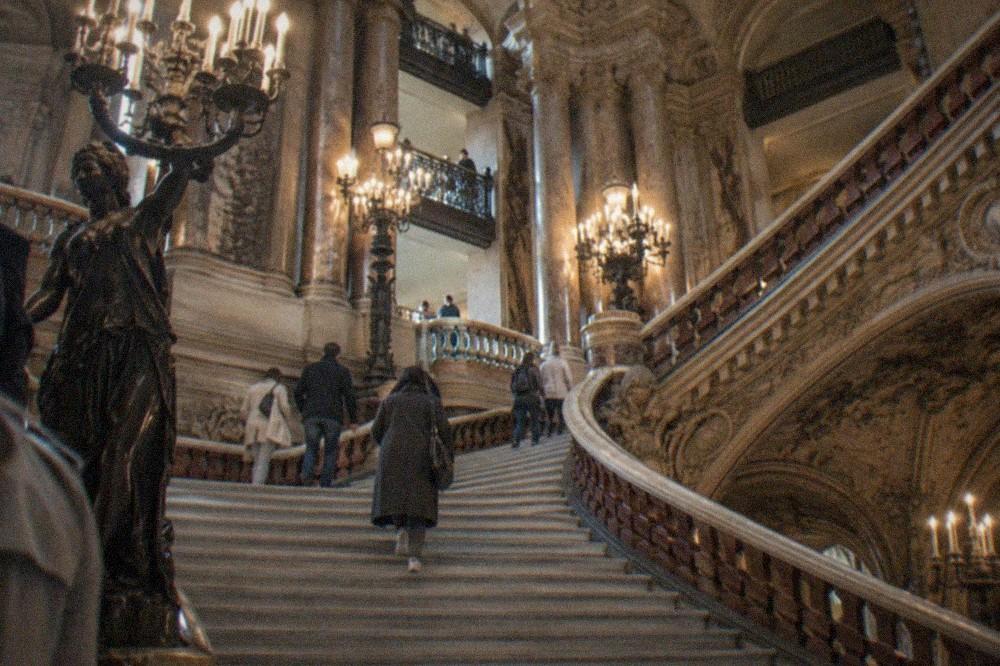
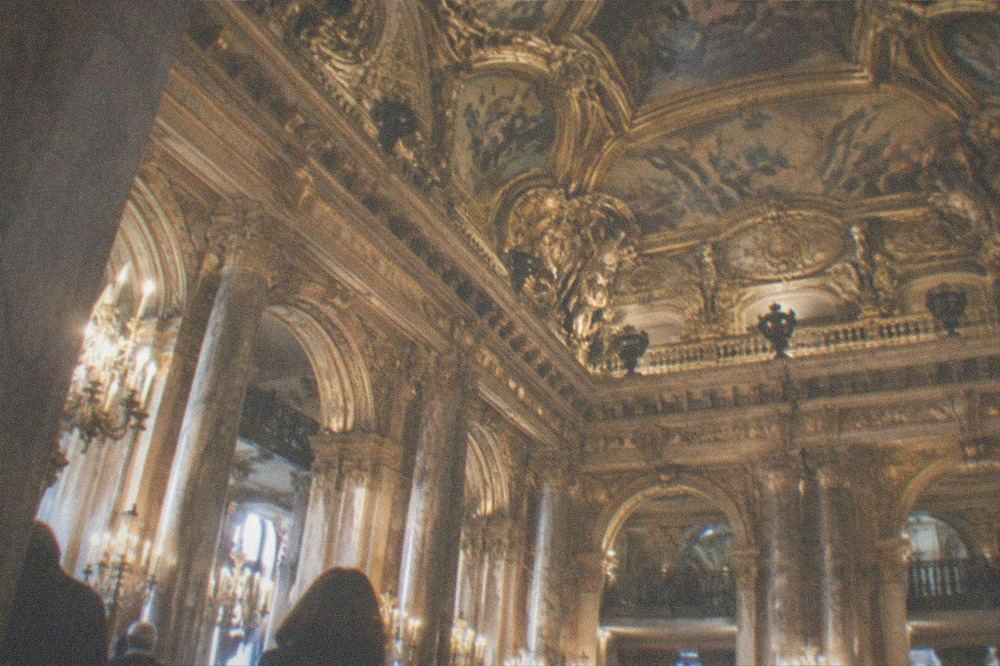
A visit ticket covers the building's grand public spaces: the marble Grand Staircase, the foyers and galleries, the famous auditorium when the stage schedule allows it, and the museum-library spaces devoted to the opera's own history. It is an architecture and atmosphere visit rather than a collection, so plan for looking rather than for reading panels.
Charles Garnier finished the house for Napoleon III, and nearly everything a tourist comes to see is decorative architecture rather than exhibits. The Grand Staircase is the first reveal, a sweep of marble in contrasting colours under a gilded balustrade, and it is the space reviewers photograph most. The auditorium, wrapped in red velvet and gilding under its chandelier, sits about 1,900 people and is the emotional centre of the visit when it is open to view. The ceiling above it was repainted by Marc Chagall in the 1960s, and the original design hangs nearby in the museum space. The foyers, the grand avant-foyer with its mosaics, and the round salon that looks back down the avenue de l'Opéra are all on the visitor route.
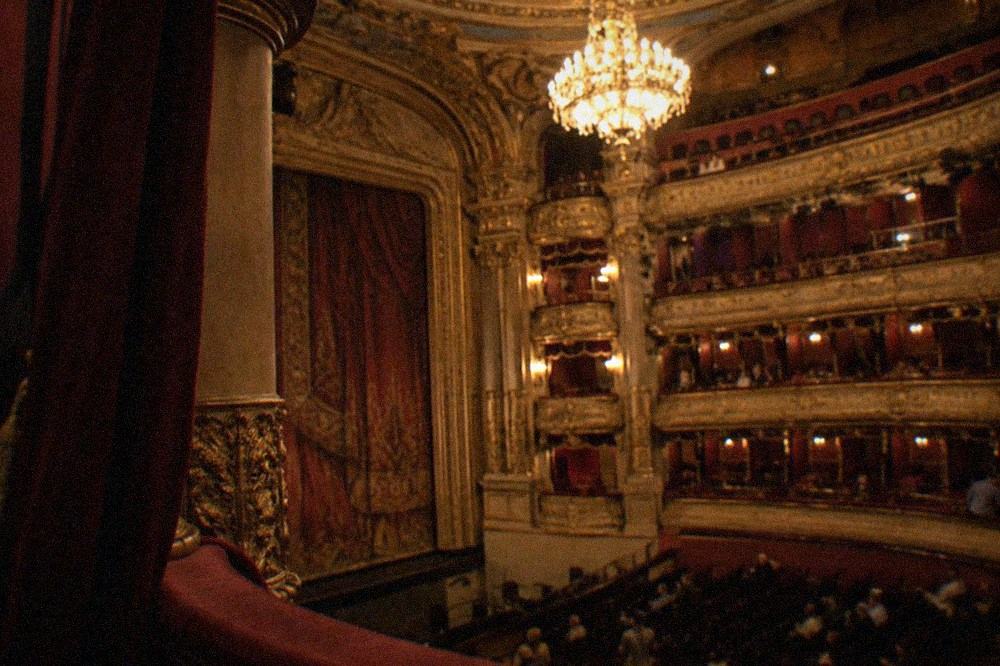
The caveat that matters most: the auditorium is a working stage. When a rehearsal, a technical session or a fitting is running, the house may close that space, restrict the route, or shut entirely for the day, and it does so without a fixed weekly pattern. Unlike the Louvre, which closes every Tuesday, or the Musée d'Orsay, which closes every Monday, the Palais Garnier has no published closed weekday at all. Its reliability problem is the opposite one: any day can be lost to the stage schedule, sometimes at short notice. The practical defence is a morning slot booked for the first day of your stay, so a closure leaves you room to retry.
That working-theatre character is also what makes the building worth the price for many visitors. Reviewers rate it 4.6 across 19,247 reviews, and they repeatedly make the same comparison: the Palais Garnier is the one major Paris interior where the decoration is the exhibit, and where the visit feels closer to attending something than to touring something. Reviewers who came straight from a museum afternoon often call the contrast the point, a building whose every surface was designed to be an evening's destination in itself. A few note the reverse, that they wanted more explanation and fewer gilded corridors, so read the route for what it is before you expect a museum's worth of content.
If the timing and the online-only purchase feel like friction, a bookable entry option takes care of the slot for you, and it is worth checking before you commit a day:
How Much Does A Palais Garnier Ticket Cost, And Who Gets In Free?
Entry is €15 for visitors from France and the EEA and €25 for everyone else, sold online only, with bookable options from $29.08. There is no free day, no first-Sunday rule, and no Paris Museum Pass coverage, and the pass exclusion is permanent rather than seasonal.
The two-tier price deserves a moment of attention because it is the same pattern now in force at the Louvre and at Sainte-Chapelle, and it changes the arithmetic for non-European visitors. A household of two from outside the EEA pays €50 for the pair, against €30 for the same visit by two residents of the EEA. Neither figure buys a guided tour; both buy the timed self-guided entry described above. The bookable entry from $29.08 is a separate thing, a platform from-price that typically bundles the timed slot with the convenience of not negotiating the box office's own calendar, and it should be compared against the €15/€25 figures rather than confused with them.
| Entry option | Price | What it buys |
|---|---|---|
| Self-guided visit, France and EEA visitors | €15 | Timed entry to the public spaces and auditorium when open |
| Self-guided visit, outside the EEA | €25 | The same route and the same timed slot |
| Bookable entry option | from $29.08 | A platform from-price for a timed entry, never the same figure as the door price |
Who gets in free is a shorter answer than at almost any other Paris landmark, and that shortness is itself useful for planning. There is no free Sunday of any kind. There is no age-based published exemption equivalent to the national-museum rule that makes under-18s and EU and EEA residents under 26 free at the Louvre, because the Palais Garnier is an opera house run by the Opéra national de Paris rather than a national museum or monument. And there is no pass coverage: the Paris Museum Pass exclusion list names the Opéra Garnier explicitly, alongside the Eiffel Tower, the Catacombes and the Atelier des Lumières, so anyone holding a pass still buys a full-price timed ticket here. The pass's own terms page at parismuseumpass.fr is the place that list is published, and it is worth a glance if you are deciding whether a pass makes sense for your itinerary at all.
The practical booking question is timing. Because slots are timed and the building's capacity for visits is limited by the stage schedule, morning slots on weekends go first, and a same-day purchase is a gamble in high season. Bookable entry at Palais Garnier tickets and timed entry lays out the current options, and the honest advice is to book the moment your dates are fixed, then hold your plans loosely if a rehearsal takes the auditorium away. Reviewers who booked late consistently report the better slots gone, while those who booked early mostly report the opposite.
If the timed-entry model of Paris landmarks is new to you, the same logic applies across the city, and it is worth understanding once. The Louvre demands a compulsory timed slot even for pass holders, Versailles demands a separate timed reservation from anyone with a pass, and the pattern here is the same at heart: the landmark controls daily flow by making the slot, not the payment, the scarce thing. Our piece on should you buy Musée d'Orsay tickets in advance walks through the same decision at the impressionist end of town.
How Long Should You Allow, And When Is It Shut?
Plan on an hour to an hour and a half for the visit itself, longer if you linger in the foyers or the library-museum. There is no fixed closed day; instead the house closes without warning for rehearsals, so a morning slot early in your stay is the safest structure, with a spare day behind it.
Time inside divides naturally. The staircase and the foyers take about half that window at a relaxed pace. The auditorium viewing, when the stage allows it, adds the rest, and the library-museum spaces reward another fifteen to twenty minutes for anyone interested in the opera's own history. Visitors who describe the route as quick are usually the ones whose auditorium access was restricted, which is one more reason the rehearsal calendar matters more than any clock. Adding the surroundings, the Place de l'Opéra itself, the Café de la Paix across the square, and the Grands Boulevards a short walk away, makes this a comfortable half-day block anchored by the visit.
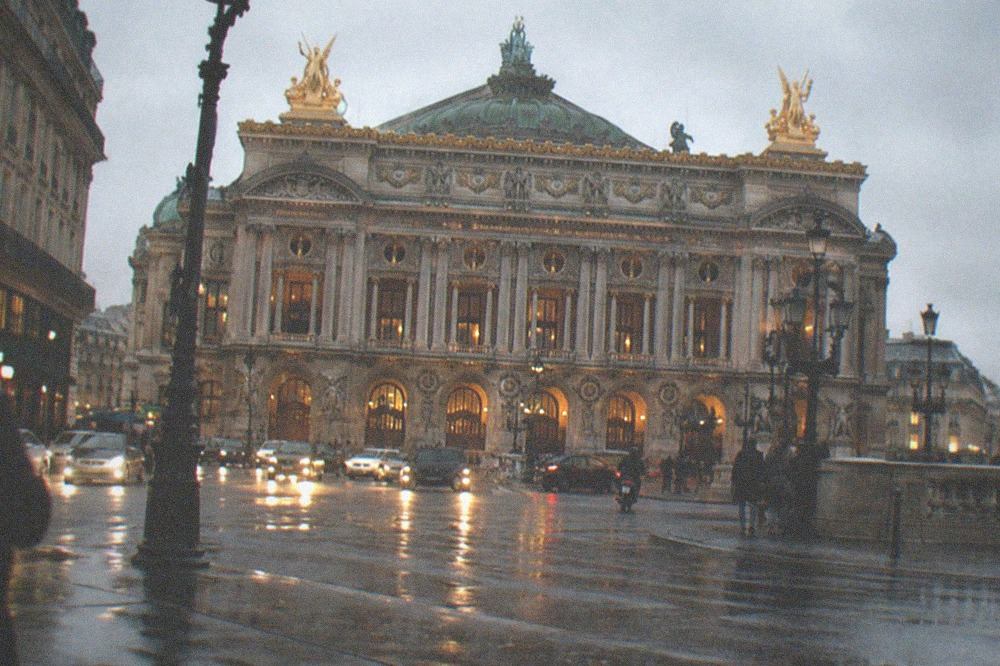
| Planning fact | The arrangement at the Palais Garnier |
|---|---|
| Closed day | None fixed; closures happen for rehearsals and stage builds without a weekly pattern |
| Timed entry | Compulsory, on every ticket |
| Door sales | None; tickets are sold online only |
| Area | 9th arrondissement, Place de l'Opéra |
| Visitor rating | Reviewers rate it 4.6 across 19,247 reviews |
| Pass coverage | Excluded from the Paris Museum Pass |
The dress-code half of the original question belongs here too, because the answer changes with the clock. For the daytime visit, nothing is required and nothing is checked; visitors tour in sneakers, jeans and rain jackets every day, and nobody is turned away for clothing. The etiquette question only becomes real in the evening, when the same building fills with an audience. For a performance, the house expects the kind of clothes people wear to a nice restaurant in the evening, and opera-goers do treat it as an occasion, though the Opéra does not police a formal rule for the auditorium either. If your question is really whether jeans are a problem anywhere in formal Paris, the same reasoning applies at the Louvre, which we cover separately in can you wear jeans at the Louvre. The short principle: daytime visits never check, evening performances reward effort, and the gap between the two is smaller than most people fear.
One more timing note that is easy to miss. Because the ticket is timed and the building's day is shaped around the stage, late slots are riskier than early ones, since a rehearsal that overruns eats the end of the visiting day first. A 10am slot survives almost every schedule; a 5pm slot survives some of them. Build your Garnier morning around that asymmetry and the building almost always delivers.
How Does The Palais Garnier Compare With Its Nearest Alternatives?
Against Sainte-Chapelle and Versailles, the Palais Garnier is the interior-architecture choice: €15 or €25 for an hour inside a working theatre, versus €16 or €22 for a stained-glass chapel on the Île de la Cité and €35 in high season for a whole royal estate at Versailles. It is the cheapest of the three for EEA visitors and the shortest visit of the three for everyone.
The comparison is fair because these three get booked by the same traveller in the same week, but they reward different instincts. Sainte-Chapelle is a concentrated hit: 1,113 square metres of stained glass in a single upper chamber, a visit measured in minutes rather than hours, €16 for EEA visitors and €22 from outside, free the first Sunday of the month from January to March and November to December only, and open every day with no closed weekday. Versailles is the opposite extreme, a full-day commitment, €35 for the Passport from April to October and €25 the rest of the year, closed Monday, and a compulsory timed reservation even for pass holders. The Garnier sits between them: more interior than Sainte-Chapelle, less land than Versailles, and a schedule no guide can promise because rehearsals, not a calendar, decide.
| Landmark | Door price | Closed day | Timed entry | On the pass | Visitor rating |
|---|---|---|---|---|---|
| Palais Garnier | €15 EEA / €25 non-EEA | None fixed, shuts for rehearsals | Compulsory | No | 4.6 / 19,247 |
| Sainte-Chapelle | €16 EEA / €22 non-EEA | None | Compulsory | Yes, reservation still needed | 4.3 / 141 |
| Palace of Versailles | €35 high season / €25 low | Monday | Compulsory | Yes, reservation still needed | 4.7 / 11,852 |
For a choice between them, think about what your trip is missing rather than what ranks highest. If your itinerary is already full of paintings and old masters, the Garnier adds something none of the museums have, a functional palace of the performing arts where you stand inside the audience's own scenery. If your trip is churches and monuments, Sainte-Chapelle is the sharper single experience per euro and per minute, and the combined ticket with the Conciergerie next door suits a half-day on the Île de la Cité; our guide to how long the wait for Sainte-Chapelle is and the combined ticket covers that pairing in detail. Versailles belongs in the day-trip column, not the city column, and it deserves a whole day rather than the tail end of one.
If the chapel-and-palace pairing appeals, here is the Sainte-Chapelle side of that choice:
A final thought on how the Garnier fits a museum-heavy plan. Paris rewards the visitor who breaks up paintings with spaces, and the opera house is the most efficient such break in the 9th arrondissement: it costs less than the Louvre in every case, takes under two hours, and sits directly above a métro interchange that connects to almost everything else you are doing. The people who regret it are, in the reviews, overwhelmingly the people who arrived expecting a museum, and the people who love it arrived expecting a theatre. Set the expectation correctly and the ticket earns its price on the staircase alone.
Before the closing questions, here are the three landmarks of this comparison one more time, side by side, if you are deciding tonight:
Common Questions About The Palais Garnier
Do You Need A Ticket To Enter The Palais Garnier, And Is There A Dress Code?
Yes, a ticket is required: the Palais Garnier is a working opera house and entry is a paid, timed, online-only ticket at €15 for France and EEA visitors and €25 for everyone else. There is no dress code for a daytime visit; dress only matters for evening performances.
How Much Is Entry To The Palais Garnier?
€15 for visitors from France and the EEA, and €25 for visitors from outside the EEA. Bookable entry options start from $29.08, which is a platform from-price and not the same figure as the door price in euro.
Can You Buy A Palais Garnier Ticket At The Door?
No. The Palais Garnier sells no tickets at the door at all. Purchase is online only, every ticket carries a compulsory timed slot, and same-day booking in high season is a gamble for the better morning slots.
Is The Palais Garnier Open Every Day?
It has no fixed closed day, unlike the Louvre which closes Tuesdays or the Musée d'Orsay which closes Mondays. Instead it closes without warning for rehearsals and stage builds, so a morning slot early in your stay, with a spare day behind it, is the safe structure.
Is The Palais Garnier Included In The Paris Museum Pass?
No. The Opéra Garnier is on the pass's exclusion list, alongside the Eiffel Tower, the Catacombes, the Atelier des Lumières and every Paris Musées city museum, so a pass holder still buys a full-price timed ticket here.
Who Gets Into The Palais Garnier For Free?
Nobody under a published free rule. There is no free Sunday, no first-Sunday arrangement, and the national-museum exemptions that make under-18s and EU and EEA residents under 26 free at the Louvre do not apply, because the Palais Garnier is run by the Opéra national de Paris, not as a national museum.
How Long Does A Visit To The Palais Garnier Take?
Plan on an hour to an hour and a half for the self-guided route through the staircase, foyers and auditorium, longer if you linger in the library-museum. Auditorium access can be restricted when the stage is in use, which is the main thing that shortens or lengthens a visit.
What Should You Wear To Visit The Palais Garnier?
Whatever you wear to walk around Paris. Daytime visits have no dress code and nothing is checked at entry. For evening performances the house is a formal setting and audiences dress accordingly, though no formal rule is enforced for the auditorium.