Can You Wear Jeans At The Louvre?
Yes, jeans are completely fine at the Louvre. The museum has no dress code; its rules concern security, bags and timed entry. Ticket prices, free categories and planning advice, all verified.
Can You Wear Jeans At The Louvre?
Yes, completely. The Louvre has no dress code of any kind: jeans, sneakers, shorts and casual layers are all fine, and nobody is turned away for an outfit. The rules that matter concern security screening, bag size and timed entry, not clothing. On any given day a large share of the crowd in front of the Mona Lisa is wearing denim.
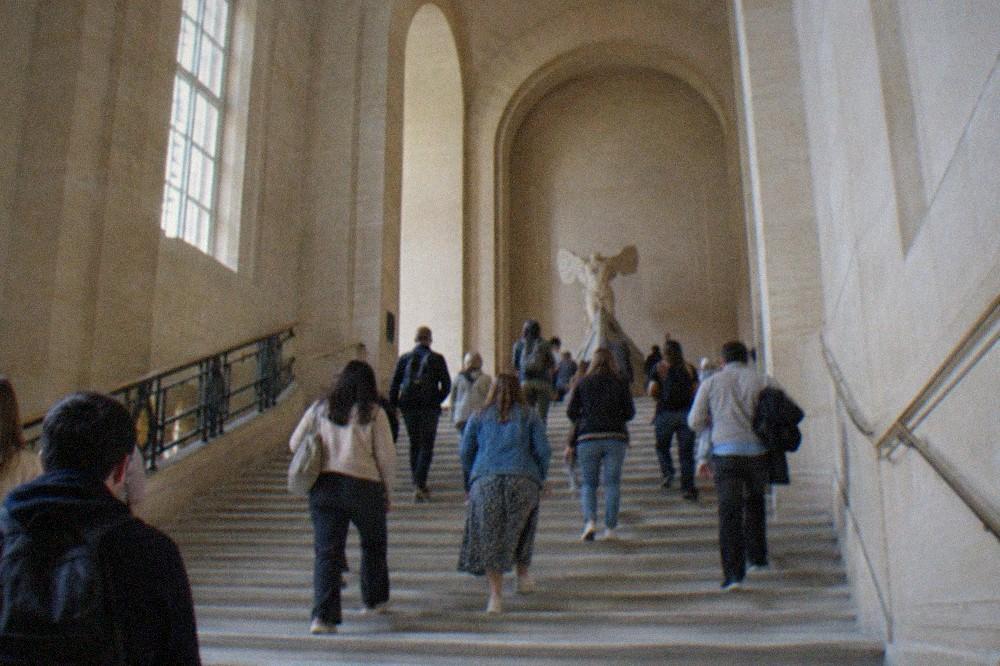
This question gets asked more often than you would expect, and the answer is settled. Paris museums do not police fashion. The Louvre's own practical information covers admission, free days, timed entry and the list of available galleries, and none of it says a word about clothing. What it does describe is a security perimeter, a compulsory entry slot and a building so large that the real constraint on your day is stamina, not style.
The worry usually comes from a genuine place. People have read that some Paris venues care about dress, and a few do: upscale restaurants, some clubs and certain private events. None of that applies to a national museum. The Musée du Louvre is a public institution receiving millions of visitors a year, from school groups in track suits to travelers straight off a flight in hiking gear. Reviewers consistently report being waved through in exactly the clothes they wore on the street.
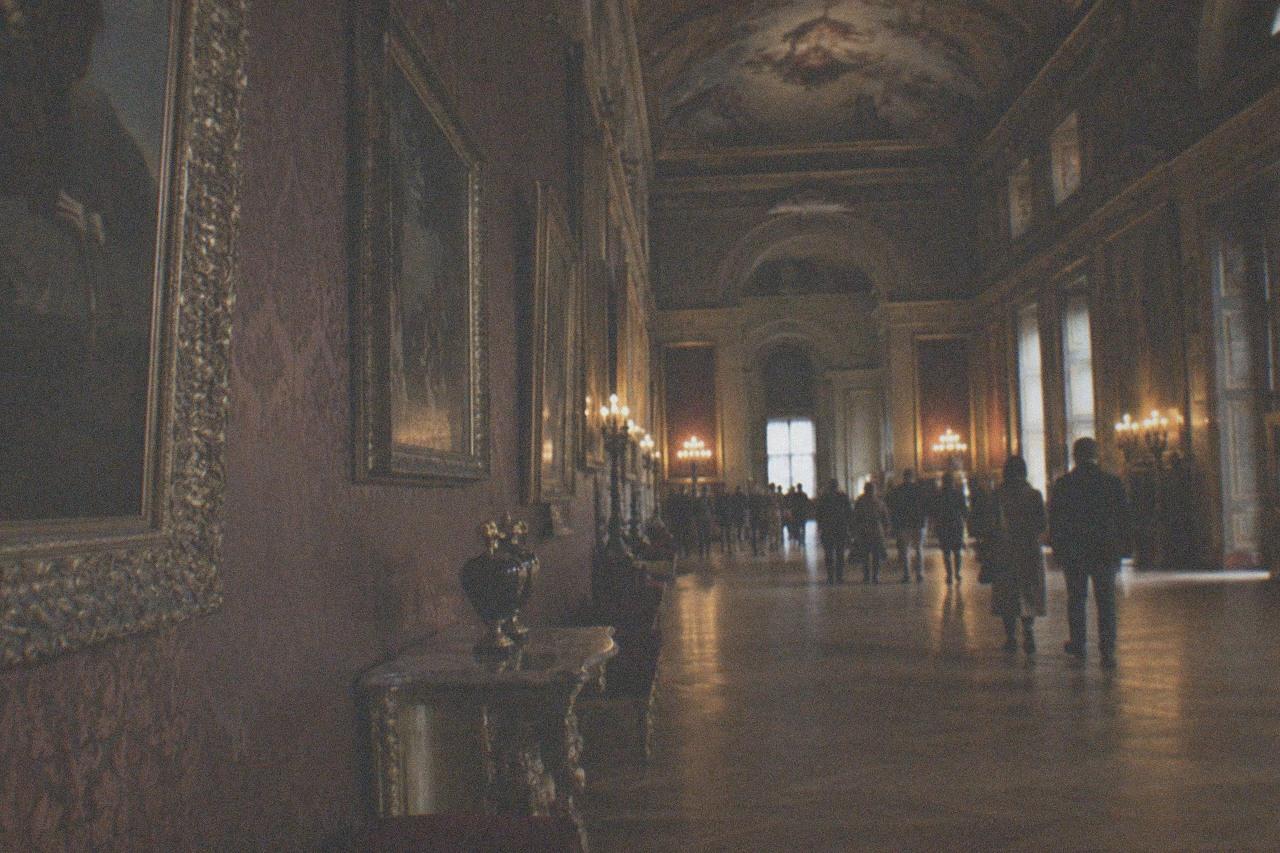
Denim specifically is everywhere in the museum. It is arguably the most practical choice, because a Louvre day involves an outdoor queue, hours of walking on hard stone floors and possibly a sprawl on a bench in the Galerie d'Apollon. Jeans survive all of that better than most alternatives. If anything, the advice runs the other way: dress for a long walk, not for a gallery opening.
For the practical side of getting in, from the timed slot to the door price, this site's companion piece on how much a Louvre ticket costs covers the money in detail, and Louvre tickets and timed entry options lay out the bookable routes. Neither page will ask what you are wearing either.
Is There A Dress Code At The Louvre?
No. The Louvre publishes no dress code on its official visit page, and staff enforce access rules, not fashion rules. There is no required style, no ban on denim, no footwear rule and no appearance check at the door. What the museum checks is your ticket slot, your bag and prohibited items, and that is the full extent of it.
The clearest way to see this is to read what the museum actually regulates. The official hours and admission page sets out prices, free categories, the timed-entry requirement and the free Friday evening. Clothing never appears. Security screening at the entrance looks at what is in your bag, not what is on your back. That distinction is the whole answer to this question in one line.
| Topic | What the rule actually is |
|---|---|
| Clothing style | No rule, no code, no check |
| Denim and jeans | Fully welcome, worn by a large share of visitors |
| Footwear | Any footwear is accepted; comfort is your own problem |
| Bags | Subject to entrance security screening; size is the concern |
| Timed entry | Compulsory for every visitor, ticket or free category |
| Closed day | Tuesday, every week |
The one place dress intersects with a Louvre visit is the queue outside the Pyramid, which is open to the weather. That is a layers question, not a fashion question. Bring something warm in winter, something you can tie around your waist in summer, and shoes you have already broken in. Beyond that, the museum is indifferent, and honestly so are the paintings.
A useful comparison: the strictest dress rules in Paris belong to religious buildings and nightlife, not to museums. The Louvre sits at the permissive end of that spectrum. Visitors who have toured other major institutions will find nothing here they have not seen before, and the infogain facts below concern money and timing, the two things the museum is strict about.
What Is Actually Inside The Musée du Louvre?
The Louvre's collection spans ancient Egypt, Greek and Roman antiquity, Islamic art, decorative arts, Italian Renaissance painting and French painting, spread across three wings around the Pyramid. The three works most visitors come for are the Mona Lisa, the Venus de Milo and the Winged Victory of Samothrace. None of them requires any particular outfit to stand in front of.
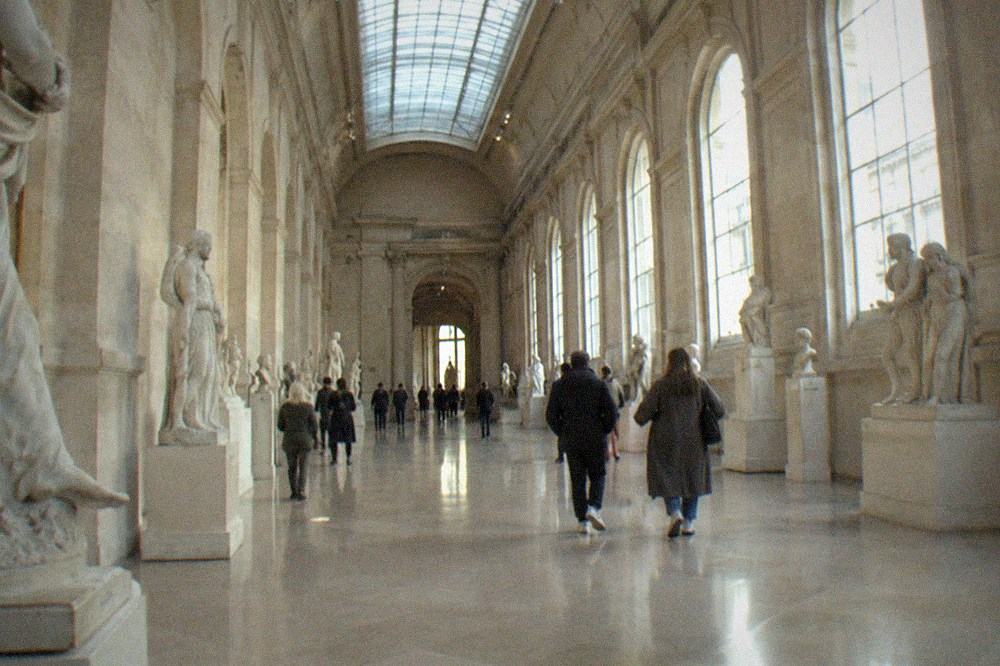
What you are dressing for, then, is a long day in a vast building. The three wings, Denon, Richelieu and Sully, each run the length of the former palace, and the distances between headline works are measured in hundreds of metres of stone corridor. Visitors regularly report being surprised by how much walking a two-stop itinerary involves. This is why the jeans question answers itself in practice: denim is simply one of the better fabrics for the actual activity, which is closer to a hike than to a dinner.
The rooms rotate closed on their own schedule, and the museum publishes a gallery list on its own site so you can check that a specific room will be open before you commit a morning. That planning step matters far more to your visit than anything in your wardrobe. If the Mona Lisa is the single reason you are going, the published gallery availability is the page to read first, not a fashion blog.
Reviewers consistently describe the interior experience the same way: crowded at the famous works, surprisingly calm elsewhere, and physically demanding in a way few smaller museums are. One recent review on the operator's listing calls it a full day if you let it be, and that matches the structure of the place. The building rewards slow routes and punishes ambitious ones, in whatever shoes you are wearing.
If you would rather hand the logistics to someone else, a guided or skip-the-line option is worth considering at exactly this decision point, since the timed-slot system is the part most first-time visitors underestimate. The companion guide on skipping the line at the Louvre walks through the choices in detail.
How Much Does A Louvre Ticket Cost And Who Gets In Free?
A standard adult ticket costs €22 for visitors from the EEA and €32 for everyone else, with timed entry compulsory. Under-18s are free with photo ID, and EU and EEA residents under 26, including holders of a long-stay permit or visa, enter free too. The museum is also free the first Friday of the month after 6pm, except in July and August, plus on 14 July.
The two-tier price is the detail to internalize, because most published guides still print a single figure. A visitor from outside the EEA pays €32 at the door, and that is the number the rest of this site's roster carries as the standard adult price. An EEA visitor pays €22 for the identical ticket. Residency is what gets checked, not nationality: a non-citizen EEA resident under 26 must show a valid photographic and residency permit, and the free-under-26 category includes holders of a long-stay permit or visa over four months.
| Visitor | Price at the door |
|---|---|
| Adult from outside the EEA | €32 |
| Adult from the EEA | €22 |
| Under 18 | Free with photo ID |
| EU and EEA residents under 26 | Free, including long-stay permit or visa holders |
| First Friday of the month after 6pm | Free, except July and August |
| 14 July | Free |
Two traps sit beside that table. First, there is no free Sunday at the Louvre at all, at any point in the year; the free evening is Friday, and skipping it because a blog told you Sunday costs you nothing but a wasted walk. Second, the timed slot applies even to free categories and even to pass holders, which means a free ticket still needs a reservation. Bookable entry through a platform starts from $69.80, and the listing carries a 4.6 rating across 7,769 reviews, but the door price in euro is the figure to compare against.
None of these numbers cares about your outfit. The ticket office asks for your slot and your ID where applicable, and that is the entire interaction.
Do You Need To Book A Timed Entry Slot?
Yes. Timed entry is compulsory at the Louvre, and a Paris Museum Pass does not remove that requirement: pass holders still book a separate free slot for the same visit. Booked tickets carry an entry window, and arriving outside it is the one thing that genuinely costs you time, whatever you are wearing.

The reservation rule is worth a paragraph of its own because it surprises people twice. First, they assume a ticket is a ticket. It is not: entry is bound to a window. Second, they assume a pass overrides the system. It does not. The official pass site badges the Louvre as requiring a reservation even for holders, which is the same badge it gives Orsay, the Orangerie, Sainte-Chapelle, the Conciergerie, the Hôtel de la Marine, the Tours de Notre-Dame and Versailles. Eight pass sites carry that badge, and the Louvre is the one where turning up without a slot hurts most.
The practical sequence is simple. Decide your day, book the slot, and treat the slot as the fixed point of your itinerary around which everything else, including what you wear for the outdoor wait, is arranged. In high season the windows go fast, and the free Friday evening goes faster still, since it is the single cheapest way into the building for a non-EEA adult who does not qualify for an age exemption.
This is also where Louvre tickets and timed entry options earn their keep: the choice between the door price in euro and a bookable platform from-price is a real decision with real differences, and it deserves its own weighing rather than a sentence here. What no option anywhere asks is what you plan to wear.
How Long Should You Spend And Which Day Is It Shut?
The Louvre is shut every Tuesday, so that is the one day to keep off your plan. Rooms rotate closed on their own schedule, and the museum publishes its gallery list so you can check a specific room before you go. For time, plan a half day rather than a quick stop: the building is enormous and the walking distances are long.
Two separate closed systems run at once here, and mixing them up wastes mornings. The weekly closure is Tuesday, full stop, the Louvre belonging to the national camp of Tuesday-closers alongside the Orangerie, the Musée Guimet and Fontainebleau. The room-level closures are different: they rotate, they are published in advance, and they only matter if one specific work is the reason for your visit. A traveler in jeans on a Wednesday sees everything that is open; a traveler in a suit on a Tuesday sees a locked Pyramid.
For duration, think in blocks. A half day covers the headline route comfortably; a full day covers a wing properly plus a break; a flying visit covers the Mona Lisa and a long walk. Visitors regularly report that the exit, not the entrance, is where they realize how much of the museum they never reached. This is a planning constraint, not a fashion one, but it does feed back into clothing: whatever you wear needs to survive four hours of standing and walking, which is precisely what jeans and broken-in shoes are built for.
Bench space is generous in the quieter galleries, the cafeteria exists for a midpoint rest, and the whole route is step-friendly in the sense that ramps and lifts connect the levels. The building was a palace before it was a museum, and the circulation still feels like one, long and grand and unforgiving on thin soles.
Louvre Or Musée Rodin: Which One Suits Your Day?
The Musée Rodin is the calm contrast: €14 at the door against the Louvre's €32, rated 4.7 across 2,519 reviews against the Louvre's 4.6 across 7,769, and closed on Mondays rather than the Louvre's Tuesday. It is smaller, quieter and mostly sculpture, and its garden alone justifies a visit when the Louvre feels like too much.
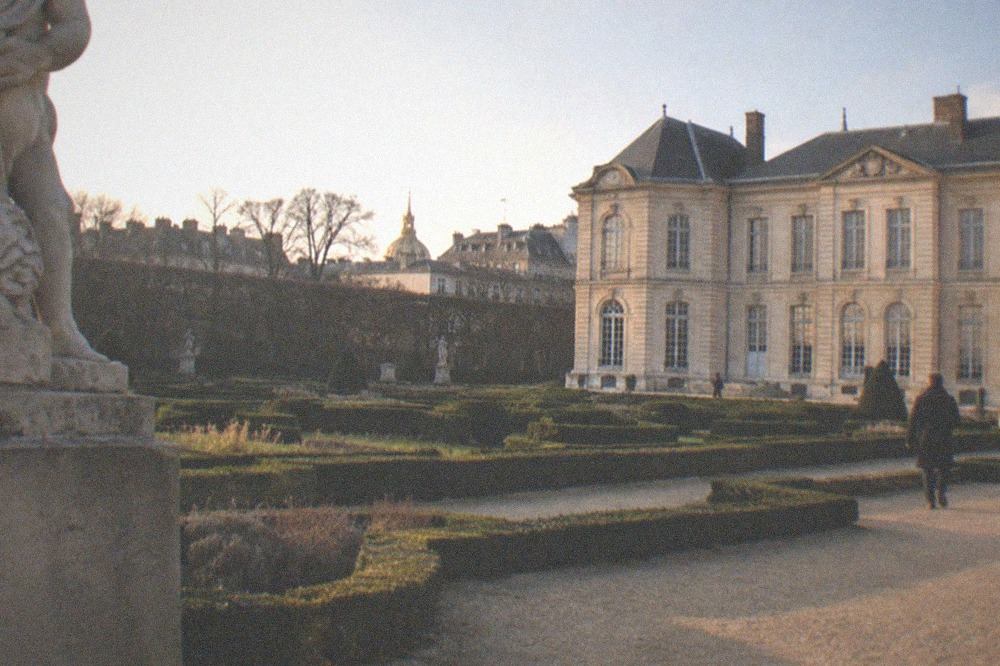
The pairing works because the two museums sit in the same broad category, art and sculpture, and because the contrast is so complete. The Louvre is a day; Rodin is an afternoon. The Louvre needs a timed slot; Rodin needs no reservation at all. The Louvre closes Tuesday; Rodin closes Monday, so between them they cover every day of the week. And Rodin has one more lever: it is free the first Sunday of the month from October to March, with no booking needed, which is a genuinely rare combination in this city.
| Musée du Louvre | Musée Rodin | |
|---|---|---|
| Door price | €32, or €22 for EEA visitors | €14 |
| Rating | 4.6 across 7,769 reviews | 4.7 across 2,519 reviews |
| Closed day | Tuesday | Monday |
| Timed entry | Compulsory | Not required |
| Free route | First Friday evening after 6pm, except July and August | First Sunday, October to March, no booking |
If your day only has room for one and the Louvre feels intimidating, Rodin is not a consolation prize. Reviewers consistently call it one of the most pleasant museum hours in Paris, largely because the garden lets you break the visit into pieces rather than enduring it in one stretch. Details and options are on the Musée Rodin tickets and visiting hours page.
The honest framing, as this Paris Museums guide records it: the Louvre is the monument, Rodin is the pleasure, and Arc de Triomphe is the view. Many visitors do the Louvre in the morning and Rodin in the afternoon, which works on any day but Monday, when Rodin is shut, or Tuesday, when the Louvre is, and because two very different buildings in one day is a better itinerary than either alone.
What Should You Actually Wear For A Day At The Louvre?
Wear whatever you can walk in for hours. Comfortable shoes matter more than anything else, because the visit involves long distances on hard floors and a queue that stands outdoors. Layers help, since the wait is in the open and the galleries are warm. Jeans fit all of this perfectly: durable, warm enough for the queue, and comfortable enough for the walking.
So the answer to the original question doubles as genuine advice. Denim is not merely permitted, it is well suited: it survives a metal detector without issue, it handles a bench sit, a floor crouch in front of a low frame and a long walk to the métro afterwards. Add real shoes, a layer for the queue, and a bag small enough that security screening takes seconds rather than minutes, and the outfit question is fully solved.
The things that will actually decide whether your Louvre day goes well are elsewhere on this page: the Tuesday closure, the timed slot, the €22 and €32 price split, and the free Friday evening that most guides misstate as a Sunday. Get those four right and the museum will never once look at what you are wearing. Get them wrong and the nicest outfit in Paris will not help you at a locked door or a full window.
Plan the ticket, book the slot, wear the jeans. That is the whole of it.
Common Questions About Dress At The Louvre
Can You Wear Jeans At The Louvre?
Yes. The Louvre has no dress code, and jeans are worn by a large share of visitors every day. The rules that apply concern security screening, bag size and your timed entry slot, never clothing.
Are Sneakers Allowed At The Louvre?
Yes, and they are the recommended choice. The visit involves long walking distances on hard floors and a queue that stands outdoors, so any comfortable footwear is both permitted and practical.
Can You Wear Shorts At The Louvre?
Yes. There is no rule against shorts, skirts, denim or any casual item. The Louvre enforces access rules, not dress rules, and nothing in its official visit information mentions clothing.
Do You Need To Dress Up For Paris Museums?
No. Paris museums, including the Louvre, do not police style. Dress codes in Paris belong to restaurants, clubs and some religious buildings, not to national museums, where casual wear is standard.
Can You Bring A Backpack Into The Louvre?
Bags pass through security screening at the entrance, and the checks look at contents and size rather than fashion. Very large bags are the problem to avoid; a normal daypack is routine.
Does The Louvre Have A Free Day?
Not a Sunday. The Louvre is free the first Friday of the month after 6pm, except in July and August, and on 14 July. Under-18s and EU and EEA residents under 26 are free every day with ID.
Which Day Is The Louvre Closed?
Tuesday. The Louvre is shut every Tuesday of the year, and individual rooms also rotate closed on a published schedule, so check the gallery list if one specific work is your reason for going.