Musée de la Vie romantique is a small Romantic-era museum in the 9th arrondissement, housed in the former home and studio of painter Ary Scheffer. It suits readers of George Sand, fans of 19th-century art and anyone wanting a quiet, free hour away from the big queues.
What You Actually See Inside
The museum fills the former home and studio of the Dutch-born painter Ary Scheffer with paintings, sculptures, letters and personal objects connected to the writers and artists of the Romantic era, with the circle around George Sand at its heart. The two ground-floor rooms are devoted largely to Sand, while the studio spaces upstairs and downstairs display Scheffer's own work and pieces by his contemporaries.
The George Sand rooms are the reason most people seek this place out. They gather her portraits, her jewelry, plaster casts of her famous left arm, manuscripts, watercolors she painted herself, and furniture from the Nohant estate where she wrote and entertained. It is intimate rather than grand. You are looking at a life through its leftovers, and the scale of the rooms keeps everything within arm's reach in a way the Louvre never manages. Visitors regularly report that the density of personal objects is what lingers in memory, far more than any single masterpiece.
The other half of the story is Ary Scheffer himself. Scheffer was one of the most successful painters of his generation, a favorite of the Orléans family, and his villa on rue Chaptal became a Sunday gathering point for the artistic world of Paris. Chopin and Delacroix both came here. The museum's own page states that the house, studio and pavilion form the last surviving villa complex of this kind in the neighborhood, which gives the building itself a claim on your attention equal to the collection. Studio walls hold his sentimental and historical paintings, including works drawn from Goethe and Dante, the literary sources he kept returning to.
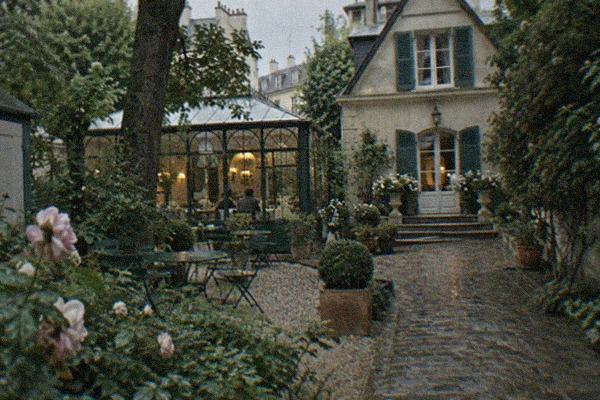
Then there is the part most people walk straight past: the courtyard. You enter through a green gate off rue Chaptal, cross a cobbled forecourt planted with roses and sheltered from the street, and only then reach the villa. In decent weather the courtyard and garden work as a small pause before the visit proper, and plenty of visitors say the approach alone changes the pace of the day. Reviewers consistently say the combination of the courtyard, the rose garden and the studio atmosphere is what makes this museum feel like a secret, even though it sits ten minutes from a major tourist corridor.
Tickets, Prices And What Entry Covers
Entry is free for everyone, with no ticket and no age condition, and the permanent collection costs nothing to visit. The only thing you pay for is the temporary exhibition program, which is ticketed. Nobody needs to book anything to walk in and see the house and its permanent displays.
The museum is a city museum, and like several Paris city museums it does not charge general admission. That is worth stating plainly because much of what you read online about Paris museums assumes every door has a paywall. Here there is no fast-track option to weigh, no line-skipping product to compare, no age bracket to check. A family of five, a student, a retired couple on separate visits, all of them walk in for exactly the same price, which is zero. There is no timed-entry slot to reserve for the permanent collection.
What still costs money is the temporary exhibition. The museum mounts a changing program of shows connected to the Romantic period, and these are the one paid element on the site. If a temporary show is running during your visit and you want to see it, that is a separate ticketed item. If you only want the house, the George Sand rooms and the Scheffer studios, you pay nothing at all. The museum's own page at vieromantique.paris.fr lists what is currently on in the exhibition spaces, so you can decide in advance whether the paid program matters to you or whether the free collection is the whole visit.
For context on how this compares across the city, the Paris Museum Pass covers many of the large state and national monuments, and pass holders sometimes wonder whether small city museums are included. The practical answer for this page is simple: since entry here is free, a pass saves you nothing on the permanent collection. The pass earns its keep at heavy hitters elsewhere in the city, such as the Musée de l'Armée at Les Invalides or the Conciergerie on the Île de la Cité. If you are building an itinerary purely around pass value, treat this museum as the free interlude between paid stops.
How Long To Allow And When To Go
The museum is small and a visit runs well under half a day, which makes it an easy add-on to a morning or afternoon elsewhere. It is closed every Monday, so Tuesday through Sunday are the days that work. The garden and tea room add time in good weather.
The building itself is compact: two floors of display in a villa and studio, plus the courtyard and garden. Without rushing, most visitors spend between forty minutes and ninety minutes inside, and the tea room can stretch a warm-weather visit well past that. Treat it as a pocket-size museum rather than a destination you clear a half day for. It pairs naturally with a walk through the 9th arrondissement, which is one of the most pleasant neighborhoods in Paris for wandering without an agenda.
Because entry is free and unticketed, the dynamics of timing are different from a paid museum. There is no timed slot to miss. Crowds are the only variable worth planning around. Reviewers consistently say the museum stays quiet on weekday mornings, while weekend afternoons, especially when a temporary exhibition has opened, bring the biggest numbers. The garden tea room fills first on sunny days, so if a table under the roses matters to you, arriving before midday is the practical move.
Season shapes the visit more than at most museums. The rose garden and the tea room are the outdoor half of the experience, and they are at their best from late spring through early autumn. In winter the courtyard loses its perfume but the interiors hold up fine, and the George Sand rooms are just as absorbing in the rain. One more scheduling note: check that you are not planning a Monday. Monday is the one closed day, a hard fact worth double-checking against any itinerary, since visitors regularly report turning up on Mondays and finding the green gate shut.
Getting There And Know Before You Go
The museum sits at 16 rue Chaptal in the 9th arrondissement, in the New Athens district north of the Grands Boulevards. Metro lines 2 and 12 and line 13 all reach within a short walk. It is closed every Monday, entry is free, and the building is a period villa with stairs, so expect limited step-free circulation.
The nearest stations cluster around Pigalle and Saint-Georges, both within walking distance of rue Chaptal. Line 12 stops at Saint-Georges and Pigalle, line 2 runs through Pigalle as well, and line 13 serves the area to the west. Blanche on line 2 also puts you within a reasonable walk. Bus lines serve the boulevards to the south. Whichever you choose, the last stretch is through residential streets that reward a slow pace, and the villa's green gate is easy to miss if you are moving fast, so keep an eye on street numbers.
On accessibility, be realistic. This is an 1830s villa and studio, with the George Sand rooms on the ground floor and further display space reached by stairs. The museum's own page states that accessible visits are possible, but the building cannot be flattened. Anyone with mobility constraints should assume the ground floor is the reliable part of the visit and plan around it. Bags and backpacks are subject to the usual Paris museum practice of not wanting large luggage in the galleries; travel light and you will not think about it at all.
A few practical points round out the picture. Photography for personal use is standard in the rooms, though flashes and bulky equipment are not welcome anywhere in Paris museums. The tea room in the garden serves drinks and light food in season, which makes the museum one of the few in Paris where the café is arguably as much of a draw as the collection. Restrooms are on site. There is no cloakroom fee to budget for and no ticket line to dread, because entry costs nothing and no ticket is needed for the permanent collection. Bring a book for the garden if the weather cooperates; visitors regularly report spending as long outdoors as in.
Who It Suits And Who Should Skip It
This museum suits readers, literary travelers and anyone who wants a free, low-commitment slice of 19th-century Paris. It does not suit visitors hunting blockbuster art or a full day out, since the collection is intimate and the whole visit is short.
If George Sand means something to you, this is the closest thing Paris has to a shrine. Her circle, her belongings and her world are the organizing principle of the ground floor. Chopin fans get something too, since his time in Paris overlapped with the house's social life and the museum keeps that connection alive. Literary travelers who have already done the obvious stops will find this the kind of place that rewards prior reading; the objects mean more when you know the letters and novels behind them.
Families with young children get a mixed deal. Entry is free for everyone with no age condition, so there is no financial risk in bringing kids, and the small scale means a short visit is a complete visit. But there is no hands-on program, no dress-up room, no dedicated kids' trail on the scale of the big institutions. The garden is the best card the museum holds with children: space to run, flowers in season, and a drink at the tea room. If it rains and the garden is off the table, the visit shortens considerably.
Art lovers should calibrate expectations. Ary Scheffer was enormously famous in his own century and is modestly exhibited now, and the museum's strength is atmosphere and biography rather than a hit parade of canonical paintings. Visitors who want major canvases by the household names of Romanticism will find more satisfaction at the Musée de Cluny for the medieval world, or across the city at the state museums. What this villa offers instead is a preserved domestic world, which is genuinely rare in Paris, where most period houses have not survived as museums at all. Come for the context, not for the masterpieces, and the free entry stops being a bargain and becomes the whole point: a genuinely atmospheric place that asks nothing of your wallet.
What To Pair It With Nearby
The museum's location in the 9th arrondissement puts it within walking distance of Montmartre to the north, the Grands Boulevards to the south, and the covered passages and Notre-Dame-de-Lorette church in between. A half day built around rue Chaptal is easy to assemble without touching a single paid attraction.
The most natural pairing is a walk up to Montmartre. Pigalle station sits between the museum and the hill, and you can reach the lower slopes of Montmartre in under twenty minutes on foot. Doing it this way reverses the usual experience: most tourists arrive in Montmartre from the south, exhausted by the climb, whereas walking from rue Chaptal lets you approach the village from a quieter side. Visitors regularly report that the New Athens streets between the museum and the hill, with their artists' studio architecture, are the prettiest stretch of the whole walk.
South of the museum, the Grands Boulevards offer the department stores, the theaters and the covered passages that define this stretch of Paris. The passages, the glass-roofed shopping arcades of the early 19th century, are historically of a piece with the museum: they were built in the same era the villa documents, and walking one after the other makes the century feel continuous rather than curated. A coffee in a passage is the same price as anything nearby and a good deal more atmospheric.
For visitors who want one heavyweight stop to anchor the day, the Arc de Triomphe is a direct Metro ride west, with its terrace view over the whole city, and the Musée de l'Armée at Les Invalides offers a full-scale museum day in the opposite direction. Both are paid and both are the kind of commitment this museum deliberately is not. The honest recommendation is to keep the paid heavyweight for the morning, come to rue Chaptal in the afternoon when your feet want a small museum and a garden chair, and end with tea under the roses. That sequence is the one reviewers consistently describe as the ideal day here, and it costs nothing until the tea arrives.
Questions People Ask
Is Musée de la Vie romantique Free?
Yes. Entry is free for everyone, no ticket is needed, and there is no age condition. The permanent collection costs nothing to visit. The only paid element is the temporary exhibition program, which is ticketed separately.
Do Children Need A Ticket?
No. Children and young visitors enter free, exactly like everyone else. There is no ticket, no age condition and no youth rate, because the museum does not charge general admission to anyone for the permanent collection.
What Is There To See At Musée de la Vie romantique?
The museum occupies the former home and studio of the painter Ary Scheffer. It is known for the rooms devoted to George Sand and her circle, Scheffer's own Romantic-era paintings, and a courtyard and rose garden with a popular tea room. Visitors regularly report the personal objects are the highlight.
Where Is The Museum Located?
It is at 16 rue Chaptal, Paris, France, in the 9th arrondissement, in the New Athens district. Metro lines 2, 12 and 13 all reach within a short walk, with Pigalle and Saint-Georges the closest practical stations.
When Is The Museum Closed?
It is closed every Monday. Tuesday through Sunday are the days that work. Visitors regularly report arriving on Mondays to find the gate shut, so check your itinerary against the Monday closure before setting out.
How Long Does A Visit Take?
Most visitors spend between forty minutes and ninety minutes inside, since the villa and studio are compact. The garden tea room stretches a warm-weather visit considerably. It is a short, low-commitment stop rather than a half-day museum.
Can I Visit The Garden And Tea Room Without Paying?
The museum does not charge general admission, so the entry route to the house, courtyard and garden is the same free route for everyone. The tea room itself is a café where you pay for whatever you order, but there is no ticket or entry charge.