Is The Atelier des Lumières Worth It, And What Does A Ticket Cost?
A full review of the Atelier des Lumières: what the immersive show actually contains, the €19.50 ticket, discounts and free entry, visit length, and how it compares with other Paris museums.
Is The Atelier des Lumières Worth It, And What Does A Ticket Cost?
Yes, for most visitors the Atelier des Lumières is worth it, provided you want an immersive sound-and-light show rather than a museum. A full-price ticket costs €19.50 booked online, entry is timed, and the show runs on a loop, so you can stay for one cycle or several. It is rated 4.1 across 670 reviews, open every day, and the nearest equivalents in Paris are smaller or less consistent.
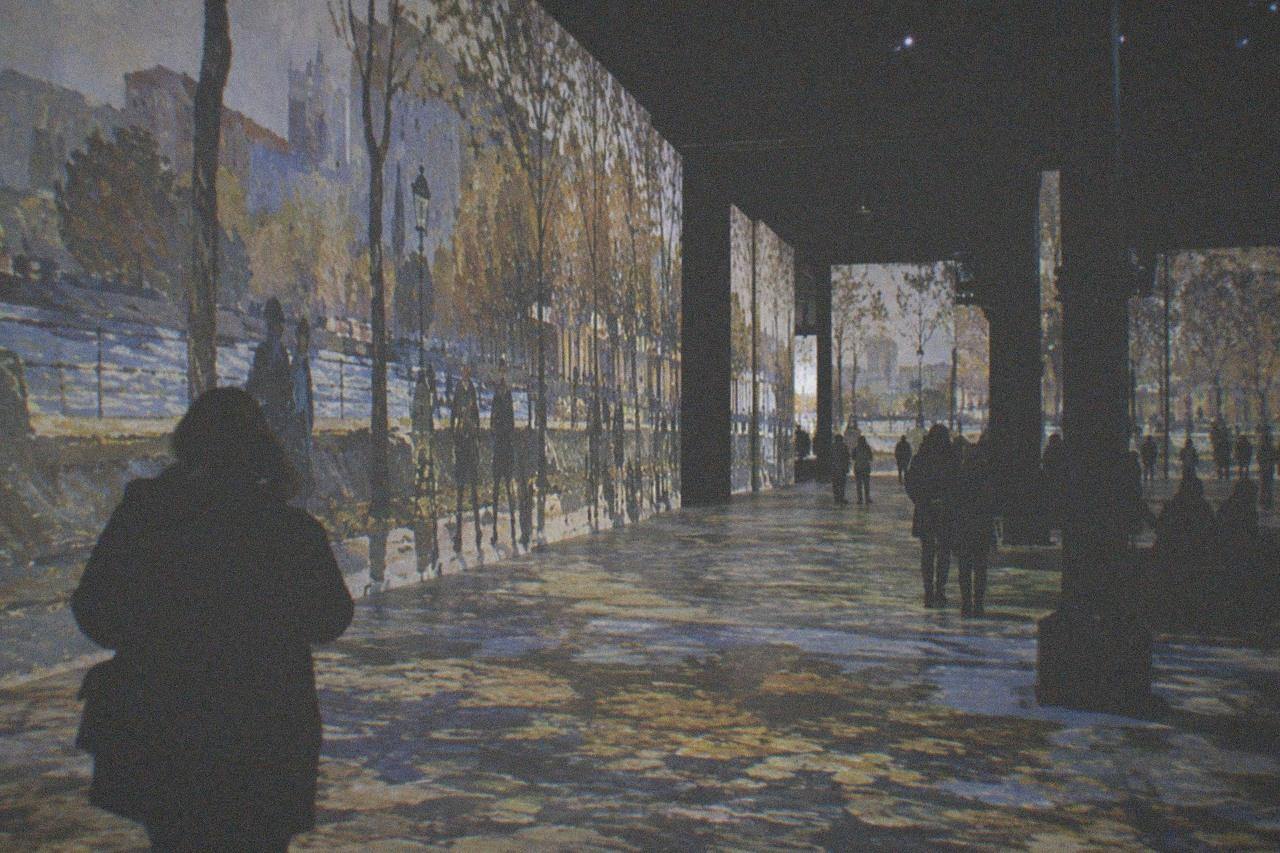
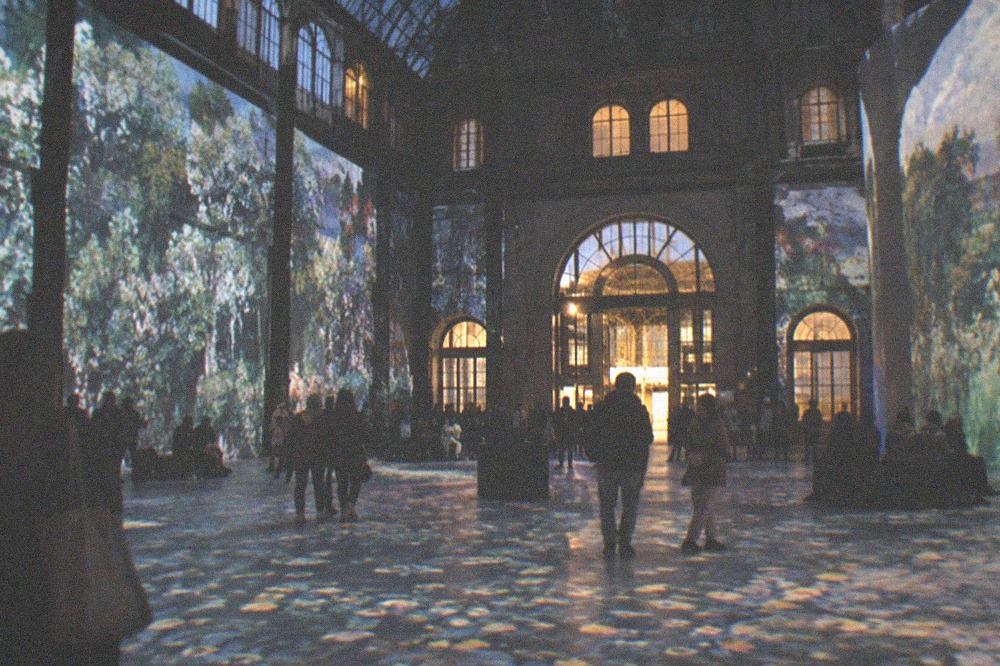
The honest framing comes first. The Atelier des Lumières is not a museum in any conventional sense. There are no display cases, no labelled works, no rooms you walk through in an order. It is a single cavernous industrial hall, a nineteenth-century foundry on rue Saint-Maur in the 11th arrondissement, in which entire exhibitions of projected imagery wash over the walls, the pillars, the floor and sometimes the visitors themselves. Sound and image run on a loop of roughly half an hour to fifty minutes depending on the programme, and the space is dark enough that the projections carry the whole visual field.
That difference explains both the appeal and the complaints. Reviewers who love it describe the scale, the music and the sensation of standing inside a painting rather than looking at one. Reviewers who are lukewarm, and 4.1 across 670 reviews means a real spread exists, tend to say the same things: it is short for the money, it is not a substitute for seeing actual art, and the hall is popular with tour groups at peak times. Both readings are fair. What is not in dispute is that the format is unique in Paris at this scale, and that the venue sits in a part of the 11th arrondissement, around rue Oberkampf and rue Jean-Pierre Timbaud, that rewards the trip with cafés and small galleries once you leave.
The venue's own page at the Atelier des Lumières site publishes the running programme, and this matters more here than at any traditional museum: the ticket you buy is always for whatever show is running that season, never for a permanent collection, because there isn't one. If the current programme features an artist you respond to, the visit will almost certainly land. If it doesn't, no amount of production quality changes the fact that you are watching that artist for an hour.
Worth it, then, is a question about the programme as much as the venue. The €19.50 ticket is the same whatever is showing, and the advice from this site, which reviews these venues from research rather than a single visit, is to check the programme before you book and then to buy for an off-peak slot. Our own Atelier des Lumières ticket page walks through the booking options.
What Is Actually Inside The Atelier des Lumières?
Inside is one principal projection hall, roughly 3,300 square metres of former foundry space, where images play continuously across the walls and floor to a synchronised score, plus a smaller secondary space with its own shorter programme. There are no original artworks, no vitrines and no permanent displays. The building is the exhibit, and the show is the content.
The main hall is the reason people come. The founders, the museum-design company Culturespaces, took the 1835 chemin de fer iron foundry, stripped it and mapped it for projection at a scale that registers physically: viewers regularly report feeling the floor move when a large canvas scrolls across it, and children in particular tend to respond to the floor projections as if they were wading through the paintings. The loop structure means nothing is scheduled in the museum sense. You arrive, the show is already running, and you leave when you have seen enough or when the cycle you walked in on comes back round.
A second, smaller space in the venue carries a shorter, often more contemporary or abstract programme, and the ticket covers both. Most visitors spend the bulk of their time in the main hall and treat the secondary programme as a coda. Beyond the two projection spaces there is a bookshop and a café area, functional rather than remarkable, and that is the extent of the estate. Unlike the Louvre or the Musée d'Orsay, there is no route to plan, no wing to choose, no decision about how long to give a highlight you have travelled for. The visit is deliberately simple, which for many travellers after a heavy museum day in Paris is exactly the appeal.
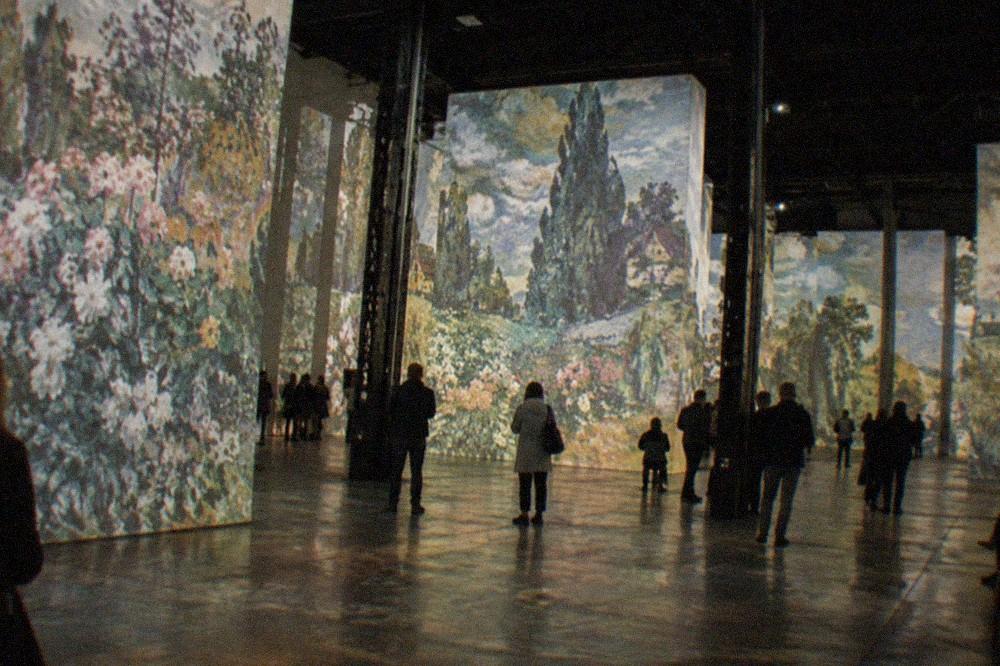
The context of the building adds something that pure purpose-built venues cannot. The foundry's pillars and gantries stay visible inside the projections, so a Van Gogh or a Klimt or whatever the current programme carries is constantly interrupted and framed by genuine industrial architecture. Photographs of the space are popular for this reason: the collision of nineteenth-century ironwork and moving colour is the signature image of the venue, and it is the one thing the projections cannot exist without.
For readers deciding between formats, the distinction that matters is this: a traditional museum such as the Musée Picasso Paris, a twenty-minute walk away in the Marais, rewards close looking at single objects over one to two hours, while the Atelier rewards standing still and letting a whole oeuvre pass over you. Some travellers do both in one afternoon, and it is a pairing the geography genuinely supports.
What Does A Ticket Cost, And What Does It Cover?
A full-price adult ticket costs €19.50 bought online, and that is the ticket: entry to both projection spaces, the running programme, and your timed entry slot. There is no permanent collection ticket, because there is no permanent collection. Children pay reduced rates, and the online price is the published one, with no separate door tariff to exploit.
The pricing is flat and simple compared with the two-tier structures now spreading across Paris. The Louvre charges €22 for EEA visitors and €32 for everyone else; the Palais Garnier charges €15 for France and EEA visitors and €25 for the rest. The Atelier des Lumières publishes a single €19.50 adult price online, and the booking carries a timed entry slot, which is compulsory. That makes it marginally dearer than several major art museums: more than the Musée Rodin at €14, more than the Musée Picasso Paris at €16, a little more than the Musée Jacquemart-André at €19, and cheaper than the Catacombes at €31.
What the ticket covers is narrower than any of those, and knowing that in advance settles most disappointment. It covers the show, both halls, and however many loops you care to watch within the flow of visitors. It does not cover a tour, because no guided tours exist in the ordinary sense, and it does not cover anything you could return for on a later date, since the programme changes and the ticket is date-specific.
The pass question deserves its own sentence, because it is where the most planning mistakes happen. The Atelier des Lumières is on the exclusion list of the Paris Museum Pass, confirmed on the pass's own site, alongside the Eiffel Tower, the Catacombes, the Palais Garnier, the Fondation Louis Vuitton and every city museum in the Paris Musées network. A pass holder still buys a full-price ticket here. Anyone building a Paris itinerary around the pass should treat the Atelier as an add-on, not a stop on the pass route.
For travellers weighing the two formats, the closest bookable comparisons in the site's roster tell a clean story:
| Venue | Adult price | Rating | What the ticket buys |
|---|---|---|---|
| Atelier des Lumières | €19.50 | 4.1 across 670 reviews | Both immersive programmes, timed entry, no permanent collection |
| Musée Picasso Paris | €16 | 4.5 across 3,696 reviews | The full collection in the Hôtel Salé, timed entry |
| Arc de Triomphe | €22 | 4.7 across 37,709 reviews | Terrace access and the rooftop view, open daily |
Who Gets In Free, And Which Passes Work?
Almost nobody gets in free. The Atelier des Lumières is not on the Paris Museum Pass, it holds no first-Sunday free rule, and the city's free permanent collections do not apply because there is no permanent collection. Children enter at reduced rates, and that is the full extent of the concessions that matter in practice.
This is the section where the Atelier diverges hardest from the rest of Paris, and where a reader planning a free-museum day needs to stop and recalibrate. Paris has two separate free systems. Eleven city museums in the Paris Musées network, including the Musée Carnavalet, the Petit Palais and the Musée d'Art Moderne de Paris, are free to everyone all year for their permanent collections. National museums, separately, are free the first Sunday of the month. The Atelier des Lumières sits in neither camp: it is a private venue operated by a commercial operator, its content is by definition a rotating exhibition, and even the Paris Museum Pass's own rule of never covering temporary exhibitions would exclude it regardless of its ownership.
The practical consequences are straightforward. A four-day pass bought at €105 does not reduce your Atelier ticket by a cent. A first-Sunday itinerary built around the Louvre's free first Friday after 6pm and the Orsay's free first Sunday does not extend to this venue. The under-18 and under-26 EEA residency rules that make so much of Paris free for young travellers are national-museum rules and the Atelier is not a national museum. Children do get reduced entry, so a family visit is cheaper than four adult tickets, but the family budgeting should start from the fact that everyone in the party pays something.
The comparison with the free eleven is worth making honestly rather than defensively. If your priority is spending a day in Paris without buying a single museum ticket, the free city museums deliver that in abundance, and the Musée Carnavalet's history of Paris or the Petit Palais's fine-arts collection cost nothing at all. The Atelier des Lumières costs €19.50 because it is a produced show with a rotating programme, projection infrastructure and licensing behind it, closer in economics to a short performance than to a gallery. Whether that production value reads as worth the price is the judgement the 670 reviews split on.
For the modest-crowd traveller, one more planning note belongs here. Because entry is timed and slots are sold in advance, the Atelier rarely produces the queue phenomena of the Sainte-Chapelle or the Catacombes, where timed inventory genuinely sells out days ahead. Booking a day or two ahead is normally enough outside school holidays, and the timed slot means the venue controls its own density in a way untimed museums cannot.
How Long Should You Allow, And When Should You Go?
Allow about an hour to an hour and a half: one full loop of the main programme runs roughly half an hour to fifty minutes, the secondary space adds a shorter loop, and most visitors stay for one main cycle plus a partial rewatch. The venue is open every day of the week, so there is no closed day to route around, and off-peak late-afternoon slots are the calmest.
The loop structure makes visit length genuinely flexible in a way no traditional museum manages. You cannot leave the Louvre at a natural break point and come back, but the Atelier's cycle returns you to its own beginning, and plenty of visitors treat it like a film they are half-watching twice. The realistic floor for a satisfying visit is the length of one main programme, and the realistic ceiling is however long the hall holds your attention, with ninety minutes covering almost everyone including the secondary space and a browse of the shop.
Timing within the week is unusually forgiving. Paris's museum calendar is a minefield of Monday and Tuesday closures: the Louvre, the Orangerie and the Musée Guimet shut Tuesday, while the Orsay, the Rodin, the Picasso, the Cluny and the whole free city network shut Monday. The Atelier des Lumières opens daily, which makes it a natural anchor for the one day of the week when half the rest of the map is dark, and a Monday itinerary pairing it with the Musée de l'Armée, also open daily, is one of the site's recommended shapes. Within the day, the first slots of the morning and the late afternoon are the ones where the hall is least crowded, and group bookings cluster around midday.
Season matters for a different reason than at the museums. The programme turns over once or twice a year, and the weeks after a new show opens are the busiest the venue gets, with locals and return visitors as much as tourists. The shows themselves are announced well in advance, so a traveller deciding between April and October can look up which programme each month carries and let that, not the weather, drive the choice. Rain, for the record, is not the scheduling problem it is at the Eiffel Tower or the gardens of Giverny: the Atelier is entirely indoors and a genuinely strong rainy-day pick, one reason it features in our guide to rainy-day museum plans for Paris.
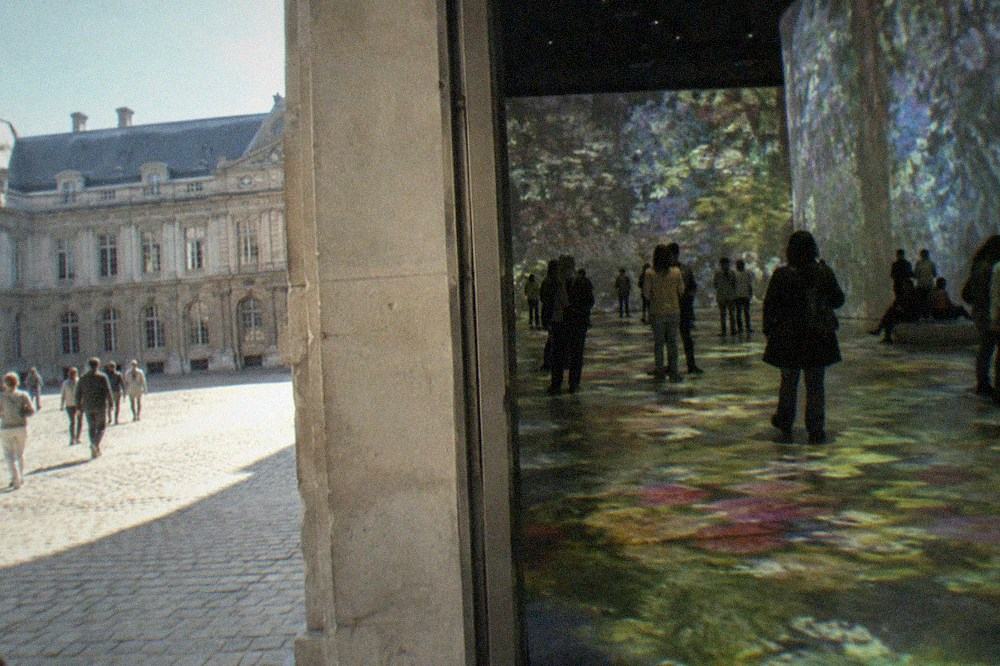
A note on the neighbourhood as part of the timing. The venue sits deep in the 11th, ten minutes' walk from rue Oberkampf and a similar distance from the Marché des Enfants Rouges direction if you stretch the map slightly, and evening slots pair naturally with dinner in one of the least touristy quarters a first-time visitor will see. A late slot followed by the walk back through the darkened streets is, in the site's assessment, the strongest way to schedule the visit.
How Does It Compare With The Nearest Alternatives?
Against a classic museum it trades depth for spectacle: the Musée Picasso Paris costs €3.50 less, rates higher at 4.5, and offers real works over two hours, while the Atelier offers scale, sound and emotion in under one. Against a monument such as the Arc de Triomphe, also open daily, the choice is between an indoor produced show and a rooftop view over Paris at €22.
The Picasso comparison is the sharpest because the two venues share an audience and a district. Both live east of the centre, both carry timed entry, both suit a two-hour window, and both draw the modern-art curious. The Musée Picasso Paris holds the world's largest Picasso collection in the seventeenth-century Hôtel Salé in the Marais, charged at €16, rated 4.5 across 3,696 reviews, and free the first Sunday of every month with no reservation needed. The Atelier des Lumières costs €19.50, has no free day, and shows whatever artist the current programme carries. A traveller who wants to understand an artist buys the Picasso ticket. A traveller who wants to feel a whole movement of painting in half an hour, music and motion included, buys the Atelier. The two are complementary rather than competing, and the walk between the quarters is pleasant enough that a determined visitor can manage both in one afternoon.
The Arc de Triomphe comparison is about format and the daily opening both venues share. The Arch charges €22, rates 4.7 across a very large 37,709 reviews, and delivers a physical climb, a small museum of the monument's history and the terrace view down the Champs-Élysées. It is an outdoor, historical, photogenic hour. The Atelier is an indoor, contemporary, immersive hour. Families with younger children often split exactly along this line: children under the Arch's under-18 free rule climb for nothing, while at the Atelier the reduced child rate still applies, and the floor projections tend to be the deciding factor in the children's preference either way. Our full guide to the Arc de Triomphe visit covers the climb question in detail.
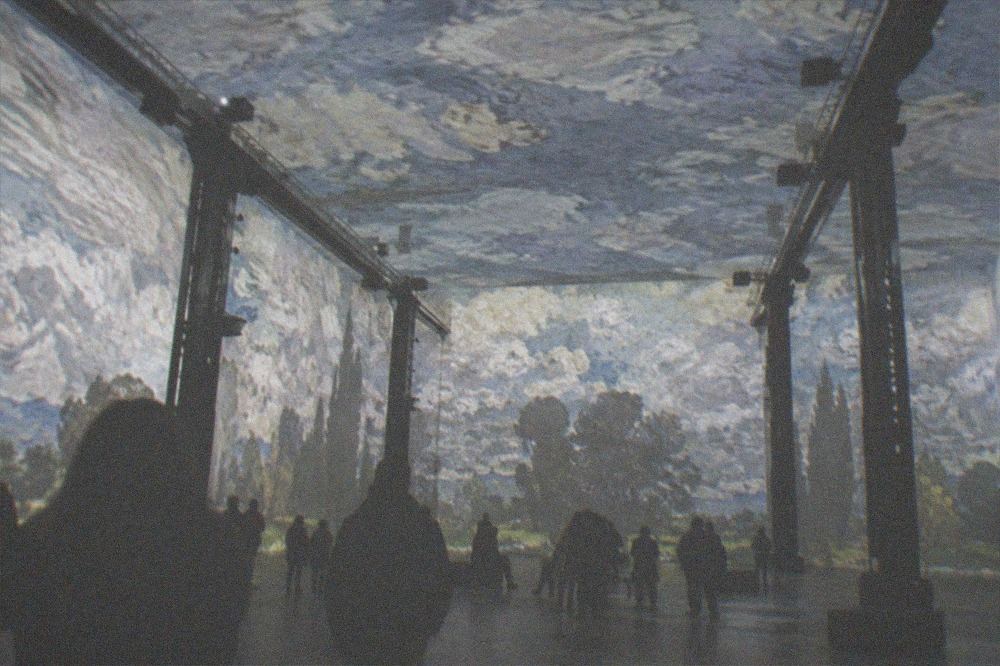
Against the immersive-format rivals, the Atelier's position is stronger than its rating suggests. The venue is the pioneer of the large-scale projection format in France and remains the biggest dedicated space of its kind in Paris. Its rivals in the city are either smaller, temporary, or attached to institutions whose programme changes unpredictably; the Fondation Louis Vuitton's building is an event in itself but the Fondation is closed and reopens on 9 October 2026, and the Centre Pompidou, the other modern heavyweight of the 4th arrondissement, closed on 22 September 2025 for renovation until 2030, its collection dispersed to the Grand Palais and partner venues. Anyone whose Paris modern-art plan leaned on the Pompidou is, in the current window, effectively rerouted toward exactly the kind of ticket the Atelier sells.
Is It Good For Children And First-Time Visitors?
For children it is among the best-value art experiences in Paris: the format needs no prior knowledge, the floor projections invite movement, and reduced child pricing applies at every age band. For first-time visitors the honest answer is that it complements rather than replaces the classics, and a Paris trip that includes only the Atelier has missed the museums that make Paris Paris.
Children are the venue's most reliable audience. The show requires no reading, no context and no patience with vitrines, and the standing, wandering, photographing rhythm of the hall suits short attention spans better than any gallery in the city. Reviewers regularly single out family visits as the highest-satisfaction segment, and the design choices, floor projection included, read as deliberately child-friendly. The counterweights are the darkness, the loudness of the score at moments, and the fact that very young children cannot be carried through the loop the way a stroller navigates a traditional museum: the hall is dark, floor projection means eyes down, and the venue is calmer with children who can walk steadily.
First-time Paris visitors should treat the Atelier as a flavour, not a foundation. The foundation visits are the Louvre at €32 for non-EEA visitors, the Musée d'Orsay at €16 booked online, and the Sainte-Chapelle at €22 for non-EEA visitors, and every one of them is a different order of cultural event. The Atelier slot belongs in the itinerary the way a concert does: one evening, one hour, high sensory reward, no homework. Travellers who arrive in Paris for three days and give one evening slot to the Atelier generally report it as a highlight precisely because it breaks the museum rhythm at the point where museum fatigue sets in. Travellers who give it their only art slot are the ones who write the disappointed reviews.
Accessibility deserves a mention because immersive venues are not all equal. The flat floor of a single hall, the absence of stairs in the main space and the free-flowing, unguided format make the Atelier one of the easier art venues in Paris for visitors with limited mobility, and for anyone who finds the navigation of large museums, the Louvre above all, genuinely tiring. It is worth confirming specific access arrangements with the venue before booking a slot that needs them, but the physical shape of the visit, one level, one hall, no route, is inherently simple.
The booking question, finally, is simple at this venue. Timed slots mean the Atelier des Lumières ticket page on this site, part of Paris Museums, exists to hold the live inventory in one place, and the choice of slot matters more than the choice of day. Book the show you actually want to see, take an off-peak slot if your schedule allows it, and keep the visit to the natural length of the loop rather than stretching it.
Common Questions About The Atelier des Lumières
Is The Atelier des Lumières Worth It, And What Does A Ticket Cost?
It is worth it if you want an immersive projection show rather than a traditional museum. A full-price adult ticket costs €19.50 online, entry is timed, and the venue is open every day. It rates 4.1 across 670 reviews, with the split running between visitors who love the scale and visitors who find it short for the money.
How long does a visit to the Atelier des Lumières take?
Most visitors stay between an hour and an hour and a half. One loop of the main programme runs roughly half an hour to fifty minutes, the secondary space adds a shorter loop, and you can leave whenever the cycle has come back round to where you entered.
Which day is the Atelier des Lumières shut?
None. The venue is open every day of the week, which makes it a useful anchor on Mondays and Tuesdays when most Paris museums close, and an easy fit for any itinerary shape.
Is the Atelier des Lumières covered by the Paris Museum Pass?
No. The pass does not cover it, and the pass never covers temporary exhibitions in any case, while the Atelier's entire programme is a rotating temporary show. Pass holders buy the full €19.50 ticket.
Is there a permanent collection at the Atelier des Lumières?
No. There is no permanent collection at all. The ticket is always for the current projected programme, so checking what is showing before you book matters more here than at any museum in Paris.
Is the Atelier des Lumières good for children?
Yes, it is one of the most reliable art experiences in Paris for children. The format needs no prior knowledge, the floor projections invite movement, and reduced child rates apply. Very young children may find the dark hall and the loud score less comfortable.
Can you take photographs inside the Atelier des Lumières?
Yes, photography without flash is part of the experience, and the projected walls with the foundry's ironwork are among the most photographed interiors in Paris. Tripods and professional equipment are not part of the ordinary ticket.